

After last week’s gallivanting, today was the first opportunity to go through my research notes and try to make sense of it all. I’ve by no means finished the challenge yet!
- Last Monday: normal day at work;
- Tuesday-Wednesday: visits to King’s Inns and Trinity College Dublin libraries to check the old guardbook catalogues at the former, and archival documentation at the latter, also fitting in an informative meeting with the music librarian there
- Thursday: another normal day at work, then taking a choir-practice, and finally the overnight Caledonian Sleeper to London
- Friday: a visit to Stationers’ Hall archives to see the registers in which new publications were registered in the Georgian era; then a meeting with one of the music librarians at the British Library to discuss future plans
- Saturday: speaking at a conference at Cecil Sharp House, the English Folk Dance & Song Society’s headquarters
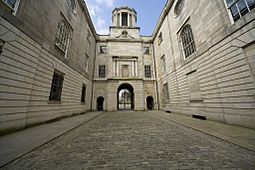
Today, I tackled my notes from the visit to King’s Inns. You wouldn’t expect a legal library to hold much music, would you? But they do have a few books of national songs from the Georgian era – not many, but a few. They also have quite a bit of poetry – I found Burns, Thomas Moore and Byron, for a start, not to mention works by Sir Walter Scott, and William Motherwell’s Minstrelsy. Surprisingly, there are quite a few libretti (the word-books) for late 18th century ballad operas by Dibdin – many predating the legal deposit era, so however they got there, it wasn’t from Stationers’ Hall! Someone had a passion for the theatre, that’s for sure. And although I didn’t find folio-sized sheet music (in other words, roughly the size of sheet music today, perhaps slightly larger), I did find smaller publications – books- about the history of music, and a couple of pedagogical tomes which are also in some of the legal deposit libraries in England and Scotland. One was a likely legal deposit arrival – the other was older, so could have arrived by any route, perhaps a donation from an old lawyer or his descendants. I only saw the catalogue records, so I may need to follow up with a few queries about some of these items, to see if there’s a standard binding style or any stamps indicating where they came from. As a librarian myself, I do very much appreciate help received from host libraries – I know how long it can take!
Tomorrow, I’ve got a day’s leave – whether I push on with my notes from Trinity College rather depends on what else I need to do at home, of course! So … watch this space. I’ll be back as soon as I can!
 Karen McAulay, Musicologist