

William Hawes (1785-1846) was a singer, conductor and composer in a variety of high-profile institutions, beginning with his appointment as a chorister at the Chapel Royal. Work as a deputy lay vicar at Westminster Abbey was followed by his becoming a Gentleman of the Chapel Royal, later becoming Master of the Choristers at St Paul’s and Master of the Children at the Chapel Royal. He was also an associate of the Philharmonic Society, a leading light in the Regent’s Harmonic Institution, a lay vicar of Westminster Abbey, conductor of the Madrigal Society, and organist of the Lutheran Chapel. And then there was his work with the operatic scene, too. He was clearly quite an important person on the contemporary London musical scene.
(The potted biography shared above, summarises the entry in Oxford Music Online:- W.H. Husk, Bernarr Rainbow and Leanne Langley (2001), Oxford Music Online https://doi.org/10.1093/gmo/9781561592630.article.12598)
For some reason, William Hawes had the Stationers’ Hall music registrations from 1789 to 1818 copied into a manuscript, A List of Music Entered at Stationers’ Hall, from January 1 1789, to January 1, 1819. 1818 had seen the inception of the Regent’s Harmonic Institution, and Krummel suggests in Kassler’s edition of Music Entries at Stationers’ Hall 1710-1818 (2004) that the manuscript was probably connected with establishing when music would go out of copyright (after twenty-eight years), becoming legally reprintable. (Kassler, ix)
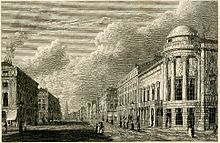
You can read more about the Regent’s Harmonic Institution in Oxford Music Online. It’s an institution I’d like to learn more about in due course:-
“Regent’s Harmonic Institution [ Royal Harmonic Institution ] English firm of music publishers . It was founded in London in 1818 as a joint-stock company of 23 (then 21) professional musicians, including Attwood, Ayrton, J.B. Cramer, William Hawes, Ries, George Smart, Thomas Welsh and Samuel Wesley, to finance reconstruction of the Argyll Rooms, Regent Street…” Leanne Langley (2001)
https://doi.org/10.1093/gmo/9781561592630.article.42367
You may also like to visit Leanne Langley’s website, where you can read about the ‘Taking Stock’ project:- http://www.leannelangley.com/projects/taking-stock/
But I digress. When Kassler produced his edition of Music Entries, he combined his own transcriptions from the Registers with those of Don Krummel and Alan Tyson, as far as the year 1810, but used Hawes’ transcription for the years 1811-1818. This became the cut-off point for Kassler’s edition, in order to restrict the work to one volume.
Now, I should like to extend transcriptions forward to 1836. That’s the year when new legislation changed the legal deposit stipulations, reducing the number of legal deposit libraries and for those that lost their privilege, instituting a new system of granting library book-budgets instead. How to make my idea happen is the question that is exercising me at the moment!
On this day … ballads, rondos, anthems, glees and variations on operatic themes
19th December 2018 is a significant day in Claimed From Stationers’ Hall terms, because the very last transcribed entries in William Hawes’ manuscript were those originally entered exactly 200 years ago. And it was a good day for music, albeit a busy one for warehouse keeper Mr Greenhill – no less than sixteen musical entries. Five from publisher Goulding, followed by six from Power, two from Birchall, one that may have been from Chappell alone (it’s hard to tell in Copac), one from Clementi, and one published by both Clementi and Chappell. This last isn’t in Copac, but a copy can be traced in Berlin via WorldCat.
Goulding
Samuel Webbe, Jr’s Edward, a ballad – surviving in the most likely copyright libraries:- Aberdeen, the Bodleian, the British Library, Glasgow and St Andrews.
Ferdinand Ries’ When the wind blows, rondo, no.1, op.84, surviving in Aberdeen, the British Library and Glasgow.
Ries’ Popular French air with variations, no.4, op.84 – the same five libraries above.
Henry Rowley Bishop’s I have kept the ways of the Lord, anthem (in memory of Queen Charlotte [died 17.11.1818]) – same five libraries, and also in Edinburgh (whose copy isn’t yet catalogued online)
Bishop’s Hark! The solemn, distant bell (again, in memory of Queen Charlotte [died 17.11.1818]) – same five libraries, and in Edinburgh (as above)
Power
Thomas Simpson Cooke’s The dandy beau: a song – Aberdeen, British Library, Glasgow and St Andrews
Thomas Attwood’s Her hands were clasp’d (a Thomas Moore text from Lalla Rookh) – Aberdeen, British Library, Glasgow and St Andrews
John Clarke’s The Peri pardoned (song from Lalla Rookh) – Aberdeen, Bodleian, British Library and St Andrews
Frances L Hummell, or Hunnell’s My love is like the red, red rose – only in the Bodleian and the British Library
Joseph William Holder’s La belle Hariette [Henriette] with variations – Aberdeen, British Library and St Andrews
Thomas Howell’s Six progressive sonatinas for piano forte – Aberdeen, the Bodleian, the British Library, Glasgow and St Andrews
Birchall
Carlo Michele Alessio Sola’s – Amabili Britanne, canzonetta – the same five libraries
Sola’s Amor possente amore, canzonetta – the same five libraries
Chappell?
Ries’ La charmante Gabrielle, with variations [cannot trace Ries’s piece in Copac, but maybe it could be a piece indexed as by Onslow, published by Chappell]
Clementi
Ries’ Venetian air, with variations – Aberdeen and the British Library
Clementi, Cheapside, and Chappell, New Bond Street
Ries’ Air from Griselda (by Ferdinand Paer) with variations [again not in Copac but in Worldcat we find: A favorite air from Paer’s Celebrated Opera Griselda. Can only trace in the Berlin Staatsbibliothek – and digitised under the auspices of the Europeana project.
Considering what was registered, it’s not surprisingly a very typical collection of pieces for the era. I’ve found the library locations of surviving copies listed online, generally using Copac but occasionally also resorting to WorldCat – but this doesn’t mean that a few more might not yet turn up in collections not fully catalogued online to date. I wonder if anyone would like to check their card catalogues?! You’ll observe that there’s a fairly clear pattern of which libraries kept their legal deposit music. In the ensuing 200 years, it isn’t too surprising that the numbers of surviving copies varies just a little. Indeed, I find it quite remarkable that as many copies do survive!
 Karen McAulay, Musicologist