


Today, I went to the Royal Highland and Agricultural Society of Scotland (the successor to the Highland Society of Scotland) to explore various manuscripts in their archives. In my search for documentation about Sir John Macgregor Murray’s Gaelic interests, I felt it only right that I should inspect these mss to see if they shed any more light on the man and his obsessions.
As well as letters by Sir John, I looked at someone else’s 1807 tour of the Highlands in search of Ossianic “reciters”. Mr Stewart referred to himself as the “Tourist” in his list of interviews with twenty different individuals from all walks of life. Oral history transcription never was straightforward, and poor Mr Stewart didn’t have it easy at all! When you imagine this kind of activity being pursued by a number of “tourists” over several years, as they endeavoured to prove what exactly James Macpherson had used back in 1760, it’s not too hard to extrapolate a complex picture of overlapping expeditions, and I wonder how many people got sick and tired of being interviewed, cajoled into reciting their precious repertoire, or declining more or less graciously to cooperate!
I shared some of Mr Stewart’s experiences on a Twitter stream this evening. It’s really going off at a bit of a tangent, considering he only alluded to Sir John three times, but I was interested because of my own doctoral researches into the musical side of Scottish song collecting.
Anyway, here’s the story as it appears on Twitter:- My curated Twitter “Moment”
Incidentally, Friends of Wighton associate, harpist Simon Chadwick has shared with me some live recordings of Ossianic verse being declaimed in more recent years – I’ll share his link, and you can explore it for yourself! Early Gaelic Harp Info: Lays: Recordings
Image: ‘Ossian Relating the Fate of Oscar to Malvina’ – from The Poems of Ossian by James Macpherson -artist, William Brockedon, via ArtUK
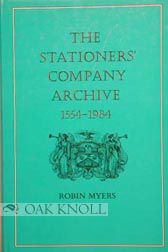 By and large, this book is aimed at book and publishing historians – it enumerates the contents of the Stationers’ Company Archive from 1554-1984, at Stationers’ Hall. The compiler, Robin Myers, was for a long time Honorary Archivist there. (She has the status of Liveryman at the Stationers’ Company.)
 Karen McAulay, Musicologist