In Search of a (Minor) Hero

Remembering my fruitful walk on 3 January 2023, I looked outside today – yes, the third of January again – saw the sun shining (athough the temperature was literally freezing out there), and decided to go on another research-and-exercise outing. What could possibly go wrong?

I’ve been exploring the story of a Victorian Glasgow music professor, so I headed for St George’s Cross by subway, to see a former church where he had once been organist. He had started his tenure in an earlier building, which was burned down in a fire, but a new one was built in a mere two years, so he must have resumed duties at that point. I already knew that, as with organist Maggie Thomson’s Paisley church, this Glasgow church had likewise now been converted into rather classy flats.
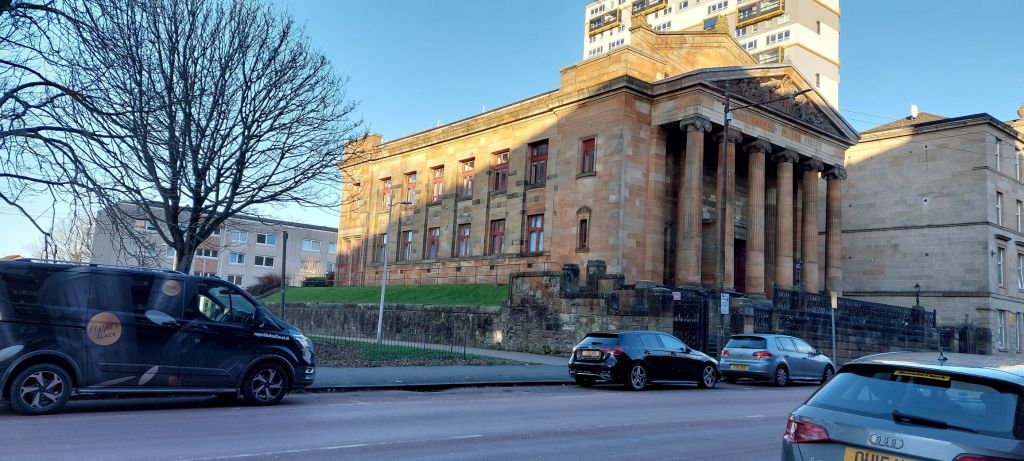
St George’s-in-the-Fields, Glasgow

Unperturbed, I headed next to the Mitchell Library, and up to the fourth floor where the old music card catalogue lives; it has never been digitized. This eminent individual certainly composed enough, but mostly in a light-music vein, and not published by any of Glasgow’s bigger music publishers. However, I was still surprised to discover that he is completely unrepresented in the card catalogue.
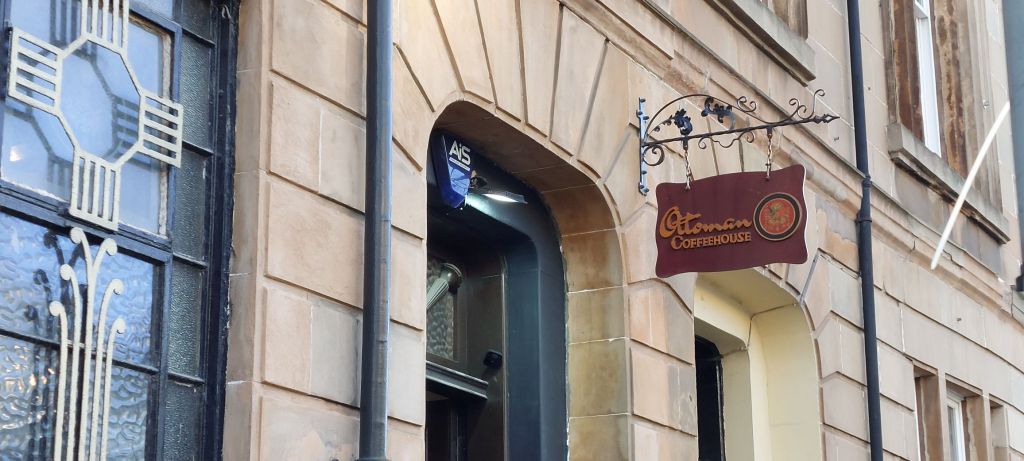
Ottoman Coffeehouse

To drown my sorrows, I headed next to a celebrated Turkish coffee shop in Berkeley Street. (The premises had once been a club for Glasgow musicians, and our hero had been included in a song-book that they sponsored; clearly I needed to have a coffee there in his honour.) Foiled again! There was a queue out to the pavement, just to get inside the cafe. Back I went to the Mitchell Library cafe, to get my coffee more quickly!

It was still bright and sunny outside, so my next port-of-call was India Street (on the opposite side of the M8, near Charing Cross station). This had been both of professional significance and latterly home to our hero, and although I knew modern developments had taken place, I still hoped that I might be able to walk the length of the street. Thwarted! Scottish Power sits squatly and solidly across the line of the road, and pedestrian access is blocked by ongoing building works before you even get to it.

I could have headed into the city centre to gaze at the Athenaeum, but I’ve passed it hundreds of times, and there are plenty of pictures on the web – it wouldn’t have felt like much of a discovery. Sighing – for the mere glimpse of a road sign at the wrong end of  India Street had not exactly thrilled me – I headed for the bus home.

But fate had one more twist for me: whilst I was looking on the travel app to find out when the next bus was due …

… the next bus sailed past my stop.

I decided that maybe walking briskly to the Subway would be quicker than waiting for another bus. At least the Subway dates from the era when our hero was in his prime and doing well.

‘How did you get on?’, I was asked, when I got back home. I was forced to admit that, apart from St-George’s-in-the-Fields, I had really seen virtually nothing.

On the plus side, my FitBit is as happy as Larry.  Finally, it said, she has realised that Christmas is over, and it’s time for the healthy living to resume!
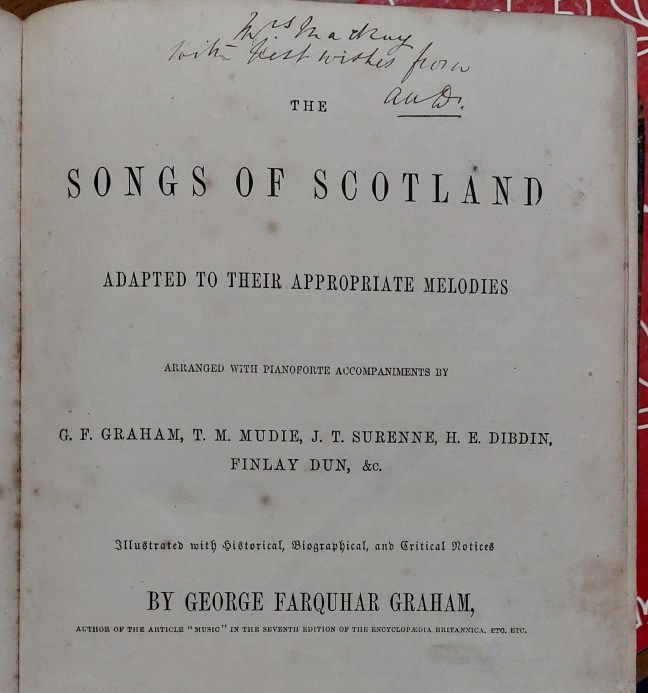
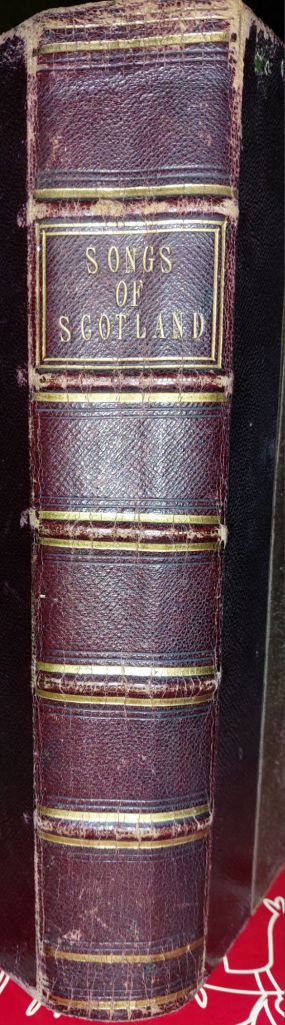
Q. Name a Scottish Song Collector who Features in Both my Books!

The Songs of Scotland edited by George Farquhar Graham et al. Title page
Songs of Scotland

I couldn’t find a nice anniversary for yesterday, but I certainly have one for today, 28th December.

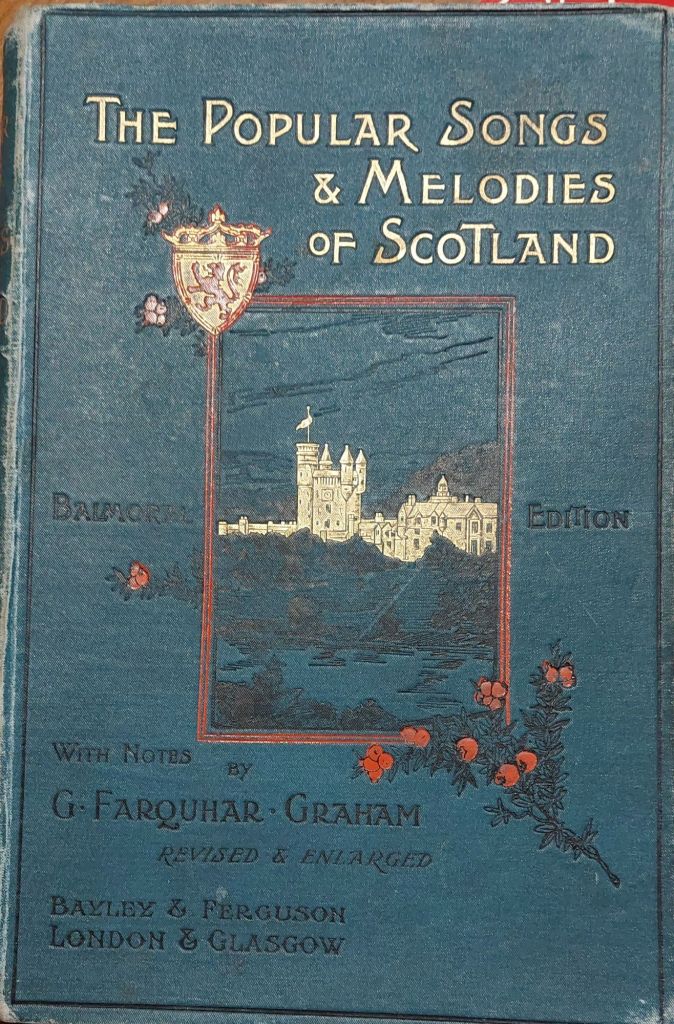
Journo, music critic, and Scottish song compiler George Farquhar Graham (1789-1867) was the editor of John Muir Wood’s long-lived song collection, Songs of Scotland, first published in 1848.  As such, he featured heavily in my Our Ancient National Airs.  But the book enjoyed an afterlife as one of Bayley and Ferguson’s handsome reprints – The Popular Songs and Melodies of Scotland  – thus getting a mention in A Social History of Amateur Music-Making and Scottish National Identity, too.

Where’s all this going? Well, today is Graham’s 236th birthday – ‘Many happy returns,  Sir!’

The Popular Songs and Melodies of Scotland

New Article about Sir John Macgregor Murray, in the Folk Music Journal

Finally, an article from me after a long spell of apparent silence. ‘Sir John Macgregor Murray: Preserver of Highland Culture, Music and Song’. Folk Music Journal vol. 13 no.1, pp.50-63. 

The article started out as a conference paper, but I felt it deserved a wider audience. Let me share the abstract:-

Abstract

Sir John MacGregor Murray is known by Scottish music historians as the man who retrieved Joseph Macdonald’s Compleat Theory of the Scots Highland Bagpipe. This act of transmitting a work about Highland culture was just one instance of the Highland chieftain’s involvement in facilitating the artistic output of his native country. A founder member of the Highland Society of Scotland, he traversed the Highlands in pursuit of James Macpherson’s Ossian poetry, assisted song collector Alexander Campbell in planning his own itinerary in the Highlands and Western Isles, and helped establish a piping competition in Edinburgh. Sir John was one of a number of individuals who played a mediatory role in the collecting and publication of Scottish music.
This article outlines Sir John’s role in the codifying and promotion of Highland culture, embracing literary as much as musical endeavours. It also introduces some of the other individuals who played a similar role in Scotland during the Georgian and Victorian eras.

EFDSS (English Folk Dance and Song Society) website

Folk Music Journal

Lanrick Castle Gatehouse (Wikipedia)

The Man who Turned up Everywhere!

Yesterday was my first day back in the archives. My phone was crawling with messages (an ongoing family situation). Then came a phone-call, which I couldn’t answer without running out to where I could talk. That led to another, and another. And another. Back and forth I went.  I can’t tell you what a day it was!

However, I did get through several folders of Thomas Nelson papers.  I’m in search of the first mention of a particular individual who was very influential in Nelson’s educational music output.  I found him mentioned a couple of times in yesterday’s papers, once quite unexpectedly. I need to see how this sits in my timeline.  Honestly, I didn’t expect to find him urging an organist’s wife to submit a book proposal on … elocution!  It didn’t look like choral speaking (yes, that was a thing, which was quite in vogue a little later on). Indeed, a Nelson editor specifically advised his boss that it was about elocution, so I don’t need to wonder.

Nelson’s rejected the lady’s proposal. She found another publisher.  I briefly wondered how the Englishman who basically ended up acting as music advisor to the Nelson editors, came to know a Scottish organist and his wife, quite early on in his professional career? But I think they probably met at a course or conference.

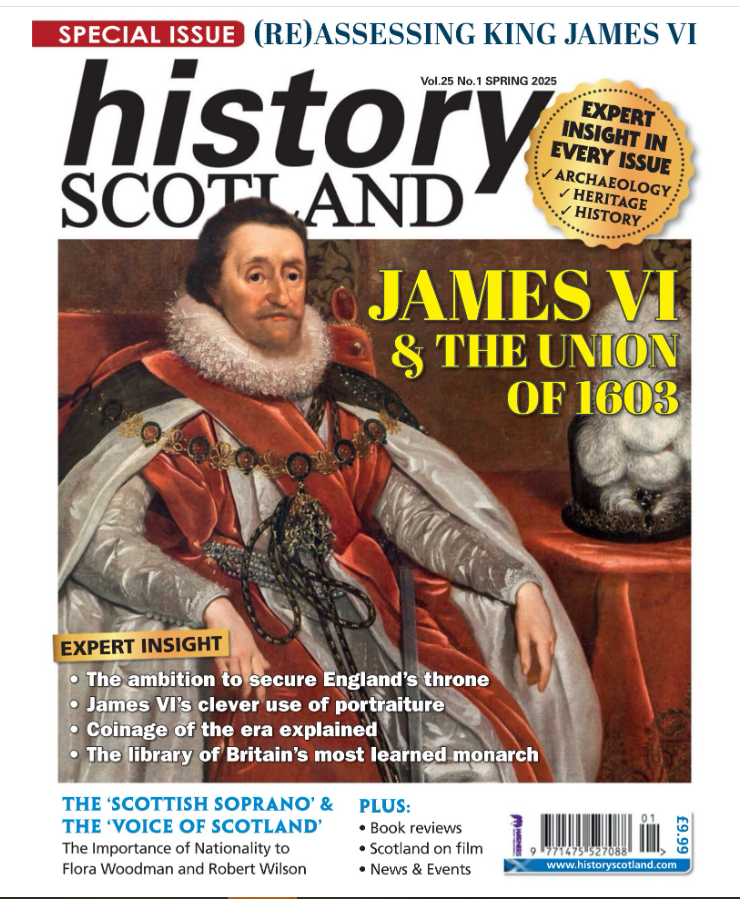
Now published in History Scotland, Spring 2025: The ‘Scottish Soprano’ and the ‘Voice of Scotland’

The Scottish Clans Association of London badge, on background of Mackinnon tartan

Sadly, this is the last issue of History Scotland, but I’m very pleased to have an article published there. I have really enjoyed writing this, and I think my idea of comparing two very different Scottish singers has actually come together rather well.  I wanted to write about Robert Wilson, but I didn’t want to go over the same ground that has already been covered.  I also wanted to write about Flora Woodman – but would anyone remember her? Then came the inspiration: what if I wrote about them both, two almost contemporary but very different celebrities, and then I could compare them.  This hadn’t been done before! And it worked  – the piece almost wrote itself.

Karen E McAulay, ‘The ‘Scottish Soprano’ and the ‘Voice of Scotland’: the Importance of Nationality to Flora Woodman and Robert Wilson’, History Scotland Vol.25 no.1 (Spring 2025), 74-81

If your public library has e-magazines, you’ll be able to read it online. Glasgow Life certainly has it!

Flora Woodman – photo and compliments, 25th October 1924

Ladies in Music Publishing – and a Curious Tea Set

Having virtually finished a major project (the second monograph), I’m exploring future directions.

Unfortunately, this looks – even to me – like going randomly round in somewhat squiggly circles, since it entails seizing intriguing little thoughts that have occurred to me at various points in my research, and (metaphorically) tugging at them to see where they might lead.  Right now, none of them have yielded much more, although it’s fair to say that I need to  wait for some to have an outcome.

Ladies in the Music Publishing Trade

There’s the thought that a publisher’s wife – who HAD been a piano teacher  – might have authored his piano tutor for him. Maybe, but there’s no way to know. Dead end? Well,  yesterday, I traced a copy in Australia.  I’d love to see it, even if it tells me no more.

Then there’s the sister of another publisher.  I do have marginally more to go on – and I’m currently following up some leads – but it’s not exactly a whole new project. After a couple of hours’ searching the British Newspaper Archive delving this evening, I had learnt that she accompanied a church concert in her late 40s – since she, too, was a piano teacher, this is hardly earth-shattering news! 

(Come to think of it, I encountered a third lady piano teacher who was a talented songwriter and small-scale self-publisher… see, if only I could amass enough extra information, I would clearly have the makings of an article here!)

So, I also started another line of enquiry. This could be more fruitful, but it’s too soon to know.

As for the tea set? Nothing to do with the ladies, as it happens. The second lady’s brother (the publisher) was a church session clerk – an important role to this day.  He therefore had the responsibility of making presentations when called upon. And, on the occasion when his sister played the piano, the church was making the presentation of a tea set and a clock to their minister, who was getting married.

In a very Chaste Design

Doulton, on eBay. Not chaste?

This brings me to the most pressing question (I jest):-

Was it plain? White or cream, maybe? It only had a small, modest embellishment.  How else can a tea set be ‘chaste’?

Or this. Surely this! Again,  on eBay.

It’s honestly not a problem that would occur to any Kirk session today! 

Main Image by Mirka Oborníková from Pixabay

Most Memorable Scottish Songs Today (Library Perspective!)

Preparing for my Good Morning Scotland interview the other day, as I mentioned, I drew up something halfway between a mind-map and a spreadsheet to clarify in my mind how old the songs were, and who they were associated with. I had also – ever the librarian – looked up which of the Whittaker Library songbooks actually contained the songs in question. I wasn’t looking for every copy we had, just a rough overview. I thought you might be interested to see what our library patrons have access to. 

It is significant that there are only two genuinely old songs – the last two, by Sir Walter Scott and Robert Burns. Otherwise, they’re popular songs that are Scottish, but folksongs? Not exactly traditional or old, but certainly much beloved today. So, will there still be popular songs in fifty years’ time? Yes, of course – but maybe they haven’t even been written yet! 

Here is the list – in order of popularity – that Visit Scotland compiled from their recent survey:-

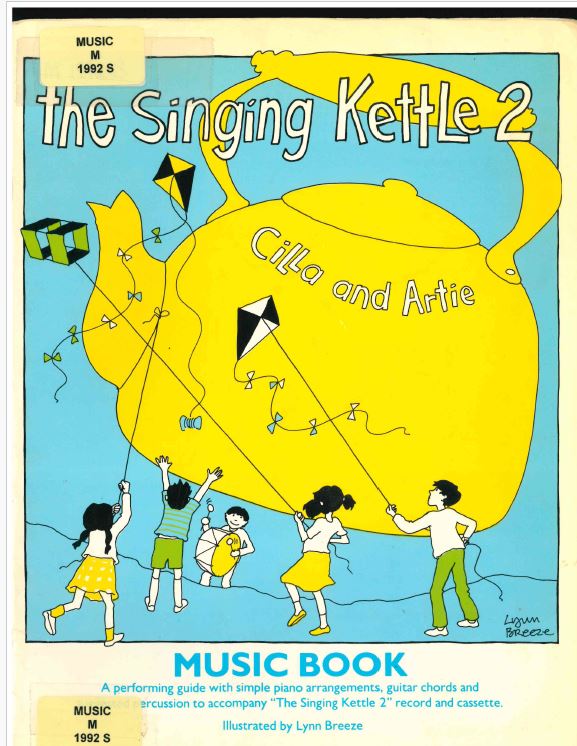
The Singing Kettle, book 2
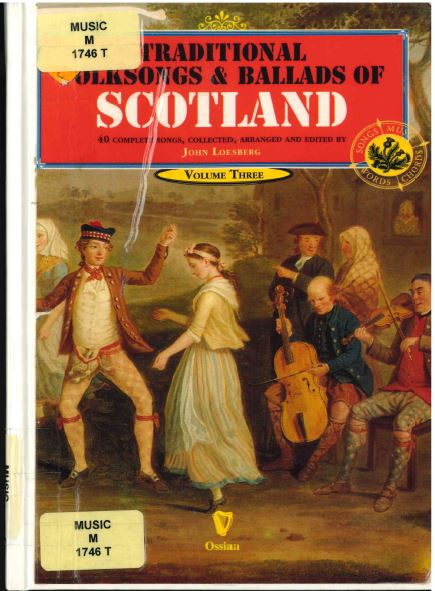
  1. You cannae shove yer grannie aff a bus – it’s in Cilla Fisher and Artie Tresize’s second Singing Kettle music book (1989). Also in Ewan McVicar’s One Singer, one Song (1990) and his Scottish Songs for Younger Children (a words-only book, 2002); and in Traditional Folksongs and Ballads of Scotland Vol.3 (1994).
  2. Donald, where’s your Troosers? Sung by Calum Kennedy and published by our friends Mozart Allan in 1959, and by Andy Stewart, published by Kerr’s in 1960. We listened to Andy’s rendition at home last night – and it still makes us laugh.
  3. Coulter’s Candy – (hint: it’s pronounced ‘Cooters’) in Singing Kettle [book 1]; Katherine Campbell and Ewan McVicar’s Traditional Scottish Songs and Music (St Andrews: Leckie & Leckie, 2001); and Ewan McVicar’s Scottish Songs for Younger Children.
  4. Wee Willie Winkie – I know it, and we have it in the library, but not in the version I know!
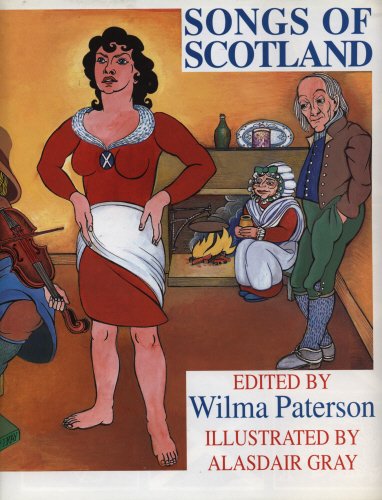
  5. Skinny Malinky – in Wilma Paterson and Alasdair Gray’s Songs of Scotland (1996)
  6. Three Craws – in the second Singing Kettle book; and Jimmie McGregor’s Singing our Own (1970)
  7. The Jeely Piece Song – the library has Adam McNaughtan’s CD, The Words that I used to know (Greentrax, 2000). It’s also known as The Skyscraper Wean and can be found in Morag Henriksen and Barrie Carson Turner’s Sing Around Scotland (1985).
  8. Bonnie wee Jeannie McColl – first sung by Will Fyffe in 1929, and more recently by the Alexander Brothers, it appears in 100 Great Scottish Songs (Dublin: Soodlum,1986)
  9. An oldie: Walter Scott’s, Scots wha’ ha’e – it’s in many, many collections! I found it in Traditional Folksongs and Ballads of Scotland Vol.3; and Wilma Paterson’s Songs of Scotland.
  10. Another oldie; Robert Burns’s My heart’s in the Highlands. People probably know the version sung by Karine Polwart in 2001, and Fara in 2014. There are much earlier versions in printed books, of course, but I suspect not what today’s enthusiasts are looking for!

This is a YouTube link to Karine Polwart’s, ‘My heart’s in the Highlands.

Wilma Paterson’s Songs of Scotland, illustrated by Alasdair Gray
Traditional Folksongs & Ballads of Scotland Vol.3

I Trashed it! Letting Things go…

For a couple of years, I’ve had a few posts saved as drafts – but I’d never posted them. They contained writing that I had had second thoughts about,  thinking they might ultimately get incorporated into the book I’ve been writing.  Often containing a fair amount of detail, I didn’t want them out in the big wide world all alone, outside the context of the bigger picture.

Occasionally, I’ve deleted such a draft, deciding I had no further use for it. This morning, two more were intentionally trashed, but then … oops! my finger slipped,  and I deleted a substantial draft about James S. Kerr! This wasn’t intentional. However, the book has now been submitted to the publisher; in fairness, I think Kerr has been given generous coverage there. I don’t feel bad about accidentally deleting this extra bit of writing. It appeared as though I wrote it quite a while before I wrote the chapters focusing on different aspects of Kerr and Mozart Allan’s output, and what will appear in the book represents deeper thought about Kerr’s place in Scottish music publishing history.

I also intentionally deleted a short piece about three musical boys from Greenock. If I return to that idea, it’ll be there in my head in any case, because one of them was the grandfather-in-law I never met!

Sometimes it’s not a bad thing to let things go.  Blogs are great places for less formal, experimental or just preparatory writing. But by the same token, not every post needs to be there forever!

(Image: one of the Berkeley Street premises later connected with Kerr’s.)

Anniversaries

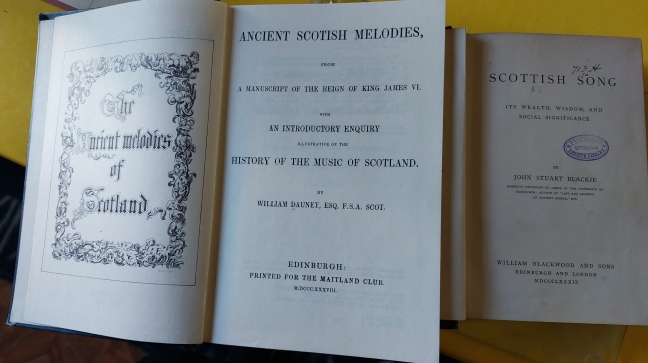
Nice to realise that, the day after submitting my 2nd book MS, today is the 180th anniversary of William Dauney’s death & 214th anniversary of John Stuart Blackie’s birth.

Dauney was in my PhD, and Blackie is in my second book. Pictured, are Dauney’s, ‘Ancient Scotish Melodies’; and Blackie’s, ‘Scottish Song’.

Incidentally, my book draft now has to get reviewed, so please do keep your fingers crossed for me! I shall be on tenterhooks for the next few weeks.