Knowing When to Stop

The mystery teacher – photo from British Newspaper Archive

There are times when our insatiable curiosity leads us ‘up the garden path’, aren’t there? For me, it’s when I decide to pursue the life history of characters that really aren’t central to what I’m researching.

Take this weekend: I’m currently researching the pedagogical output of a Victorian Edinburgh music teacher, and I discovered his daughter collaborated on some of his publications. (This is confirmed by a letter that her sister wrote to a music journal later.) The collaborations appear to have been before she married.

I found a newspaper article about a story she had written for a women’s magazine called The People’s Friend in 1906, and this gave me her married name, but also informed me that she was working as a head teacher in a village quite a way from Edinburgh. It was definitely her – it named her father and his achievements.

Oh, my goodness. I wrote a number of stories for that magazine myself, some decades ago, so that made me sit up and look, straight away!

More interestingly, though – for a married woman still to be working, was a red flag in itself, because it was usual for a woman to stop working when she married. I traced her marriage certificate on Scotland’s People, and only noticed at the last minute that there was an amendment attached. She divorced her husband – whereabouts unknown – in 1912. Perhaps she had found it expedient to continue working, notwithstanding having a young child, if there had already been marital discord for a while. But who knows?!

I found the mother, a nine-year old son and a servant living back in Edinburgh in 1911. The census described her just as a teacher – no mention of headship here.

Really, my only interest at this point – whether or not she continued to collaborate with her father after she married – was my curiosity about a woman working as a teacher after marriage. Not long ago, I researched a late Victorian woman called Clarinda Webster, who was a music teacher, head teacher and ultimately a divorcee, so there was a human interest in finding someone else whose circumstances might have been vaguely similar …

After a few hours delving into Ancestry, Scotland’s People and the British Newspaper Archive, I made myself stop. I don’t know where this woman and her son ended up. Maybe they left Scotland or emigrated, who knows? At the end of the day, it doesn’t make any difference to my research into pedagogical music publications in the late Victorian and Edwardian eras.

On the other hand, stories of working women professionals in that era continue to interest me, whether musicians, teachers or both. It wouldn’t take much to convince me to keep looking…

I Trashed it! Letting Things go…

For a couple of years, I’ve had a few posts saved as drafts – but I’d never posted them. They contained writing that I had had second thoughts about,  thinking they might ultimately get incorporated into the book I’ve been writing.  Often containing a fair amount of detail, I didn’t want them out in the big wide world all alone, outside the context of the bigger picture.

Occasionally, I’ve deleted such a draft, deciding I had no further use for it. This morning, two more were intentionally trashed, but then … oops! my finger slipped,  and I deleted a substantial draft about James S. Kerr! This wasn’t intentional. However, the book has now been submitted to the publisher; in fairness, I think Kerr has been given generous coverage there. I don’t feel bad about accidentally deleting this extra bit of writing. It appeared as though I wrote it quite a while before I wrote the chapters focusing on different aspects of Kerr and Mozart Allan’s output, and what will appear in the book represents deeper thought about Kerr’s place in Scottish music publishing history.

I also intentionally deleted a short piece about three musical boys from Greenock. If I return to that idea, it’ll be there in my head in any case, because one of them was the grandfather-in-law I never met!

Sometimes it’s not a bad thing to let things go.  Blogs are great places for less formal, experimental or just preparatory writing. But by the same token, not every post needs to be there forever!

(Image: one of the Berkeley Street premises later connected with Kerr’s.)

Crafting the Perfect Tone: Unveiling the Depths of AI Writing

In the continuing saga of my explorations into writing with AI, you’ll remember that yesterday found me getting one of my own blog posts ‘translated’ by the Jetpack bot. It didn’t have the same voice as me in the slightest. My blog posts generally consist of commentary on something I’ve been researching; discussion of my methodology; or just an update on something exciting in connection with either my role as a researcher or as a hybrid librarian/researcher. Sometimes I’ll muse upon how I feel about my own unique hybrid role.

Yesterday, the obliging Jetpack bot saw that I was excited about reaching some new milestones. I was excited in a quiet, thoughtful, academic kind of way. Jetpack-Bot, on the other hand, was breathlessly enthusiastic, inviting my readers to follow me as I celebrated these amazing achievements and exploits.

I dutifully shared Jetpack-Bot’s translation after my own blog post, so that readers could compare our written styles. At that point, I noticed a button which invited me to alter the tone of the translation. That’s what I propose to do today, with this posting.

What you have just read was all my own writing, but I adopted Jetpack-Bot’s title. Now we’ll give the bot free rein for the rest of the posting!

Here is what Jetpack-Bot created first:-

Exploring the Depths: Crafting the Perfect Tone with AI Writing

Embarking further into my AI writing experimentations, you may recall my previous encounter where I subjected one of my blog posts to the translation capabilities of the Jetpack bot. To my dismay, the resulting content lacked even a trace of my authentic voice. Typically, my blog revolves around my insightful commentary on research, methodological discussions, or enthralling updates relating to my roles as both researcher and hybrid librarian. On occasion, I also muse upon the unique nature of my hybrid profession.

During my recent venture, the ever-helpful Jetpack bot detected my excitement as I reached significant milestones. However, while my excitement resonated in a quiet, contemplative, and academic manner, Jetpack-Bot exuded an uncontrollably enthusiastic tone, urging my readers to join in on the celebration of these extraordinary achievements and ventures.

Out of duty, I shared Jetpack-Bot’s translated version alongside my original blog post, providing readers with an opportunity to compare our writing styles. It was at that moment I noticed a button beckoning me to adjust the tone of the translation. And so, today, in this new entry, I propose to seize that opportunity and sculpt the perfect tone for my content.

There’s a Choice of ‘Tone’. I opted for ‘serious’:-

(The bot seems to think that long words make for a more serious tone – what do you think?!)

Crafting the Perfect Tone: Unveiling the Depths of AI Writing

Delving deeper into my explorations of AI-assisted writing, it is worth recalling the recent incident in which I submitted one of my blog posts for translation by the Jetpack bot. Regrettably, the resulting content bore no semblance to my distinct voice. As a rule, my blog entries consist of scholarly commentary on my research endeavors, methodological discussions, or intriguing updates pertaining to my multifaceted identity as a researcher and hybrid librarian. Occasionally, I reflect upon the profound implications of my unique professional role.

Upon analyzing the Jetpack bot’s response, I discovered its unwavering enthusiasm in response to my excitement surrounding recent milestones. However, rather than mirroring my restrained and thoughtful academic enthusiasm, Jetpack-Bot appeared overtly exuberant, urging my readers to accompany me on the exhilarating journey through remarkable achievements and exploits.

Out of a sense of duty, I shared the Jetpack-Bot’s translated rendition alongside my original blog post, allowing readers to discern the stark contrast in our respective writing styles. Interestingly, I observed a button inviting me to modify the translation’s tone. Consequently, I now intend to seize this opportunity, in the present discourse, to calibrate the tone and essence of my written content with utmost precision.

Well, I think that’s enough for now, to be truthful. I wrote this in my lunchbreak, and it’s time to get back to work. I’ll hit ‘Publish’ and see what my readers make of it all.

Unveiling Milestones: Moments of Progress and Excitement

Do you keep lists, partly at least for the joy of ticking things off them? I certainly do.

In terms of milestones, today I can track significant progress: not only have I decided on the titles of my two forthcoming seminars at the University of St Andrews, but something even more momentous has occurred. My Fellowship ID card is ready before I’ve even got there. It’s all very exciting!

Moreover, the chapter I promised for someone else’s essay collection is pretty much drafted. That unidentifiable editor? Well, I sought help from a genealogical expert, and was pointed towards an individual I hadn’t really considered, in a street I already knew about. It’s a distinct likelihood rather than a certainty, but I’m happy to leave it there. So that went into the contributed chapter, and it feels a bit more ‘anchored’ as a result.

So, I now have a little time to mull it over and make sure I’m happy with it. I do enjoy writing!

(I thought I could just ask the AI bot to suggest a title, but it kindly offered to rewrite my post too. Just for the purposes of comparison, read on to see how it suggested changing the text I actually authored! Clearly, I need to be more flamboyant in my style. The bot did offer me the opportunity to change the tone. I’ll try that another time … )

NB I wrote the above. The bot suggested the title … and what follows!

Milestones: Seminars, Serendipity, and Writing Delight

Join me in celebrating the remarkable milestones I have achieved on my journey. Today, I reflect on the significant progress made as I announce the titles for my upcoming seminars at the esteemed University of St Andrews. But the excitement doesn’t end there – an even more momentous occasion awaits. My Fellowship ID card has arrived ahead of schedule, adding to the thrill of anticipation!

In addition to these accomplishments, I share the progress made on a chapter I pledged to contribute to an essay collection. Through the guidance of a genealogical expert, I uncovered an unexpected lead – an individual I hadn’t previously considered, residing on a street I was already familiar with. Though not yet confirmed, this newfound possibility has contributed depth and a sense of grounding to the chapter.

Now, with time to reflect and refine, I take pleasure in the art of writing, ensuring utmost satisfaction with my work. Join me on this exhilarating journey of milestones, serendipitous discoveries, and the joy that writing brings.

When Things Come in Threes

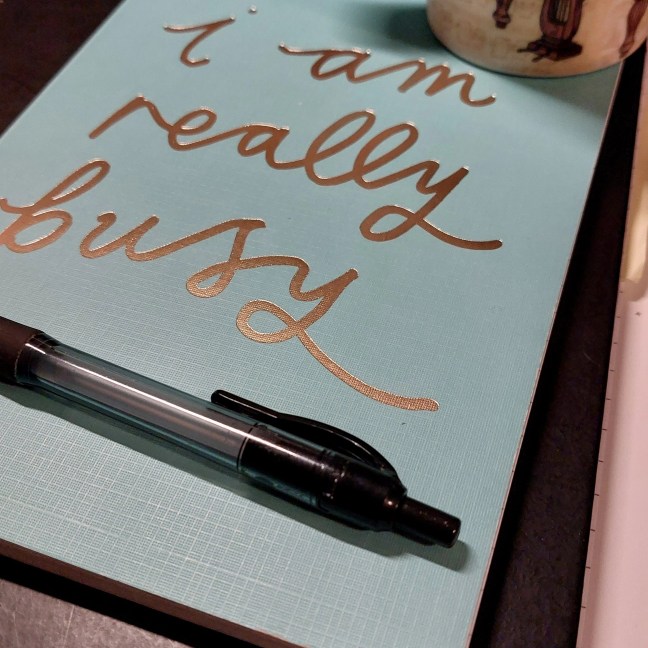
Notebook cover reads, 'I am really busy'. Pen lying on the notebook.

I submitted the book on time at the end of July. Unfortunately, it wasn’t the only thing I was supposed to complete by the end of the month. There was also my social media input before the Congress, which had a very fixed deadline indeed.

And that meant I absolutely could not complete the third thing on time. However, today I submitted the peer-review that I should also have submitted at the end of July. HOORAY!!

Necessary morning caffeine!

Anyway, when I’m not tied up being a librarian, I can now concentrate on a chapter I’ve promised to write, and two new lectures in my capacity as Ketelbey Fellow. After the hard slog with the book and the anxiety that the peer-review caused me (It was not only challenging, but I hate missing deadlines) – having these three things to do feels positively invigorating.

At last, I’ve seen it! In Waltz Time …

One of my favourite Mozart Allan songbooks has an intriguing history. I have contributed a chapter discussing it, in a print and tourism collection, and I’ve dealt with it in slightly less depth in my own monograph. (Neither is published yet, but hopefully the essay collection will appear later this year.)

The songbook has a photo of a Glasgow entertainer, and the words (so I thought) of his recent song – but not the music. That, it says, is available from Mozart Allan. I have been itching to see this entertainer’s song, but it entailed a trip to the National Library of Scotland.

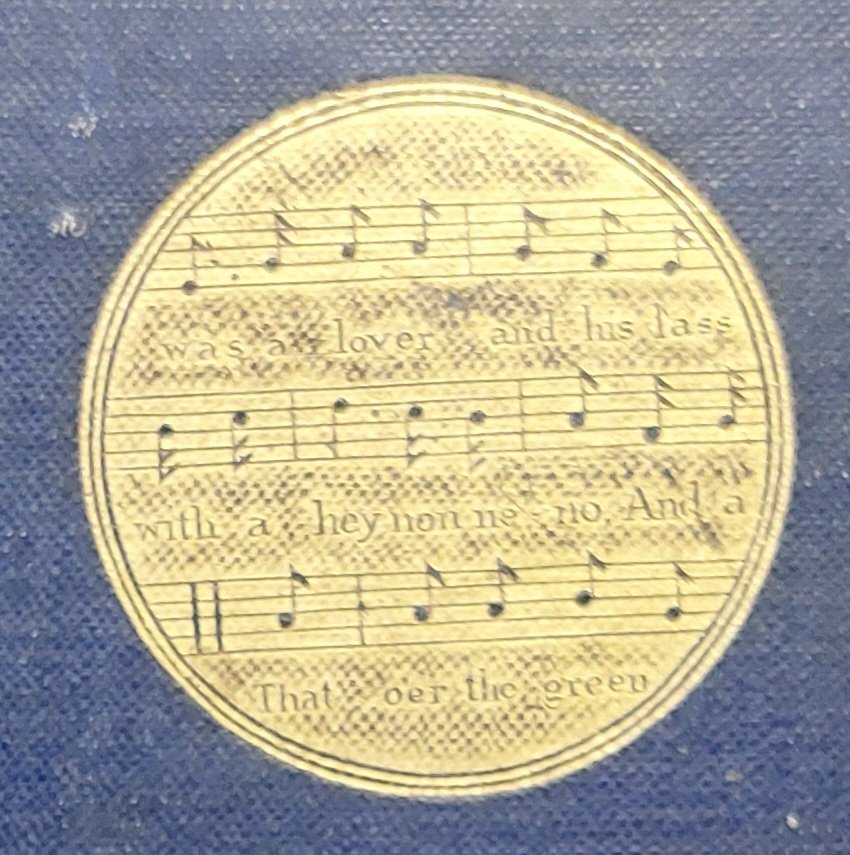
Today – at last! – I saw it. Two sides of music, that’s all. The words in the song-sheet are more extensive than what appeared in the songbook. It’s just a typical music-hall waltz, but I’ll tell you something …

They encapsulate much of what I’ve been writing about, so I’m ecstatic to have seen it. I’m not able to share the images (though I think this snippet is probably ok!) – but I’ll certainly be talking about it when I give one of my guest lectures at St Andrews!

Again and again, I sit down to write about music, and end up going into hyperfocus about words. It must just be the way my mind works!

The Fellow’s To-Do List

It’s only four weeks until Induction Week at the University of St Andrews!  From knowing I’m going to be the inaugural Ketelbey Fellow ‘in the autumn’ – a vague point in the future – it is suddenly an actual thing happening in a month’s time.  

So, on my first research day back after the vacation then the IAML Congress (leaving aside the fact that I wrote my way through almost my entire vacation), I took a deep breath and started a new To Do list.

And suddenly it wasn’t so much a question of, What am I going to do now I’ve submitted the book?, as, Where do I start on all I’ve got to do now I’ve submitted the book? It feels like there’s quite a bit to do – but I do now know the bus times, and I’ve reached out to a couple of libraries about things I need to know, so I’ve made a start.

I’ve got two guest lectures lined up, and interestingly – but perhaps not surprisingly – the monograph throws up several possible topics. It’s easier to see them, now the whole thing is written.

Indeed, although one lecture title is provisionally settled, I can see several other possibilities to choose from for the other one, which is gratifying. (Although I managed to get Dorothy Ketelbey into my book, I don’t know if I could get her into a lecture. It was only a passing mention. And yet ….)

But before that … one or two other things to catch up on. I’d better get started!

Book Revision. Unneccessary Expressions

Teddy bear sitting on piano keyboard, holding an embroidered postcard which reads 'Thoughts'

Allow me to introduce an expressionless bear! Generally, I consider his expression to be concerned and reassuring, but today he seems to display no expression whatsoever. Which is appropriate for a blog post about unneccessary expressions.

I would like to have begun with an earnest introduction, explaining that this is part of a series of blog posts intended to help newcomers to scholarly writing. Indeed, I do wish to help you, and I’d love to write that series, but at the moment, my focus is on my book deadline in six days’ time. So, this posting is just a collection of thoughts arising from my second edit of the book draft! It might still be helpful – I do hope so.

In the second week of my intensive book revision fortnight, I’m on the warpath for unneccessary expressions. I still needed to lose a few words in order to meet the deadline of 75,000 words, so I’ve been compiling a glossary of terms best either avoided or used sparingly!

  • Always with an eye for an opportunity’. Cancel that cliche!
  • At this time‘. If you’ve already defined the time-frame, there’s no need to over-egg the pudding!
  • Essentially‘.  No, that word has to go.  The genre either was, or wasn’t a hybrid form.  No ‘essentially’ about it. Same applies to ‘Evidently’.
  • ‘In actual fact’. Basically, if it’s a fact, it’s a fact, and doesn’t need to be labelled as one. (If it’s a surprising or unexpected fact, fair enough.)
  • And here I am, overdoing  ‘Indeed‘ again, too.  I can’t have seven ‘indeeds’ in one chapter!
  • Interestingly,’ …? Obviously it’s interesting or it shouldn’t be there.  Another word down!
  • ‘… is on record as having performed’. ‘Performed’ would do!
  • It is clear that‘. This is just padding, the same as ‘evidently‘. A quick way to lose four words (or one!).
  • More significantly in the present context‘ – oh, this is a good one! Six unneccessary words. Just say what you’re going to say.
  • Repertoire‘. Use judiciously. ‘Song and dance repertoire’ can often be encapsulated in ‘Song and dance’!
  • … seems to‘. Stop prevaricating! Does it or doesn’t it? Keep this expression for when you’re really not sure.
  • Specifically‘ is often a redundant word (said she,  just deleting another one).
  • ‘… was groundbreaking in being one of the first‘. Okay, she was one of the first. ‘Groundbreaking’ can be taken as read. Three more words gone.
  • ‘… would also have been‘. Or, more concisely, ‘was’!

Acceptable Informality? Or Not …

I had a feeling that I shouldn’t really be writing that something was ‘in your face’; nor that we ‘should call out’ something that is now politically incorrect or considered offensive. So, I’m afraid I asked Chat GPT what it thought!

I consider myself enlightened now. ‘In your face’ is apparently unacceptably informal in scholarly writing, so I won’t use it.

However, I can call out whatever I like, with impunity. There you go, then!

Book Revision. Counting Words and Weeks

I’ve done the first edit of the book. Cutting roughly 11% off each chapter was a good start, but each chapter gets a bibliography, and I couldn’t know how many words that would add. I do now!

Each chapter has to lose 2.5% more words. Say, between 8-10 words a page. It doesn’t sound so bad that way, and it does make me a bit more ruthless about anything extra that doesn’t carry the thread forward.

I still want to get this done by the end of the month if humanly possible. And I do have a short list of little points I need to check, so I need to find time to sort those out too.

But whilst I count down to completion at the end of July, I’m also counting down to the beginning of next July when I stop being a librarian and can hopefully just concentrate on research. (49 weeks to go. No time to stitch an imaginative weekly square this week, just a plain one.)

But I have the Ketelbey Fellowship in St Andrew’s to look forward to this autumn first!

And I do have another (smaller) book idea …

The War of the Words

Have you ever stopped to analyse which words you’re guilty of using too often?

Chapter 3 was long, making Tuesday a very long day. I had that chapter almost down to size, then Zotero formatted the chapter bibliography and added a few hundred words back. Arghh!

But that wasn’t the worst of it. I was unimpressed by the finished chapter. So on Wednesday morning, when I had planned to start Chapter 4, I spent it going back over Chapter 3 again. The good news is, I am getting it trimmed down some more, and on re-reading it, there are plenty of bits that I do like – even bits where I can say, ‘that’s GOOD’. So, things aren’t so bad, despite having a headache and being slightly behind schedule!

But having spent Wednesday afternoon on Chapter 4, I didn’t seem to have cut out much at all – it was all pretty ‘lean’! Maybe another 3 hours would see some more progress …

And I decided I’d better check if I was overusing any common words. How does your writing compare? Do you find this an issue? Some of mine:-

  • Indeed
  • Nonetheless
  • Repertoire
  • Significance
  • Significant
  • Then
  • Very
  • Whilst
  • (Strangely enough, ‘moreover’ and ‘furthermore’ hardly make an appearance – phew!)