Dr Karen McAulay explores the history of Scottish music collecting, publishing and national identity from the 18th to 20th centuries. Research Fellow at Royal Conservatoire of Scotland, author of two Routledge monographs.
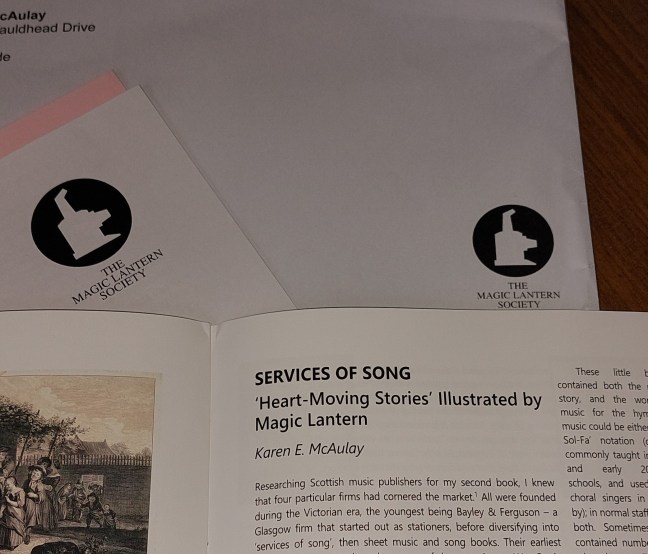
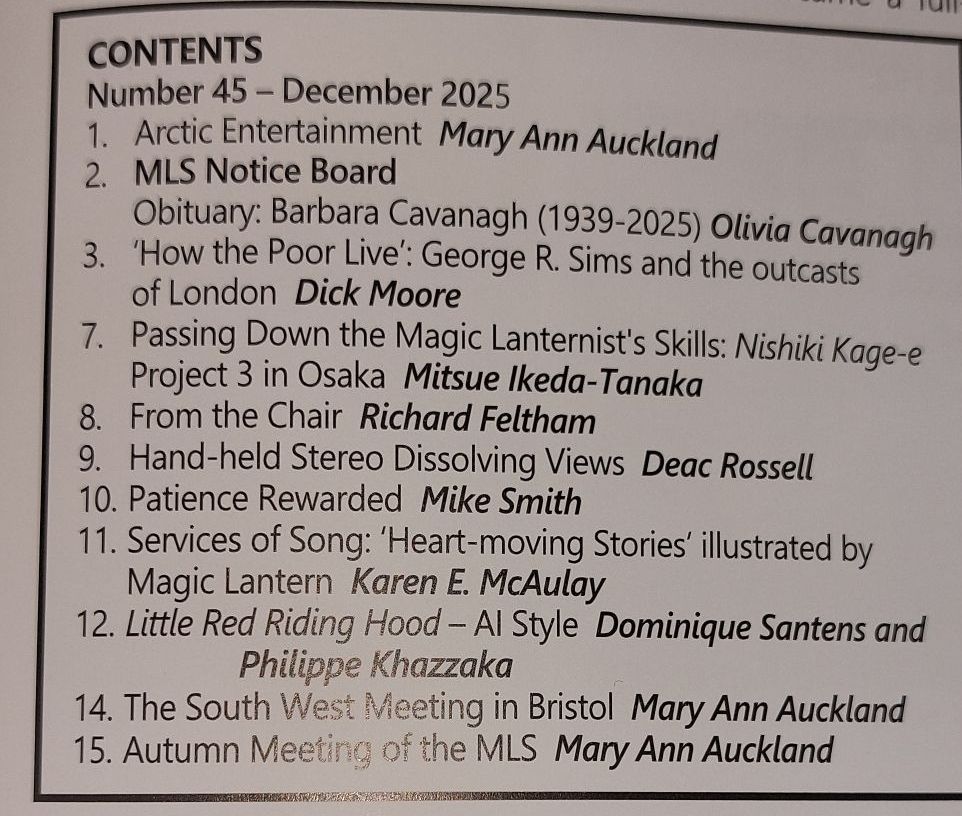
This morning saw the arrival of the latest issue of The Magic Lantern (no.45, December 2025) containing my article, ‘”Heart-Moving Stories” Illustrated by Magic Lantern’. I’m grateful to have had this opportunity to share a favourite bit of research, to which I alluded briefly in my recent monograph.
‘”Heart-Moving Stories” Illustrated by Magic Lantern’, The Magic Lantern no.45 (Dec 2025), pp. 11-12.
If you’ve glanced at my book, you may have encountered the part where I explain about Bayley and Ferguson and the services of song. Services of song are a virtually forgotten genre nowadays, but be assured that they were once a very common form of entertainment/instruction.
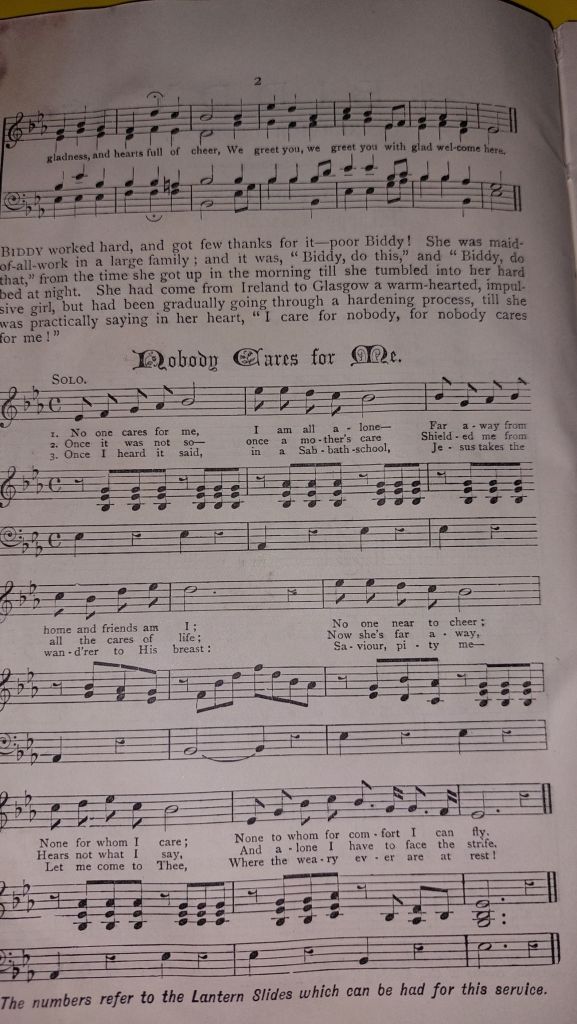
Biddy: opening piece
It’s not an abstract concept – these were a genre of magic lantern show, aimed at adult and/or juvenile audiences. To put on a magic lantern show, you needed a few key ingredients:-
A venue
A magic lantern
Something to project onto
Set of slides
Something containing a narrative (for the narrator), and plenty of songs for the audience. The music could be in Tonic Sol-Fa or staff notation (notes on lines and spaces).
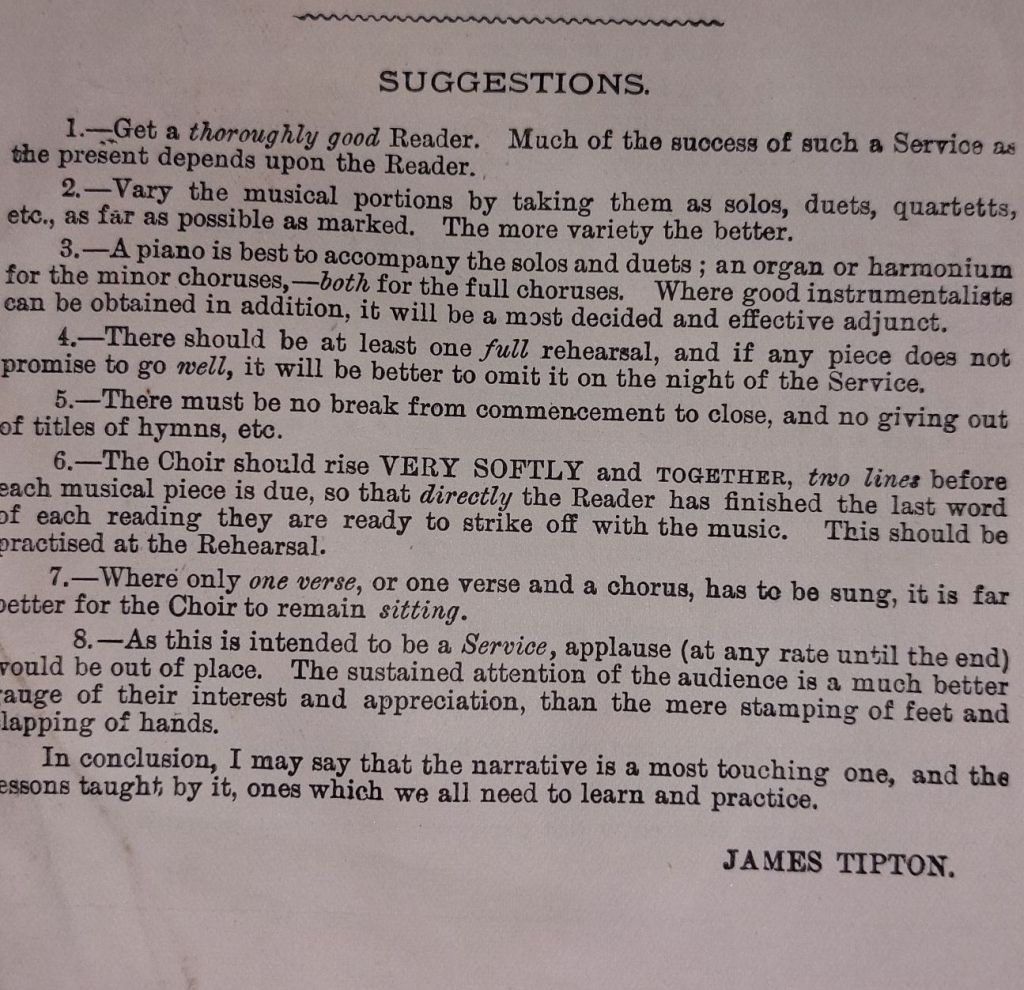
‘Get a thoroughly good Reader’
The narrative could be a biblical story or an adaptation from a moralistic story. Or perhaps something about a poet or a place.
‘Biddy worked hard …’
Whatever, the narrative and the songs were in a wee booklet, and that was your Service of Song. You bought multiple copies – they were cheap! The event itself was advertised as a service of song.
So, as you can see, a Service of Song was an early slideshow providing a variable mix of education, entertainment and religion. They were popular with Sunday Schools as a special treat, and they were often used by the temperance movement. Bayley and Ferguson published loads of them. (Organisers would have to buy or hire the slides – possibly from somewhere else.)
If you would like to know more … read the book!
Karen E McAulay,
A Social History of Amateur Music-Making and Scottish National Identity: Scotland’s Printed Music 1880-1951 🎶





 Karen McAulay, Musicologist