Victorian Copyright: the Author Miss Letitia Higgin, and Editor Lady Marian Alford

My new eBay purchase arrived on Sunday afternoon: Letitia Higgin’s Hand Book of Embroidery, published by her employer (the Royal School of Art Embroidery) in 1880, and edited by the Vice President of the Society: Lady Marian Alford. It’s a modern reprint: the original is an appropriately antiquarian price.

The Society had been founded in 1872. Letitia (Lily) was a middle-class young woman needing to earn her own living, who, with two of her sisters, was employed by the Society.  She was promoted to a senior position, and wrote this handbook not for absolute beginners, but for ladies who had learned the basics and needed to know more. The introduction explains that the book answers some of the most frequently asked questions. Brilliant, I thought. This could be just what I need. You know how I enjoy embroidery, even if I’m just a relative beginner.

A Daughter of Margaret Maclean-Clephane
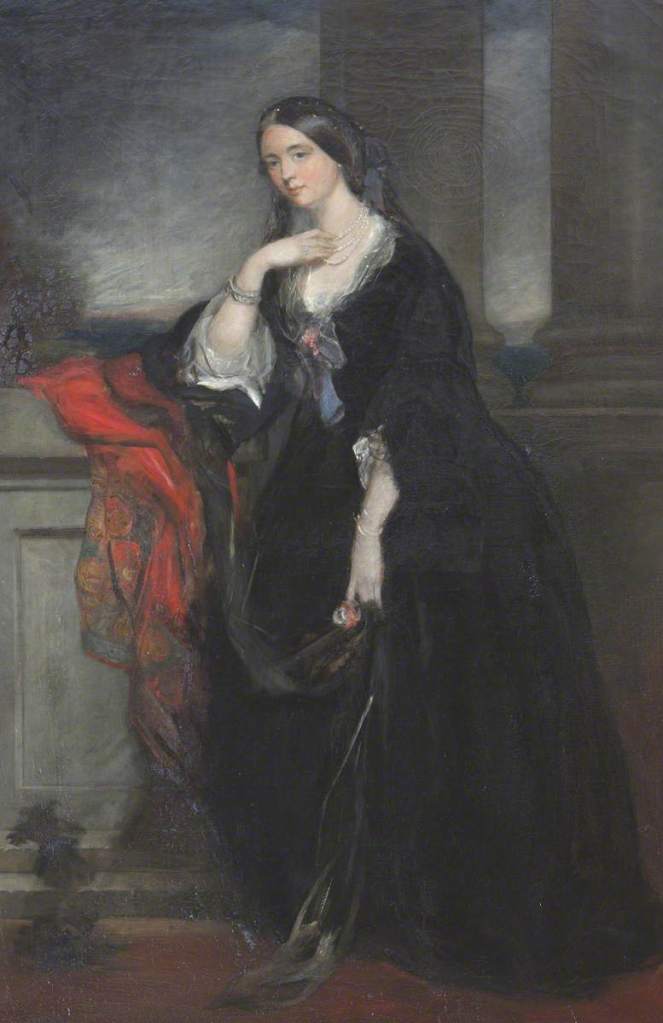
Portrait of Lady Marian Compton, from National Trust via Art.UK
Grant, Francis – Lady Marian Margaret Compton (1817-1888), Viscountess Alford; National Trust, Belton House; http://www.artuk.org/artworks/lady-marian-margaret-compton-18171888-viscountess-alford-176409 National Trust Images via Art.UK

Enter Margaret Maclean Clephane’s elder daughter, Marian (Marianne)!  The book’s editor was none other than a daughter of song-collector Margaret Maclean-Clephane. (Just for the record, Margaret’s married name was Lady Compton, and later Lady Northampton.  That’s why her daughter was Lady Marian Margaret Compton.)  Lady Marian’s musically gifted mother was also a poet.  The family evidently had creativity in their genes. Marian’s aunt Anna was a song and folklore collector too; her other aunt was artistic; and now we find that Marian was a talented needlewoman.

A Copyright Dispute

The guide was so popular that the Society had hoped to produce a second edition, but a copyright dispute between author and editor meant that this didn’t happen.

I sat bolt upright.  We ordinary folk shall never know what the dispute was. (I learnt this much from Wikipedia. See reading list below.) Maybe the Society has archival paperwork that tells more, but I really must not let myself get distracted at the moment!

Giving Credit where Credit’s due

From my vantage point as a 21st century author, it would be easy to feel outrage on Letitia Higgin’s behalf. Had she done all the work and written the whole book, only for Lady Marian Alford to sweep in and add her name to it? Realistically, having a titled name on it would probably have added gravitas and authority in 1880. My guess is that Letitia Higgin did most of the hard work, and Lady Marian put her own titled gloss on it, but I simply don’t know. We can’t jump to conclusions.
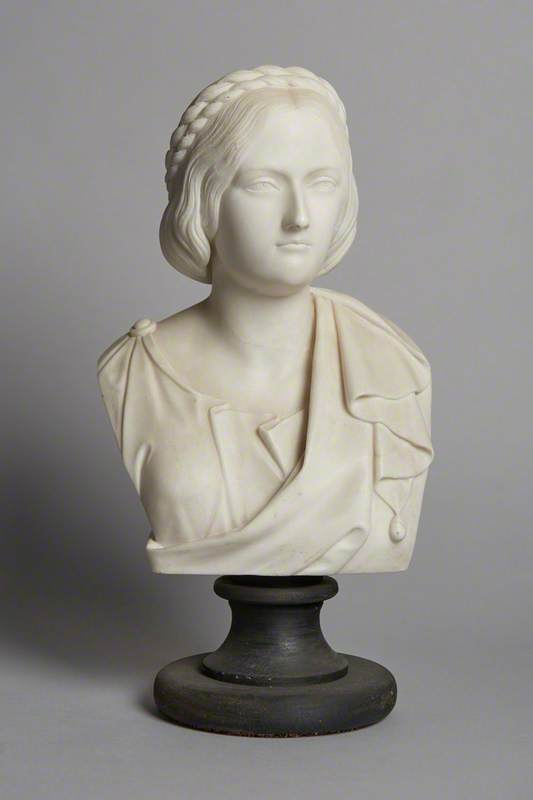
Bust of Lady Marian Compton, from National Trust via Art.UK
Lady Marian Compton (1817–1888), Viscountess Alford
Ernesto Cali (b.1821)
National Trust, Belton House, again via Art.UK.

I do know that Miss Higgin also wrote magazine articles referring to the book, and Lady Marian also authored other works. Neither woman’s expertise is in question.

Anyway, I intended to use the book for the purpose of self-instruction, so I turned the page to find out about needles. It informed me I should use a size 5 needle for crewel work. To be honest, I don’t think I’m doing crewel work (with crewel yarn), but embroidery. With embroidery silk. I had imagined it would be similar, but I imagined wrong.

Five is Larger than Nine

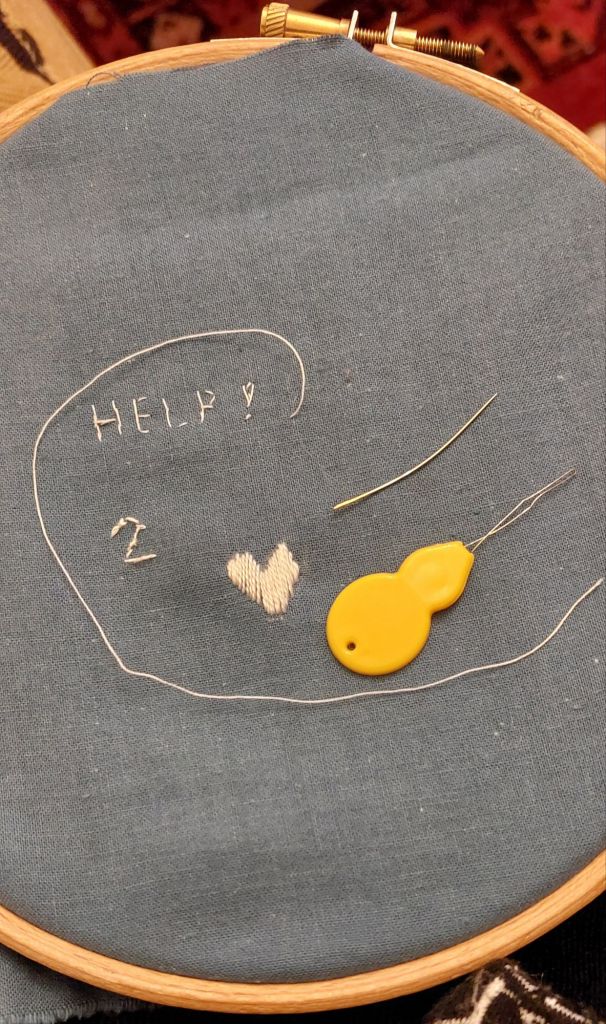
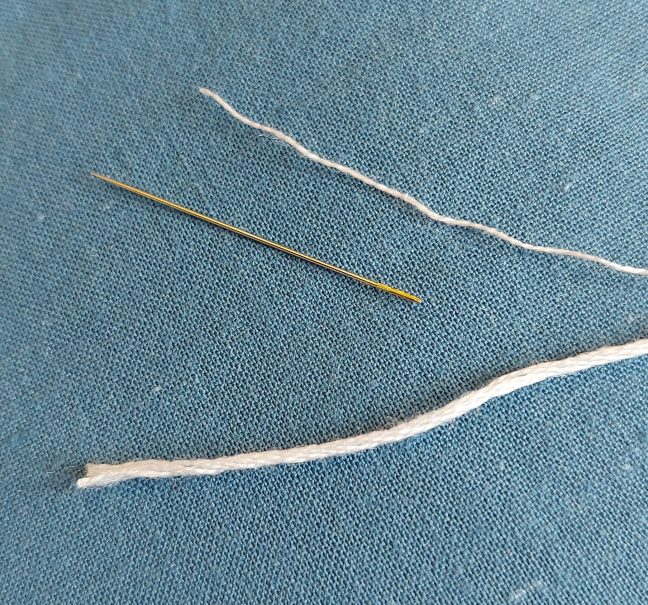
Moreover, Miss Letitia Higgin and Lady Marian Alford didn’t think to tell me that size 5 needles are larger than size 9. I suspect I may have been using the right size for embroidery all along (without knowing a scooby about sizes and numbers), but now I reached for the tiniest size needle, and spent far longer than was reasonable, trying to thread one strand of thread into the eye of a needle that I couldn’t even see. Ughh! I blamed the eye (my own) that can’t even read with glasses.  Eventually I used a needle threader. The thread broke. I did get dressmaking thread through the eye. And I bent the needle before getting the single strand of embroidery floss through the eye.  The eye of the needle was ludicrously, but appropriately small for such a tiny wee needle.
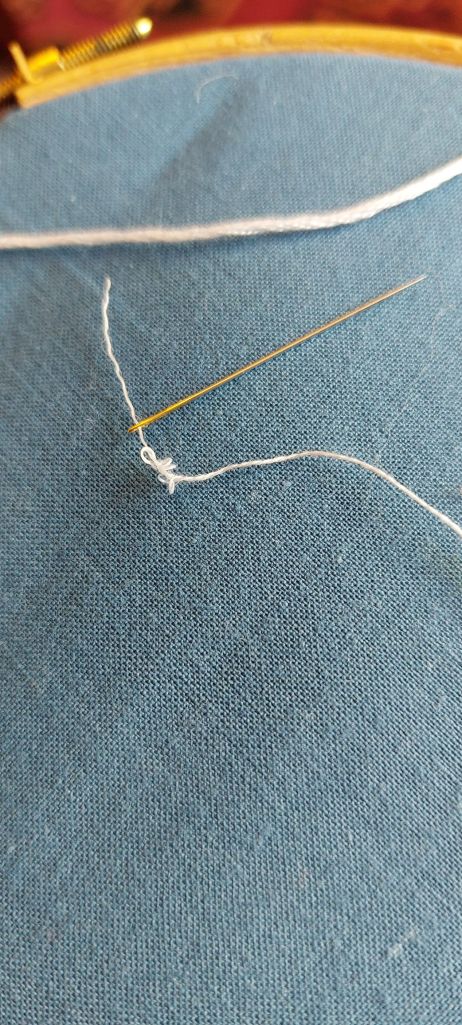
Temporarily giving up on Higgin and Alford, I turned to YouTube.  Thankfully, Sarah Homfray has done a series of YouTube videos about embroidery, and that’s how I learned that 5 was actually larger than 9:-

‘Are you using the right sized needle? I show you how to pick the right one!’

https://youtube.com/watch?v=PtBGZn0yohU&si=LJomNgTXJTZ_hoMT

I shall eventually return to Miss Higgin and Lady Marian Alston.  I’m sure they have useful knowledge to impart, quite apart from the insights into the pastime of embroidery in the late Victorian era. You could buy a marked canvas, which someone at the Royal School of Art Embroidery had prepared and even started off for you. That sounds helpful!

However, today? I’ve signed up to a local evening class. (Although I don’t know if I’ll ever be capable of marking out a canvas to make Higgin’s and Alford’s piano cloth design!)
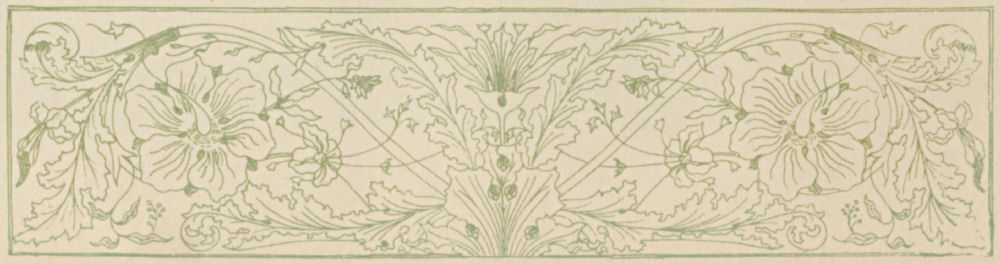
7. DESIGN FOR A SOFA-BACK COVER OR PIANO PANEL. By George Aitchison. Vincent Brooks Day & Son, Lith. (From Gutenberg website: https://www.gutenberg.org/files/24964/24964-h/24964-h.htm#Page_75

READING LIST

  • Alford, Marian, Needlework as Art (London: Sampson Low, Marston, Searle & Rivington, 1886.)
  • Alford, Marian – other works of local history interest.
  • Higgin, Letitia, ‘Art Needlework’, articles in The Art Amateur (1880) Vol.2 issues 5 and 6
  • Higgin, Letitia, Hand Book of Embroidery, ed. Marianne Margaret Compton Alford (London: Published by Authority of the Royal School of Art Needlework, 1880)
  • ‘Higgin, Letitia’ – Wikipedia entry
  • Homfray, Sarah, ‘Are you using the right sized needle? I show you how to pick the right one!’ YouTube
  • Hulse, Lynne, ‘Higgin, Letitia (Lily) , author and embroiderer’, in Oxford Dictionary of National Biography
  • Northampton, Margaret Compton, marchioness of (d. 1830), Manuscript book of poems, dated 1808-1821, by Lady Compton (Lady Northampton), also transcription of poems, dated 1804-1840, by her sister Anna Jane Douglas Maclean Clephane.] National Trust Libraries – Note on Jisc Library Hub Discover:- ‘Poems stated to be by Lady Compton (as Lady Northampton was known 1815-1828) on pp. 1-47, and by Lady Northampton on pp.113-120; poems by Anna Jane Clephane on pp. 52-110 and 121 to end (many with monogram AJC).
  • Royal School of Needlework. Our History

Going Off at a Tangent: an Intriguing Deviation from Research

Straight line with a second, curved line (ending with an arrow)
Image by Bruno from Pixabay

When that book comes from Amazon, I may be distracted. Well, it’s available online already, being very old and antiquated, but how can I refer to an embroidery book online, when I want it open in front of me whilst I sit sewing? I don’t care to read it on a tablet – I want the real thing, or in this case, a reprint of it. (You can’t so easily sit with markers in different pages, flicking between different stitches and patterns, on a tablet. )

What, you might ask, does this have to do with Scottish publishers or educational music? Absolutely nothing. It does have a tangential link to something that was once a research interest – hence my inability to let it go by me.

Watch this space. We’ll soon see if I am up to any of the suggestions in this book! Maybe it’ll arrive in time for the weekend.

Interpreting Research through Textile Arts

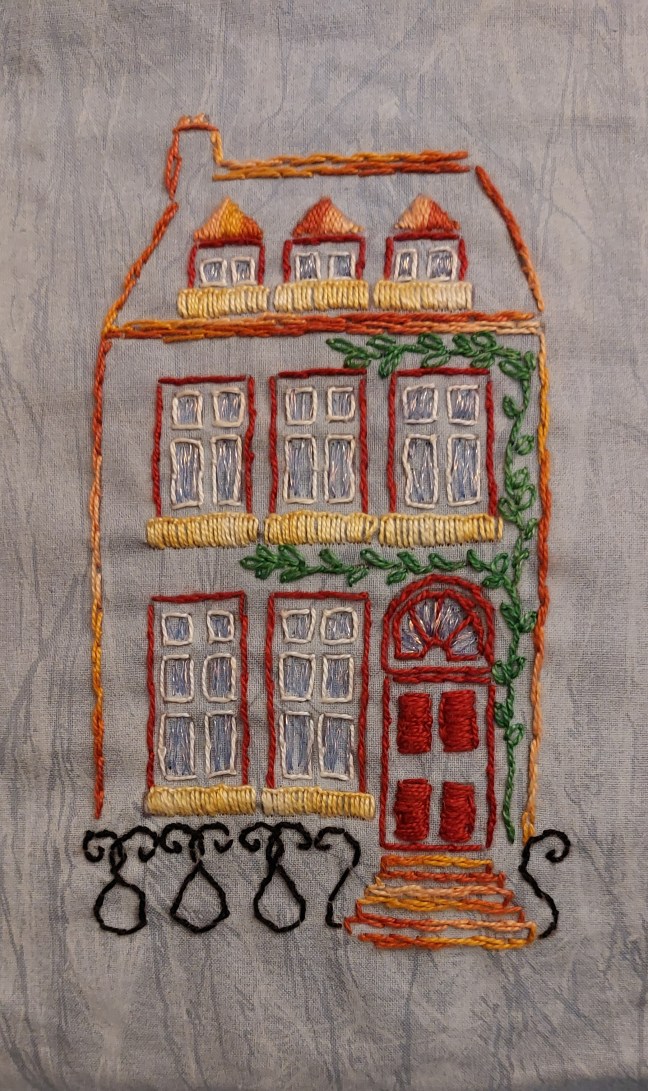
If you’ve visited this blog before, you’ll know I research various aspects of Scottish music history, not textile arts.  However,  when I take a break from research, I often take up needle and thread – it’s relaxing – and what I sew is quite often a reflection of what I’ve been researching. (I can explain the house at the top of this posting – just read on!)

I applied for an international opportunity to make something really big and research-related, a few months ago. I didn’t succeed, but I went on thinking about it.  I’m not following it though, because I would have nowhere to display it if I did make it.  Instead, I have scaled it down both literally and in terms of subject matter.

In place of a large wall-hanging representing my latest research in its entirety, I’m trying a new way of making a cloth book, and focusing on a couple of Thomas Nelson books I’ve encountered. I’m still thinking about educational music books published by Nelson in the second quarter of the twentieth century. 

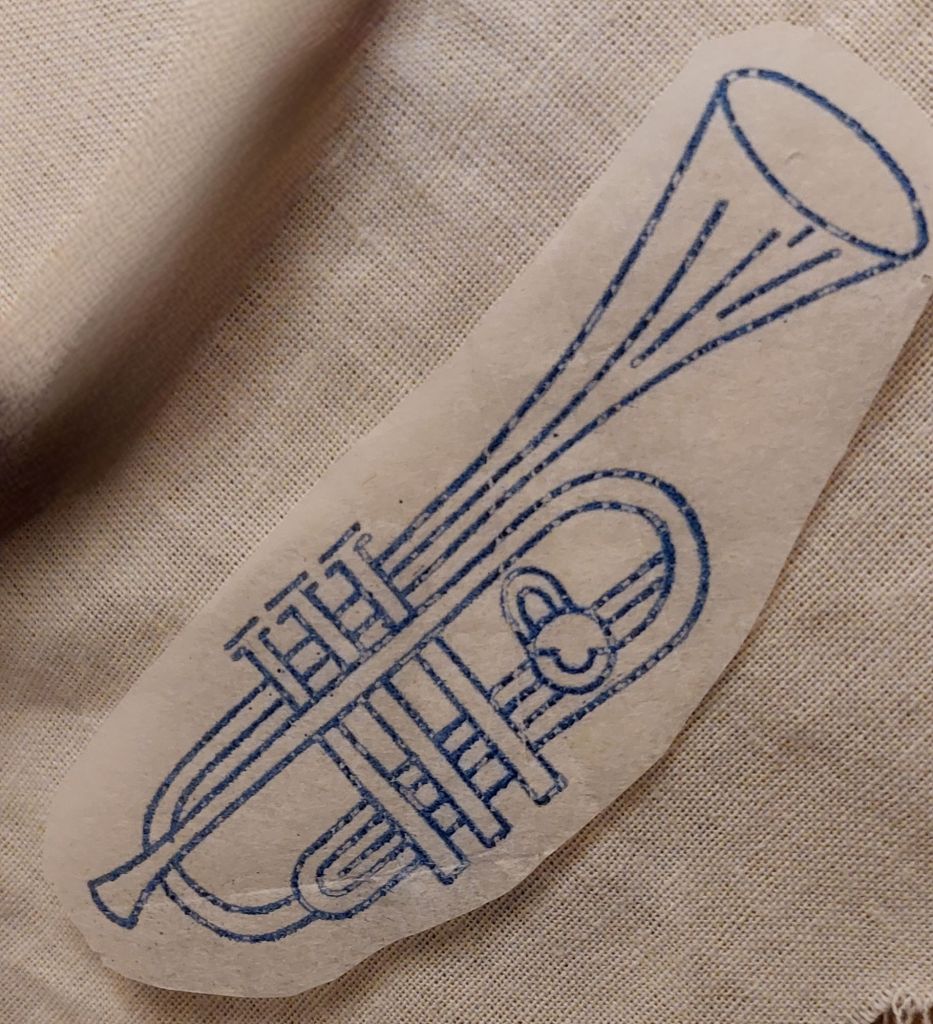
I’m using some iron-on embroidery transfers from my late mother’s collection (the kind where you iron-on a line drawn transfer,  leaving an outline on the background fabric, then work over it), along with a few ideas of my own.

We have only just realised that Mum hoarded things – she was so tidy and methodical that they could be sorted away in that large house, and no-one knew.  Why she kept quite so many embroidery transfers is a mystery.  For needlework teaching purposes? She retired in 1991!  Even I would never get through them, if I live another 30 years.

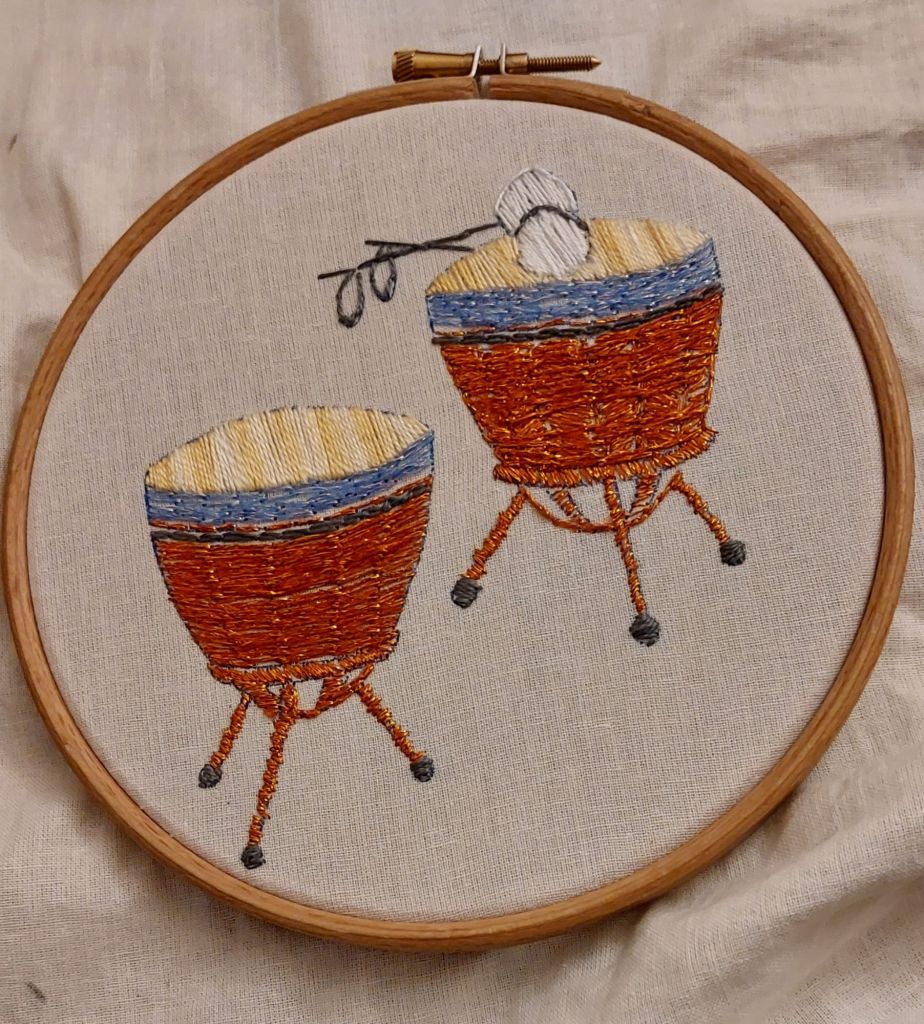
Anyway, with a bit of ingenuity, I’m finding musical motifs that might have been applicable in the 1930s to 1940s: Percussion bands.  Brass bands. Wind bands. I’ve copied Thomas Nelson’s singing child motif, and the Nelson publisher motif from books I’ve bought on eBay, and no doubt I’ll use the vintage thistle transfers (Scottish symbols) that I acquired from the same source.

Timpani  – second attempt!

There’s a rather fanciful house from Mum’s stash, which I embroidered against a blue background reminiscent of heavy rain, last weekend – Storm Amy was with us, and I had stayed at home last Friday rather than going to Edinburgh. (A wise choice, as it transpired.)  I need to end up with 20 cloth pages, so I might need to go through the stash again to see if I’ve missed anything, or start embroidering quotes that caught my eye. I’ve done one of those  already.

‘Three Stars and a Wish?’ Forget it!

I have to keep reminding myself that this is something I’m doing for fun, as an amateur, whilst Mum was a professional. As an old-school teacher, she hadn’t encountered the ‘three stars and a wish’ principle, and if it wasn’t up to scratch, she told you. Straight. No gentle preamble about what you had done well.  The ‘Spirit of Mum’ has more than once seen me unpick things because it was plainly ‘not my best’.  And whilst my little rainy-day house is now finished (after some unpicking and reworking), I can’t guarantee that I won’t have another go, just to try to improve it. (Maybe representing a sunny day, next time?) It’s strange how one still feels the weight of parental expectations, and hears the criticism, even when they’re no longer around.  This is probably the root of my perfectionism – but I’m working on it, honest!

The next problem, of course, is where to put my creations …?

From That, to This (the Original Idea)

It would have been a much larger art work!

Original Artistic plan for the work

I proposed to create a 2-dimensional hanging collage. Predominantly in black and greys, it would have depicted archival shelves and resources; silhouettes of editors; and in the foreground, children singing from the Nelson Scots Song Book,and a teacher at a piano.  The song-books would reflect the original colours of the Nelson books.  A furled blue and white Saltire flag would have occupied a lower corner of the collage.  Further details, space permitting, might have included popular motifs: a Highland piper, a thistle, or a Highland dancer; a snatch of a song in music notation, and a few significant editorial words from correspondence.

Explanation

The narrative behind this collage would have demonstrated that even a set of small Scots song books had an ultimate audience or user in mind, deriving from decisions by compilers and editors, and created as part of their day-to-day work amongst other projects. The books’ contents show the compilers responding to a contemporary urge to educate and immerse young Scots in their traditional culture.  Illustrations of resources would have hinted at the sheer quantity of paperwork behind the publications, and would have included stitched representations of bundles of paper, a document file and a correspondence book, whilst small, typically Scottish motifs would, if possible, have reflected (but not reproduced) the well-received line-drawn pictures commissioned for the separate pupils’ editions of the song books.

This was the Countdown to the New Me

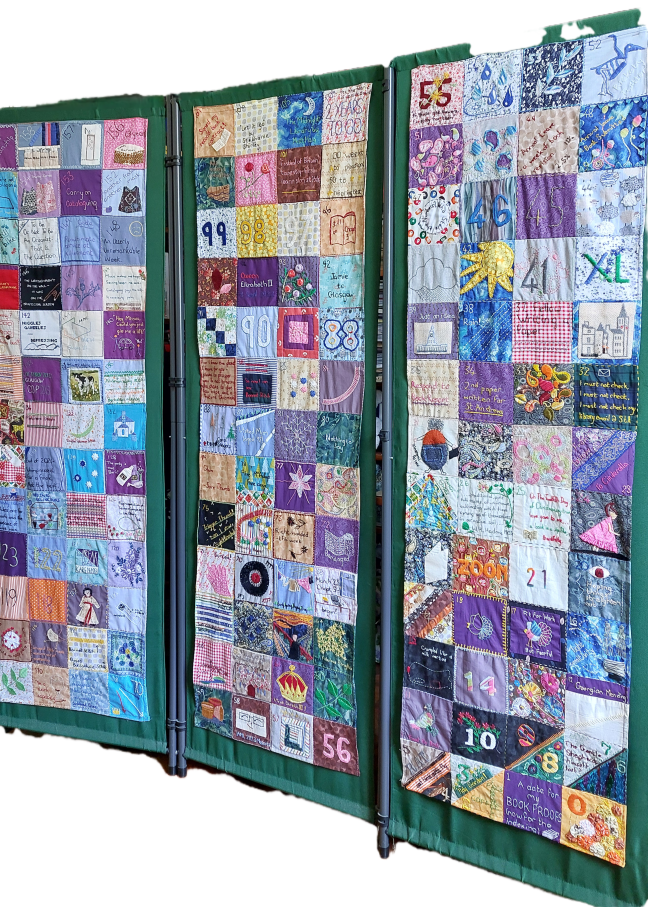
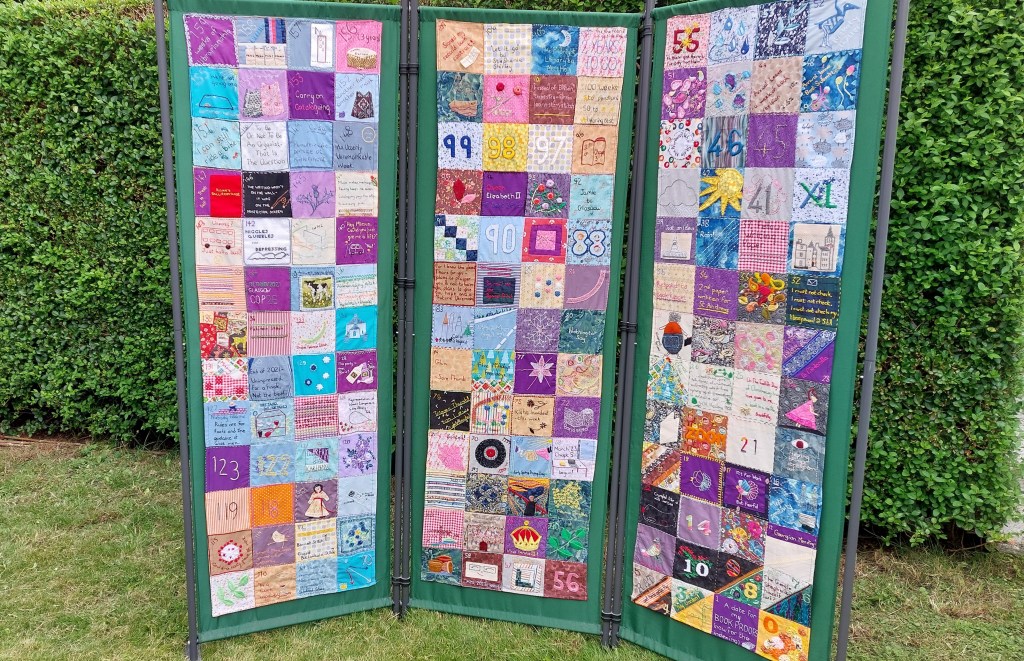
Okay, I promised I would be more forward-looking, now that I’m no longer a librarian. I’m not going back on my word, but I just wanted to share the stitched countdown project that I have completed over the past three years. My purpose was to count down the weeks until I would retire from librarianship. To that end, I sewed one square a week, and joined them up to make three panels for the folding screen that lives beside my desk. Sometimes they’re topical, sometimes reflective, and sometimes (when I got behind with myself), it’s just a number. (Those were at least good practice at sewing satin stitch. I only really took up embroidery during the pandemic lockdown – I’m not an expert.)

3-panel screen displaying the stitched countdown squares.  Background: a garden hedge.
Stitched Countdown – a square a week over three years

I finished neatening off the panels today, and took the screen outside to take a photo.

Then I came back indoors and checked my emails. To my delight, I’ve been sent the copy-edited version of my book manuscript. So yes, looking forward, I foresee a busy week checking it all and making any corrections! Semi-retired? I think we’ll forget about that until the manuscript is returned to my editor!