

I’ve mentioned before how, for the past four or five years, I’ve particularly focused on getting more music by women and composers of colour into the Whittaker Library. By the time I reach retirement age, there will be a good, up-to-date selection of such works for students to choose from. (I’ve also mentioned my rationale for this activity – if we introduce this music to today’s students, then whether they go out and perform it, or teach it, or combine these with other activities, there’s hope that they’ll pass on a wider, more receptive approach to repertoire-building to the students that follow on behind them.
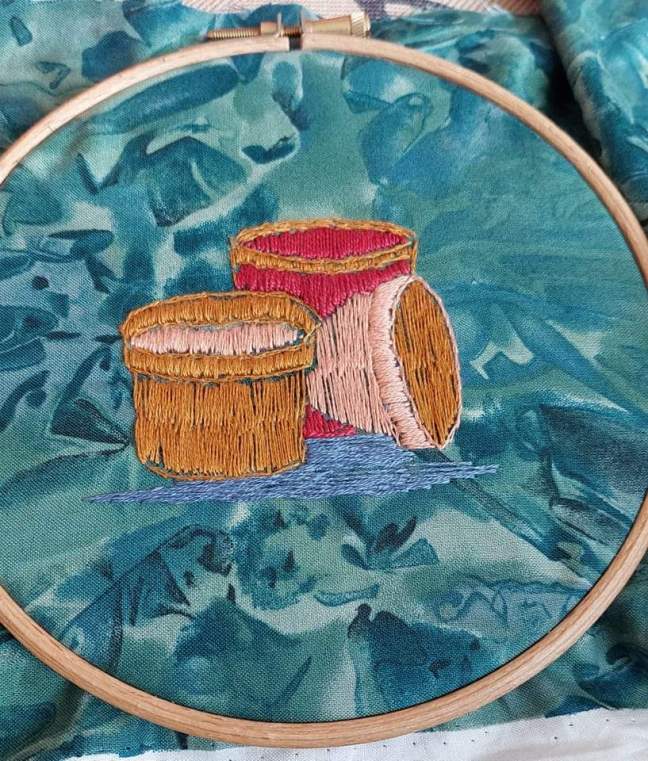
Today, I was invited to attend a recital by one of our students. Two of the pieces were pieces by women composers, that their teacher had recommended us to acquire. It was a great recital – innovative, exciting and impressive. One particular piece involved a percussionist playing a counterpart on – wait for it – an assortment of carefully-chosen, differently pitched flower pots. You didn’t think flower pots were pitched? No, they aren’t deliberately tuned, but they can be chosen for the sound they make when you hit them! I bet you none of the audience had ever heard flower pots in a recital before, but it was great. Another piece had been written with piano accompaniment, but this time it was played on accordion. (From a personal point of view, this was of considerable interest. I got an accordion a few months before the pandemic, and a concertina a few weeks before. I get a lot of enjoyment out of my beginner’s attempts with two inexpensive instruments. But to sit and hear a truly excellent instrument in expert hands – and a “button box”, too; completely baffling to me! – well, that was something else. If you think accordions are just about ceilidhs and the good old days of Jimmy Shand, then believe me, you’ve missed so much.)
I and my colleagues even got a mention in the programme “credits”, for having obtained the music. It makes all the difference to feel that we were part of the programme-planning in our own small way. Sometimes, in a performing institution, it’s easy to feel that our hidden-away, behind-the-scenes work is really very insignificant and unnoticed. Obviously, we research and source the materials, catalogue and index them, then sit back and wait to see what happens. Our job is effectively done, one score or resource at a time, and the performers then go off and do the hard work, putting together a balanced programme and practising hard. We don’t always get to hear the results, though, which is why this morning’s recital was so lovely.
I have already expressed my opinion on – and weariness of – repetitive cataloguing. Processing CD after CD, all in the same genre and series, is mind-numbing. The mental exercise in cataloguing and indexing fresh, contemporary sheet music is definitely more enjoyable! Nothing can be ‘discovered’ in a library unless it has first been carefully catalogued, indexed and assigned the correct place on the shelves.
Seeing and hearing the results reminds me of the importance of music librarianship. A timely reminder!
 Karen McAulay, Musicologist