

In honour of the fact that my McAulay in-laws originated from Ballymoney in Northern Ireland, moving to shipbuilding work in Greenock in the mid-19th century, I thought that this St Patrick’s Day I’d highlight my writing about Irish songs published in Scotland.
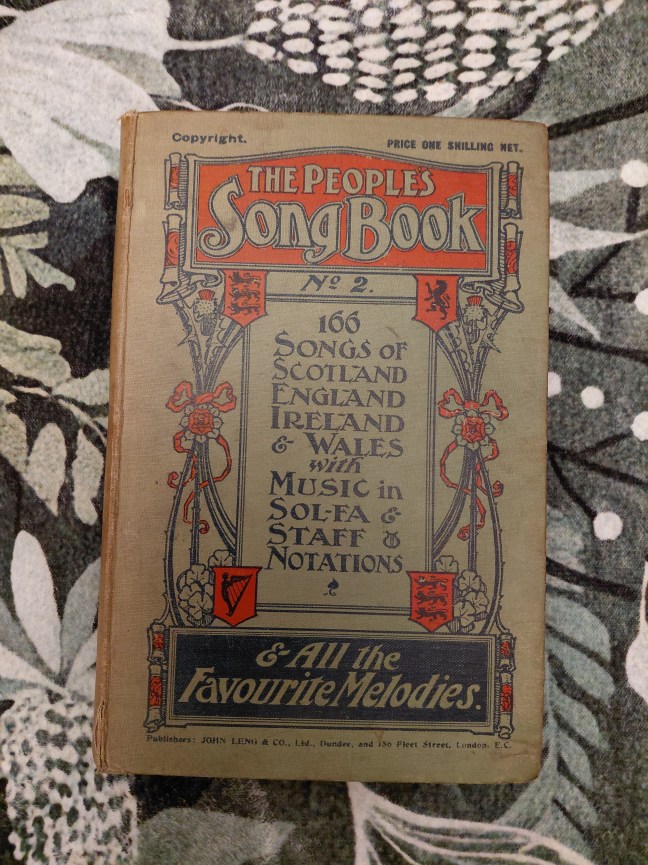
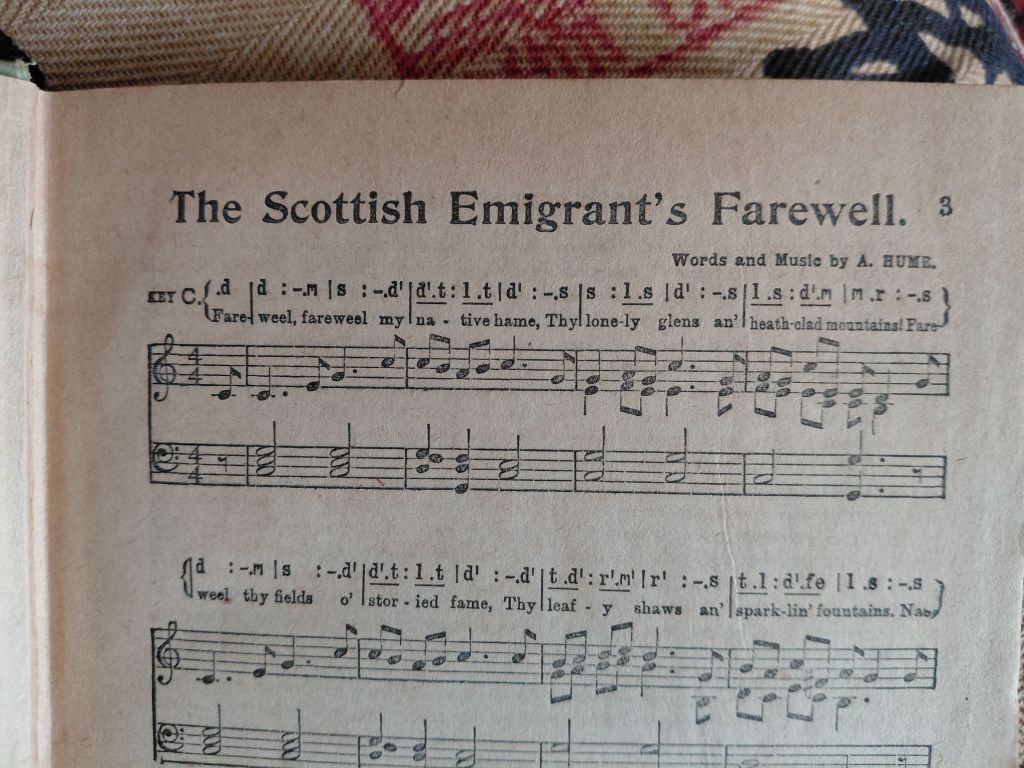
Chapter 3 in my latest book (A Social History of Amateur Music-Making and Scottish National Identity), deals with ‘The Saleability of Scottish (and Irish) Songs’. The chapter ‘functions as a guide-map to a large genre of national songs published by Scottish music publishers.’ With many Irish workers in industrial Scotland, and another eye on both the Scottish and Irish diaspora, our Glasgow publishers eagerly produced a number of Irish songs books of various kinds, alongside the Scottish books.
Let me share the chapter abstract with you:-
Abstract (A Social History, Chapter 3, pp.56-92)
Examining first the afterlife of Wood’s Songs of Scotland, the chapter next examines the growth of Glasgow firm Bayley & Ferguson, demonstrating how a combination of new works and reprints of saleable older ones built up a significant catalogue, and also noting their involvement with song-collectors and arrangers Afred Moffat and Frank Kidson. It highlights their interest in Highland collections, and also closely examines two of their popular titles, the Scottish Students’ Song Book and subsequent British Students’ Song Book.
The chapter assesses the various Scottish as well as Irish songbooks produced by Scottish publishers, appealing to emigrants as well as British music-lovers, and indicating their clear resolve to produce Irish books which would appeal to both sides of the sectarian divide.
Whilst the primary focus has been on the main Scottish music firms, this chapter concludes by shedding light on some of the lesser ones, and those for whom publishing was a sideline to a primarily retail business.
It may be of interest to note that Robert Wallace, the second owner of James S. Kerr’s, had a connection with Northern Ireland himself: his parents had married in Belfast. His father was Glaswegian, but as I recall, his mother was Irish. (There’s more about the piano-tuner turned publisher Robert Wallace in Chapter 1.) Kerr’s The Orange Songster is distinctly sectarian, but the much-reported and decidedly humorous court-case between Kerr’s and Mozart Allan hinged on just one particular song: ‘The Ould Orange Flute’. Wallace published this song first. Mozart Allan was accused of plagiarism. You’ll have to read the book for the full story!
A Century Earlier
Irish songs also got a mention in Chapter 5 of my first book (Our Ancient National Airs: Scottish Song Collecting from the Enlightenment to the Romantic Era), too. It’s a chapter on early 19th century metaphor in song book paratexts: ‘Which many a bard had chanted many a day’: Paratextual Imagery and Metaphors in Romantic Celtic Song Collections (pp. 129-148). There are no orange flutes here – but a lot about bards and minstrels, with references to broken harp strings in the context of the United Irish movement.
Silent Harps
The harp that once, thro’ Tara’s halls, the soul of music shed, now hangs as mute on Tara’s walls as if that soul were fled …
Oh! Blame not the bard, if he fly to the bowers […] The string, that now languishes loose o’er the lyre, might have bent a proud bow to the warrior’s dart …
The minstrel boy to the war is gone […] and his wild harp slung behind him. […] The minstrel fell! […] The harp he loved ne’er spoke again …
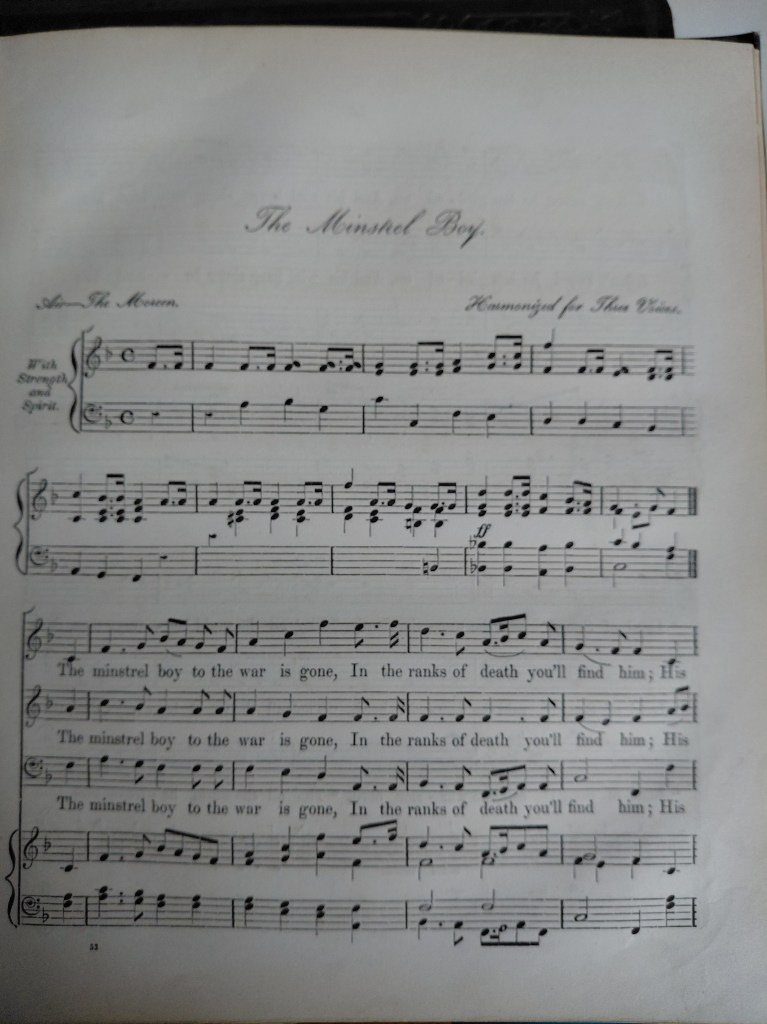
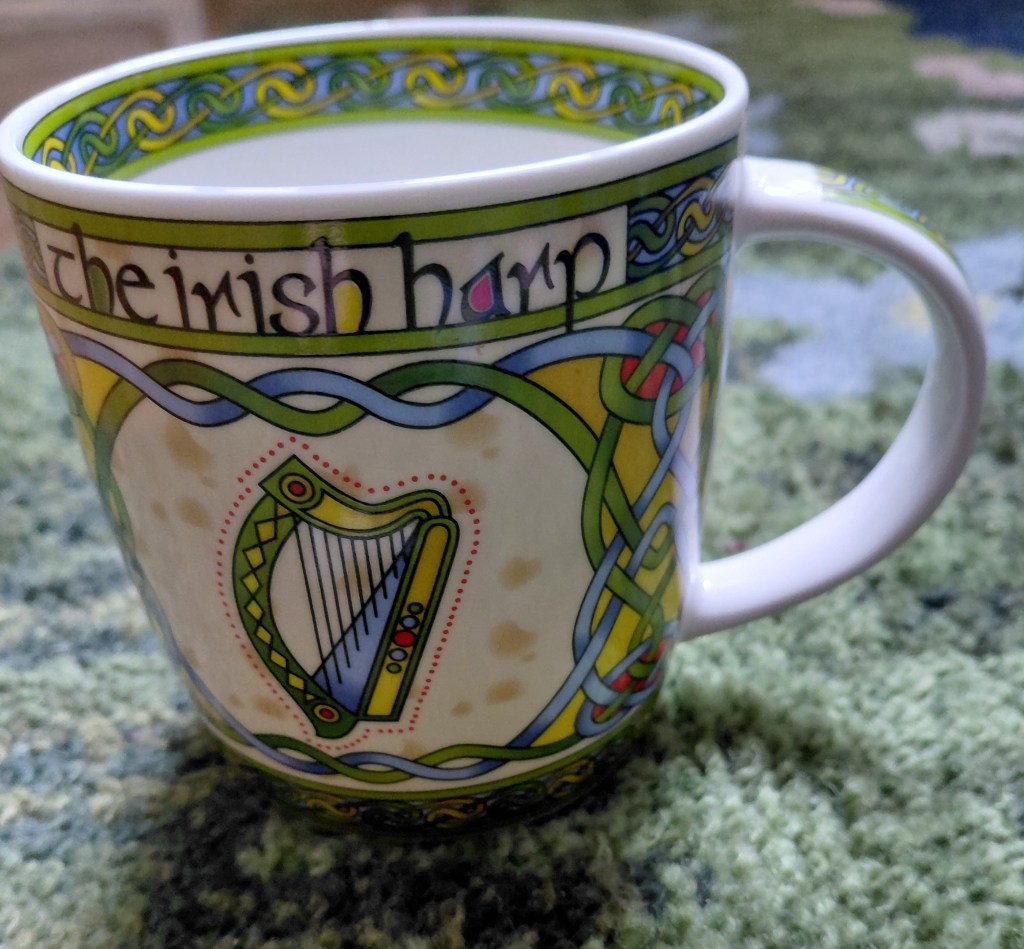
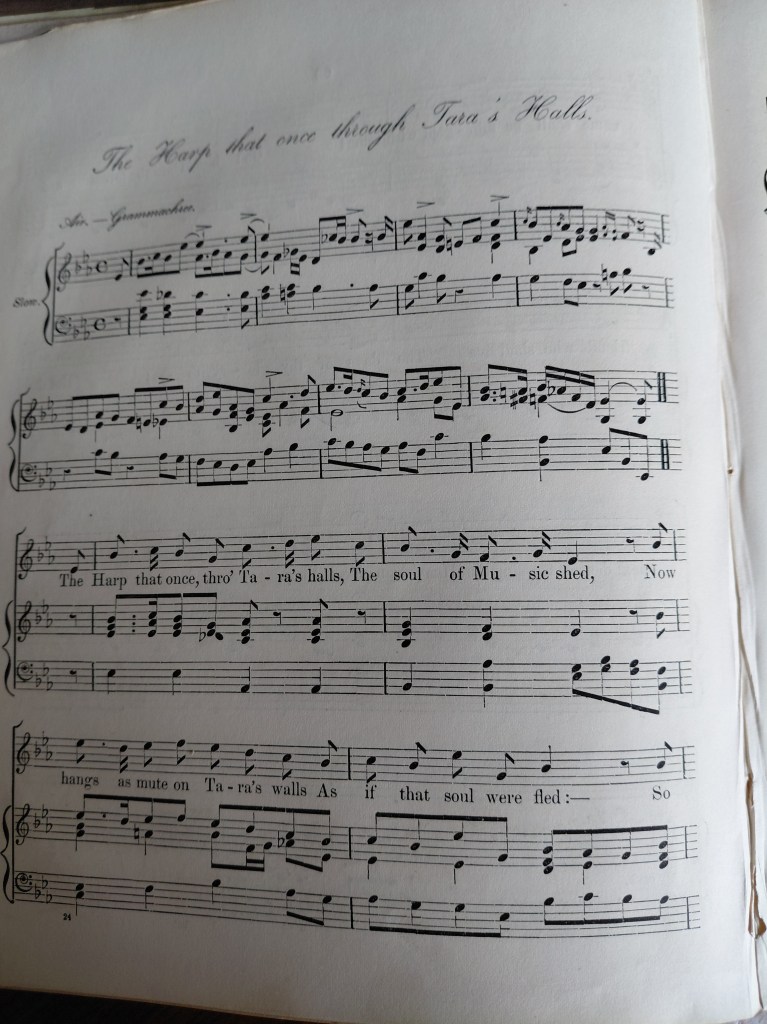
Two songs by Thomas Moore, and a souvenir from a research trip to Dublin!
 Karen McAulay, Musicologist