Dr Karen McAulay explores the history of Scottish music collecting, publishing and national identity from the 18th to 20th centuries. Research Fellow at Royal Conservatoire of Scotland, author of two Routledge monographs.
This is the very detailed and useful database compiled by Simon Fleming and Martin Perkins for their subscribers project. You can find out more about it on their extensive information pages.
I had early access to the database for my chapter on subscriptions to Scottish fiddle books. (Chapter 10: ‘Strathspeys, Reels, and Instrumental Airs: A National Product’, as I mentioned a couple of weeks ago. )
NB ‘The dataset is the intellectual copyright of Simon D. I. Fleming and Martin Perkins.’
This is the second part of the talk that I gave at yesterday’s conference, ‘Towards a Scottish Traditional Music Archive’ (Saturday 11 June 2022). The first part of my talk was about Dundee’s Wighton Collection, but in the second part I address the question of the broader printed music legacy when it comes to Scottish traditional music resources held in Scottish libraries.
Documentation
Lecture Theatre, Scottish Storytelling Centre
The Wighton Collection is a priceless resource, but it’s only fair to point out that it is complemented by other facilities containing some of the same titles, since Andrew Wighton was not the only Victorian or Edwardian collector of this particular repertoire. If you take an overview of what is actually available in all these different collections, it’s a remarkably rich legacy.
A generation younger than Wighton, the Edinburgh bagpipe firm owner and music antiquarian John Glen lived from 1833-1904. When he died, his collection was bought by Lady Dorothea Stewart Murray – or Dorothea Ruggles-Brise, to use her married name – and it ultimately ended up in the National Library of Scotland. Dorothea was born the year Wighton died, so she was a younger generation again. She, too, collected Scottish music, gifting her own collection to Perth, where the A K Bell Library holds it as the Atholl Collection.
NLS DIGITAL GALLERY
Glen’s collection – and that of Alexander Inglis of Glencorse – has been digitised and forms part of the National Library of Scotland’s Digital Gallery.
Meanwhile, the Perth collection was catalogued by Dr Sheila M. Douglas, in a book published in 1999:-
The Atholl Collection Catalogue: 300 Years of Scottish Music and Poetry, compiled by Dr Sheila M. Douglas (Perth & Kinross Libraries, 1999. ISBN 0 905 42 28 5 (Now out of print but pdf version in preparation.)
The University Libraries also hold a considerable number of Scottish music publications. Glasgow, Edinburgh, Aberdeen and St Andrews all have admirable collections. They were each legal deposit libraries until the early nineteenth century, which means they were entitled to one copy of every British book published, although history has revealed that they adopted different approaches to the music that could have come their way. Moreover, some music was never properly recorded at Stationers’ Hall in London.
The Royal Conservatoire of Scotland has a few historical published titles in the Library, but nowhere near as many as the universities can boast, particularly in terms of really old, pre-nineteenth century materials. Our strengths are more in the more recent publications which our students use as performance resources.
And of course, all universities have archival resources, by which I mean unique, manuscript or at least, non-published materials. The structural management of a university archive may be alongside but not necessarily part of the library. The Royal Conservatoire of Scotland has an archive which is part of the Information Services Department; it’s off-site and does not share the same catalogue. (Bear in mind that the Athenaeum was only established near the end of the nineteenth century, and to this day, RCS is nowhere near the size of a university.)
LINKS
Speaking as a librarian, I can say that the key to making use of the legacy that Scotland has, is in knowing how to access it.
For published resources, in the university and national library sphere, there is Jisc Library Hub Discover, which explores all their catalogues at once. Individual universities will have pages via their own catalogue leading to other finding aids for manuscripts and other rare materials. There’s also, of course, the Jisc Archives Hub, which facilitates exploring all British university archives.
Another useful resource to know about is Cecilia-uk.org, which was compiled by the UK & Ireland branch of IAML – the International Association of Music Libraries. This offers pointers as to where different music materials can be sourced.
And of course, there’s WorldCat. This extraordinary resource facilitates searching 10,000 libraries worldwide – some British university and public libraries are listed here. But what you find – whether in Jisc Library Hub Discover, or WorldCat – depends on what has been catalogued in an automated system. When libraries opt to collaborate with these online union catalogues, it is dependent on their automated catalogue records being up to particular library cataloguing codes and standards, because different library catalogues can’t be interrogated simultaneously unless all the information is coded consistently. Whilst I must admit I don’t know whether Dundee’s library catalogue is linked to WorldCat, the holdings of the Wighton Collection certainly won’t be, because they’re not catalogued into the City of Dundee’s online library catalogue in the first place.
I realise that I strayed away somewhat from my remit of talking about the Wighton Collection, but I think it’s important to be aware of both the Scottish music resources themselves, and their documentation.
To quote the old song, “You can’t have one without the other.”
With Brio Vol.56 no.2 safely delivered, there aren’t any more big planned outputs from the Claimed From Stationers’ Hall network – and 2020 is the year for new grant applications. Should I change the name of this blog, or start a new one? My gut feeling is to stick with this one until a new grant is won! Digital humanities are likely to come into it somewhere along the line. One application was submitted right at the start of November, and now I must think about the next one.
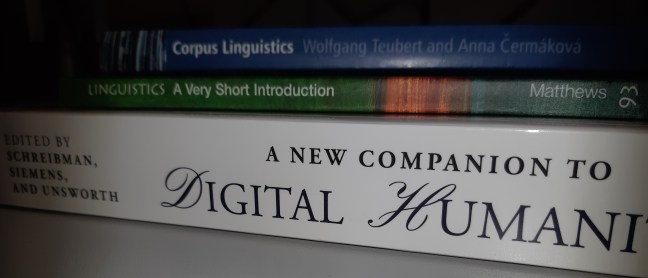
Since our Bass Culture project was essentially a digital humanities project (resulting in hms.scot), the realm of digital humanities isn’t entirely alien to me. Nonetheless, on revisiting notes from a couple of meetings I attended last year, I realise there is terminology that I need to become more conversant with. If I want the technology to help with my next project, the least I can do is make sure I can talk the lingo!
Triple IF
Today it’s “Triple IF”. It sounds a bit like IVF without the Vitro, but it’s actually concerned with marking up images, and stands for International Image Interoperability Framework. (Three I’s and an F, in fact.) Who better to come to my rescue than the Bodleian Library, so here’s my next reading material:-


 Karen McAulay, Musicologist