


Back I went to the library. I needed another look at Mrs M. A. Smith’s books, and most particularly, the Addendum containing the poem she wrote to her late husband, after she had checked the final proofs. It had just that poem, then another to a soldier who had met an untimely end. (As you might guess, I now have some newspaper-checking to do, since she wrote such a lot of memorial poetry.)
Smith recalled her husband’s blue eyes and military bearing. She was sad that he wouldn’t see the book, and said she’d miss his words of encouragement. She wrote about how she was handling her loss with her grieving children. I read that poem, over and over.
Seek and Ye shall Find
Smith’s writing is by no means all autobiographical, but some pieces are. I learnt more about her own childhood, and about her maternal sadnesses. I was reminded of wee details that I’d noted before, but hadn’t needed to draw upon on in my own work so far.
I learnt that she loved the sound of the church organ. (She’d have been pleased that two daughters later played the organ as adults!)
Jerusalem (words by William Blake, music by Hubert Parry)
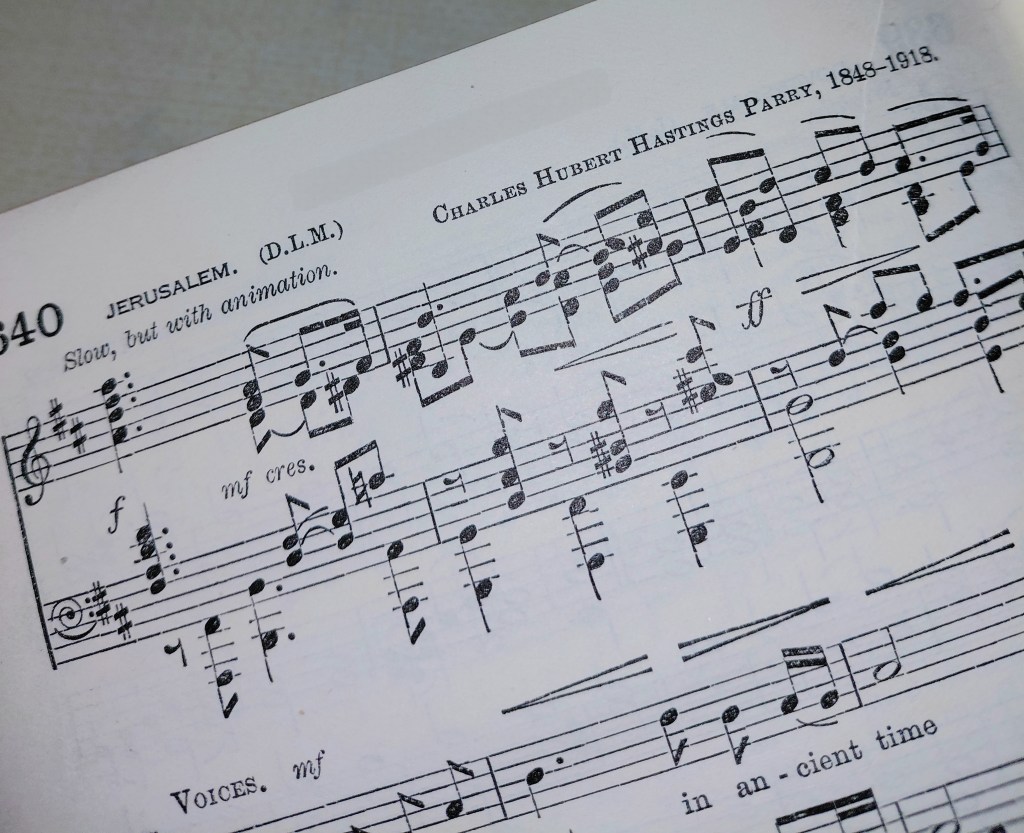
And at one point, I just smiled, because she mentioned the hymn, ‘Jerusalem’. Now, you would have to have attended church in Scotland to understand that this immediately marks her as English, because Scots can’t abide singing about ‘England’s green and pleasant land’. As an English organist living in Scotland, I never get the opportunity to play that stirring tune, because the associations just aren’t favourable up here! I wonder if congregations were more, or less laid back about it back in the 1870s?
Graveyard image from Pixabay.

