‘Una Voce Poco Fa’ (a Voice a Little While Ago) – a Hit for Two Centuries

The aria, ‘Una Voce Poco Fa’ from Rossini’s Il Barbiere di Siviglia (The Barber of Seville) may have been composed in 1816, but it remains popular to the present day – a showpiece for coloratura sopranos.  It was certainly an often-performed solo in recitals by the early 20th century star about whom I’m writing at the moment.  In the context of the original opera, it’s sung by Rosina, whose overbearing guardian wants to marry her. Of course, Rosina’s sights are set on a handsome young suitor. (Eventually the barber sorts it all out. Of course!) 

The Lyric Opera of Chicago gives you the relevant details on a handy page about the work, here.

You can find a translation on the Opera Arias Database.

But what, exactly, draws both singers and audiences to this amazing piece?  Jenna Simeonov has written a guide for sopranos learning the aria, on the Schmopera website, and her introduction gives a few clues as to why it would have appealed to a talented young soprano:-

This is a cornerstone aria for many young mezzos, and one of the few chances they have to show off coloratura and play a girl. It’s also an aria full of options.

‘How-to Aria Guides: Una Voce Poco Fa (14 October, 2015)

Sure enough, the woman I’m researching was very young, so the role of Rosina would have felt like one she could empathise with.

Simeonov gives a great deal of useful advice on singing the later coloratura part of the aria, helpfully with a marked-up score to show what she’s talking about.  She gives more insight into singing it, from a  performer’s point of view, than I could possibly have hoped for, but in her opening words, also advises working with a singing teacher.

The fast part

As we get into the coloratura bits, I can offer some general, if incomplete, advice. Help yourself by always finding the larger tune within the string of sixteenth notes, and stay nice and light. For more specifics, get thee to thy voice teacher.

Looking at the score – my goodness, talk about vocal acrobatics! Swooping scales, trills and other ornamentation, high notes, tricky fast passages that would challenge any soloist – and that’s before the conductor tries to keep an orchestra in synch with ‘Rosina’.  Or it’s up to the pianist, in a recital context.  No wonder ‘my’ singer was in the habit of noting if her allocated accompanist was good, bad or indifferent!

Here’s Kathleen Battle singing the aria – a beguiling, and impeccable performance:-

(Kathleen Battle – Rossini: ‘Una voce poco fa’, from the opera Il Barbiere di Siviglia by Gioacchino Rossini.  Recorded in Antwerpen December 1984.  From the TV show: Rene Kollo – Ich lade gern mir Gäste ein.

So, it really is completely understandable why it’s such a well-loved piece of the repertoire, isn’t it?!

Cover image from IMSLP: Editor Castil-Blaze (1784-1857)
Pub. Info. Paris: La Lyre moderne, n.d. Plate 346.
Copyright: Public Domain
Misc. Notes Biblioteca Fondazione Rossini Pesaro
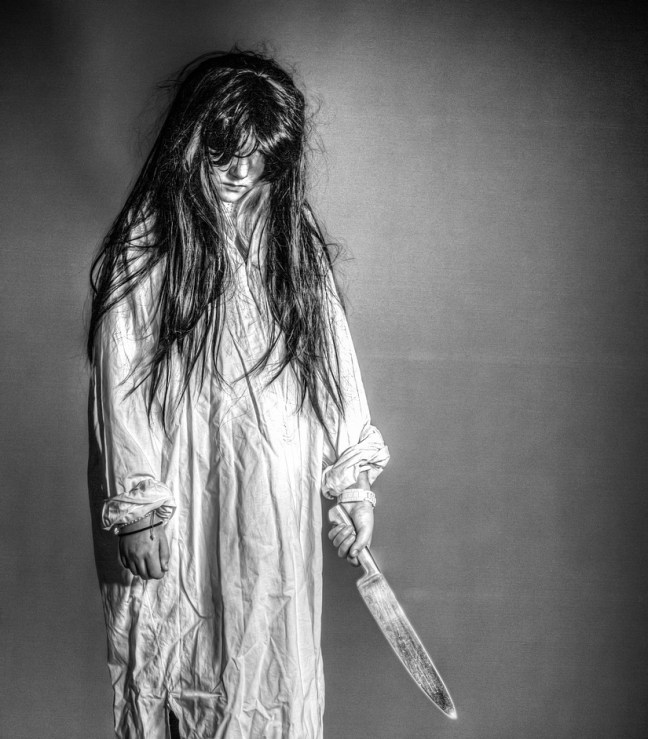
The Height of Madness? Top F in Donizetti’s ‘Mad Scene’

Donizetti – Ardon gl’incensi

I’m a little bit obsessed by this aria. It’s one of the arias in the so-called ‘Mad Scene’ in Donizetti’s Lucia di Lammermoor. It was the popular showpiece of a soprano whom I’m currently researching, and she performed it numerous times within just a few years, in the late 1920s. She never sang it in an operatic context, just in concerts, and she didn’t record it – but several women did. I wanted to know what it was like, and why she might have been drawn to it. I was keen to hear an earlier recording, to get chronologically closer to ‘my’ singer. This one goes too far the other way, dating from 1907 – it’s Luisa Tetrazzini on a Gramophone recording:-

The aria has been analysed and written about. There’s much about female madness and female agency. (The heroine has been deceived into marrying someone else, to keep her from marrying the man whom she wants to marry, and of course the ‘jilted’ lover is furious that she appears to have done the dirty on him. So, realising she’s been tricked, she murders her new, unwanted spouse. Then goes downstairs and tells the guests …)

It’s based on Sir Walter Scott’s The Bride of Lammermoor. I got very excited about this, thinking that ‘my’ soprano must have been drawn to it for its Scottish content. However, so many people were singing it, that I am forced, pragmatically, to conclude that she probably just thought it was a great showpiece aria which would suit her high soprano coloratura voice. Moreover, when the opera was premiered in the UK in 1838, there were comments that it couldn’t be much less ‘Scottish’, with just a couple of characters in Scottish costume and nothing more to hint at the origin of the story.

Oh, all right! You’d like to hear it in a better recording than the 1907 one? No offence to Tetrazzini, it’s not her fault that recording techniques were quite primitive in 1907! Here you are, have a listen to Joan Sutherland in 1959. No-one would blame you if you played this several times over – I think it’s fantastic!

The question of glass harmonica or flute as obbligato instrument is another entirely. Donizetti’s glass harmonicist walked out, so he used a flautist – as in the Sutherland recording. There’s a very nice recording of Jessica Pratt singing it with glass harmonica, which is a longer version than in the Sutherland performance:-

I’m not going to delve any further into the history of the aria. It’s fascinating, but not really part of my research!

Now, what do I do with these observations? Ah, well, I have a piece of writing to do. I do tend to sweep the net wide when I’m researching a topic, because it helps me to see the central subject in context. Whether I start writing this side of Christmas is another question entirely. It may turn out to be the writing blitz that tends to overcome me somewhere between the fourth and twelfth days of Christmas!

Buja, Maureen, ‘Who’s the Maddest of them All? Lucia di Lammermoor’, Interlude, April 2nd, 2023. https://interlude.hk/whos-the-maddest-of-them-all-best-performances-donizetti-lucia-di-lammermoor/

Metropolitan Opera, ‘Madly in love’

https://www.metopera.org/discover/education/educator-guides/lucia-di-lammermoor/madly-in-love/

Parker, Roger, ‘Lucia di Lammermoor’s mad tragedy in Donizetti’s mad life’, The Guardian, Jan 28th, 2010. https://www.theguardian.com/music/2010/jan/28/lucia-di-lammermoor-donizetti

Smart, Mary Ann, ‘The Silencing of Lucia’, Cambridge Opera Journal, Vol. 4, No. 2 (Jul., 1992), pp. 119-141

Main image from Pixabay