Since Singing is so Good a Thing …

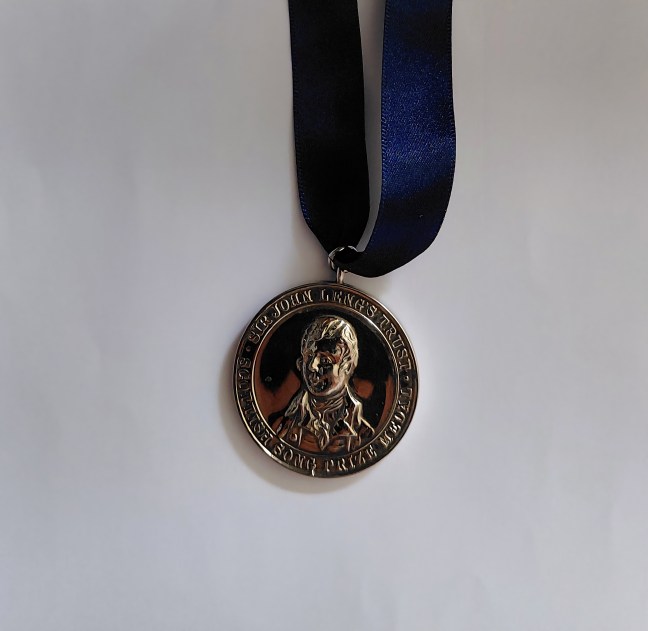
A silver Leng Medal for Scots Song, on a blue ribbon

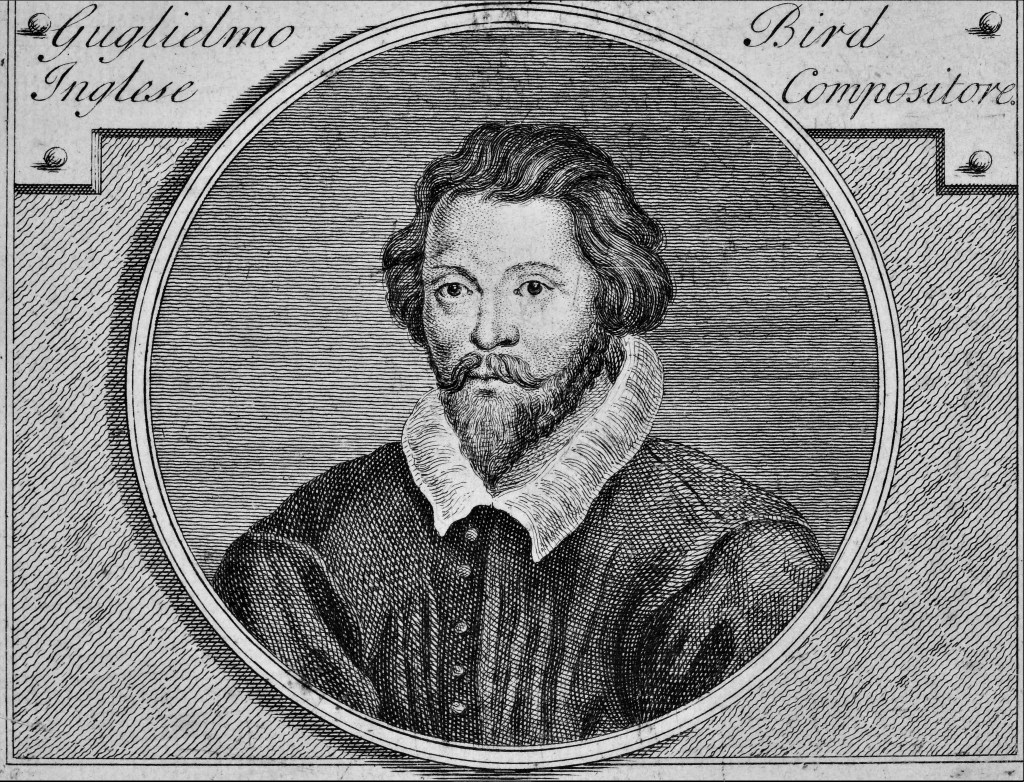
I was chatting yesterday with someone who has had a lot of involvement with the Leng Medal Scots song competitions over the years.  They shared with me a couple of lines of verse that summed up their own philosophy.  When I looked it up to see who first wrote the words, I was gobsmacked to find it goes back to … 1588! The words are by courtesy of an old English composer, William Byrd, in his book of Psalmes, Sonets and Songs. [sic] Here are the lines of verse that were shared with me:-

Since singing is so good a thing,
I wish all men would learne to sing.โ€™

You can see it in context on a blog dedicated to historical singing,
Cacophony! Reimagining Historical Voices‘.

William Byrd


You might not agree with all Byrd’s reasons, but at least some of them still ring very true!ย  Singing is good for you. It has mental, physical and social benefits.

In Dundee, Sir John Leng would surely have agreed wholeheartedly.  With the added incentive of keeping the Scots song tradition alive!

Silver and Gold Leng Medal Memories, Update no.3. Posh Scots and Everyday Scots – the ‘Scottish Cringe’

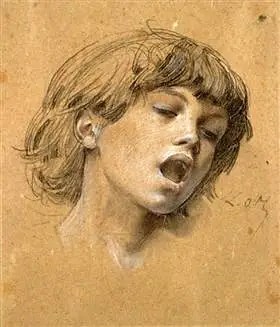
Merson - Head of a boy singing (Creative Commons licence)

It’s time for another update on the research that the Royal  Conservatoire of Scotland has awarded me an Athenaeum Award to conduct.

By the end of tomorrow I’ll have interviewed some 25 or so Leng medallists who were awarded their silver and gold medals between the 1960s and 1990s. They went to a wide range of schools, though one or two schools have featured more than once. And they sang a wide range of songs. Some were nervous, some excited. Some knew they could sing – others were surprised to win – and all were overjoyed to be winners. I’ve been shown a lot of medals, proudly kept through the decades.

Interestingly, social media has been very helpful in augmenting my research findings. On Facebook, I’ve found folk in groups like Dundee Pals enjoy answering quick questions, and their answers are often highly informative. When I asked how many people had three or more family members with medals, the number of replies was quite remarkable!

The ‘Scottish Cringe’?

It wasn’t until last weekend when I conducted a face-to-face interview in Dundee, that someone mentioned ‘the Scottish cringe’. I guessed what that meant, and when it was explained to me, it was rather as I had guessed. It refers to the inferiority complex that many in Scotland have, having grown up in a Scotland that felt it was always subordinate to England, and looked down on by many politicians south of the border. I did look up where the phrase originated, but I only made a hasty search, so I’ll hold my tongue until I am sure of my facts. An article in Glasgow University Magazine last year provides useful context:-

Didi Marina Salonia, Death to โ€œScottish Cringeโ€ (28 April 2025)

In the context of my research into the Leng medal competitions, it occasionally led to pupils being encouraged to sing their songs in a refined, sanitised kind of accent – not exactly English, but certainly toned-down Scots. I’m sensing that this happened more amongst older medallists, and hopefully children now are encouraged to use their own natural accent – as they’d speak – rather than trying to put on something uncomfortably clipped and unnatural. Again, Facebook has been very helpful here – 38 comments in reply to my question! I’m bowled over.

“I was talking to a friend about the Leng medals yesterday and an interesting thing came up. Who was encouraged to sing their Scots song in their natural everyday accent? Did anyone get told to sing it ‘nicely’ in a posh concert-platform accent?!”

For the rest of this month, I’ll be going through my recordings and transcriptions, looking for interesting threads and making sure I have tabulated schools, songs and the names of long-remembered teachers! I’m also going to look at some archival material, which excites me considerably. Hopefully I could find further evidence of Mr Easson (and perhaps Mr Wiseman), the compilers of the Nelson Scots Song Books, around the time the books were published – and introduced into Dundee schools.

Excess Annual Leave Balance

I am taking annual leave in July. (If I don’t, I lose it, and that would never do.)

I won’t be capable of NOT blogging for a whole month, apart from which I do like to think that if someone comes back here after a couple of weeks away, there will always be something new for them to find. What it will be, I cannot yet say! (Additionally, as you’ll have noticed, I have a couple of research side-interests, so who knows what my month’s vacation might lead me to, if I feel the urge to investigate sudden bright ideas?)

Image: Head of a Boy Singing, by Merson (Creative Commons)

Friends of Wighton – A Celebration of Burns

The Wighton Collection's logo - various musical instruments

Burns Night is on Sunday 25 January 2026

This Saturday, 24 January, is virtually Burns’ Night, so what better afternoon to have A Celebration of  Burns at the Central Library of Dundee? I understand we were fully booked, but those lucky enough to have obtained a ticket had a great afternoon. Click on the link (as long as it’s still there) to see the line-up.

And I finished up  the event with a singalong of three favourite songs by Robert Burns – not bad for a girl from Norfolk! If I play, and everyone else sings, my English accent is well-concealed …

But what are the three songs?

Green Grow the Rashes, O.

Burnsโ€™ version of this pre-existing song appeared in the Scots Musical Museum song collection in the late 18th century. It was included in several school song books in the 20th century, and remains popular to this day.


CHORUS: Green grow the rashes, O; Green grow the rashes, O;
The sweetest hours that e’er I spend, Are spent amang the lasses, O.

1. There’s nought but care on ev’ry han’, In ev’ry hour that passes, O:
What signifies the life o’ man,  An’ ’twere na for the lasses, O.
Green โ€ฆ

2. The war’ly race may riches chase, – An’ riches still may fly them, O;
An’ tho’ at last they catch them fast, Their hearts can ne’er enjoy them, O.
Green โ€ฆ

3. Gie me a cannie hour at e’en, My arms about my dearie, O;
An’ war’ly cares, an’ war’ly men, May a’ gae tapsalteerie, O!
Green โ€ฆ

4. For you sae douce, ye sneer at this; Ye’re nought but senseless asses, O:
The wisest man the warl’ e’er saw, He dearly lov’d the lasses, O.
Green โ€ฆ

5. Auld Nature swears, the lovely dears Her noblest work she classes, O:
Her prentice han’ she try’d on man, An’ then she made the lasses, O.
Green โ€ฆ

Cominโ€™ Throโ€™ the Rye

There was a very famous soprano called Flora Woodman (1896-1981), who was born in London of Scottish parents. For some years, this was practically her signature tune โ€“ she sang it a couple of hundred times.

But why? I discovered that there had been a novel called Cominโ€™ throโ€™ the Rye, written by novelist Helen Mather back in 1875. The heroine sings this song as she walks through a rye-field; thatโ€™s the only connection with the song.

But the story became a silent movie in autumn 1916 โ€“ months after Flora started singing it. The film was so popular that the film producer remade it in 1923. Flora was still singing the song โ€“ probably because the film had popularised it – but the film went out of fashion when the first talkie, The Jazz Singer, came out in 1927, and Flora began to sing the song less often.
As for the words โ€“ the clean words – you wonโ€™t be surprised to learn that even this version didnโ€™t make it into any school books of Scottish songs!

Cominโ€™ throโ€™ the rye

1. Gin a body meet a body Comin’ thro’ the rye, Gin a body kiss a body, Need a body cry?

Chorus: Ilka lassie has her laddie, Nane, they say, hae I, Yet a’ the lads they smile at me, When comin’ thro’ the rye.

    2. Gin a body meet a body Comin’ frae the town, Gin a body kiss a body, Need a body frown?ย  Chorus

      3. Gin a body meet a body, Comin’ frae the well,ย  Gin a body kiss a body, Need a body tell? Chorus

        ย 4. ‘Mang the train there is a swain I dearly lo’e myself, But what his name or whaur his hame, I dinna care to tell. Chorus

          Auld Lang Syne

          Our last song needed no introduction!

           1. Should auld acquaintance be forgot, And never brought to mind?  Should auld acquaintance be forgot, And the days oโ€™ auld lang syne?

          Chorus: For auld lang syne, my dear, For auld lang syne,  Weโ€™ll takโ€™ a cup oโ€™ kindness yet, For auld lang syne.

          2. And hereโ€™s a hand, my trusty fiere, And gieโ€™s a hand oโ€™ thine;ย  And weโ€™ll takโ€™ a right guid willie-waught For the days oโ€™ auld lang syne.  Chorus.

            A Touch of Tartan

            Red McKinnon, MacKinnon tartan sash with The Scottish Clans Association of London badge

            Do you want any more Flora Woodman,  or have I said enough?! I published an article earlier this year – same subject matter as my paper today, but certainly not the same piece of writing:-

            ‘The โ€˜Scottish Sopranoโ€™ and the โ€˜Voice of Scotlandโ€™: the Importance of Nationality to Flora Woodman and Robert Wilson’, History Scotland Vol.25 no.1 (Spring 2025), 74-81

            Public library e-magazine apps may still provide access to the issue, though History Scotland is no longer published. I believe you can access it via the former publisher, too. Let me share the message I received from History Scotland a few weeks ago:-


            I made a McKinnon tartan sash as a ‘prop’ for my talk. That was Floraโ€™s mum’s family tartan, going back a few generations. Flora said it – I haven’t verified this!  It also bears the Scottish Clans Association of London badge – oh, I take these things seriously!  (If you are reading this after the event but missed it – I only wore the tartan sash for 15 seconds to show how it would be worn.  Minimal cultural appropriation was committed.)

            As we answered questions after the first three talks, something occurred to me. Flora had something significant in common with her Scottish Clans Association of London audiences. The vast majority of them were of Scottish descent, and – like Flora – quite a few of them would have been born outwith Scotland. To them, she was quite simply, Scottish, the same as they themselves were. No-one was going to accuse her of not really being Scottish, because that would negate their own sense of Scottishness too. If Scottish blood flows in your veins – you’re Scottish, wherever you are.

            (Me? No, no, I’m only as Scottish as my surname!)

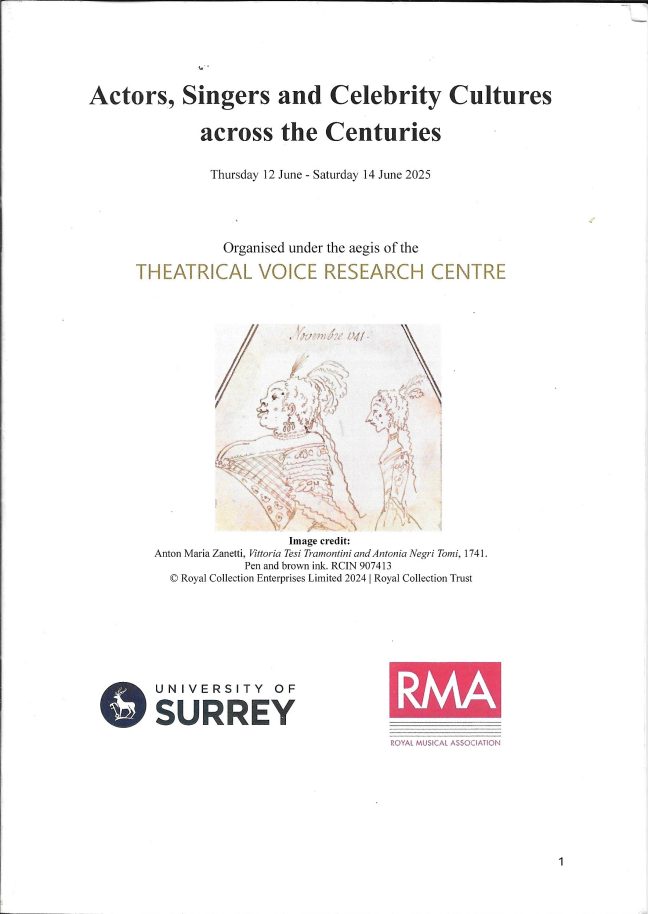
            Conference Programme: Actors, Singers and Celebrity Cultures across the Centuries

            Abstract

            Fame! Flora Woodman and Robert Wilson under the Spotlight

            I’m giving a paper at a forthcoming conference at the University of Surrey: Actors, Singers and Celebrity Cultures across the Centuries.

            It takes place from tomorrow, Thursday 12 to Saturday 14 June 2025, and is organised under the aegis of the University’s Theatrical Voice Research Centre.

            My talk’s entitled, ‘Comparing the Career Trajectories of Two Scottish Singers: Flora Woodman and Robert Wilson‘.ย 

            The Gowns! The Kilts!

            I could write plenty about their concert attire alone (think lace, diamonds and fluted frocks, or smart kilts and jackets) – but obviously, I can only just brush past that particular clothes rail, considering the more significant observations that I’m also making.

            Booseyโ€™s Ballads

            Today, I’d like to share some audio that won’t be making it into my talk. Let’s call it ‘extra content’.  I’ve recorded some of the Boosey-published ballads that Flora performed at their Royal Albert Hall concerts.  Since I’m not a trained singer, I’ve done my best to convey an impression solely on the piano.  (I’m not going to start singing here!)  I also highlight some of the themes in these songs – captured hearts, broken hearts, the joys of spring and of youth.  It’s surprising what you find, if you really look.

            Here goes:-

            The Multi-Tasking Music Teacher – 88 Years ago!

            Engraving of child singing. Probably late 1920s or early 1930s.

            Here’s a little curiosity that I came across last autumn. It’s published by Thomas Nelson, yes, but I’m not entirely sure why I bought it. I certainly didn’t know what I was getting!

            The title should have given me a clue, but it wasn’t enough to tell the whole story:-

            A RURAL SIGHT READER

            Being an Amalgamation of “Eyes Right!”

            and “Look Ahead!”

            Okay, you might say, so there were clearly two earlier books. Correct, there were. But the amalgamation was performed by having “Eyes Right!” (the simpler sight-reading book) on all the left-hand pages, and “Look Ahead!” on all the right-hand pages, until just past halfway through the book. The rest is all ‘Look Ahead” material.

            You might ask why? The answer is quite simple. A teacher in a small rural school in those days might have a wide age-range in one class, so they could hand out one set of books (are you with me?) and have two age-groups use it at the same time. The idea was that the older children would follow along when the young ones were sight-reading, and vice versa.

            The one thing they could not do, was sing together simultaneously. That absolutely would not work. (Opposite pages might have different time signatures, and or different keys – they were completely unrelated.) Ah well, it was a nice idea. The publishers went on printing it from 1937 until 1948, when His Majesty’s Inspector for Music pleaded with them to reprint it, suggesting that a different title might make it more saleable. There was still a need for it, he insisted.  (I have since discovered that he was the unnamed author of this miserable little book!)

            It was not reprinted. The publisher’s sales reps reported adverse comments and little customer interest. Looking inside, I’m not surprised. Apart from the first page of ‘Look Ahead’, which patriotically contains the National Anthem with the right rhythm followed by various odd permutations, they aren’t even recogniseable tunes, just abstract little melodies to familiarise the pupils with the ups-and-downs and simple rhythms of notated music. Functional to a fault.

            showing two opposite pages of this frankly rather dull music sight-reading book!
            [Discreetly yawning …]

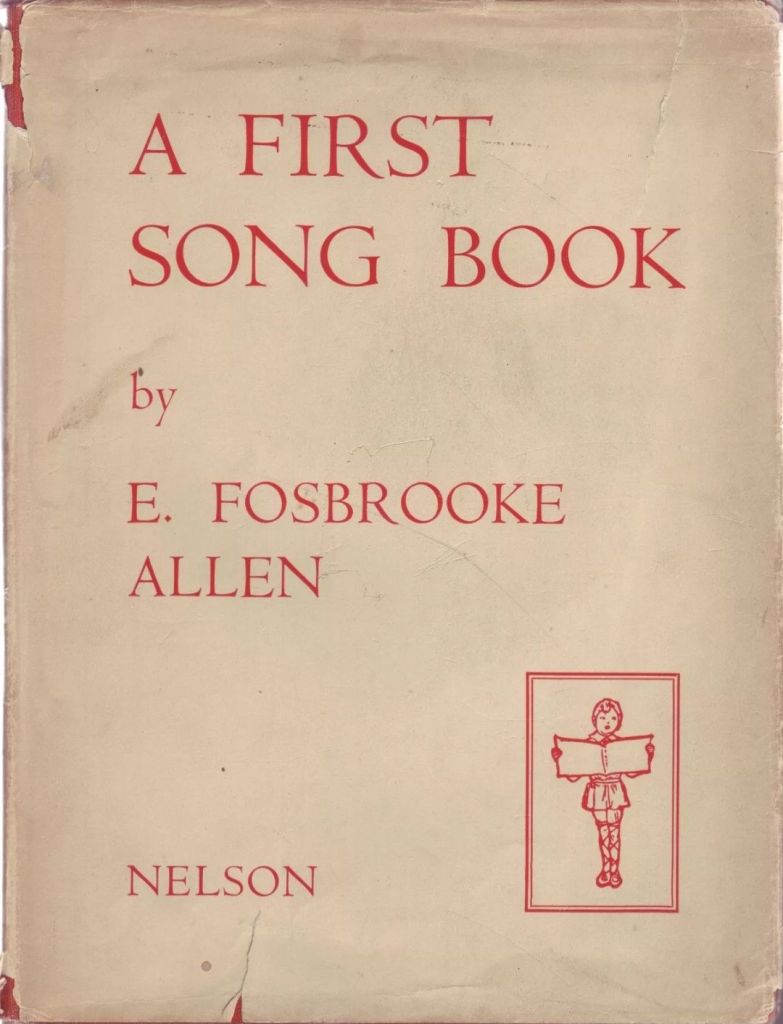
            And my copy – look closely at the image at the top – was a publishers’ sample copy. It may never even have been used. But the little singing child image was used again on the front and title pages of two other titles – E Fosbrooke Allen’s A First Song Book, and a much more popular book – Desmond MacMahon’s New National and Folk Song Book vols. 1 and 2. (Possibly elsewhere too – I haven’t seen enough titles to be able to say.)

            Whilst I admire the laudable desire to have every child leaving school musically as well as functionally literate, the Rural Sight-Reader is a truly dull and uninspiring little offering. I imagine the children wriggling and kicking under the desk until it was playtime, or time for something more appealing!

            Blue marbles - more appealing to the average child!
            Anyone for marbles?!

            Singing in Public? New to me!

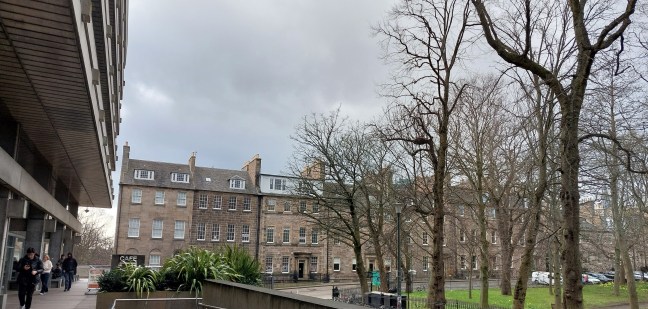
            George Square Edinburgh University

            A few weeks ago, I led a community ‘Scottish song’ event. I found myself singing a solo – well, to say ‘found myself ‘ is inaccurate, because I HAD planned and rehearsed it with a pianist.

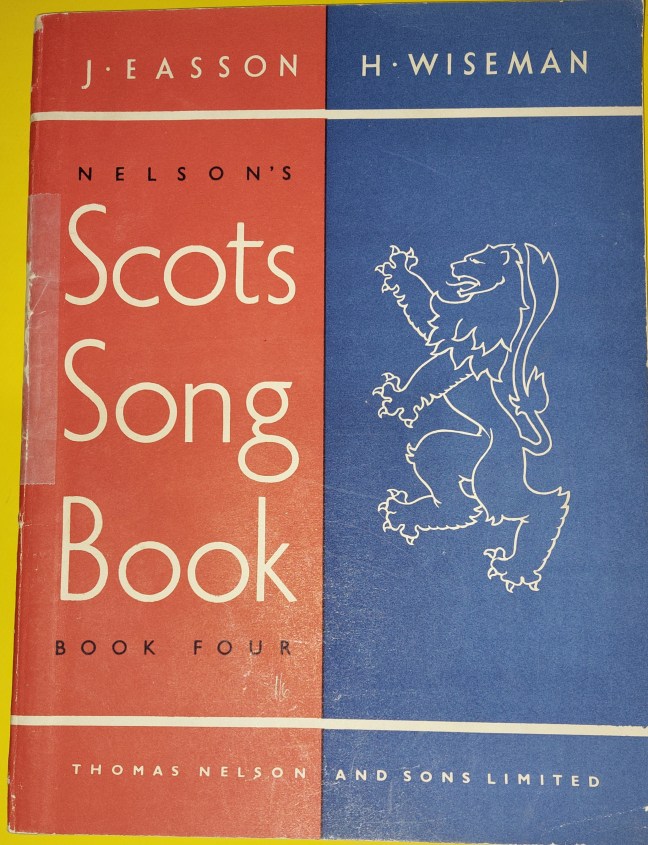
            But it seemed to go down well enough, so, emboldened by this, I sang a couple of examples from Nelson’s Scots Song Book at my Work in Progress talk on Wednesday.  This time, I prerecorded my accompaniment myself. (Three cheers for the decent mic I had purchased during lockdown!)

            I reminded myself that my esteemed audience were a mixture of musicians and non-musicians, and I was there as a researcher rather than a star turn, so hopefully they’d listen kindly rather than critically! 

            And it was fine. I suppose the more often you do something, the easier it gets. I have played in public, conducted in public, and sung in a choir numerous times, but singing solo? That’s something new.

            I have another talk coming up in a few weeks.  Of the two songs I sang this week, I much preferred one to the other  – the range was more comfortable. So I looked through NSSB4 again last night, and hit upon a favourite – ‘I’ll aye ca’ in by yon toun.’ I took it to the piano for a first play through. Yes, I like Easson’s setting.  It’s reasonably modern, and playable.

            At this point  – just as I’d finished the chorus – I was obliged to stop.

            ‘But, I was  …’

            You’d be alarmed at how routine governs my activities.  No point causing upset by continuing to play, so the song will wait for another time. Supper couldn’t wait!

            However, I thought I’d look for a YouTube rendition, to accompany my breakfast this morning, and what did I find, but a Topic recording of Jean Redpath performingย it in the American Serge Hovey’s setting.ย  I never heard Jean sing live, but she got an honorary DMus from the University of Glasgow (my Alma Mater), and her enthusiasm for Scottish song was influenced by her time at the University of Edinburgh – as I sit with a cuppa in the Library cafe, I’m literally looking out at the School of Scottish Studies building where she’d have talked with Hamish Henderson.

            I’ll aye ca’ in by yon toun

            Having heard Redpath’s beautiful singing, I am less sure that my singing is a good idea, but there’s only one way I can share Easson’s setting, and that’s by playing it. Which, without a singer, wouldn’t work at all. I’d better get practising!

            Wonderful! Look! A Gift of a Book

            A couple of days ago, I wrote,

            I would dearly love to trace a child, or children, who sang from these books. I think these books were aimed at children probably between eight to twelve years old, so the oldest children were born circa 1936-1946.

            Well, I have! Five people have reached out to me already – one of them a prize-winning singer.ย  However, it appears I underestimated this title’s longevity.ย  I guessed,

            I donโ€™t know how long the books would have remained in use, but my guess is that theyโ€™d probably have fallen to bits by the late 1950s. In that case, the youngest users would have been born round about 1950. And that would make them baby-boomers, but several years older than me

            I got that wrong! Two (as I predicted) are a bit older than me. Two a little younger. And the very youngest tells me they were at school in the 1980s – still singing from Nelson’s Scots Song Book.

            Four are Scots. But the other (one of those a little bit younger than me) was in …

            South Wales! (Now I’m curious to know – any more distant sightings, anyone?)

            I’ve also, tonight, been gifted a copy of Book 4.  I got home and sat down at the piano straight away! What an exciting present. And I can play away to my heart’s content, since it’s all in the name of research.

            Wednesday 26 March, 1 pm

            But I won’t pre-empt my Work in Progress talk at IASH next week. Would you like to hear it? It’s online as well as in person. Click here.

            Musicology, and a Nerdy but Meaningful Spreadsheet

            Musical notes cut out of old sheet music

            How to Assess whether a Song Book was Aligned with Contemporary Tastes

            There were once four books of Scottish songs in a mini-series: just under 100 songs, all told. They weren’t much advertised, and few copies are now extant.ย  If they were intended mainly for school use, then I need to know to what extent their contents were standard Scottish song repertoire for their day. (Each generation has its favourites, noticeably different from the previous ones.)

            Now then, I spent a very long time indexing song books as a librarian; that library catalogue is now a reference resource in its own right.  Last night, I listed the contents of those four books, and next, I shall look each song up in our RCS library catalogue.  I’ll end up with two figures for each song:-

            1. How many times the song is listed altogether: a high figure means popularity over a long period.
            2. How many times the song is listed between 1930-1970: this will be a shorter range of numbers. If it’s as high as, say, five hits, then it was popular amongst quite a few compilers over that 40 years.  If it’s not in any other books between 1930-1970, then it’s either old-fashioned, or a more obscure ‘rarity’ from less well-known or very old collections. 

            And THEN, I can look up the rare ones in the National Library of Scotland’s Digital Gallery. 

            This is the only accurate way of ascertaining whether the contents themselves might have been off-putting to the very audiences that they were meant to attract. I hope that’s not the case, because the compilers were well-placed, indeed ideally-placed to know exactly what went down well with school children. Nonetheless, I want hard evidence, and comparing the repertoire with two significant sets of data – the RCS more standard books, and NLS rare books – seems to me a pretty good way of doing it.

            Blogging Helps Clarify the Question

            I enjoy writing this blog, because it helps me clarify in my mind what the big issues are that I am addressing. Writing for a wide audience, which may or may not have exactly the same scholarly interest in the topic as I do, is a good way of reminding myself to write accessibly, and hopefully interestingly, about the things which occupy my thoughts as I pursue my research. Do I succeed? You tell me!

            A Non-Research Event

            Remember un-conferences? They were popular a few years ago.

            Well, now I’m co-ordinating a Scottish song event, but it’s for entertainment, and not remotely connected with my research. Does that make it an ‘un-research’ event? Anything I might say about these songs will have been learned during my research career.  (I  grew up in England – it wasn’t my childhood repertoire.) 

            Community Singing

            It’s interesting, all the same.  For a start, I am interested in community singing in an early-twentieth-century sense, but my own practical experience of secular community singing is limited. The forthcoming gig may well trigger new trains of thought. (Let’s discount leading congregational singing from the organ, which I’ve done for decades.)

            Repertoire

            The preparation has been interesting, too. We have collectively chosen the repertoire: some old, some from the 1950s and 60s, and some that our children would have learnt at school.  It bears out my findings that the repertoire of favourite Scottish songs does change with every generation. 

            We’re also channelling Sir Hugh Roberton and his Orpheus Singers for a couple of choral items, but an even earlier choral arrangement felt too dated.  You have to know about the west of Scotland’s intimate acquaintance with Roberton’s repertoire to appreciate why those settings go down so well to this day.  Somehow, his particular brand of close SATB singing has endured in a nostalgic kind of way, where earlier settings have fallen by the wayside.

            Authenticity

            It gets better.  We’ve debated different versions of the lyrics, and odd discrepancies in tunes.  In other words, we re-enacted all the chatter about authenticity and correct versions that has been rolling on for, shall we say, 250 years or more?

            And the Squeezeboxes?

            Accordion

            I debated with myself whether to go all authentic with an accordion accompaniment in appropriate songs, but I don’t think I’m that brave.ย  Singing a solo is brave. A couple of concertina tunes is positively reckless. But the accordion is probably getting left at home. (Although, if you listen carefully between now and then, you might catch me attempting a few strains of ‘The Song of the Clyde’ in private … Jimmy Shand I’m certainly not!)

            This is a new adventure for me.  More anon.