Part of Glasgow’s history: click the link below to read some fun facts that I discovered five years ago, whilst writing my book about old Scottish music publishers …
More fascinating detail about music education in Glasgow? Read my book!


Dr Karen McAulay explores the history of Scottish music collecting, publishing and national identity from the 18th to 20th centuries. Research Fellow at Royal Conservatoire of Scotland, author of two Routledge monographs.
Part of Glasgow’s history: click the link below to read some fun facts that I discovered five years ago, whilst writing my book about old Scottish music publishers …
More fascinating detail about music education in Glasgow? Read my book!
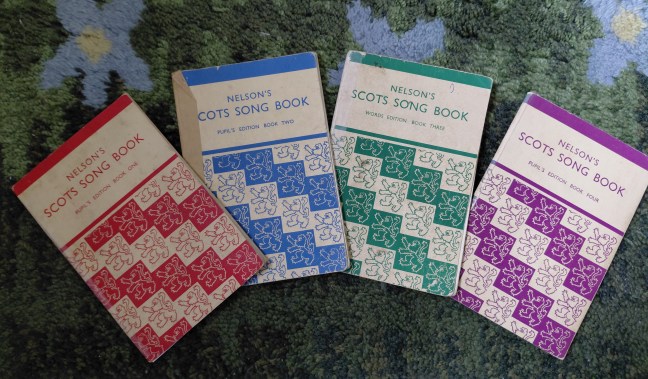
On 18 June 1946, Herbert Wiseman wrote to publisher Thomas Nelson’s editor suggesting a meeting about their proposed Scots Song Book series.
It took another two years before the first of four books rolled off the press.
I’ll be writing much more about this series later this year!

Actually, this blog wouldn’t be here if it wasn’t for teachers! So I’ve paused to consider the importance of teachers in my own personal background, in my working life – and as subjects of my musicological research in their own right.
So, having paused to thank several dozen influential teachers, we come to this blog itself. How many teachers have I mentioned over the years? Well, you only have to type teacher into the search box on my home page, to get a good few for a start!
And there are plenty more music teachers hiding in my A Social History of Amateur Music-Making and Scottish National Identity: Scotland’s Printed Music, 1880-1951. Alan Reid, who did a lot of educational music materials for Parlane, the Paisley publisher, for a start. I haven’t mentioned him on this blog, but I spent a lot of time examining his output whilst I was Ketelbey Fellow at the University of St Andrews. Or William Anderson Moodie, who set Wee Davie for a magic lantern Service of Song, and taught at the forerunner to Jordanhill Teacher Training College.
Not to mention the teachers I encountered in the archives of Thomas Nelson & Sons last year, about whom I’ll be writing later this year.
So – yes, I owe a debt of gratitude to an enormous number of teachers, both in my own education, and in my historical research. I think I need an orchard rather than just one apple!
This isn’t really a scholarly post – just a reflection.
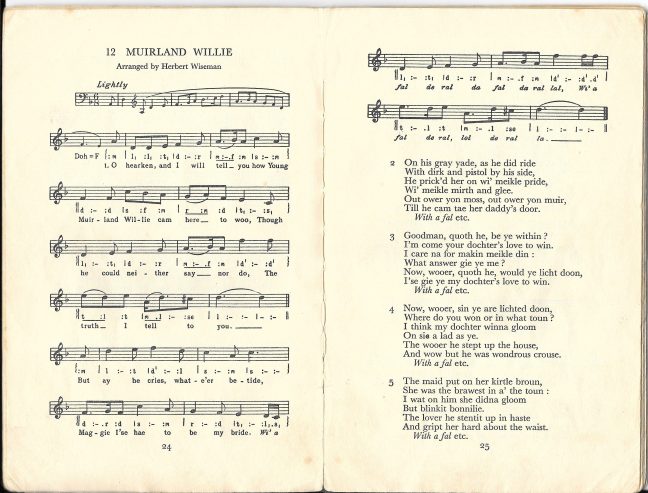
One of my informants remembers singing ‘Muirland Willie’ as their Silver Medal entry, and I was chuffed to find it in my Nelson’s Scots Song Book, Book 3 (‘words edition’). And yes, the ‘words edition’ does contain the melody line as well – just not the piano part.
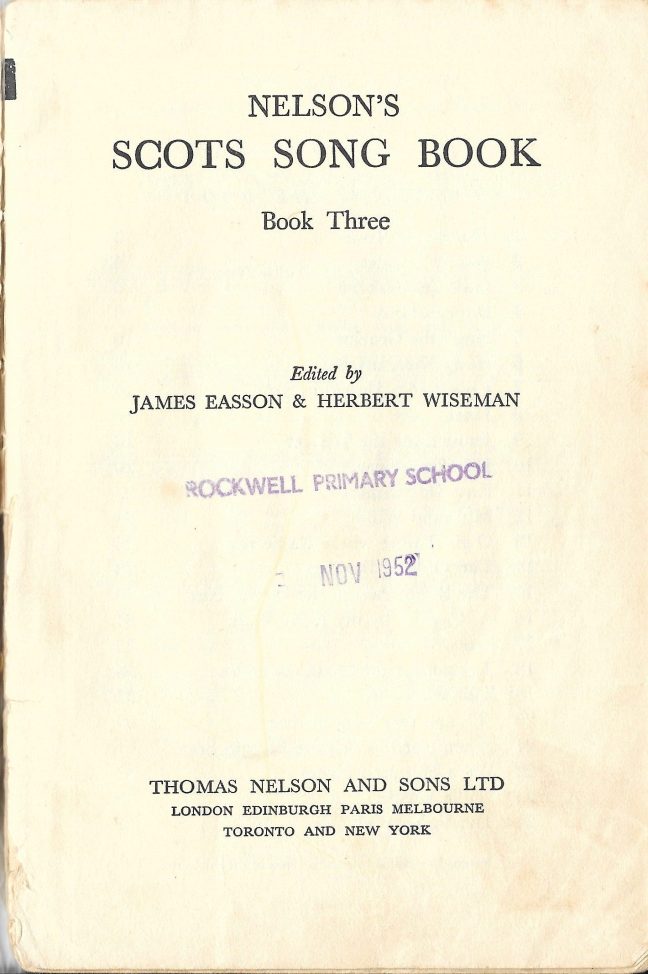
The book had reached me third hand – or was it fourth? How many hands has it passed through since someone stamped ‘Rockwell Primary School, November 1952’ on the title page? This tells me it was bought by a Dundee school the year it was first published. It must have lived in a class collection for some years, at some point ending up in a private home, and finally being sold to a friend of a friend, who generously got it on my behalf.
It’s a little bit battered, so it obviously got well-used. One page bears a carefully drawn treble clef – pretty accurate but not yet fluent – someone had been learning how to write music, evidently! Meanwhile, the back inside cover has a scrawled ‘THE END’! Was there a sigh of relief, or was it just an irresistibly blank page demanding to be scrawled on?
I wonder how many Leng medal competitors used this copy? If books could talk, this one would surely recall feelings not only of excitement, enjoyment and pride, but also occasionally fear, nerves and perhaps embarrassment – all emotions that my interviewees have shared with me.
It would remember teachers who are still remembered half a century later; not to mention head teachers and deputy heads whose own musicality ensured that they gave music its proper place in the schools that they led.
The principal teacher of music at that time […] was a redoubtable lady and she made sure everybody knew everything …1
But I’d better put my little book away and get back to my interview transcriptions now!
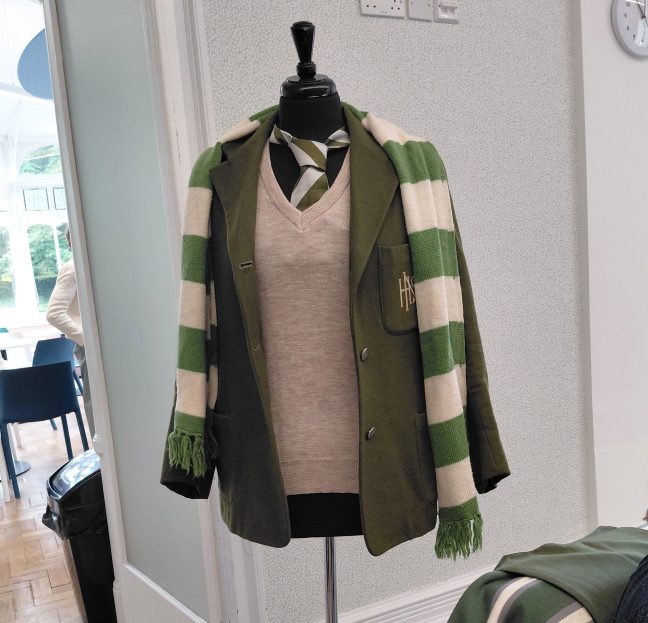
Since I work part-time (1.5 days a week), taking the day off effectively means taking nearly a week off. I’ve been home to Norwich for a fiftieth school reunion – fifty years since we left Norwich High School for Girls, GDST.
In fact, the weekend was significant in three different ways – as well as my school reunion, Dr Edward Harper’s Kilbarchan organ was inaugurated at St Marien, Prenzlau in Germany, and Old Gourock and Ashton Church celebrated its 250th anniversary. But I couldn’t be everywhere at once, so off I went to the reunion, whilst my husband went to the church where he had enjoyed being organist for a number of years. (I drooled over the Facebook postings about Prenzlau, where they seem to have had a fabulous series of concerts and talks in what looks like an absolutely stunning church. Dr Harper would doubtless have been highly impressed. And what lovely sounds were heard on the brief clips that were shared!)
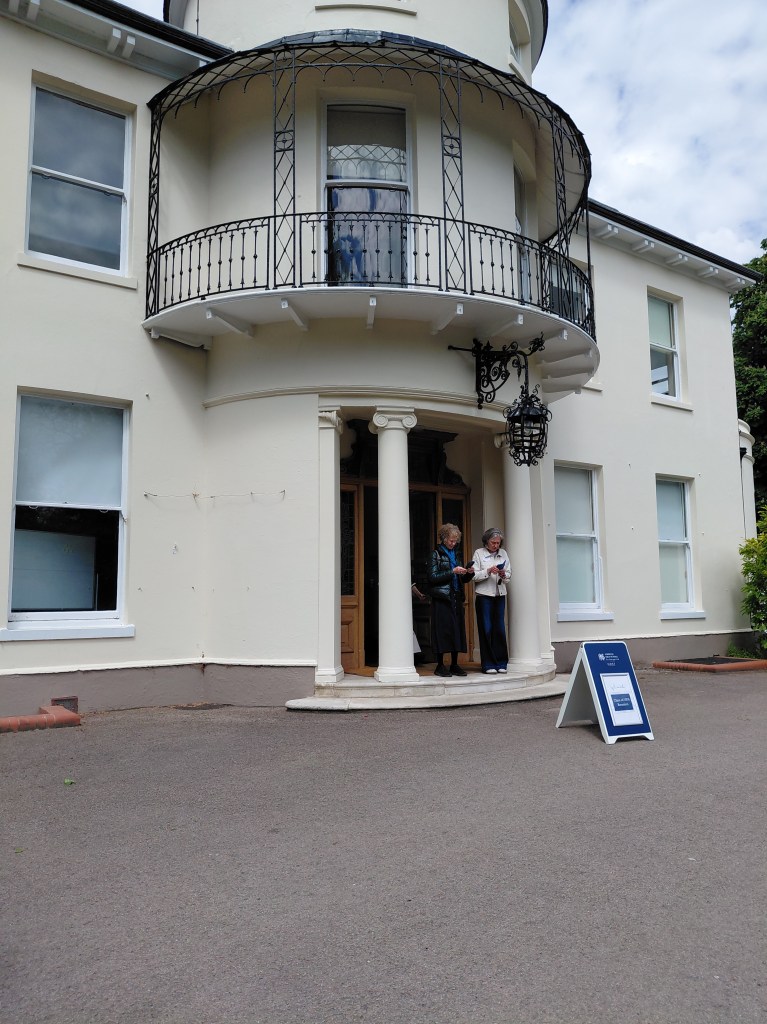
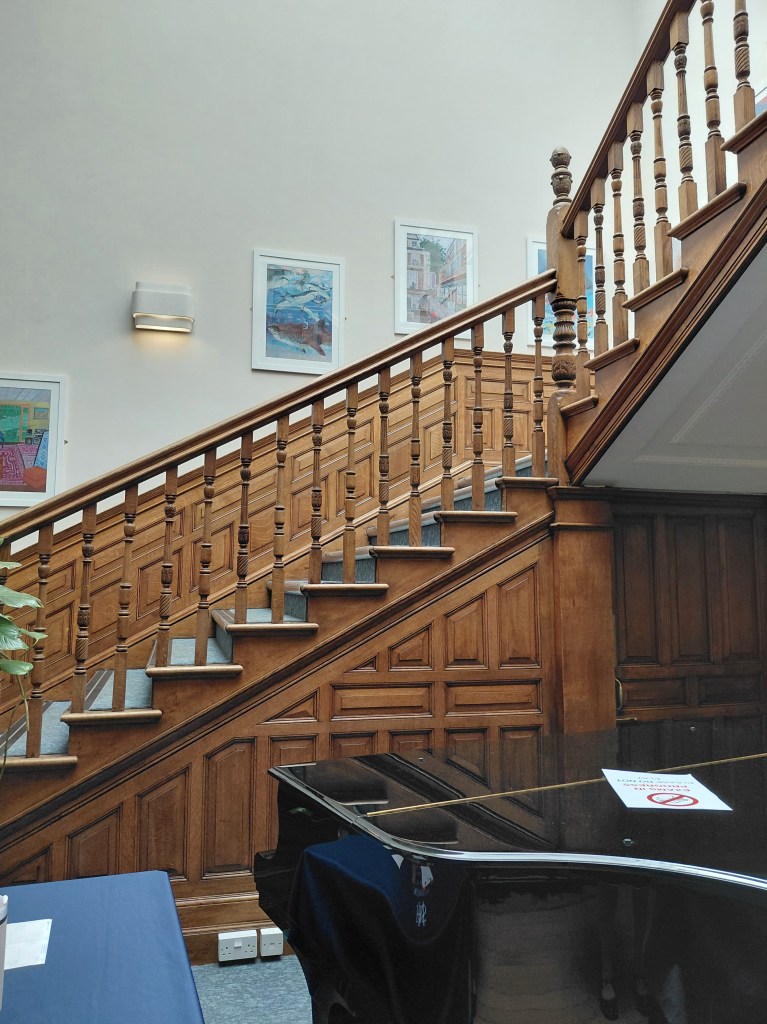
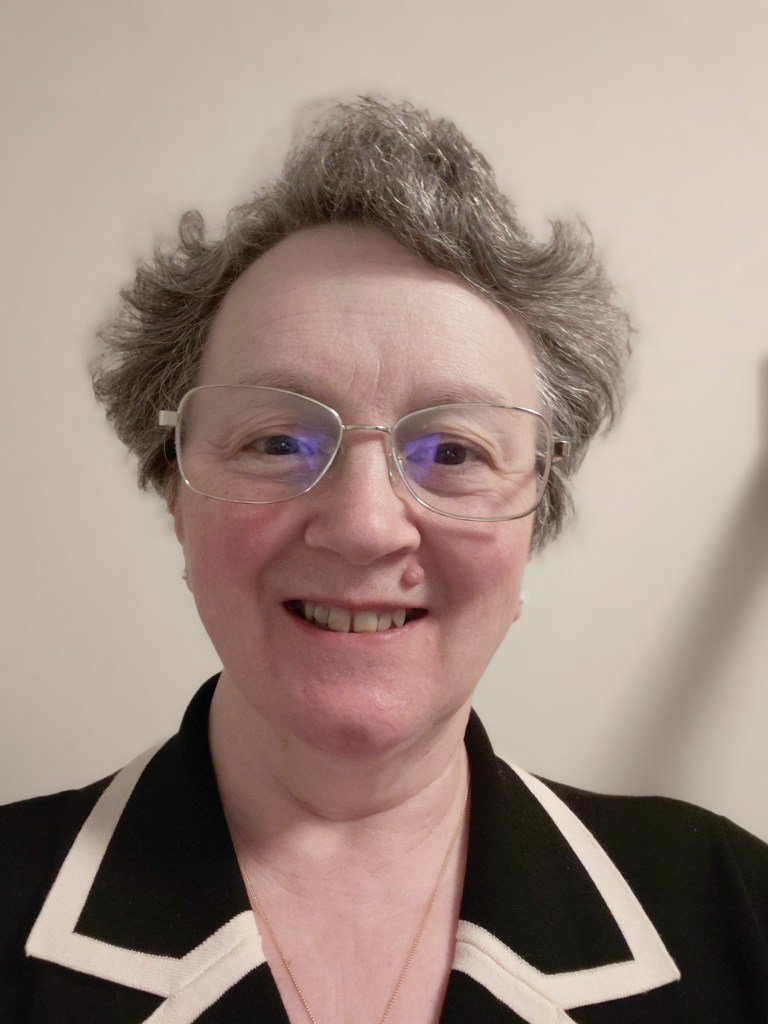
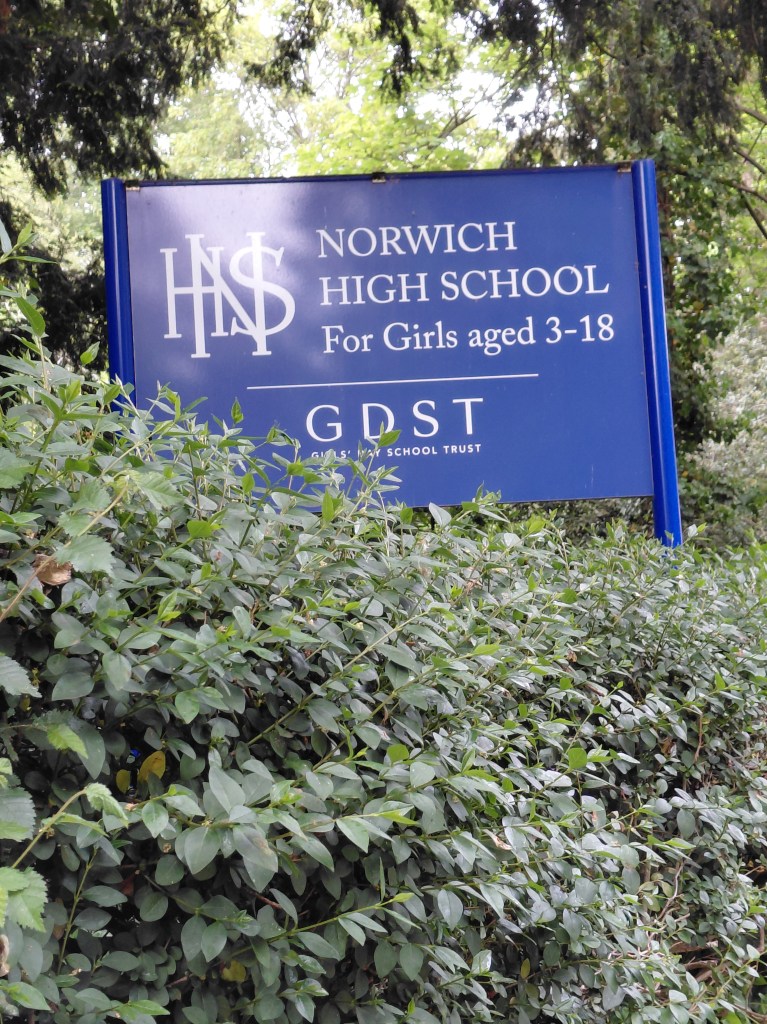
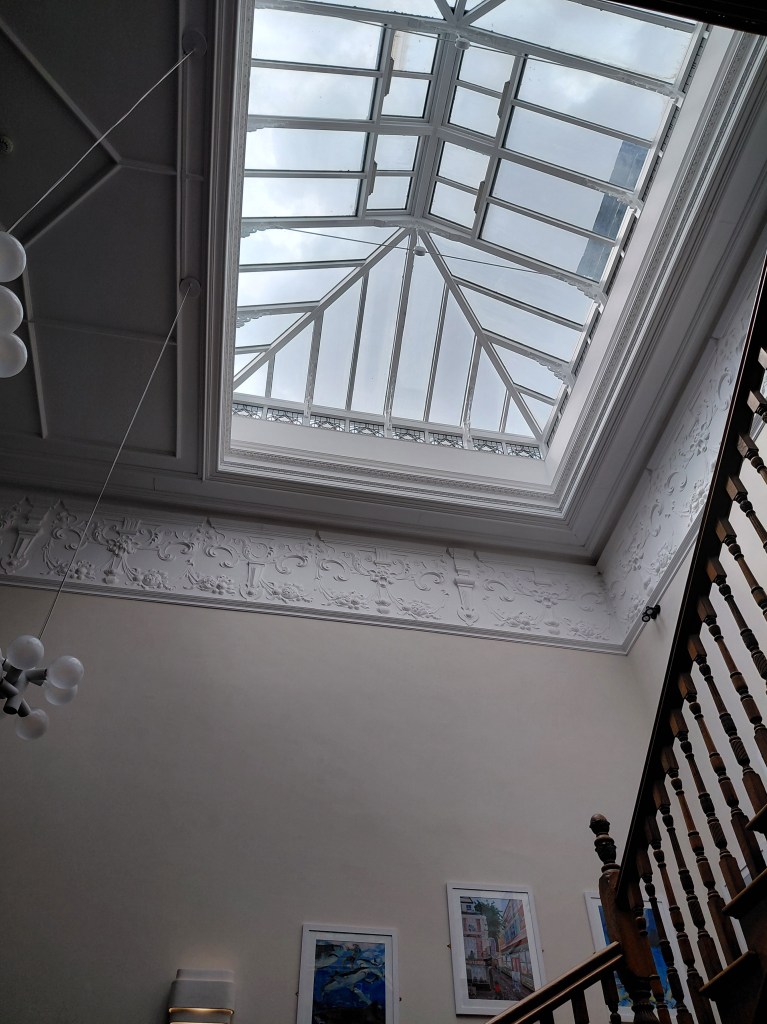
I’m so glad I went to Norwich. I’m prone to focus on negative memories, but everyone was really welcoming, and it was great catching up with what everyone had done, and where they’d been. No-one else had a negative memory of one particular teacher who really did not like me! Then again, I’d kept in touch with the other member of that department for 25 years, and she’d even visited and stayed with us in Glasgow.
I heard stories that I’d never heard before, and was reminded of things that I did vaguely remember. We were shown round the school, exclaiming over the changes and remembering the familiar. The archivist was there, and there were photos and other memorabilia to examine. That awful olive-green uniform!
It was surprising to find that several people had moved away from Norwich, but later moved back. That’s not going to happen for me. Someone who researches Scottish music or social history of Scottish music, is hardly going to remove themselves 400-odd miles south! Some people had continued with interests that they already had at school. Others had taken completely different directions, whether to the upper echelons of corporate life, arable farming or a whole lot of other avenues. I did appear to be the only semi-retired postdoctoral researcher! And if my Scottish music publishers didn’t evince a great deal of enthusiastic interest, then – yet again – oral history research certainly did. People are interested in oral history, interested in memories in general and particularly interested in memories of their school days and school music.
And the trip itself was a nice break. Indeed, I knitted a whole mansized sock on the various legs of my train/replacement coach journey, discovering that knitting can sometimes start unexpected conversations! People like reminiscing about that, too…
I’d better get back to my Leng Medal memories. Today, it’s time to contact people who remember participating in the 1990s – long after I’d left school myself!
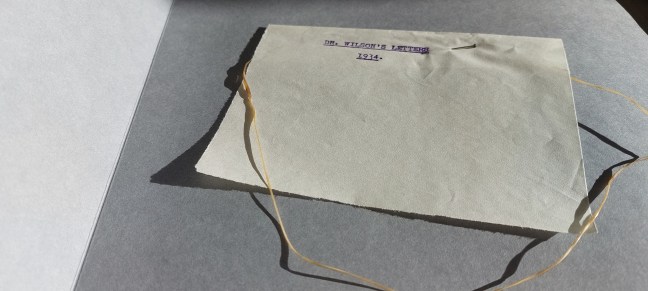
Anyone who has spent any length of time on archival research will agree with me that there are days when nothing of interest really turns up! This week has been a case in point.
On the positive side (and this relates to research time beyond the archives), I used to have ONE spreadsheet listing all the significant names – and relevant dates – of the individuals I’ve encountered over the past year or so, be they Thomas Nelson editors, authors, or connected in some other capacity. I now have a second spreadsheet, charting the weird and wonderful departmental codes appearing on letters and memos to/from the Parkside (Edinburgh) and Pater Noster Row (London) offices; I’ve again listed names associated with those offices. This is likely to be of interest to me, but little interest to anyone else. Still, there’s a quiet satisfaction in having clarified who did what, where and when. Whilst I was working on that, I discovered that one of the earlier editors had previously been an HMI before joining Nelson’s. That was a gratifying discovery, even if he had been a geographer, and had nothing to do with publishing music education materials.
I’ve also continued reading a book about an individual who published a book with Nelson’s in 1935; I’ve borrowed another; and recommended a useful e-book to my home institution library. It hasn’t been a wasted week.
But, glancing through my archival notes and social media postings, there weren’t any significant discoveries. I had a long list of boxes to trawl, in my hunt for interesting correspondence with one particular author, but on Tuesday I realised I’d already seen all that was worth seeing in two boxes, whilst the third box contained ‘the editor regrets’ letters to would-be authors. (A whole boxful of dashed hopes for dozens of would-be authors, ninety-odd years before my own disappointment in an unproductive, rainy day.)
Back I went to Edinburgh yesterday, eagerly anticipating fresh discoveries. Did I find the sought-after correspondence? No. There was plenty to amuse, but I can’t say I learned anything more about music education publishing. For example, my curiosity was piqued by a book proposal for a collection of prayers. The editor wrote to a colleague that he didn’t think they wanted any prayers, but he would decide finally when he saw how the would-be author had prayed. I wish I knew what he decided!
I shook my head sorrowfully at the rather naive author who wrote to Nelson’s asking if they published a particular genre of material. I suppose in the 1930s, it was less easy to find out, but could they not have gone into a library or bookshop and ASKED? Again, there was no copy of a response.
Another book proposal that presumably foundered, was the one unappealingly entitled, ‘The Unamiable Child’. I don’t think they offered the author a contract. (More recently, wasn’t the Horrid Henry series so beloved by children and their parents, about precisely such a child? Maybe the earlier hopeful author was just ahead of their time.)
I did, however, come across some correspondence which might be of interest to a historian of domestic science education. It appears to be a long time since anyone seems to have published anything about one of QMU’s earlier forerunners, the Edinburgh College of Domestic Science. (Tom Begg wrote a book, The Excellent Women: The Origins and History of Queen Margaret College, in 1994.) But if you know anyone currently researching it, then I can advise them that 1933 saw a run of correspondence with Thomas Nelson about a book they were producing. I can let them know which folder to consult, if they’d like to follow this up!
As I approached the end of my second day in the archives, one final memo made me smile. (Again, this had absolutely nothing to do with music – I was just dutifully flicking through pages to ensure I hadn’t missed anything.) A memo was sent to three of Thomas Nelson’s Edinburgh managers in July 1956. They were warned that they might have to entertain a couple of visitors from Melbourne whilst their colleague was away. There were a couple of points that they needed to be aware of. I didn’t read past the first of these!
‘It might be wise to point out that Mr C is a teetotaller’.
Let’s hope they remembered. Reading between the lines, ‘hospitality’ was clearly not always a cup of tea and a scone!
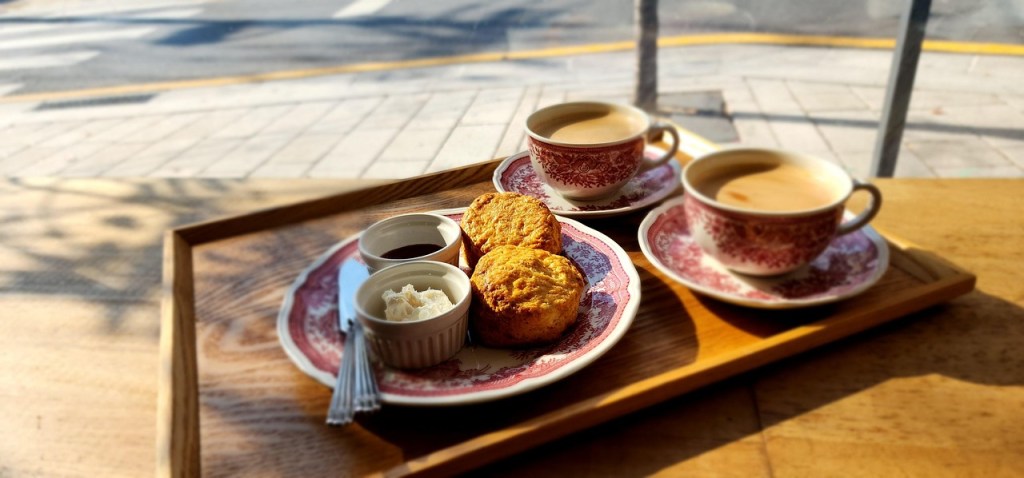
Image by Dayoung Seo from Pixabay

Folks, I got distracted again tonight – beguiled by bamboo pipes, in fact. Let me explain!
Have you heard of Margaret James (1891-1978)? I wouldn’t be surprised if not, but believe me, she really started something in the 1920s. Someone gave the Gloucestershire school teacher a bamboo pipe from Sicily, and she realised this was something that kids could make at school. They weren’t expensive to make, either. (I read an observation that they were made from materials readily available in many homes.)** It apparently took off! Kids liked actually making an instrument then learning to play it. It was certainly another means of practical music-making. Crafting bamboo pipes briefly became the latest thing in classroom music, or so the literature would have us believe. Although unmentioned in the Board of Education’s Handbook of Suggestions for Teachers in 1927, either in the music or the handcrafts sections, by 1933 the idea was being recommended in Board of Education literature and by HMIs (His Majesty’s Inspectors). I do tend to wonder how many pipes were actually being made across the country – did the numbers match the rhetoric? Anyway, Margaret organised courses, wrote books and made at least one recording. Judging by the number of publications, there surely must have been sufficient interest. This is a quick, but not exhaustive, list of works Margaret had a hand in:-
Indeed, Vaughan Williams even wrote a Suite for Pipes (Oxford University Press, 1947), a quartet which was certainly more difficult than the average school pupil could attempt. Here it is, albeit played by a recorder quartet:-
The bamboo pipes do sound sweet, pastoral, traditional – very ‘English’. (I say that in inverted commas, because the question of what sounds ‘English’ is a whole dissertation in itself. I’m not going there.) Which makes it all the more ironic that her original gifted pipe was Sicilian! Anyway, we can agree that their folksy sound is part of their appeal.
Margaret herself started the Pipers’ Guild, which lasts to this day. I did wonder if her bamboo pipe-making movement made it as far as Scotland – was it something Scottish teachers were also doing? Judging by newspaper evidence, the Guild did have a small presence up here, but perhaps not quite as enthusiastically as in England. I won’t hunt further.
Since my research interests are currently in a Scottish publisher producing educational music materials for a widespread market, then I thought maybe I should see if, or how often pipe-making got a passing mention – because their music editor/advisor was nothing if not on the ball. However, by 1939/40, it appears the humble (and ready-made!) recorder had gained supremacy. See this observation by one of Thomas Nelson’s authors:-
[…], who has done a lot of work on pipe playing in schools, composed pieces for them, and might be asked to write a first book on recorder playing, since they’re attracting more interest than pipes now. […] My own opinion is that there is already sufficient pipe music but not sufficient first stage recorder music.’
Similarly, Thomas Nelson’s four classroom books of My Music Guide (1953) mention recorders, but are silent on the question of pipes or pipe-making. Bamboo pipes evidently remained a minority interest, albeit for a long time.
** Glancing at my own garden canes, I doubt they’re wide enough to do anything with. I don’t know if our toolbox is equipped for such a project, anyway.
Picture of Pipers’ Guild Handbook sourced from eBay. (I didn’t buy it.)

I’m contemplating writing another book. It’ll be based on my recent researches as an IASH Fellow, obviously. But I’ve had a brainwave of an idea for the final chapter – which involves a bit more research – so the past few days have been dedicated to exploring possibilities. As I now know, from the historical Thomas Nelson point of view as much as my own present existence as a scholar, publishers like publishing things in series. It helps them sell, if readers can see how a book fits into a larger grouping of books. I’ve been thinking about where my book might fit in.
I’ve also had a wee jaunt to Dundee to talk to a scholar of my acquaintance; and today, I sat down to write an email. Who’d have thought it would take most of an afternoon to write an email?! But when it’s important, it’s worth taking some effort in the crafting of it.
Finally, I thought it was just right. I mused that maybe I should leave it and re-read it tomorrow. But no, I must be resolute. So, I did not prevaricate. More of this thrilling story in due course …

A couple of days ago, I wrote,
I would dearly love to trace a child, or children, who sang from these books. I think these books were aimed at children probably between eight to twelve years old, so the oldest children were born circa 1936-1946.
Well, I have! Five people have reached out to me already – one of them a prize-winning singer. However, it appears I underestimated this title’s longevity. I guessed,
I don’t know how long the books would have remained in use, but my guess is that they’d probably have fallen to bits by the late 1950s. In that case, the youngest users would have been born round about 1950. And that would make them baby-boomers, but several years older than me
I got that wrong! Two (as I predicted) are a bit older than me. Two a little younger. And the very youngest tells me they were at school in the 1980s – still singing from Nelson’s Scots Song Book.
Four are Scots. But the other (one of those a little bit younger than me) was in …
South Wales! (Now I’m curious to know – any more distant sightings, anyone?)
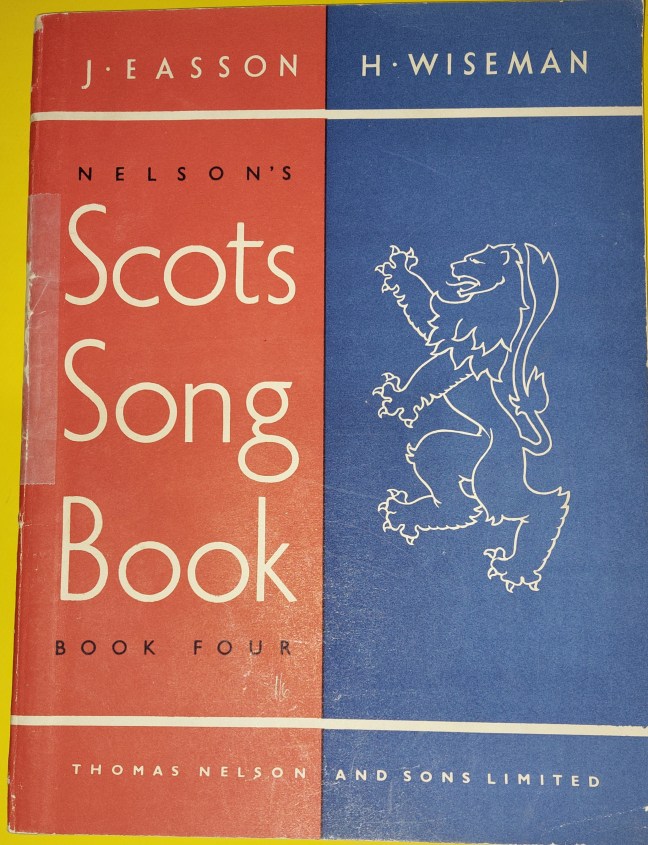
I’ve also, tonight, been gifted a copy of Book 4. I got home and sat down at the piano straight away! What an exciting present. And I can play away to my heart’s content, since it’s all in the name of research.
But I won’t pre-empt my Work in Progress talk at IASH next week. Would you like to hear it? It’s online as well as in person. Click here.

Who’d have thought marking was such energetic mental exercise?! I might have a Postgraduate Certificate in Learning and Teaching in the Performing Arts – I might even have some experience in doing these activities – but I haven’t usually had to do marking. And now I’m almost all done – just one paper to go, this week, and that has got ‘Tomorrow’ written all over it. My brain has had enough for today.
Back soon.

