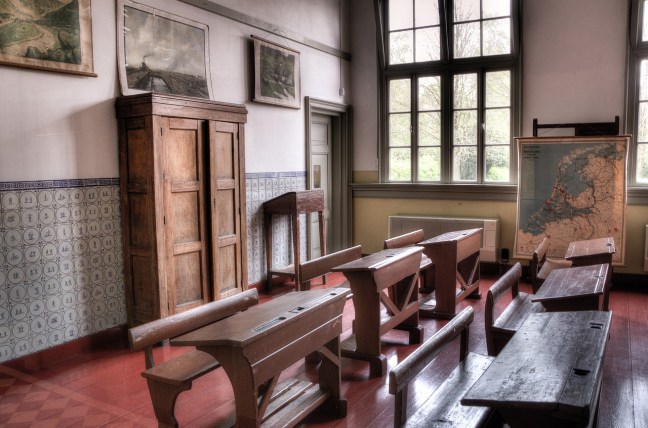
Highland Archive Centre – Conan Bridge School, 1880s

Another Covid-ridden short from me today. See if you can see what excited me about these images of Conan Bridge School inventory …

Highland Archive Centre Facebook Posting 31 Aug 2024

Meddle the Thistle Wha Daur! (Old Poem, New Thistle)

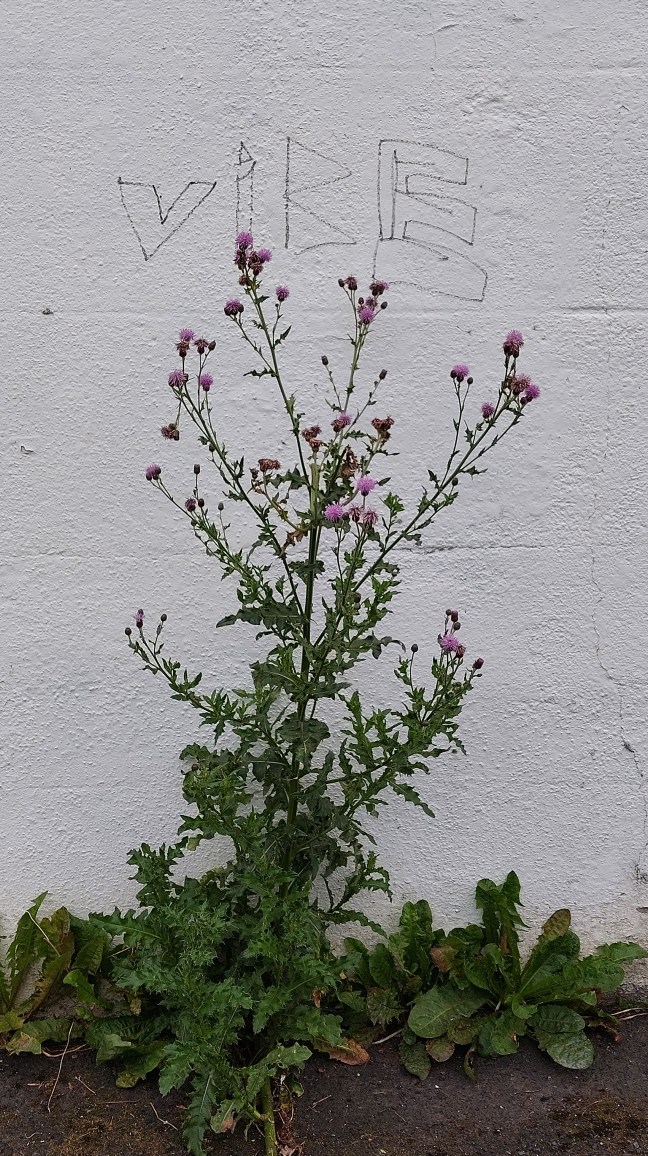
Thistle against a white wall with graffiti reading ;'Vibe'

Our neighbours have a high white wall. There’s a tall thistle growing there, and some young joker has scrawled above it, ‘VIBE’. I don’t know if they were consciously referencing the metaphor of a prickly thistle to represent Scottish, and most particularly, Glaswegian identity, but – hey, they wrote it directly right above that thistle, so who knows? I took a photo anyway – it was too good an opportunity to miss.

Every time I walk down the road or get into my car, there it is, and every time it reminds me of a poem by one of ‘my’ Scottish song-writers. He published his book of poems in 1894, and it’s well out of copyright, so I can share it with you. Just look at that last verse – there’s a proud, very nationalist Scot for you!

“I’m a Scot and I carena’ wha’ kens it, Juist meddle the thistle wha’ daur,

They’ll maybe get mair than they wantit, An Scotia be little the waur …”

To be honest, I’m more interested in the poet for his work as an Edinburgh music teacher, than as a poet or local historian, but it’s all part and parcel of who he was. Two different musicians set this song to music – one was really pretty uninspiring, but the other one’s not too bad! (Well… musically competent, not remotely ‘Scottish’ sounding, nor particularly memorable, but competent.)

The poet-teacher gets a significant mention in my forthcoming book, especially his views about children singing Scottish songs.

I have just sent the manuscript back to the editor with my own amendments to the copy-editing, so watch this space! Now to turn back to the question of the second index … which I drafted a few weeks ago, but which now needs fine-tuning before I get the proofs back to link my index-terms to the publisher’s page numbers!

Image by Ralph from Pixabay

Why all the Fuss about Referencing?

I blogged for the library this morning. It’ll hopefully be of use to our new students 🙂 – you can read the text below.

https://whittakerlive.wordpress.com/2023/10/16/why-all-the-fuss-about-referencing/

You turn up to start a new university course, all ready to elevate your ukulele* performance to the highest possible level … and suddenly, you’re being told about referencing and citation, catalogue searching and note-taking, and you have a written assignment which terrifies the life out of you? How have things got so serious, so soon?

As you’ll have been told, it is very important that whoever marks your essay can see where you drew your information from. When you studied maths at school, your teachers probably told you to ‘show your workings’ (or some similar expression), right? Referencing is pretty much the same idea – they need to know how you arrived at your final argument, and which authorities informed your thinking. Referencing (some people call it citation) is how you show your workings in academia.

AI generated image: Image by qiaominxu 橋茗旭 from Pixabay

You’ll also have been told about the Turnitin software which can determine whether your submission is likely to be all your own work, or cut and pasted from various other sources without acknowledgement. Academic honesty is all-important. Using other folks’ work is not acceptable – and using AI such at Chat GPT is equally frowned upon.

‘Chat GPT can’t do referencing’

(said a colleague from another institution, in discussion)

Is this correct? In the spirit of scientific discovery, we decided to put this to the test. We wrote an ‘essay’ (well, a couple of paragraphs) containing some genuine references, but also some downright lies about pizza and curry! then asked Chat GPT to write a piece of prose with a bibliography.

  • Chat GP entered into the spirit of the thing, and made up some titles in line with the nonsense we’d written!

Well, this wouldn’t be much good in an essay, would it? Made up titles? No publisher details? No, thanks. Perhaps, we thought, we had been wrong to TELL Chat GPT we were only playing with it.

  • Removing the dates, we left incomplete references. Chat GPT completed every reference with ‘(year of publication and the title are not provided).’ That wasn’t much use either.

How could we get Chat GPT to produce a Harvard reference? Indeed, any decent reference?

  • We tried a third time. This time, we left the imaginary essay out of it, and just gave Chat GPT five authors’ names and the years of their genuine publications.

Chat GPT was stumped! However, it was scrupulously polite in admitting it:-

‘I apologize, but I couldn’t find specific references or sources for the provided citations. It’s possible that these references do not exist or that they are not widely known in the academic or literary world. If you have any other questions or need assistance with different topics, please feel free to ask.’

Chat GPT, 16 October 2023

So, it’s true. You can’t get Chat GPT to write a Harvard reference! It might be tempting to try to use technology to help write your essay, but you’re seriously better off doing the work – and the referencing – yourself! You learn, your tutor sees that you’ve done the work, and everyone is happy. (NB The library can help you find resources to get your referencing right. It sounds complicated, but it’s really quite easy to get the hang of it. Look for the Ask a Librarian link on the catalogue home-page.)

*No offence intended to ukulele players!

Guys, Guys! Stop Squabbling! (A Musical Debate)

Old school classroom

The year is 1943, and the music teachers are debating.

An editorial in a music journal was followed by a heated discussion. It was all about the best way to get kids reading music – and believe me, they didn’t unanimously approve of the new, fashionable trends! One enlightened individual asked whether anyone had asked the kids what they thought. The editor remarked that we didn’t ask what they thought about learning maths, so why ask them about learning music? There was even some gloomy muttering about Beveridge and the welfare state …

On the whole, it was a gentlemanly conversation – and I can use that word, because the correspondents were, by and large, men. Not entirely – there was a lengthy contribution from a woman teacher training instructor, too.

After publishing a selection of responses over the three months following his editorial article, the editor attempted to sum up the arguments in the following three issues. He named and shamed those he disapproved of, stating quite openly, that someone’s opinion was frankly a load of nonsense! (I’m summarising – these are my words, and not the journal editor’s.)

The second, summarising editorial was supposed to be the end of his [lengthy] summary. But it took yet another editorial before he finally did finish it!

In actual fact, they almost all agreed that things weren’t as good as they had been, forty years earlier; precisely when the rot set in, was open to debate. Moreover, everyone blamed it on the politicians and inadequate time allocations.

Plus ca change …?

My New Favourite Journal

Victorian classroom, children seated around piano.

Pursuing one particular aspect of my recent research that fascinated me, I’ve turned up a number of useful references that I now need to sift through. I’ll still be working on this task in St Andrews this week.

History AND Music AND Education AND Scottish

The literature search has certainly had its challenges. Searching on History AND Music AND Education AND Scottish, just won’t cut it in this situation!

In one chapter of the book I’ve just finished writing, I’ve written about Scottish music publishers and some of the materials they produced for Scottish music education. Now, I need to move on beyond my book: I want to know how much their resources were used or disseminated beyond Scotland, and I want to catch the pedagogues talking about them! The tricky part of this search is in ensuring I get a historical perspective – I’m not looking at how the history of music is taught today, but a particular aspect of the history of teaching music.

One journal in particular wasn’t an obvious resource when my main focus was on Scottish music publishers. However, now I’m thinking even more deeply about their educational materials, I’ve just found a journal that looks distinctly promising:-

And I’m also going to be combing some resources on English music education, in the hope that some Scottish resources or pedagogues get at least a passing mention. If they’ve been mentioned, then I don’t need to reinvent the wheel. If not, then I have a blank canvas, and that in itself is exciting.

Why study history?

There are lots of arguments on social media about why we should, or should not study history. I freely admit – I think we should! I really liked a blogpost by someone whom I follow on twitter, George Harris (@HistoryLecturer):-

What is the Point of Studying History?

History Lecturer, Wednesday, 5 June 2013

I’ll be adding this link to my Zotero bibliography, ready to fire at anyone who dares suggest that studying history is not worthwhile!!!