Just a Boy

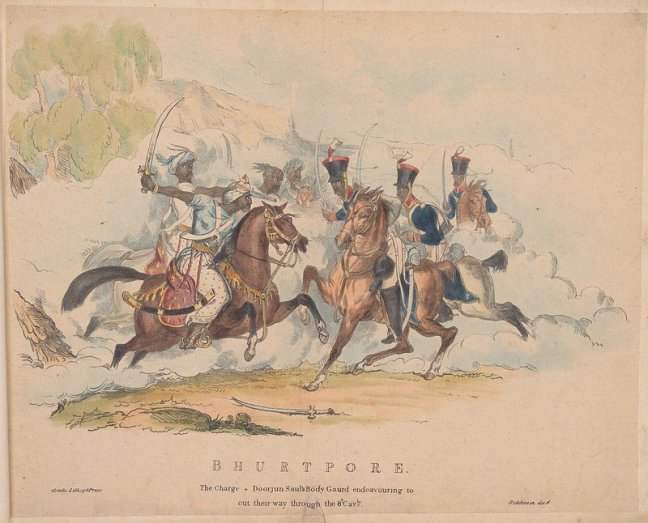
Siege of Bhurtpore

This morning, I examined Trumpet Major James Smith’s military enlistment and discharge papers online. His discharge was on health grounds – but he still lived another twenty-three years. One can be unfit for soldiering, but still fit enough to live a useful life away from the battle-field or garrison. Indeed, he had married four years before his discharge from the army, and had quite a big family, over the space of twenty-odd years.

I was quite moved by the poignancy of fourteen-year old James’s ‘Attestation’ in 1826 (his enlistment papers) – he was so young, and so small to be joining the army. He still had another thirteen inches of height to grow, going by his discharge papers! (Fourteen-year old boys are an average of 8 to 9 inches taller nowadays, two centuries later.)

Mary Anne Smith's poetry books

Mary-Ann enjoyed writing anapaestic tetrameters; I found several of them, and similar variants, amongst her poetry collections. Next week, I’m going to go back to the library to look at some more of her poems. In particular, I’m keen to see the poem she wrote ‘To James’ after his death, in an Addendum at the end of her second collection.

Anyway, I wondered whether I could pen an anapaestic tetrameter of my own, so here it is – my first attempt at writing in this particular poetic meter. I hope Mary-Ann and Rose would approve:-

You were four feet, nine inches, your eyes grey but bright,
Just a boy of fourteen - still a lad;
Though you hadn't near equalled your father in height,
You were counting the days till you had!
You were fair and light-skinned, with a healthy physique,
And you'd finished your schooling at last;
You knew what came next - you were keen to step up,
Leaving playthings behind in your past.
Growing up in the army, your future was clear -
You enlisted in steamy Cawnpore,
A Dragoon, bravely riding with no trace of fear -
And youโ€™d make your Ma proud, thatโ€™s for sure!
But how long would you soldier? How long in Cawnpore?
Would you battle, or help keep the peace?
Would your bugle lead soldiers to brave acts of war,
Or might you succumb to disease?
Just a boy, starting out in the steps of your Pa,
With your trumpet, a sword, then a horse -
With your musical gifts you were told youโ€™d go far,
But at fourteen, time still took its course.
For the marching, the drills, and the beat of the drum
Would have thrilled you enough at the start,
Now your schoolbooks were closed and your work had begun,
Youโ€™d need strength, and a resolute heart.

Horsepower: the Museum of the King’s Royal Hussars. Timeline showing that the 11th Hussars had been engaged in the Siege of Bhurtpore only the year before.

Hunting for Heroines

(Or should this be, ‘Holding out for a heroine?’) I love looking for the places where my Scottish music heros and heroines lived and walked. No particular reason – I just like to visualise where they lived. In fairness, it may tell me nothing more pertinent than to inform me that they lived in a very luxurious, upmarket neighbourhood – or one that has seen better times – or indeed, one that may never have been particularly swanky! If they were a church organist or a teacher, or supplied music to dance musicians, it’s nice to see how far they lived from their work. In any case, it’s an innocent enough obsession, and sometimes I manage to find a coffee whilst I’m out prowling!

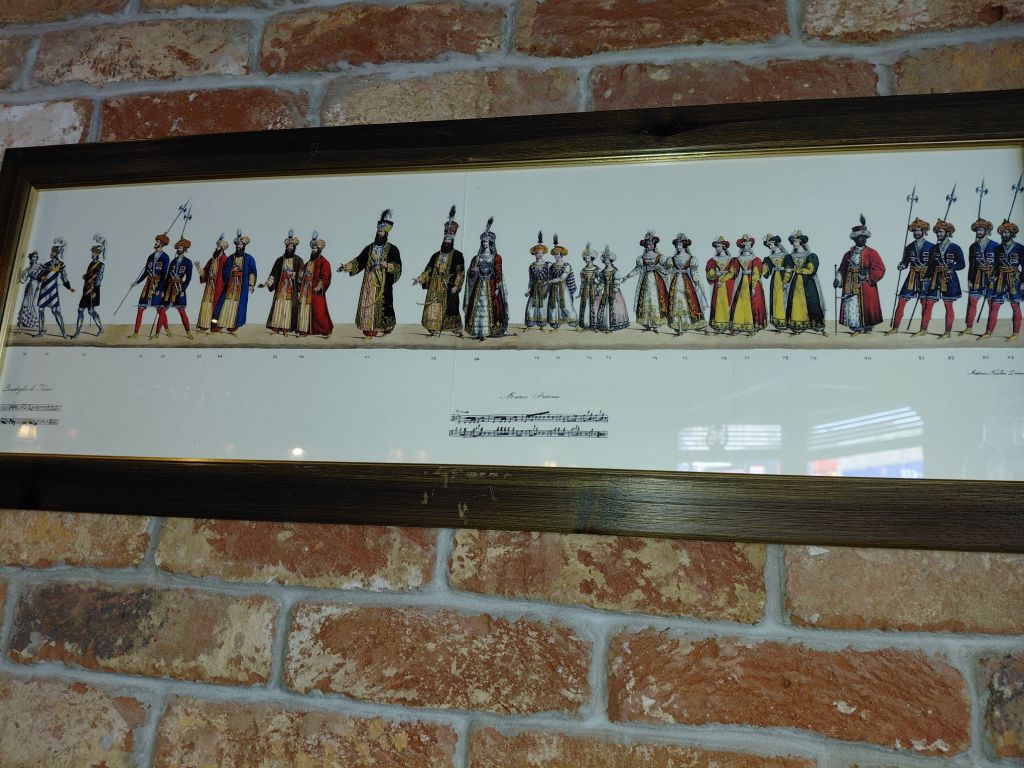
Out we went into deepest Lanarkshire earlier this week, in search of the birthplace of one of the two women I’ll be talking about at the conference in a couple of weeks.* We couldn’t stop for a photo, in a busy street, but I’d seen it on Google maps in any case.ย  We had a coffee just round the corner in the main street. (I believe it’s under Turkish ownership, which might explain the intriguing illustrations of quadrilles in different national costumes, on the walls! Look carefully – there’s a Marcia Persiana amongst them.)

Quadrilles, illustrations found in an antique shop by the cafe owner

But I didn’t expect, a couple of days later, to find myself looking across at one of the addresses that our budding composer occupied in Glasgow. Buildings change, and it looks as though this one has been reduced to two storeys since our heroine lived there with her mother and a couple of siblings in the 1890s. So … you may or may not be looking at the tenement flat where they lived, but you’re definitely looking at the tenement!

It’s just along from the Fabric Bazaar and the famous Barras market.  Since Piping Live has been on, and yesterday it was the second day of the World Pipe Bands Championships at Glasgow Green, there was a distant, constant sound of drones, and kilts swinging round every corner.

Yes, even in the fabric shop, the reason for my outing in the first place. No kidding.


*The Royal Academy of Music’s September conference, Women and Musical Histories, 1789-1914. My paper has possibly my longest ever title-

‘The Trumpet Majorโ€™s ‘Poetess’ Widow; the Scottish Shipping Magnateโ€™s Daughter and the Retired Barrister: The Importance of Parental Support to Musically Gifted Girls in the Late Victorian and Edwardian Eras’.

Social History: Not Just Music!

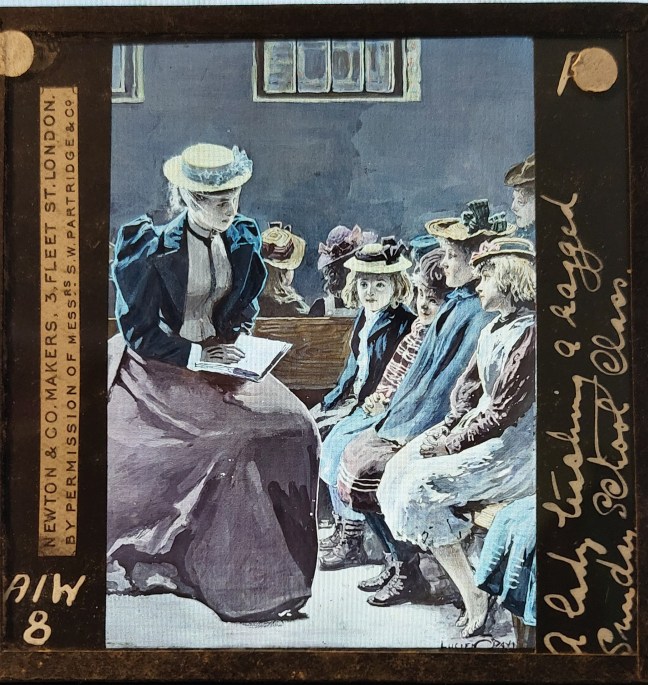
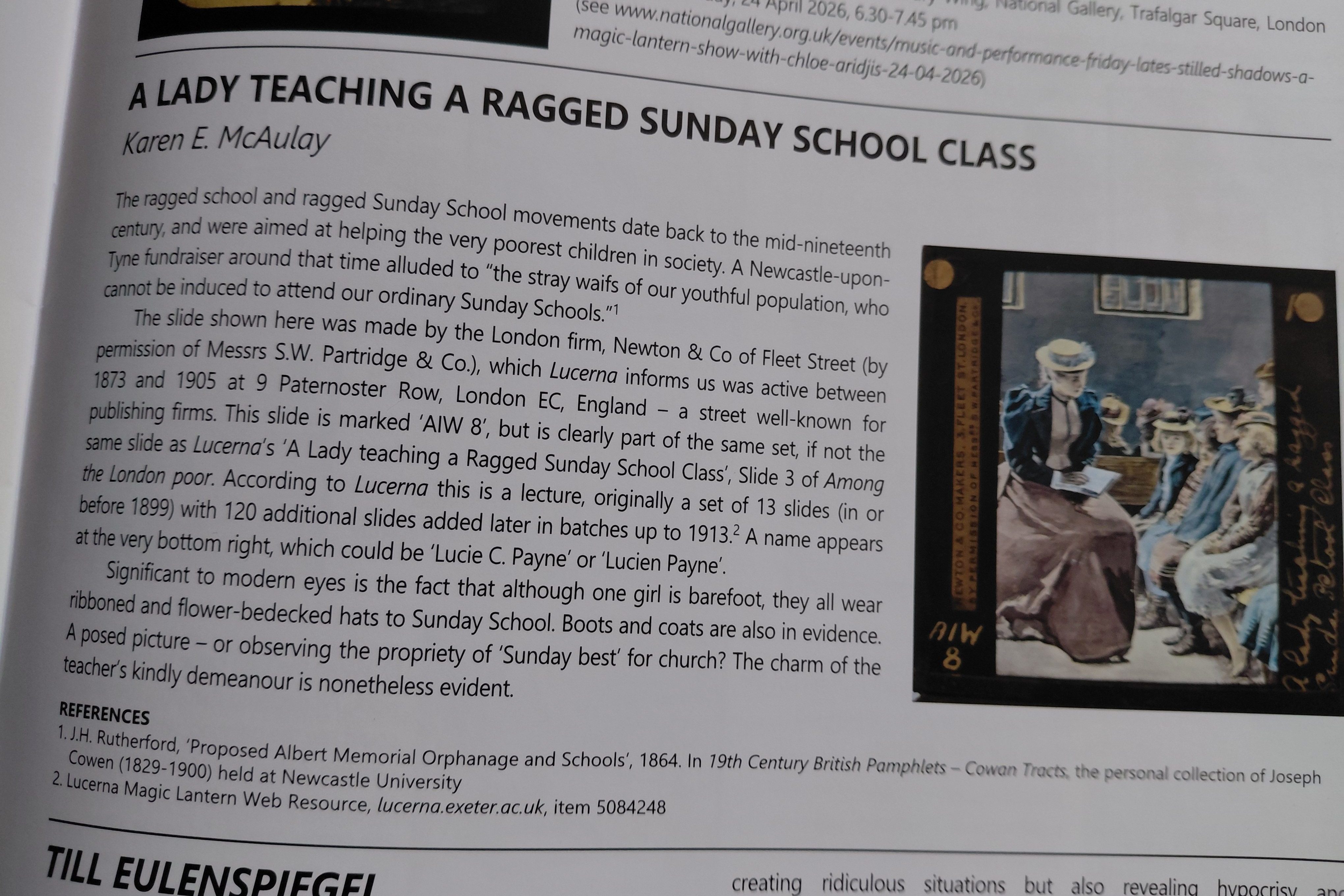
A Vctorian lady teaching children in a ragged Sunday School.
The Magic Lantern - title logo

Some months ago, I was looking for a picture of a Victorian Sunday School, to illustrate my writing about music for Sunday School use. I found an enchanting magic lantern slide, and – eBay being such a tempting resource – I immediately snapped it up. In truth, I just fell in love with the image: the children aren’t standing singing, but it conveys an impression of a kind and gentle Sunday School teacher, and attentive pupils. (Perhaps it also puts me in mind of attending Sunday School back in the 1960s?)

Anyway, I wrote a couple of paragraphs about it for The Magic Lantern (no.46, March 2026), and the copy duly popped through my letter box yesterday. Since the newsletter may prove hard to source in future, I’m taking the liberty of reproducing my piece here. I can hardly call it an article – it’s too short!

Entire annotated image in The Magic Lantern no.46, March 2026, page 13.
‘A Lady Teaching a Ragged Sunday School Class’, The Magic Lantern no.46, March 2026, page 13. DOI:ย 10.13140/RG.2.2.36840.43521

‘February Article of the Month’ – Delighted!

Pink Scottish heather plants

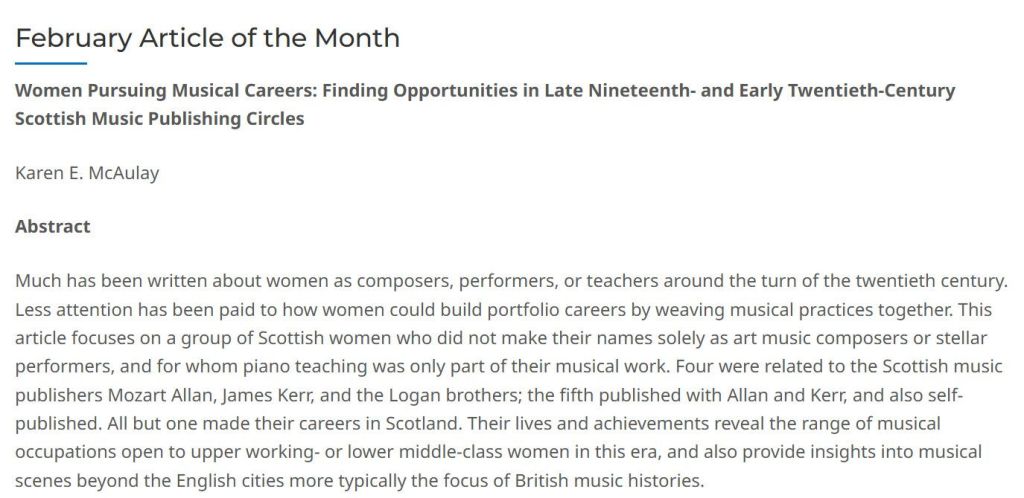
What do you know? I’m delighted to discover that my article is February Article of the Month in vol.56 of the RMA Research Chronicle!

Women Pursuing Musical Careers: Finding Opportunities in Late Nineteenth- and Early Twentieth-Century Scottish Music Publishing Circles

Good News! Article now Published in RMA Research Chronicle, and an [unrelated] Book Chapter Pending

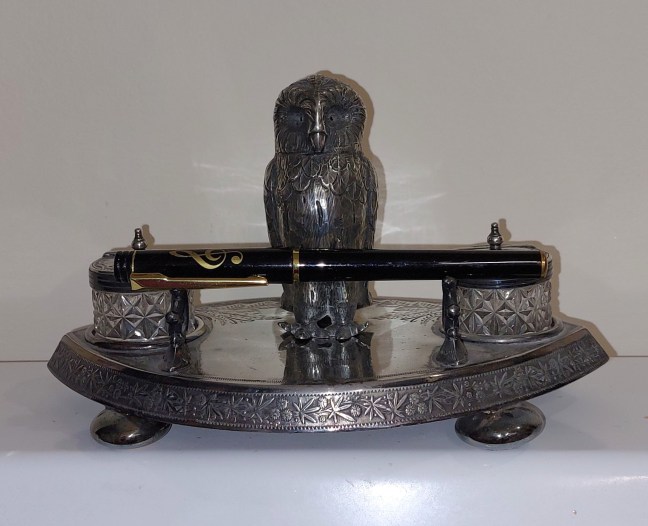
Silver Victorian pen and ink stand

A couple of weeks ago, I mentioned that my RMA Research Chronicle article was now available online as open access. Today, it’s actually in the published issue. Receiving this email is a great start to the day:-

“your article, ‘Women Pursuing Musical Careers: Finding Opportunities in Late Nineteenth- and Early Twentieth-Century Scottish Music Publishing Circles’, has now been published in Royal Musical Association Research Chronicle! You can view your article at https://doi.org/10.1017/rrc.2025.10009

Citation Details

Writing about Tourism

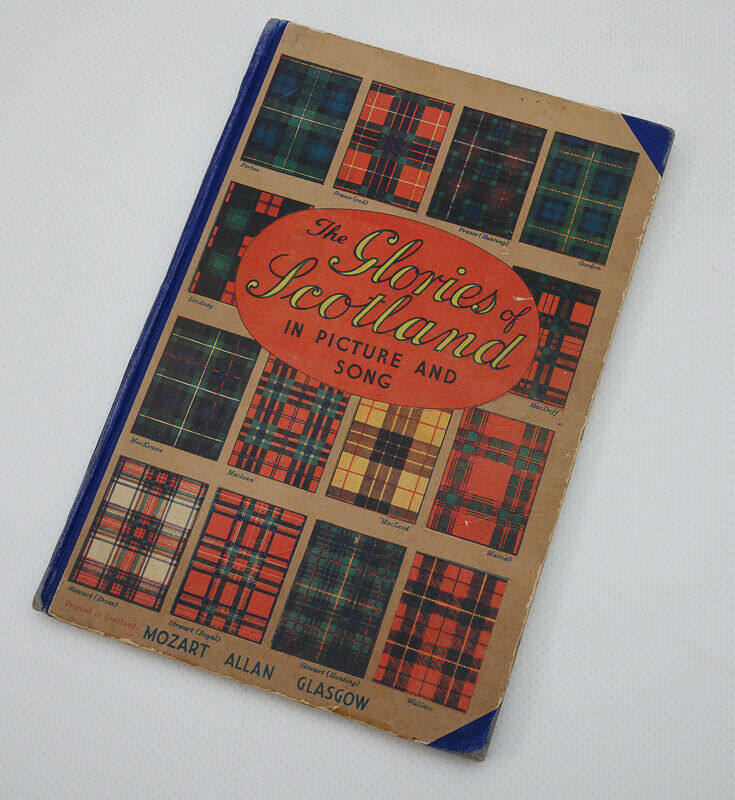
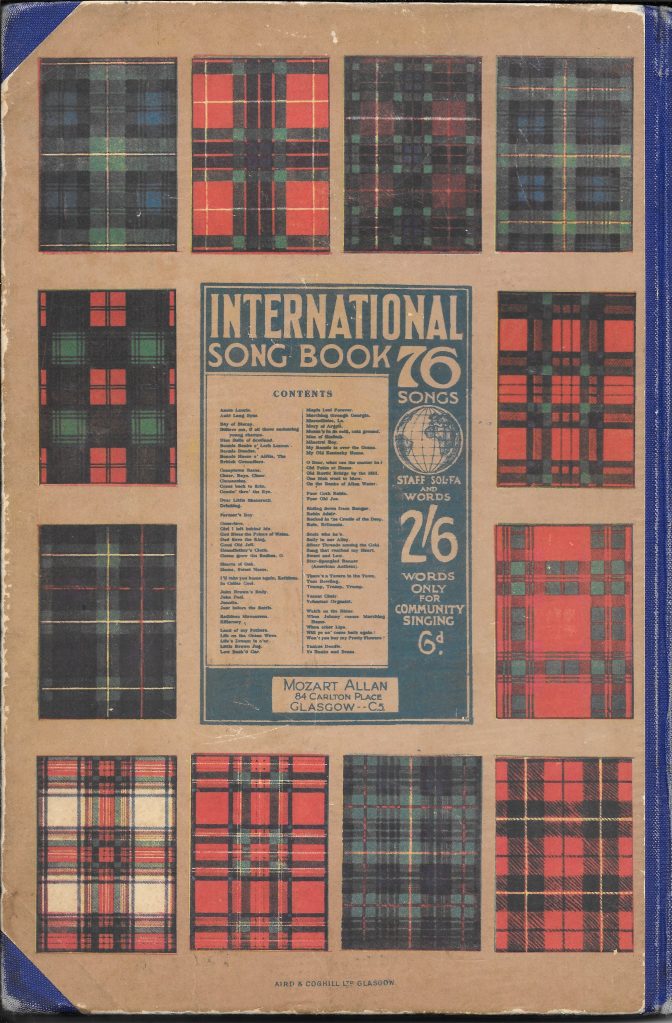
What’s this?, I hear you ask. Why would a musicologist write about tourism? Well, it’s like this: one of the song book titles that I explored in last year’s monograph, The Glories of Scotland, really deserved more space than I could give it in a monograph devoted to a nation’s music publishing. However, the opportunity came up to contribute a chapter to a Peter Lang Publication, Print and Tourism: Travel-Related Publications from the Sixteenth to the Twentieth Century, edited by Catherine Armstrong and Elaine Jackson.

Today, I received the final proofs, which means that the book itself can’t be very far away. I really enjoyed writing this chapter – you could say that it’s decidedly more about publishing history, and tourism, than conventional musicology – and I really look forward to it actually being published.

My chapter (19 pages):-

‘The Glories of Scotland in Picture and Song’: Jumping on the Festival of Britain Bandwagon?’

Proud Addition to my Published Output: Women Pursuing Musical Careers: Finding Opportunities in Late Nineteenth- and Early Twentieth-Century Scottish Music Publishing Circles

Edwardian lady and two little girls. Picture has a floral border.

Published online today, 12 January 2026, in the RMA (Royal Musical Association) Research Chronicle, by Cambridge University Press, on Open Access:- click here.

Writing this article was enormously fulfilling. I had encountered these ladies whilst researching my latest monograph, and I became convinced that they deserved profiling in their own right, and not merely as bit-parts in the larger picture occupied by their husbands, fathers and brothers.

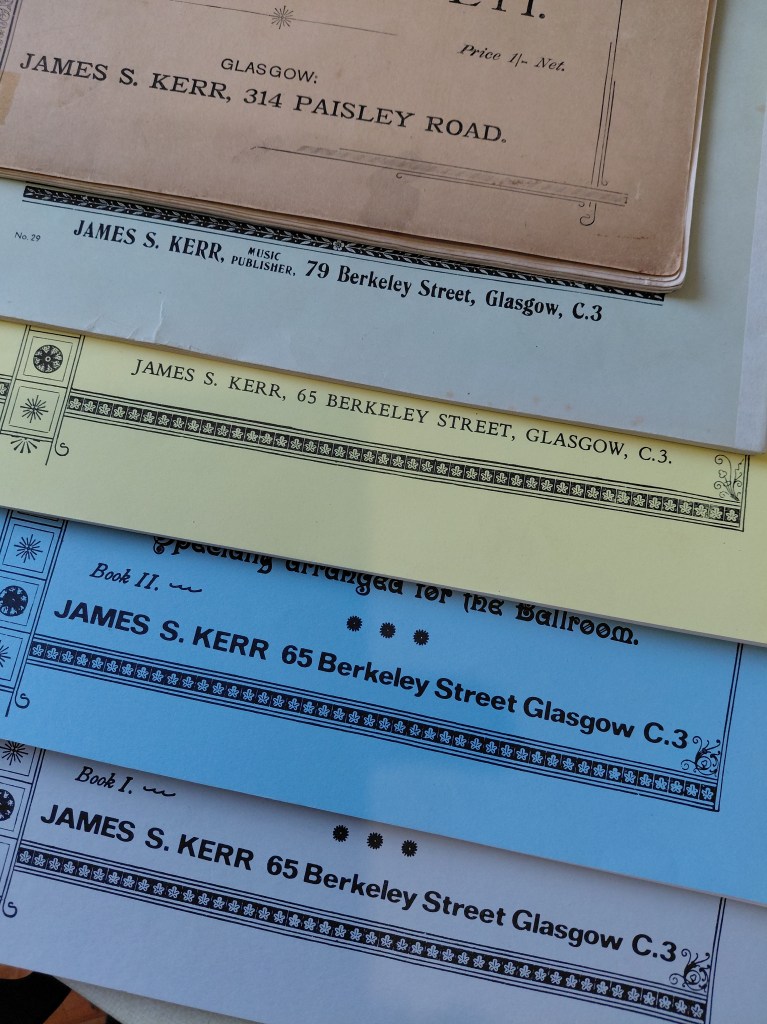
The kernel of the abstract states that, ‘This article focuses on a group of Scottish women who did not make their names solely as art music composers or stellar performers, and for whom piano teaching was only part of their musical work. Four were related to the Scottish music publishers Mozart Allan, James Kerr, and the Logan brothers; the fifth published with Allan and Kerr, and also self-published.’

And all had fulfilling portfolio musical careers. Read on, and I’m sure you’ll agree!

In Search of a (Minor) Hero

Remembering my fruitful walk on 3 January 2023, I looked outside today – yes, the third of January again – saw the sun shining (athough the temperature was literally freezing out there), and decided to go on another research-and-exercise outing. What could possibly go wrong?

I’ve been exploring the story of a Victorian Glasgow music professor, so I headed for St George’s Cross by subway, to see a former church where he had once been organist. He had started his tenure in an earlier building, which was burned down in a fire, but a new one was built in a mere two years, so he must have resumed duties at that point. I already knew that, as with organist Maggie Thomson’s Paisley church, this Glasgow church had likewise now been converted into rather classy flats.

St George’s-in-the-Fields, Glasgow

Unperturbed, I headed next to the Mitchell Library, and up to the fourth floor where the old music card catalogue lives; it has never been digitized. This eminent individual certainly composed enough, but mostly in a light-music vein, and not published by any of Glasgow’s bigger music publishers. However, I was still surprised to discover that he is completely unrepresented in the card catalogue.

Ottoman Coffeehouse

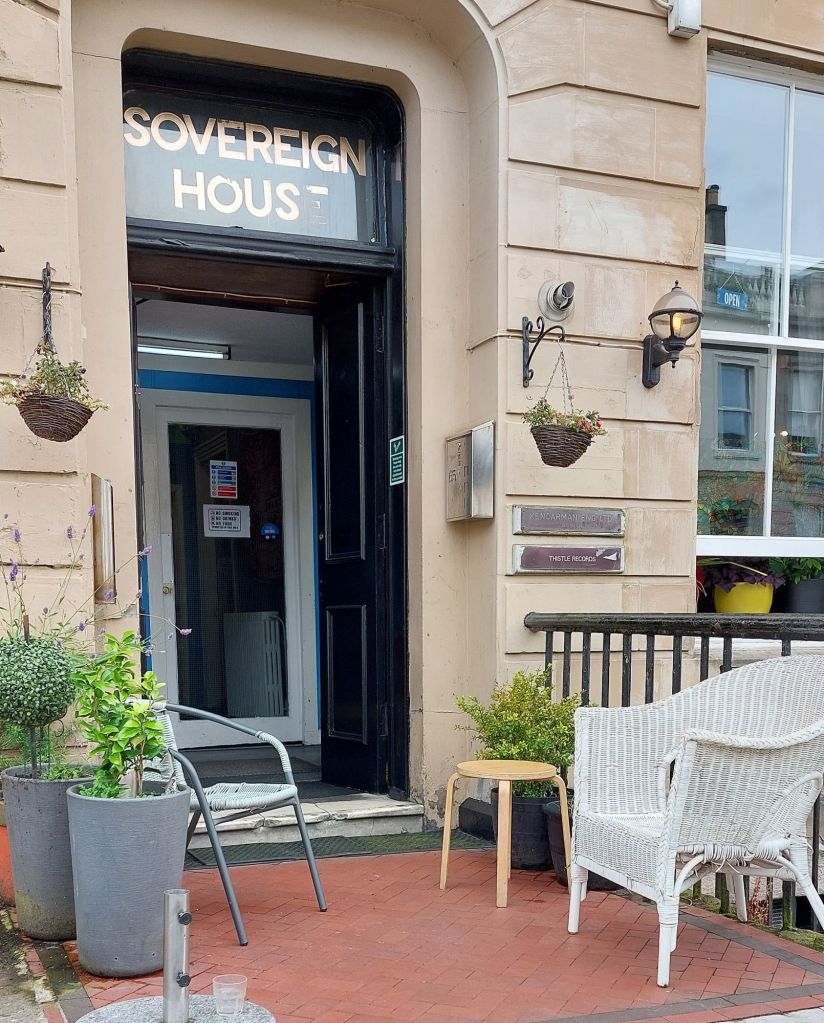
To drown my sorrows, I headed next to a celebrated Turkish coffee shop in Berkeley Street. (The premises had once been a club for Glasgow musicians, and our hero had been included in a song-book that they sponsored; clearly I needed to have a coffee there in his honour.) Foiled again! There was a queue out to the pavement, just to get inside the cafe. Back I went to the Mitchell Library cafe, to get my coffee more quickly!

It was still bright and sunny outside, so my next port-of-call was India Street (on the opposite side of the M8, near Charing Cross station). This had been both of professional significance and latterly home to our hero, and although I knew modern developments had taken place, I still hoped that I might be able to walk the length of the street. Thwarted! Scottish Power sits squatly and solidly across the line of the road, and pedestrian access is blocked by ongoing building works before you even get to it.

I could have headed into the city centre to gaze at the Athenaeum, but I’ve passed it hundreds of times, and there are plenty of pictures on the web – it wouldn’t have felt like much of a discovery. Sighing – for the mere glimpse of a road sign at the wrong end of  India Street had not exactly thrilled me – I headed for the bus home.

But fate had one more twist for me: whilst I was looking on the travel app to find out when the next bus was due …

… the next bus sailed past my stop.

I decided that maybe walking briskly to the Subway would be quicker than waiting for another bus. At least the Subway dates from the era when our hero was in his prime and doing well.

‘How did you get on?’, I was asked, when I got back home. I was forced to admit that, apart from St-George’s-in-the-Fields, I had really seen virtually nothing.

On the plus side, my FitBit is as happy as Larry.  Finally, it said, she has realised that Christmas is over, and it’s time for the healthy living to resume!

Forgotten Local Heroine Margaret Wallace Thomson

On this day, 3 January 2023, I went in search of this late Victorian lady’s grave in a Paisley cemetery.  She’d been a noted local celebrity, reputed to be the best accompanist in the town.  Sadly, she lost her mind to grief after her mother’s death,  and died in an asylum.

The gravestone was extravagantly impressive – even though the obelisk has sadly been taken down for health and safety reasons.

Nonetheless, her story is interesting and moving, and her connection with Paisley publisher Parlane ensured her a mention in my book. 

I also wrote a more detailed biographical article for the Glasgow Society of Organists, and reproduced it in this blog.

Postscript. I went on another 3rd January expedition this afternoon.  More of that another day!

The Worse for Wear? Motherwell Replies to R A Smith

So, 202 years ago today, William Motherwell received Smith’s letter with accompanying draft preface.  He would attend to the Scotish Minstrel Preface, he assured Smith.  But …

… it would take him a week to get over his Hogmanay celebrations.

However much had he celebrated?  Too hungover to do the task, but capable of writing back immediately?

2nd January  – another five days to go!

202 Years ago, R A Smith Wrote a Letter to William Motherwell

Musician Robert Archibald Smith edited six volumes of The Scotish Minstrel (yes, Scotish) between 1820-1824. It was a project coordinated by Lady Carolina Nairne and her committee of ladies.

On this day, 1 January 1824, Smith wrote to William Motherwell, who was supposed to be writing a preface for them. To speed things up, the ladies had written text that Motherwell was now asked to edit as he saw fit.

Motherwell did reply by return of post, but not with the edited preface.  However, that’s a story for tomorrow!

Image of William Motherwell, from National Galleries of Scotland