Just a Boy

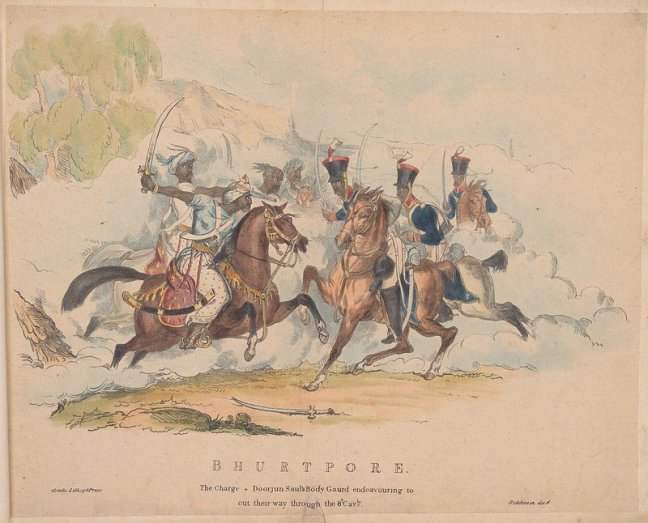
Siege of Bhurtpore

This morning, I examined Trumpet Major James Smith’s military enlistment and discharge papers online. His discharge was on health grounds – but he still lived another twenty-three years. One can be unfit for soldiering, but still fit enough to live a useful life away from the battle-field or garrison. Indeed, he had married four years before his discharge from the army, and had quite a big family, over the space of twenty-odd years.

I was quite moved by the poignancy of fourteen-year old James’s ‘Attestation’ in 1826 (his enlistment papers) – he was so young, and so small to be joining the army. He still had another thirteen inches of height to grow, going by his discharge papers! (Fourteen-year old boys are an average of 8 to 9 inches taller nowadays, two centuries later.)

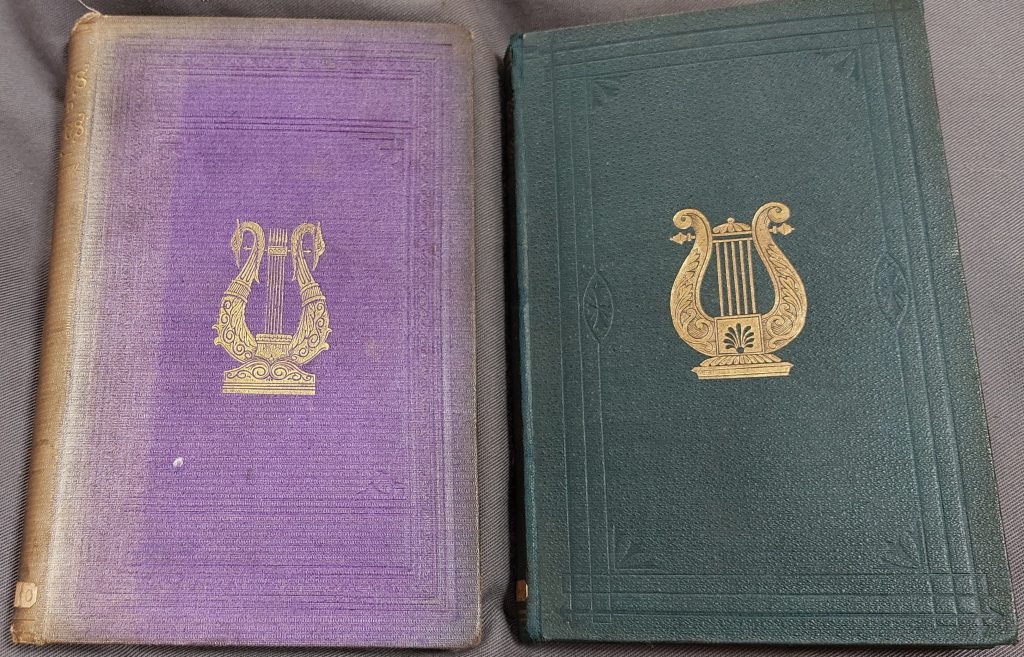
Mary Anne Smith's poetry books

Mary-Ann enjoyed writing anapaestic tetrameters; I found several of them, and similar variants, amongst her poetry collections. Next week, I’m going to go back to the library to look at some more of her poems. In particular, I’m keen to see the poem she wrote ‘To James’ after his death, in an Addendum at the end of her second collection.

Anyway, I wondered whether I could pen an anapaestic tetrameter of my own, so here it is – my first attempt at writing in this particular poetic meter. I hope Mary-Ann and Rose would approve:-

You were four feet, nine inches, your eyes grey but bright,
Just a boy of fourteen - still a lad;
Though you hadn't near equalled your father in height,
You were counting the days till you had!
You were fair and light-skinned, with a healthy physique,
And you'd finished your schooling at last;
You knew what came next - you were keen to step up,
Leaving playthings behind in your past.
Growing up in the army, your future was clear -
You enlisted in steamy Cawnpore,
A Dragoon, bravely riding with no trace of fear -
And you’d make your Ma proud, that’s for sure!
But how long would you soldier? How long in Cawnpore?
Would you battle, or help keep the peace?
Would your bugle lead soldiers to brave acts of war,
Or might you succumb to disease?
Just a boy, starting out in the steps of your Pa,
With your trumpet, a sword, then a horse -
With your musical gifts you were told you’d go far,
But at fourteen, time still took its course.
For the marching, the drills, and the beat of the drum
Would have thrilled you enough at the start,
Now your schoolbooks were closed and your work had begun,
You’d need strength, and a resolute heart.

Horsepower: the Museum of the King’s Royal Hussars. Timeline showing that the 11th Hussars had been engaged in the Siege of Bhurtpore only the year before.

The Trumpet-Major, a Splendiferous Helmet, and – oops!

I took it into my head to do some spare-time research into the father of one of my musical heroines, last night. In truth, I already know enough for my purposes, but I thought it would be nice to see if I could find out any more.

Victorian Militaria? Don’t Even Go There!

He was a Trumpet Major, right? And then a drill sergeant in Scotland, in retirement. I wondered what his uniforms looked like – an illustration might come in useful in a presentation one day, so why not find out? I googled. I searched eBay. Did I want to buy a hat badge? Well, tempting as it was, I thought I probably did not. And I searched beyond eBay. Then I came to a magnificent, shiny helmet with a scary-looking spike on top. It was for sale – but I didn’t want to buy the thing, just to read the vendor’s description to see if it really was the kind of headgear he might have worn either in active service or in ‘retirement’. I clicked. And – because I wasn’t using this laptop but another one – I was prevented from seeing the item at all. Apparent a shiny nineteenth century helmet counts as weaponry. Well, I know the spike looked terrifying, but it was on top of a piece of headgear. No matter – I don’t want to get myself in trouble, so I didn’t persist, and quietly tiptoed away from the beautiful shiny, silver distraction. I can’t even find the same picture today – even on my own laptop – so I can’t show you it. All I can say is, look at pictures of Victorian militaria at your peril!

Instead, I bought a book about his regiment. This is how I end up learning so many weird and wonderful facts!

Where and When?!

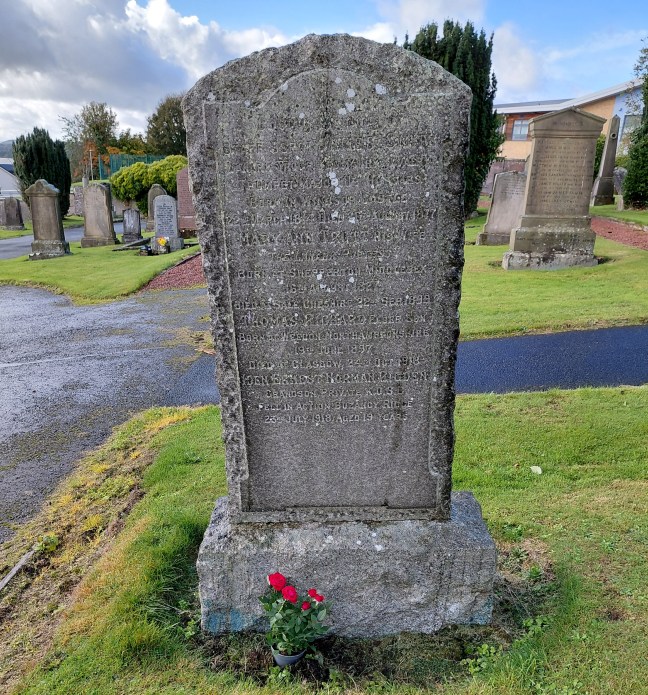
Today, I decided I’d try another line of enquiry. Since I’ve been unable to trace the death of the Trumpet Major’s wife, I wondered if the family might have arranged for her to be buried beside him in Lanark. But can I trace his grave? I cannot. I could try a bit harder, or I could return to Lanark and physically look at gravestones – but I’m not making any plans just now. It’s their music and poetry that interest me, really, not their final resting places.

Or might she have gone to live with one of her children? She certainly wasn’t with Rose in 1901, though Rose and her husband were presumably living with her at the time of their marriage in 1898, since the address is the same, and it was usual to marry at the bride’s family home. This makes me think she might have died between those years. Or she could have died somewhere other than Glasgow. One son had married in England, for a start. It’s a puzzle. Inconsequential, but infuriating!

Maybe another day will bring another search inspiration. Until then – as I said, I really do know quite enough for my purposes!

*picture from eBay