Dr Karen McAulay explores the history of Scottish music collecting, publishing and national identity from the 18th to 20th centuries. Research Fellow at Royal Conservatoire of Scotland, author of two Routledge monographs.
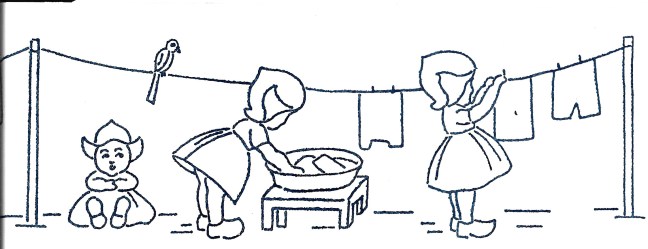
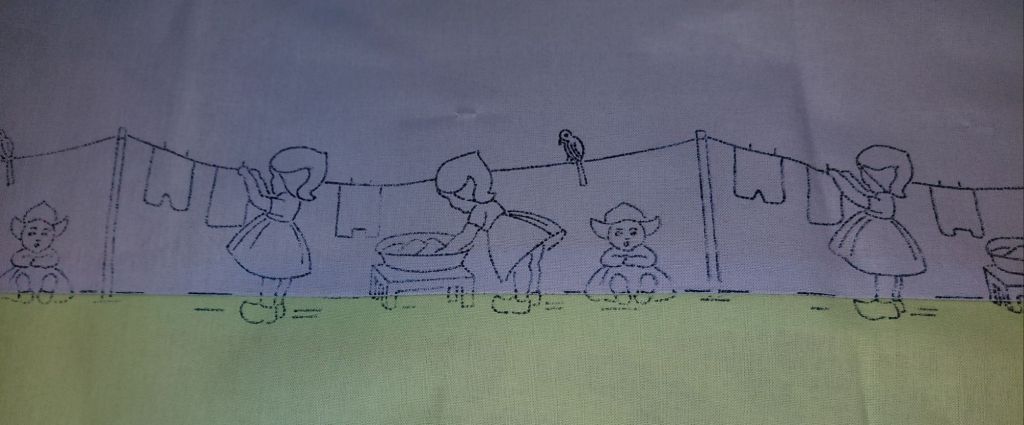
Further to yesterday’s post, a quaint postscript. I’ve been wondering what to do with an embroidery transfer found amongst my late mother’s sewing things. It’s about 30 x 2″, showing a motif repeated four times: little girls and a baby, hanging out the washing. It’s both cute and politically incorrect – no little boys in sight! (Boys, hang out washing? In the ‘fifties or ‘sixties? Surely not.)
Then it came to me. I’m the mug that gets to hang out the laundry. It’ll make a great border for an apron. Might as well look the part!!
Part of Glasgow’s history: click the link below to read some fun facts that I discovered five years ago, whilst writing my book about old Scottish music publishers …
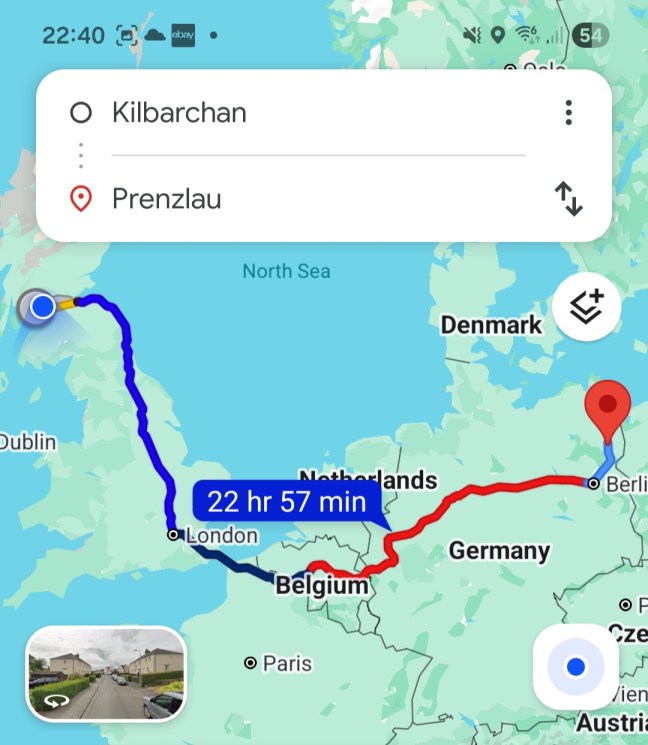
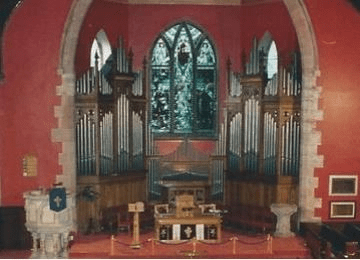
It was 2018 when the BBC posted the story of a magnificent three-manual organ built by Hill and Son, which was being taken out of Kilbarchan West Church – no longer needed after a merger – and transported to Prenzlau:-
The Hill organ at Kilbarchan West Parish Church (photo from Kilbarchan West website). *
It has taken a while – Covid got in the way – but in May 2026, there’s going to be an organ festival to celebrate the inauguration of the organ in its new home.
Former Athenaeum Principal Inaugurated Kilbarchan Organ
Well, I’m excited, even though I don’t think I can justify going all that way. (Or can I?) You see, I’ve been researching the second Principal of the Glasgow Athenaeum – Dr Edward Emanuel Harper, who was only with us for two years, 1902-1904. After that, he left. There are no records extant to say why he left. But within a few months, by September 1904, he had been appointed organist of …
Kilbarchan Church.
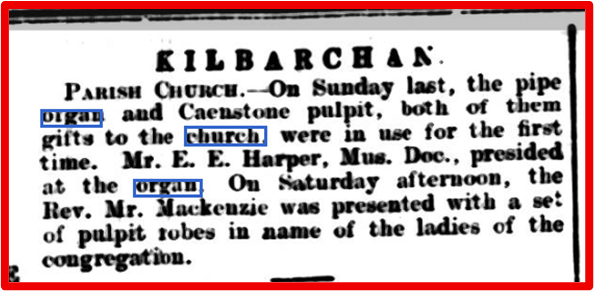
He played the inaugural recital for the new Hill & Son organ.
British Newspaper Archive: Paisley & Renfrewshire Gazette – Saturday 22 October 1904
I won’t tell you his whole story here – I already mentioned him, only a few weeks ago. By 1909 he had gone back to Stockport, accepted a job offer in Canada, been widowed before they had even moved to Canada, but still moved his young family to Canada as planned, and started a new life. And then another new life on the opposite side of Canada a year later.
Part of his fascination for me is his elusiveness, I must admit. Why did he leave the Athenaeum? What persuaded him to return to his home-town, or to cross the Atlantic? I do know a little about what happened when he got there. And I’ve traced his publications in the UK, but can only find only one published in Canada. Why? It’s hard to imagine he didn’t publish any more.
But most pressingly – do I want to go and hear the rebuilt organ which was, originally, only a few miles away from Neilston, where I am currently organist? After all, I’m not researching organ-building, or organ music. And Harper wasn’t a Scot, or published in Scotland – but he WAS briefly our Principal. I’m drawn to the story and the connections …
* The original Kilbarchan church was more recently known as Kilbarchan West Parish Church, before it combined with Kilbarchan East. At that point, the united congregation elected to use the East Church.
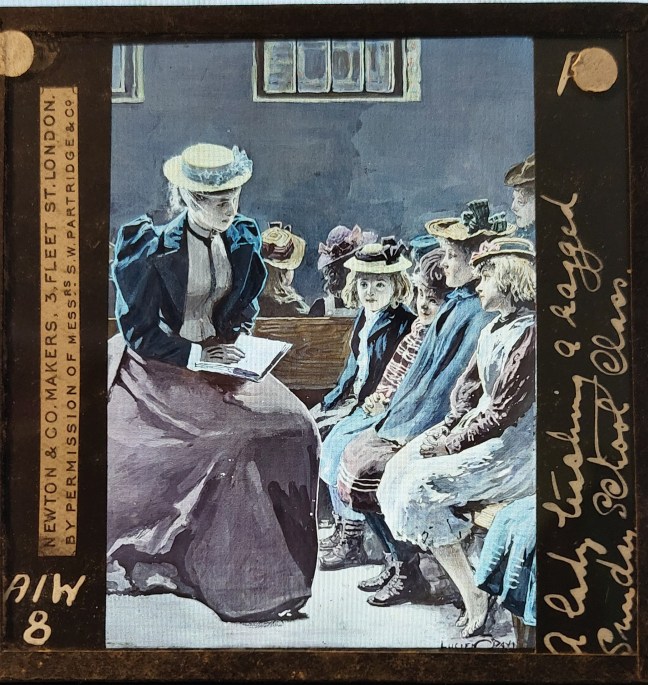
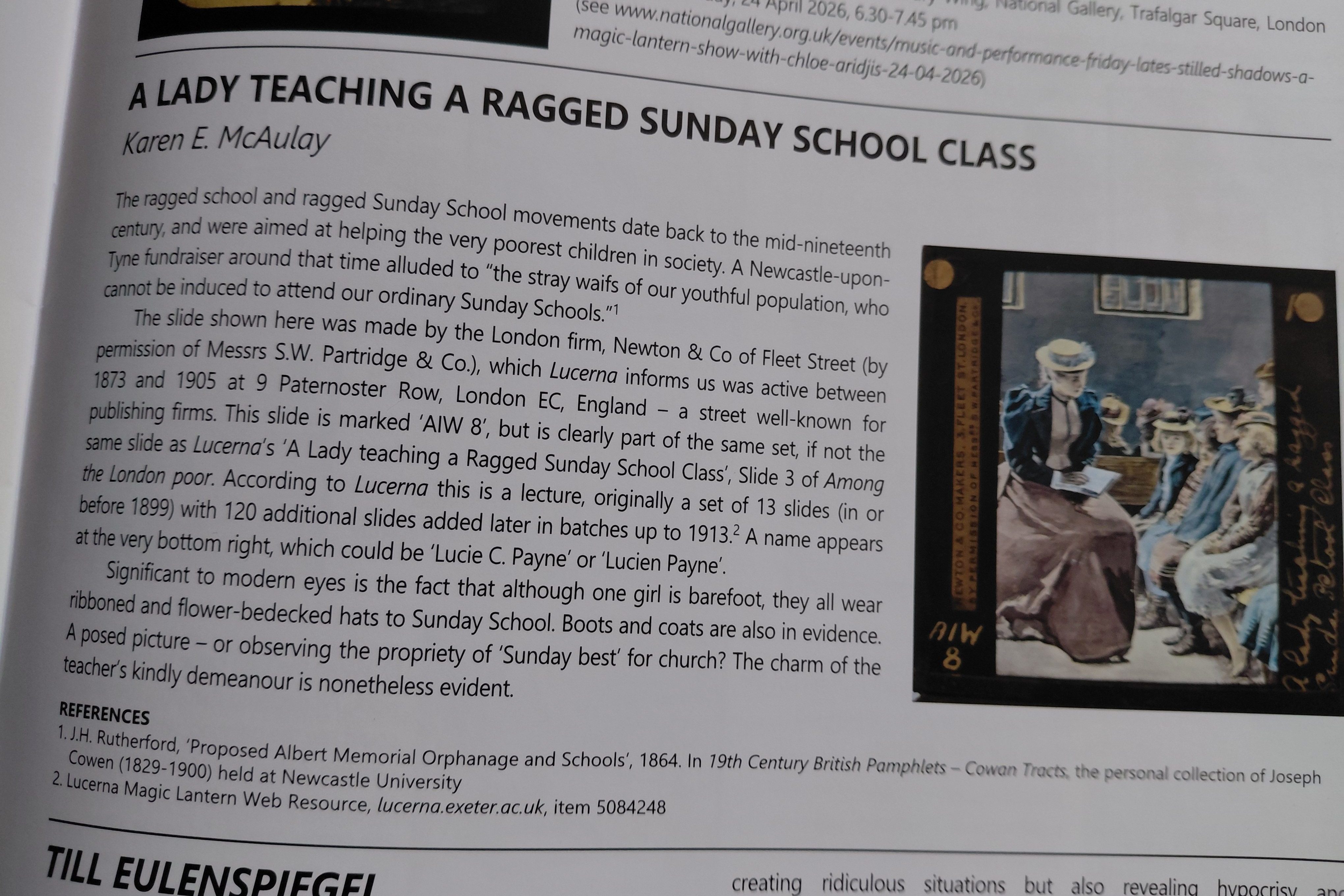
Some months ago, I was looking for a picture of a Victorian Sunday School, to illustrate my writing about music for Sunday School use. I found an enchanting magic lantern slide, and – eBay being such a tempting resource – I immediately snapped it up. In truth, I just fell in love with the image: the children aren’t standing singing, but it conveys an impression of a kind and gentle Sunday School teacher, and attentive pupils. (Perhaps it also puts me in mind of attending Sunday School back in the 1960s?)
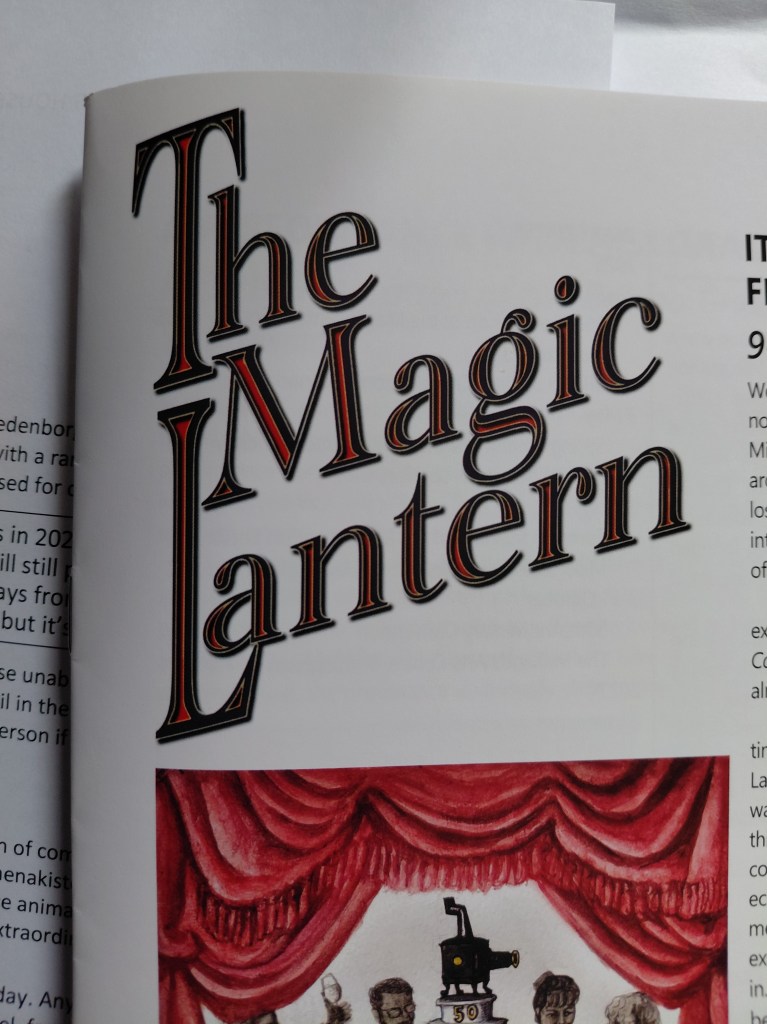
Anyway, I wrote a couple of paragraphs about it for The Magic Lantern (no.46, March 2026), and the copy duly popped through my letter box yesterday. Since the newsletter may prove hard to source in future, I’m taking the liberty of reproducing my piece here. I can hardly call it an article – it’s too short!
‘A Lady Teaching a Ragged Sunday School Class’, The Magic Lantern no.46, March 2026, page 13. DOI: 10.13140/RG.2.2.36840.43521
Remembering my fruitful walk on 3 January 2023, I looked outside today – yes, the third of January again – saw the sun shining (athough the temperature was literally freezing out there), and decided to go on another research-and-exercise outing. What could possibly go wrong?
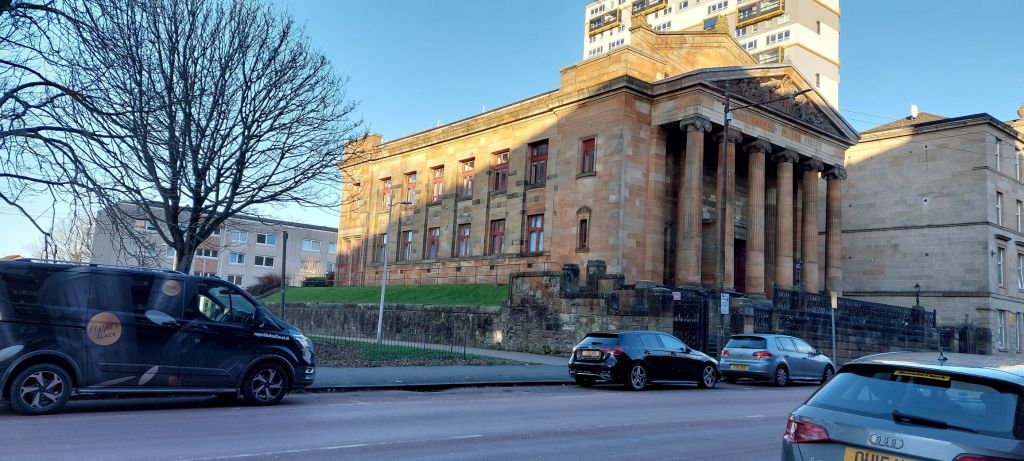
I’ve been exploring the story of a Victorian Glasgow music professor, so I headed for St George’s Cross by subway, to see a former church where he had once been organist. He had started his tenure in an earlier building, which was burned down in a fire, but a new one was built in a mere two years, so he must have resumed duties at that point. I already knew that, as with organist Maggie Thomson’s Paisley church, this Glasgow church had likewise now been converted into rather classy flats.
St George’s-in-the-Fields, Glasgow
Unperturbed, I headed next to the Mitchell Library, and up to the fourth floor where the old music card catalogue lives; it has never been digitized. This eminent individual certainly composed enough, but mostly in a light-music vein, and not published by any of Glasgow’s bigger music publishers. However, I was still surprised to discover that he is completely unrepresented in the card catalogue.
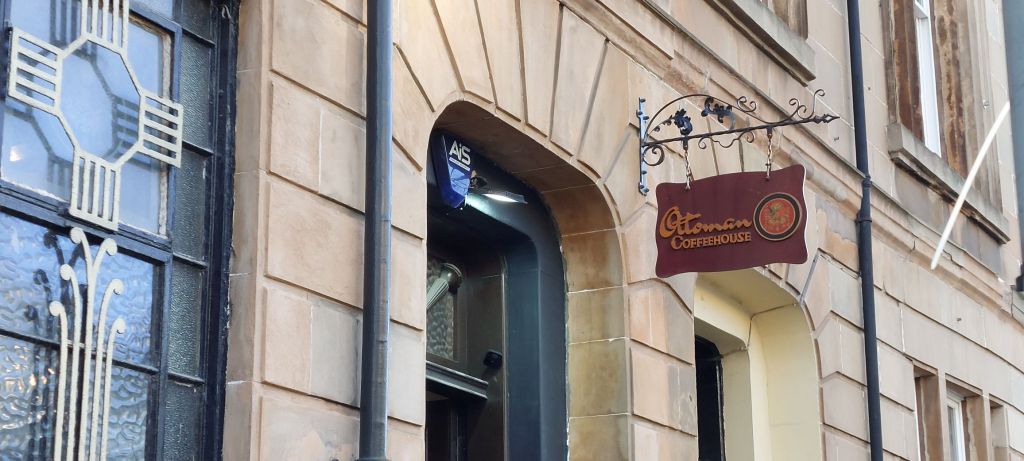
Ottoman Coffeehouse
To drown my sorrows, I headed next to a celebrated Turkish coffee shop in Berkeley Street. (The premises had once been a club for Glasgow musicians, and our hero had been included in a song-book that they sponsored; clearly I needed to have a coffee there in his honour.) Foiled again! There was a queue out to the pavement, just to get inside the cafe. Back I went to the Mitchell Library cafe, to get my coffee more quickly!
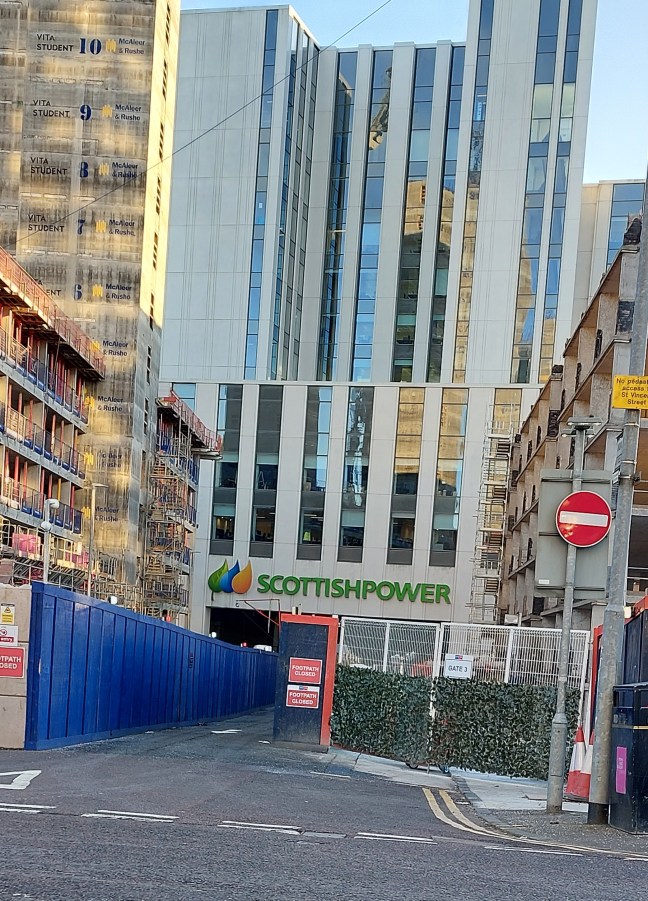
It was still bright and sunny outside, so my next port-of-call was India Street (on the opposite side of the M8, near Charing Cross station). This had been both of professional significance and latterly home to our hero, and although I knew modern developments had taken place, I still hoped that I might be able to walk the length of the street. Thwarted! Scottish Power sits squatly and solidly across the line of the road, and pedestrian access is blocked by ongoing building works before you even get to it.
I could have headed into the city centre to gaze at the Athenaeum, but I’ve passed it hundreds of times, and there are plenty of pictures on the web – it wouldn’t have felt like much of a discovery. Sighing – for the mere glimpse of a road sign at the wrong end of India Street had not exactly thrilled me – I headed for the bus home.
But fate had one more twist for me: whilst I was looking on the travel app to find out when the next bus was due …
… the next bus sailed past my stop.
I decided that maybe walking briskly to the Subway would be quicker than waiting for another bus. At least the Subway dates from the era when our hero was in his prime and doing well.
‘How did you get on?’, I was asked, when I got back home. I was forced to admit that, apart from St-George’s-in-the-Fields, I had really seen virtually nothing.
On the plus side, my FitBit is as happy as Larry. Finally, it said, she has realised that Christmas is over, and it’s time for the healthy living to resume!
Followers of this blog will already know my penchant for anniversaries. This festive season, I’ve decided to indulge myself – and you, dear reader – with the kind of trivia that doesn’t make it into my research writing.
90 years ago today, Thomas Nelson editor Richard Wilson was languishing in hospital. (On Boxing Day – how miserable!) His daughter had been handling his correspondence whilst he was ill, so he could keep in contact with his boss. But by Boxing Day, he’d been able to check the page proofs of the Music Guide (a teaching manual) from his hospital bed.
Now, I know he was a dedicated soul – but I also know that the series editor (not his boss) of the teaching series, ‘Music Practice’, was agitating to get these books published as soon as possible. Sooner, if at all feasible!
Let’s hope Wilson’s efforts didn’t delay his recovery …
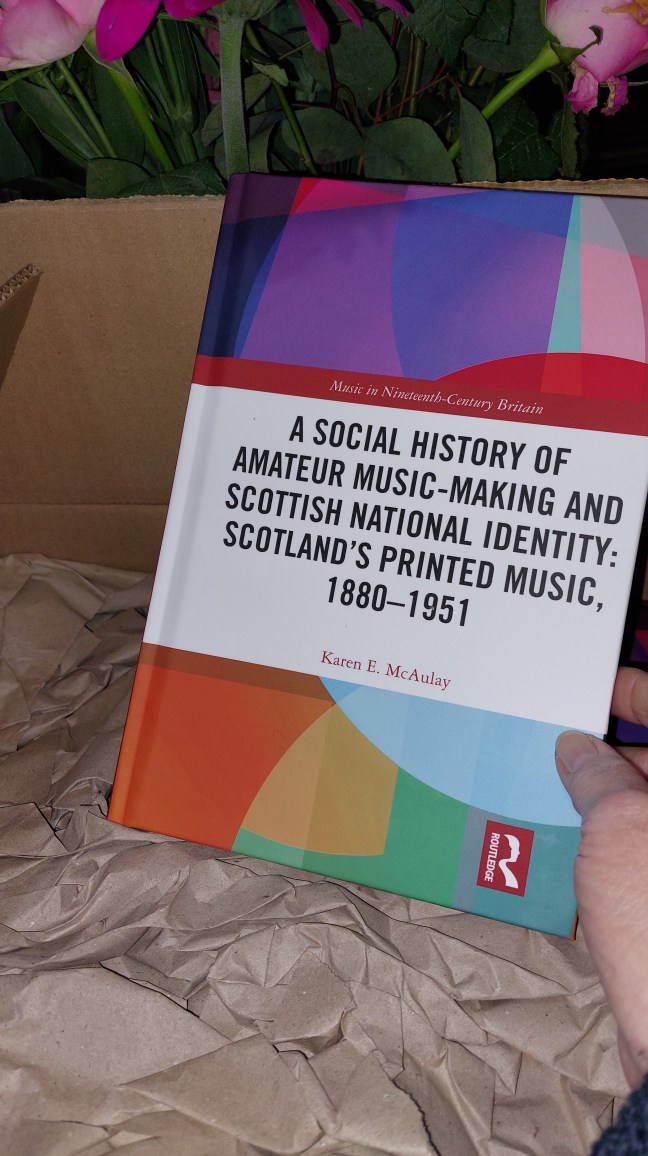
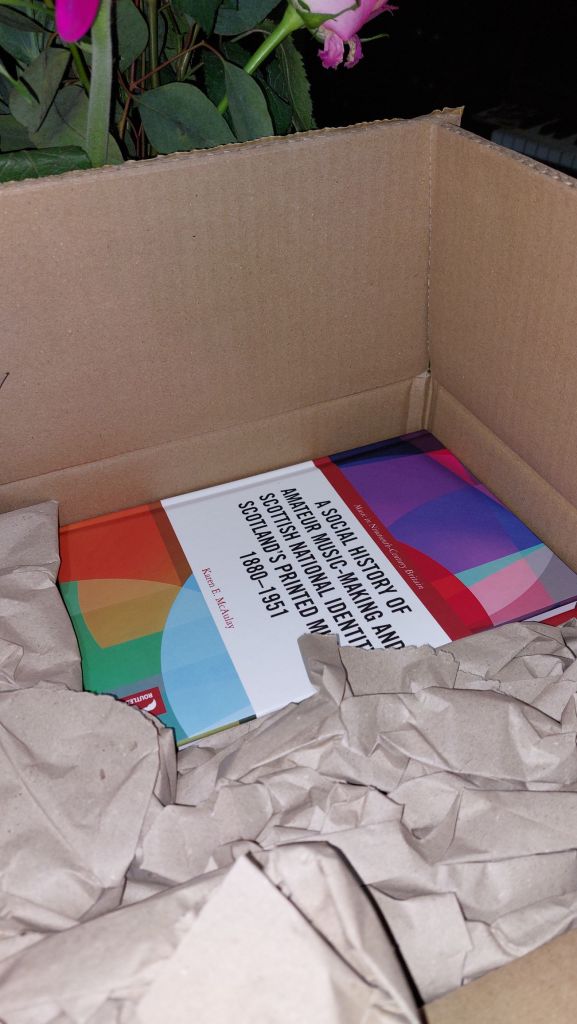
It would be remiss of me not to point out that Routledge’s Black Friday sale makes the e-book version of my book very affordable! (Maybe someone might even buy you it for Christmas?).
Those preferring to read a hard copy might point out to their library that there’s no time like the present…
Leisure and Pleasure – Everyday life in Second World War Scotland
I don’t often sign up to webinars, but something so closely aligned to my own current research was irresistible.
The History Scotland webinar series is promoted by the History Department at the University of Dundee. The guest speaker today was Dr Michelle Moffat of Manchester Metropolitan University.
And what did I learn? Leisure pursuits didn’t stop in wartime, especially going to the cinema. This is worth knowing. (However, I must be careful not to assume things were exactly the same everywhere. It makes me wonder about central London, for example, where people might have felt more threatened. )
There was also interesting detail about rationing and food shortages, and discussion about how much people in Scotland felt the war was ‘their’ war. (I suspect anyone who had relatives fighting overseas would very much have felt indirectly part of it.)
And a reminder about the Mass Observation Archive. I had forgotten about this, but it’s a crucial resource – I’m going to check it out with some questions that I hope it might help with!
Writing a second book has felt quite different from the first time round. The first one developed out of my PhD, so I had my supervisor supporting me as I wrote the original thesis.
Going Solo
But this one? All my own, unsupervised work, arising originally from the thought that someone really ought to write a book about the music published by Scottish publishers in the late Victorian era and the early twentieth century. No-one had written one, so I researched and wrote it myself. I was grateful for my peer-reviewers’ feedback on the first draft, and I know that the final product benefited from the subsequent edits that I made during my Ketelbey Fellowship at St Andrews.
This time, I did my own indexing, too. That was a new experience for me.
Now, to start planning a book launch! Watch this space – I have an idea. Provisional date Monday 11th November, but the details have yet to be finalised!