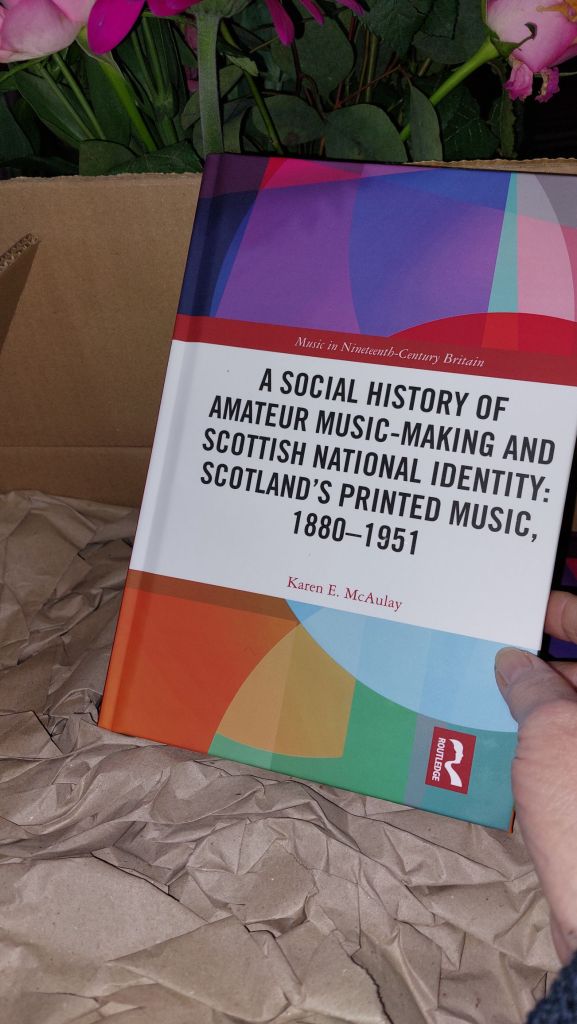
Part of Glasgow’s history: click the link below to read some fun facts that I discovered five years ago, whilst writing my book about old Scottish music publishers …
More fascinating detail about music education in Glasgow? Read my book!


Dr Karen McAulay explores the history of Scottish music collecting, publishing and national identity from the 18th to 20th centuries. Research Fellow at Royal Conservatoire of Scotland, author of two Routledge monographs.
Part of Glasgow’s history: click the link below to read some fun facts that I discovered five years ago, whilst writing my book about old Scottish music publishers …
More fascinating detail about music education in Glasgow? Read my book!
I’m looking forward to my trip to London for this conference this week, and I’m grateful both for the invitation to give a paper, and for the support from my home institution, in the form of a Royal Conservatoire of Scotland Athenaeum Award. I thought it would be worthwhile sharing the link to the event again, now that the programme has been finalised.
The organisers have shared the following information:-
The final programme can be accessed directly here:
View the full conference schedule.
A more comprehensive programme, including all presenter abstracts and biographies, is accessible as an Exposition on the Research Catalogue platform.
My paper is on the final afternoon, Friday 4th September:-
‘The Trumpet Major’s ‘Poetess’ Widow; the Scottish Shipping Magnate’s Daughter and the Retired Barrister: The Importance of Parental Support to Musically Gifted Girls in the Late Victorian and Edwardian Eras’.
ABSTRACT
Although I’ve encountered few women’s names in nineteenth- and early twentieth-century Scottish music publishing, I recently published an article about the five women that I did find. (Two were English by descent, but they all grew up in Scotland.) Meanwhile, in other unrelated research, I encountered a London-born Scotswoman with a completely different background, who made her career as a high-flying soprano recitalist. The common thread was their family background and/or support. In today’s paper, I’d like to focus on Rose Buchanan Smith (1870–1942), one of the Scottish-born Englishwomen, and Flora Woodman (1896–1981), the London-born Scot. The cut-off date of this conference, 1914, is significant for both women: it’s the latest possible date for Kerr’s fourth book of Kerr’s Merry Melodies, in which I first encountered Rose’s name; and the year of Flora’s concert debut in London’s Bechstein Hall.
One cannot generalise about women’s musical careers on the strength of two women’s stories. Nonetheless, when there are comparatively few stories substantial enough to draw any inferences from, those that do survive must perforce carry more weight. In my research, I have realised that it is sometimes surprisingly useful to attempt comparisons between individuals whose lives were entirely unconnected. How did these women curate their careers? What influence might their parents have had? Might their mothers have had a particular influence or been especially supportive? What about marital status? Did being a Scottish-born Englishwoman, or a London-born Scotswoman, have any particular effect on their careers? Did they make use of professional networks? And was the advent of new technologies reflected in their musical activities? I shall outline the resources to which I had access, in tracing their path from adolescence to late middle-age, and demonstrate the importance of families to a young Victorian or Edwardian woman establishing a musical career.
This project has been supported by the Royal Conservatoire of Scotland’s Athenaeum Awards.
I was surprised, last night, to realise that I hadn’t blogged about William Moodie on this blog. The explanation turns out to be very simple: I blogged about him on Whittaker Live, the library blog that I ran for a couple of decades before I retired from the Whittaker Library at the Royal Conservatoire of Scotland. Click here to read all about him!
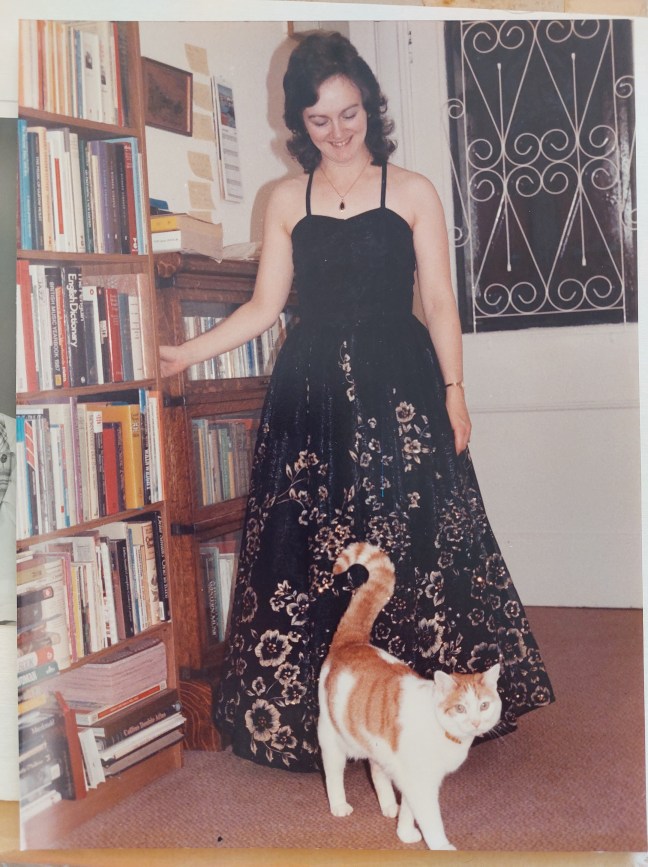
38 years ago today, we (my husband and I, and the cat) moved from North Shields on Tyneside, to Springburn in Glasgow. I swear the vet hadn’t given Fergie a strong enough sedative for his journey, because he yowled every time we slowed down. Nonetheless, he staggered drunkenly from his travelling crate when we reached our new home.
I had a couple of music degrees, a librarianship qualification, and was a chartered librarian. I’d abandoned a PhD (on mediaeval English cantus firmus treatment in the Eton Choirbook, don’t you know?) a couple of years earlier – and I knew NOTHING about Scottish music. Research fellowships weren’t even on my horizon. I had only ever published small things in my capacity as a music librarian.
We now have three adult sons and no cat. I completed another PhD and a teaching certificate, and gained Fellowship of CILIP. (I relinquished membership when I left the library.) I know ‘a bit’ about Scottish music, have published quite a lot, and added other fellowships to my CV.
No-one ever said, ‘You’ll live to regret abandoning doctoral studies …’
If you’d told the 1988 version of myself what I’d achieve in all those librarianly years, I doubt she’d have believed you. I really just wanted to make it up to myself for not completing the first doctorate.
It all started when we set off from North Shields, behind the removal van.
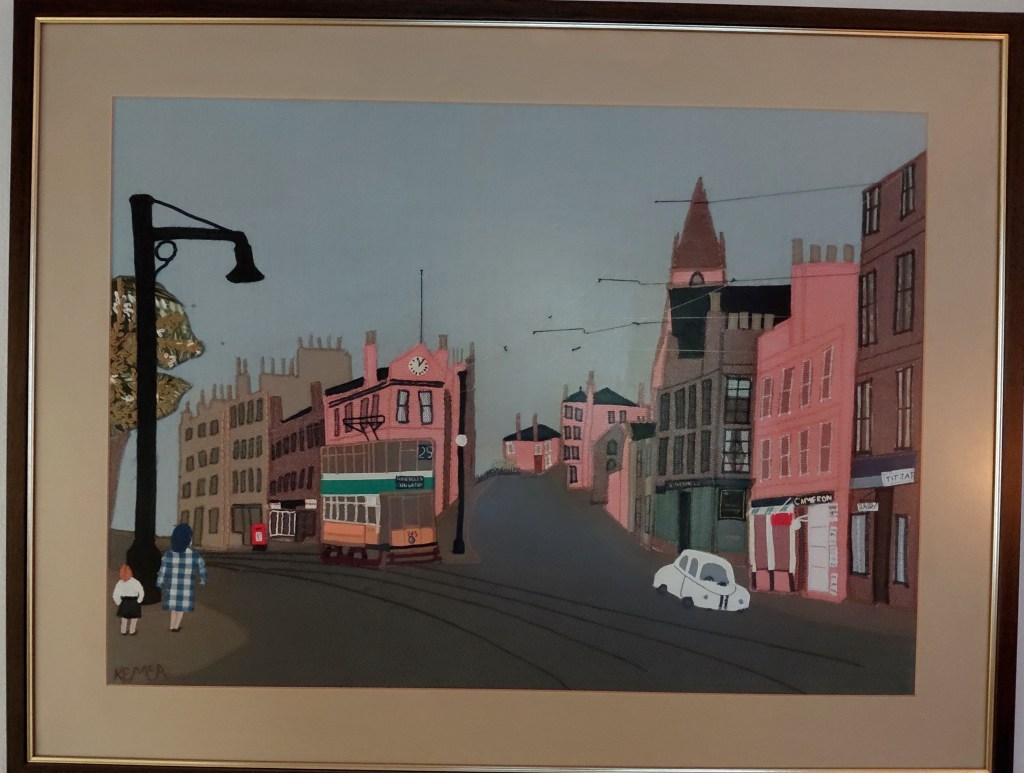
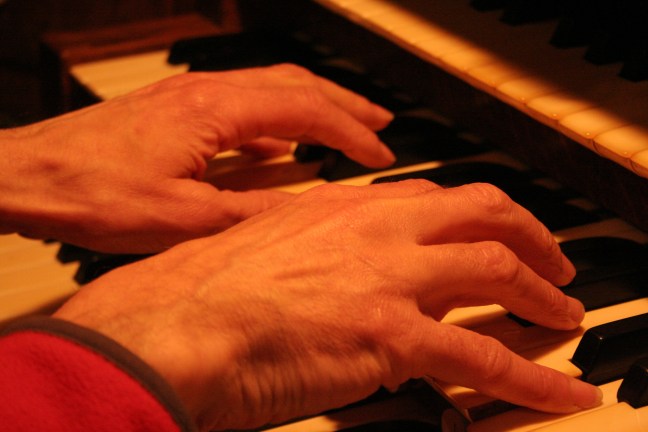
Welcome to my first podcast – I’m talking about organist Dr Edward E. Harper, the second Principal of Glasgow Athenaeum School of Music, and why I find his story so interesting.
–
Sometimes a side-hustle can take on a life of its own, before you realise what’s happening. In my case, this is a piece of research into the intriguing life of Dr Edward Emanuel Harper – that I’ve pursued more out of curiosity than for his connection with my main research topic. Intersecting threads from different aspects of my research, combined with local interest – and a personal interest in organ music – made Harper an almost irresistible target for a research side-project.
Where should I begin?
The first thread is the Athenaeum itself. Researching for my most recent book on historical Scottish music publishers, the early years of my own institution were obviously of interest – not because the Glasgow Athenaeum School of Music was engaged in music publishing, but because there would obviously be names of local musicians whose work was published either in Scotland or further afield.
The first Athenaeum School of Music Principal, Allan Macbeth, left in 1902 when the Board decided they didn’t want a Principal who also taught. Macbeth resigned in a huff, and opened his own music school. I traced a few of Macbeth’s compositions, and I’ve done some research into his life – but not as extensively as I have for the second Principal, Dr Harper.
Harper had been working in Southport, which is on the north-west English coast between Blackpool and Liverpool. He came highly recommended. However, he only held his Athenaeum post for a couple of years (1902-1904), then resigned. The absence of institutional records for those years means we’ll probably never know why. Did he jump, or was he pushed? Was it a repetition of the Macbeth situation? His resignation from a different post, some years later, was attributed in some quarters to a lack of tact, but there could have been extenuating circumstances, and we certainly shouldn’t believe all that we read in newspapers! Anyway, it was some fifteen years before the Athenaeum School of Music had another Principal. I outline more of the Athenaeum’s story in my book, A Social History of Amateur Music-Making and Scottish National Identity -but it’s not part of today’s podcast.
The Athenaeum School of Music thread is just one line of enquiry. An English gentleman who moved to the West of Scotland and only stayed in his prestigious post for two years, may not have made a huge impression on the overall trajectory of the institution.
Indeed, two years in the life of a man who lived to the age of 75 (or possibly a little older) is barely a drop in the ocean. However, it did make me curious about the rest of his life! That’s the second thread – to establish a basic biographical outline for Dr Harper, LRAM.
However, the aspect of most irresistible, and most immediate appeal, was neither Harper’s place in the annals of the Athenaeum, nor the tracing of his life and career, fascinating as it turns out to be. Instead, it is one particular three-manual organ that Harper played. This organ, and Harper’s organ-playing, has been my third line of enquiry.
You see, when Harper left the Athenaeum, he remained in the West of Scotland, and became the first organist of a spectacular new organ in the new parish church at Kilbarchan, five miles from Paisley. The old parish church had been replaced by a large new building at the turn of the century. The three-manual organ was gifted by an unnamed lady, and was built by an English firm called William Hill and Son. Harper played for the inaugural recital in Autumn 1904, and stayed for five years. The Athenaeum’s loss was clearly Kilbarchan’s gain.
And why is this of immediate interest? It’s because the organ has recently been moved and installed at St Marien, in Prenzlau, Germany.
You see, despite being only a small village, for many years Kilbarchan had two Presbyterian churches – for reasons concerned with mid nineteenth century Church of Scotland politics. The one with the Hill organ was eventually named the West Kirk, and the other the East. In the present century, the churches combined, leaving the West Kirk redundant, and the organ needing a new home. A home was found, organists and churches liaised, and organ builders got to work on the complex operation of dismantling, transporting and reassembling this substantial instrument.
There’s a festival and weekend conference taking place in mid-May 2026, at its inauguration in Prenzlau. The organist there, Hannes Ludwig, has a Facebook page neatly entitled ‘Hill’s Angels’, about the organs built by this firm, and the excitement about St Marien’s new instrument is – I might say – off the register, in organist circles. It’s a fantastic story. I really wish I could go to Prenzlau, but I’m already committed to an equally important weekend engagement among.
Kilbarchan isn’t very far from Neilston, where I’m currently organist in the parish church. The organ I play is smaller than the Kilbarchan instrument – we only have two manuals – ie, keyboards – compared to their three. And our organ, barely a few years older, was originally powered by a person operating a manual pump. (The stump of the lever is still visible.) Their’s was quite possibly powered electrically from the start. This means the organist could go and practise freely, without needing someone to pump the handle! And there’s another difference – the Neilston instrument is still tracker action – the notes are sounded by levers connecting the keys to the opening and closing of individual pipes. The more stops you pull out, the heavier the action. From what I’ve read, the Kilbarchan instrument was probably always electro-pneumatic. A bigger instrument, more stops, and less physical effort.
I’m not an organologist – incidentally, that’s actually someone who researches musical instruments of any kind, not just organs. So, what have I been researching?
Well, I’ve got a very detailed chronology of Harper’s life in England before he moved to Glasgow for the Athenaeum post. I’ve traced where he lived after he left the Ath., and his subsequent life after he emigrated across the Atlantic.
He seems to have been a teacher not only in institutions, but also as a private music teacher. However, being an organist is a thread that runs throughout his life. I’ve traced his professional education and training, and the places where he was organist. I’m compiling quite a lengthy list of his compositions. Not much of it is extant, and just one single piece is accessible on IMSLP. I picked up another rare volume in a local second-hand music shop. It’s a bound volume including three of his pieces from just before he was employed by the Athenaeum. And I’m waiting excitedly for the arrival from America of another collection that I sourced on eBay. (Having been a music librarian professionally, I do have a certain aptitude for sourcing old music!) The latter book may not contain particularly demanding music, since it’s for American organ or harmonium, and that means, no pedals. Nonetheless, if it contains a dozen or so pieces by Harper – AND was published by a Glasgow publisher, possibly after Harper left Scotland – then plainly I had to acquire it! It metaphorically had my name on it.
So, in short – I’ve researched his life, his career, and his compositional output. From an institutional perspective, I wanted to know the strengths of this individual who was recommended to the Athenaeum by no less than his doctoral supervisor, Ebenezer Prout . (If you’ve ever sung Handel’s Messiah from an ancient Novello copy, then you’ve held a piece edited by Prout. He was a big name.)
I can conclude that Harper was a capable teacher, organist and composer. His compositions may not have endured any longer than his own lifetime, but he was certainly competent, and I’ll be adding the proper organ pieces to my own repertoire, although I don’t know what the American organ/ harmonium pieces will be like! Moreover, to judge by a contemporary remark by someone who worked alongside him in his first year overseas, a huge, unquantifiable amount of music seems not even to have been published at all.
In a wider sense, it has underlined just how important a position church organists held in the late nineteenth and early twentieth centuries. Of course, I can’t tell how much of his income was earned by being an organist, compared to classroom or private teaching. I sense that being an organist may have been the main part, but I don’t know enough to reach an informed conclusion here.
When he left Kilbarchan, there were no less than – wait for it – 85 applicants for the vacancy. For a small village, a short train-ride from Paisley, that’s a lot of applicants. There were clearly a lot of organists about, and the three-manual Hill organ was obviously a big draw. To this day, it’s considered a fine instrument.
He’d never have guessed that by 2015, Kilbarchan West and East churches would have united, and the West Kirk would have been vacated. Nor that the magnificent three-manual organ would have been relocated to Germany, to such great acclaim.
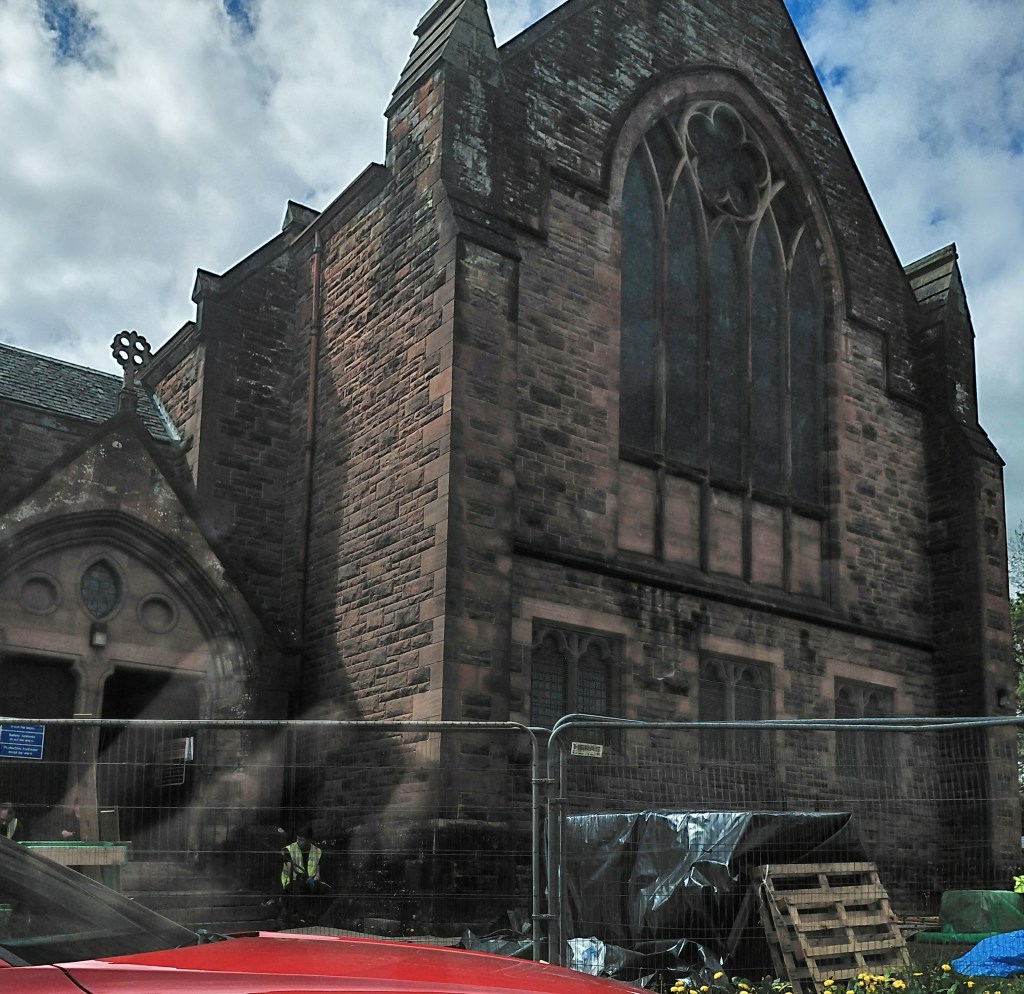
We went to Kilbarchan earlier this week. It’s still a small village of only 3,600 or so people, and that could be the largest it has ever been. I’d have liked to have stood on the doorstep that Dr Harper finally left in summer 1909. However, there were fences up, and construction workers buzzing around. It was sold almost exactly a year ago at auction, with planning permission for 17 flats.
The doors were open, but I wasn’t going to intrude upon a building site. It felt as though I’d chanced upon a quietly significant moment in time: the organ re-purposed and brought back to glowing life in a new country, and the church itself re-configured for secular use in the present day. I wonder what Edward Harper would have made of these changes?
We’ll never know! [pause]
Any more than we’ll know why he left the Athenaeum in Spring 1904!

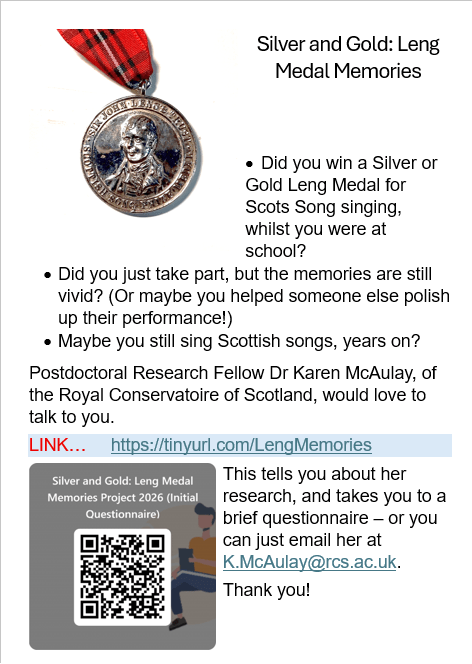
And I’ve started. I’m inching towards the part of the project where I start interviewing people, to see what they remember about this long-running Dundee schools singing competition. I’ve created a Microsoft mini-questionnaire so that people can contact me, and a poster for displaying or sharing. I’ve shared news of my oral history research project via Facebook, Bluesky and Linked in. And folk are getting in touch! I am really excited to say that in less than a week, I’ve already been contacted by quite a lot of people. Best of all, they’re already sharing memories of the Leng Scots Song competition that are exactly the kind of thing I was hoping to hear about – which goes to show that I’ve plainly come up with a really good topic to investigate (if I might be so bold as to say!)
Here’s the link to the questionnaire:- https://tinyurl.com/LengMemories
This research is being funded by an Athenaeum Award from the Royal Conservatoire of Scotland.
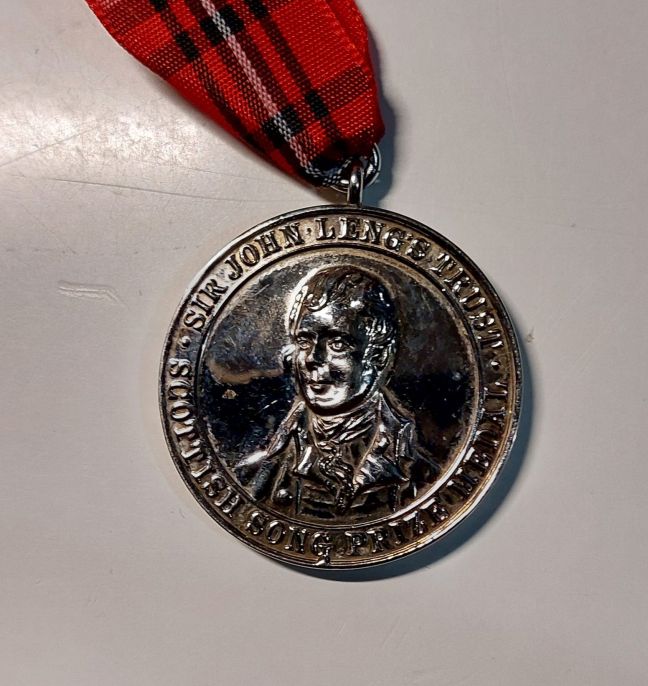
Do you have schooldays memories of taking part in the Dundee-based Leng Medal Scots song singing competitions? Perhaps you were a proud prize-winner of a Silver or Gold Leng Medal?
Maybe you didn’t actually win, but the memories are still vivid? You might remember the song you chose, or which song book you sang from? Or you helped someone else polish up their performance?
Maybe you’ve never stopped singing Scottish songs?
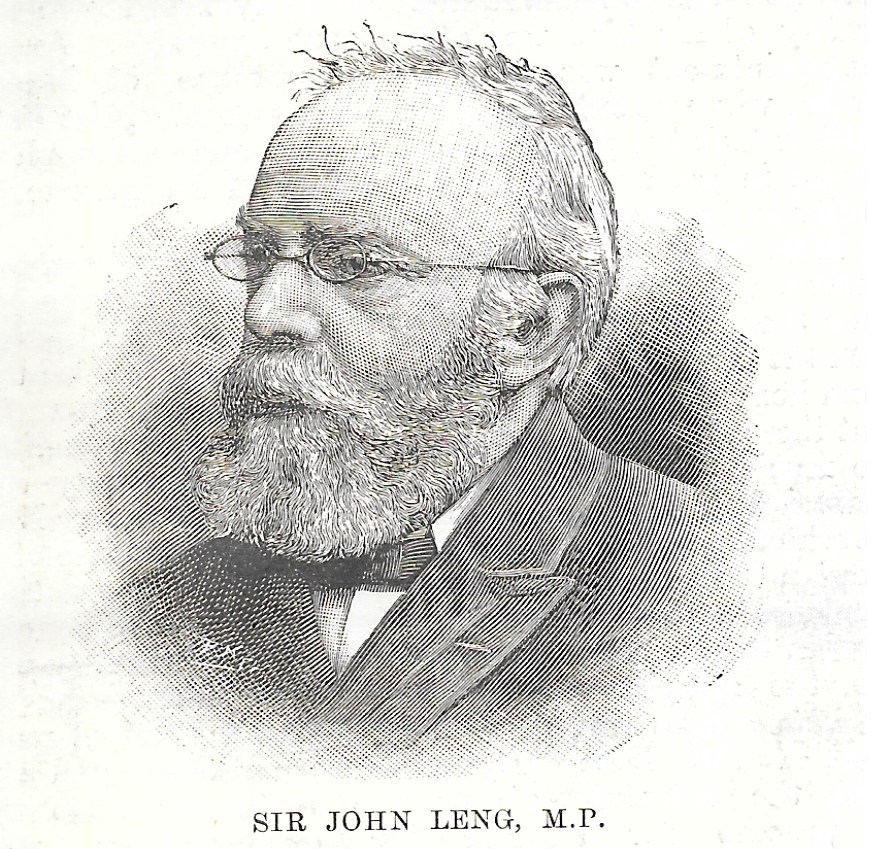
I’m on the staff of the Royal Conservatoire of Scotland as a postdoctoral research fellow, researching Scottish music. Whilst investigating an old Scottish song book aimed at school pupils in the post-war era, I became fascinated by the initiative of Sir John Leng (1828-1906), who endowed the singing prize 125 years ago. He died 120 years ago, but his singing competition is still live and kicking all these years later. Encouraging kids to sing Scottish songs was obviously a good thing!
Would you like to help me? If so, I’d be very grateful if you could fill in a very short questionnaire, and I’ll get back in touch as soon as I can to arrange an interview with anyone who has a story to tell!
I decided to find out more, and I’m embarking on a project to talk to as many Leng medallists, entrants, teachers or adjudicators as possible. The Sir John Leng Trust endorses this research, and is looking forward to hearing what I uncover.
My research is made possible with the support of an Athenaeum Award from the Royal Conservatoire of Scotland.
The first and second Principals of the Glasgow Athenaeum School of Music weren’t actually in post very long. Allan Macbeth managed twelve years (1890-1902); then Edward Emanuel Harper, only two (1902-04). I’ve been researching them recently, and I’ve found out quite a bit more than has hitherto been known. But this post is not about their biographies and achievements – that’s for another time.
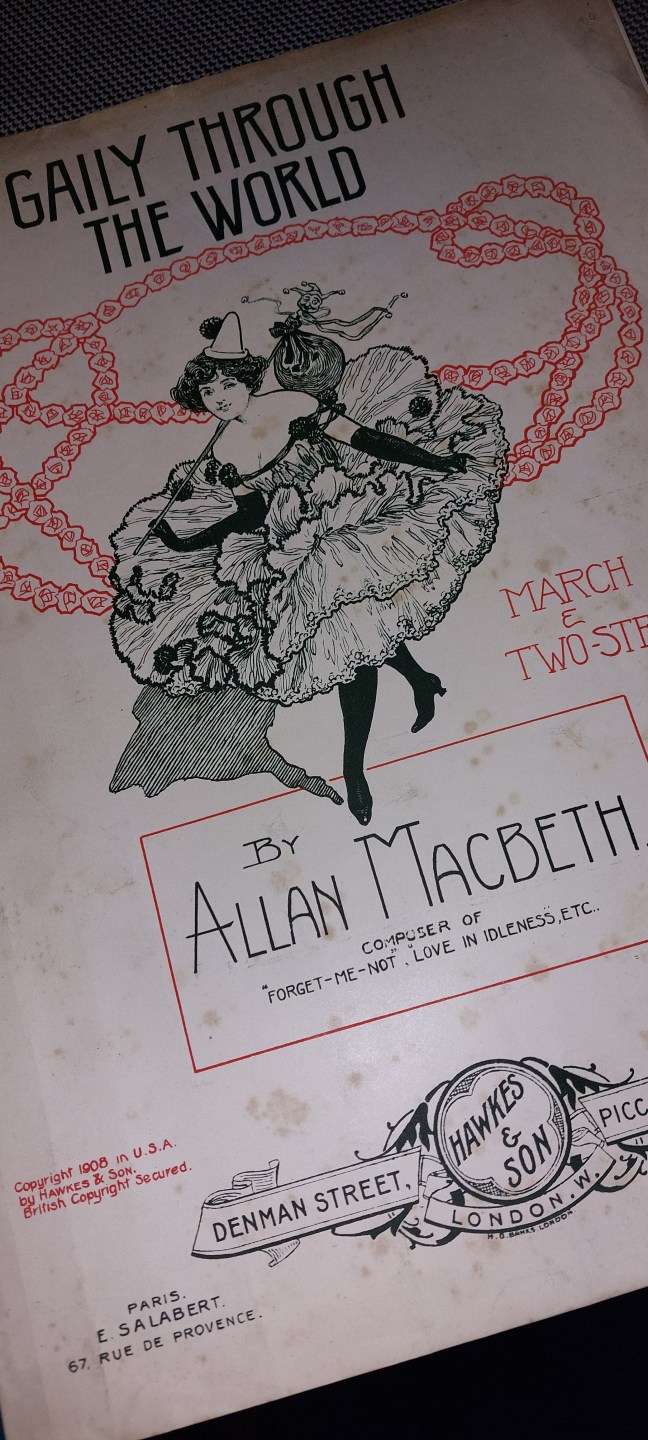
No, today is about practical music-making. Amongst a handful of compositions, Macbeth wrote a march and two-step, Gaily Through the World, which is actually very jaunty, and enjoyed quite a long life as a piece of band music. It’s not high art, but it does stand up as an effective piece of light music. It was published in 1908, two years before he died, by Hawkes. (Yes, the Hawkes that later went into partnership with Boosey in 1930.) That in itself is a mark of its respectability, if nothing else. The author of this YouTube posting says it was premiered at a Boosey Promenade Concert in 1896 – when Macbeth was in the middle of his Principalship.
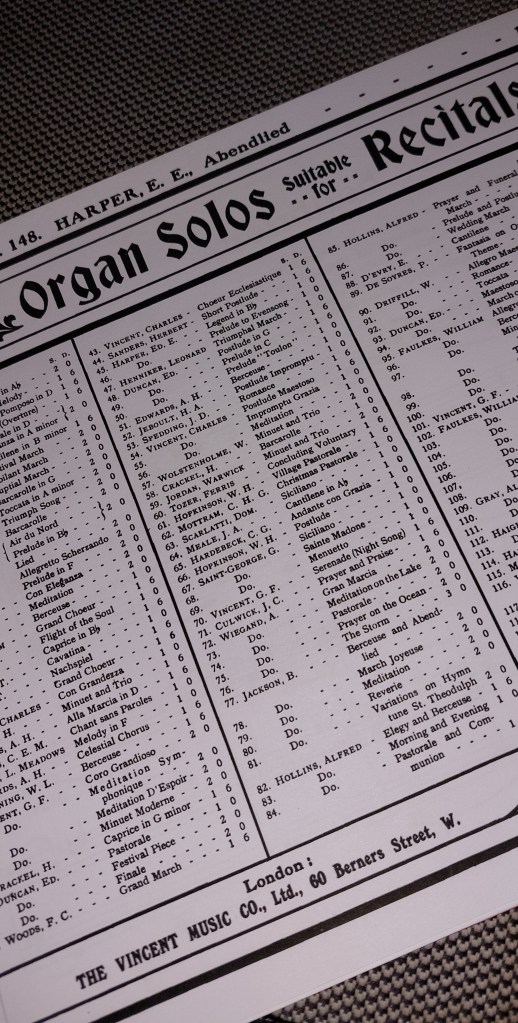
Harper seems to have had a larger output. Again, it was respectable but not remarkable. Nonetheless, I found a piece of organ music on IMSLP, this time published by Vincent Music in 1903, halfway through his own spell at the Athenaeum. (Vincent Music was the firm who would later publish James Woods and Learmont Drysdale’s Song Gems (Scots), which I’ve written about before. They were not as eminent as Boosey or Hawkes.) Abendlied is gentle and reflective, and appeared in an extensive series of ‘Organ Solos Suitable for Recitals’. It’s not hugely memorable, but it’s a nice enough piece for all that. Whilst Macbeth and Harper were both organists, each at several churches, I’ve formed the impression that being an organist occupied perhaps more of Harper’s career than it did of Macbeth’s, but this is really only a guess; moreover, Harper lived much longer than Macbeth and was only Principal of the Athenaeum for a couple of years. He obviously occupied himself in other ways for the rest of his career, and I have quite a list of the churches where he ‘presided’ at the organ.
Anyway, I digress. I played Abendlied before morning worship this morning. (No-one knew it was an ‘Abend Lied’, after all!) It could well have been played by Harper, just a few miles away, when he was organist at Kilbarchan.
But I saved Macbeth’s Gaily Through the World for my outgoing voluntary – and it did get noticed! It fitted the organ so well that I wondered if he had ever tried it at the organ himself – though maybe he might not have considered it serious enough for late Victorian Presbyterians …
Kilbarchan church was more recently known as Kilbarchan West Parish Church, before it combined with Kilbarchan East. At that point, the united congregation elected to use the East Church, and the organ itself was dismantled and sold to St Marienkirche church in Prenzlau, Germany. There’s a festival in May 2026, to celebrate the organ’s inauguration in its new home.


Probably the most eventful year I’ve ever reported, 2024 saw plenty of action. However, I’d like to add a few words of explanation before I go any further. Firstly, everyone’s different and everyone’s circumstances are different. (You know the old saying about how you have to ‘walk a mile in someone’s shoes’ before you understand their experiences and challenges?) I’ve spent far too long on introspection, measuring myself unfavourably against high-achievers. It gets you nowhere, apart from feeling inadequate. You will know what is possible in your own situation; please don’t feel I’ve set myself up as an example. I’ve done it my way.
If you’re on the tenure track hamster wheel elsewhere in the world, you may read this and wonder at how little I’ve achieved. On the other hand, if you’re not employed as an academic, you might be surprised at how much. If you’re fully retired, you may think I’ve lost my marbles, but if you’re semi-retired, you might understand! Similarly, everyone’s personal circumstances at home are different too.
For full disclosure, my research career has been what you’d now call alt-ac (alternative academic); I have had 10½ paid hours a week on research for over a decade, but my main career has been in music librarianship. (I’ve never been a full-time academic, and my outputs were achieved in less than one third of my working week.) As you’ll see, I recently gave a keynote about being ‘alt-ac’, and I’d certainly be open to further bookings of this kind, if your institution or network was interested. (I’m in the UK.)
Four fellowships of various kinds is quite an impressive number, however you look at it, so I must remind myself of this before I start beating myself up about my relatively modest upward progress!

My IASH Fellowship will allow me the opportunity to explore the former Edinburgh publisher, Thomas Nelson’s archives, to find out more about their publishing in the music field. There wasn’t a great amount, but I aim to explore correspondence and find out how it fits into the wider range of their activities. I’ll be spending more of my time on research than I ever have since 1982!
Meanwhile, I’ve been working on an article for a history publication; I want to get that finished in the near future, so that I can turn my attention to another article on a different topic. What I do after that will probably depend on how the IASH Fellowship research goes, and what interesting possibilities reveal themselves to me. There’s bound to be enough for an article. But could I expand it to something book-length? I’ll have to wait and see!

A quick post to mark a successful and very enjoyable evening. I gave my research exchange talk tonight at RCS. It was about a book of Scottish songs almost certainly published for the Festival of Britain in 1951. I talked about history, book history, music history, Scottish tourism and that all important catch-phrase for the Festival of Britain – ‘A Tonic for the Nation’. And then there was my book launch afterwards.
RCS wasn’t on Renfrew Street in 1951. We were the Royal Scottish Academy of Music at that point, in the old Athenaeum building (Nelson Mandela Place), but we had established a drama department in 1950 – the Glasgow College of Dramatic Art. (More about our history – click here.)
It’s fair to say that the book I talked about tonight – The Glories of Scotland, published by local publisher Mozart Allan – would not have been required repertoire for the talented students passing through our doors in 1951. It wasn’t aimed at high-performing classical artistes. (I doubt the library even had a copy in 1951, but there’s no way of finding out now. Anyway, we have recently acquired it!)
Nonetheless, the songbook does have a place in Glasgow’s history, in its own unique way.
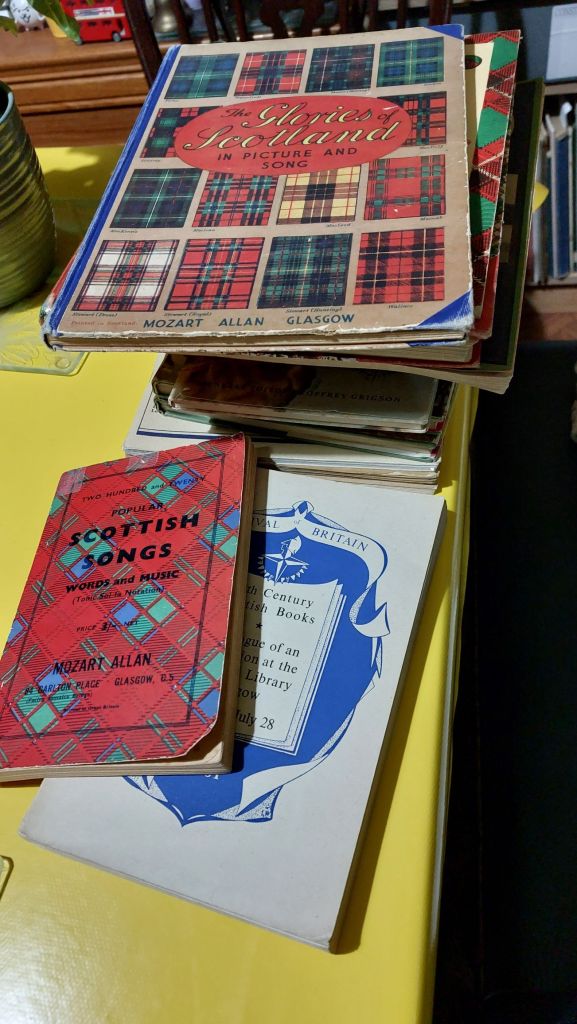
After the exchange talk, we launched my book about amateur music making, Scottish national identity and Scottish music publishing. Professor Stephen Broad introduced it, and said some very kind words about it. There were friends and colleagues there whom I hadn’t seen for a while, so it was very sociable as well as celebratory.

My thanks go to everyone who contributed to make the evening so successful – Research Exchange colleagues, Library former colleagues, and the box office events team. I’m ‘dead chuffed’, as they say.