‘I do Remember all the Crowd Standing Up’: Leng Medal Memories Update No.4

After a couple of months of online and a few in-person interviews, I’m at the stage now where I’m going through all my recorded interviews and transcriptions, reminding myself of highlights and key details.

This one just leapt out at me:-

Isn’t that glorious? I’m sure the Sir John Leng Trust will be delighted to read such heartwarming witness to Sir John’s inspired endowment. (I’ll keep the rest of that particular interview for later – I want to leave plenty of material for what I shall be writing in due course. I have a lot of data to draw upon.)

I aim to bring the interviewing to an end by the end of June; after that, I have some annual leave booked, and then I need to start writing! An article or two, a book chapter – and maybe organise a wee event or two.

This has turned out to be absolutely the most enjoyable, affirming piece of research. I’ve decided I love oral history, and conducting interviews is nowhere near as scary as I thought it might be!

(Incidentally – although my interviewing will mostly finish by the end of June, if anyone was literally bursting to share their own Leng Medal memories with me after that, then do get in touch. Even if an interview wasn’t feasible, I still might be able to draw upon memories shared by email.)

Since Singing is so Good a Thing …

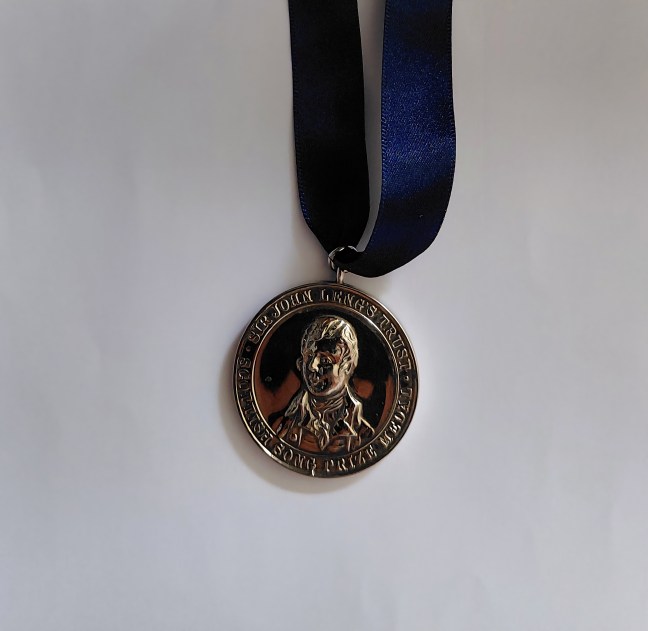
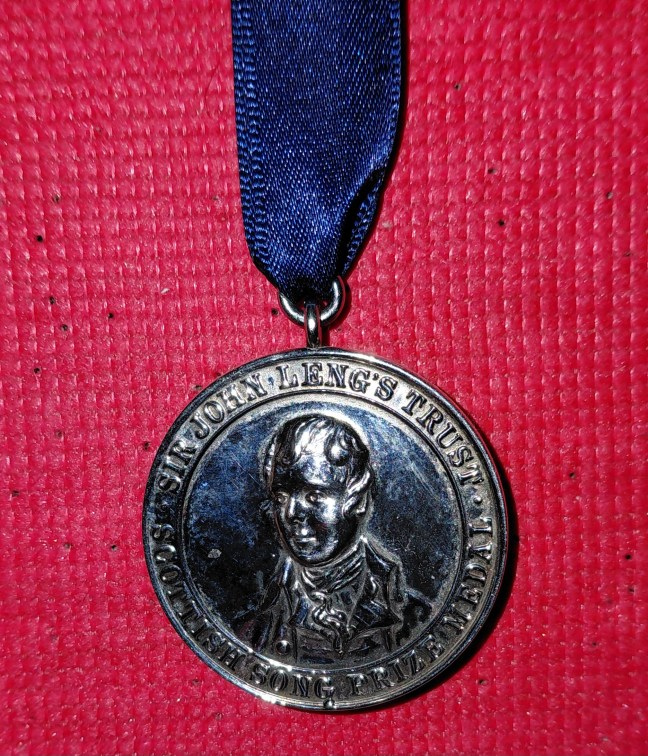
A silver Leng Medal for Scots Song, on a blue ribbon

I was chatting yesterday with someone who has had a lot of involvement with the Leng Medal Scots song competitions over the years.  They shared with me a couple of lines of verse that summed up their own philosophy.  When I looked it up to see who first wrote the words, I was gobsmacked to find it goes back to … 1588! The words are by courtesy of an old English composer, William Byrd, in his book of Psalmes, Sonets and Songs. [sic] Here are the lines of verse that were shared with me:-

Since singing is so good a thing,
I wish all men would learne to sing.โ€™

You can see it in context on a blog dedicated to historical singing,
Cacophony! Reimagining Historical Voices‘.

William Byrd


You might not agree with all Byrd’s reasons, but at least some of them still ring very true!ย  Singing is good for you. It has mental, physical and social benefits.

In Dundee, Sir John Leng would surely have agreed wholeheartedly.  With the added incentive of keeping the Scots song tradition alive!

Silver and Gold Leng Medal Memories, Update no.3. Posh Scots and Everyday Scots – the ‘Scottish Cringe’

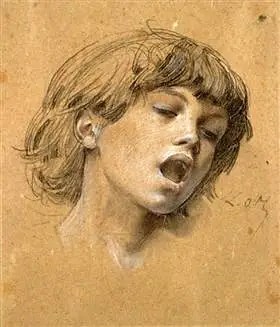
Merson - Head of a boy singing (Creative Commons licence)

It’s time for another update on the research that the Royal  Conservatoire of Scotland has awarded me an Athenaeum Award to conduct.

By the end of tomorrow I’ll have interviewed some 25 or so Leng medallists who were awarded their silver and gold medals between the 1960s and 1990s. They went to a wide range of schools, though one or two schools have featured more than once. And they sang a wide range of songs. Some were nervous, some excited. Some knew they could sing – others were surprised to win – and all were overjoyed to be winners. I’ve been shown a lot of medals, proudly kept through the decades.

Interestingly, social media has been very helpful in augmenting my research findings. On Facebook, I’ve found folk in groups like Dundee Pals enjoy answering quick questions, and their answers are often highly informative. When I asked how many people had three or more family members with medals, the number of replies was quite remarkable!

The ‘Scottish Cringe’?

It wasn’t until last weekend when I conducted a face-to-face interview in Dundee, that someone mentioned ‘the Scottish cringe’. I guessed what that meant, and when it was explained to me, it was rather as I had guessed. It refers to the inferiority complex that many in Scotland have, having grown up in a Scotland that felt it was always subordinate to England, and looked down on by many politicians south of the border. I did look up where the phrase originated, but I only made a hasty search, so I’ll hold my tongue until I am sure of my facts. An article in Glasgow University Magazine last year provides useful context:-

Didi Marina Salonia, Death to โ€œScottish Cringeโ€ (28 April 2025)

In the context of my research into the Leng medal competitions, it occasionally led to pupils being encouraged to sing their songs in a refined, sanitised kind of accent – not exactly English, but certainly toned-down Scots. I’m sensing that this happened more amongst older medallists, and hopefully children now are encouraged to use their own natural accent – as they’d speak – rather than trying to put on something uncomfortably clipped and unnatural. Again, Facebook has been very helpful here – 38 comments in reply to my question! I’m bowled over.

“I was talking to a friend about the Leng medals yesterday and an interesting thing came up. Who was encouraged to sing their Scots song in their natural everyday accent? Did anyone get told to sing it ‘nicely’ in a posh concert-platform accent?!”

For the rest of this month, I’ll be going through my recordings and transcriptions, looking for interesting threads and making sure I have tabulated schools, songs and the names of long-remembered teachers! I’m also going to look at some archival material, which excites me considerably. Hopefully I could find further evidence of Mr Easson (and perhaps Mr Wiseman), the compilers of the Nelson Scots Song Books, around the time the books were published – and introduced into Dundee schools.

Excess Annual Leave Balance

I am taking annual leave in July. (If I don’t, I lose it, and that would never do.)

I won’t be capable of NOT blogging for a whole month, apart from which I do like to think that if someone comes back here after a couple of weeks away, there will always be something new for them to find. What it will be, I cannot yet say! (Additionally, as you’ll have noticed, I have a couple of research side-interests, so who knows what my month’s vacation might lead me to, if I feel the urge to investigate sudden bright ideas?)

Image: Head of a Boy Singing, by Merson (Creative Commons)

Silver and Gold Leng Medal Memories, Update no.2. Uplifting Conversations

A Silver Leng Medal for Scots song singing

After some years researching the history of printed Scottish music and Scottish music publishing, I’m currently using oral history (talking to people about their memories) to find out what they recall about Dundee’s Leng Medal Scots Song Competitions. Did participation lead to a lifetime of music and song? Or stage fright?!  What do people remember?

I began the Athenaeum  Award funded project a couple of months ago. I posted the first update a month ago. It feels like time I posted another one, so here goes!

You’d be surprised how many people remember their music teachers. You’d also be surprised how many people have kept their Leng medals! For gold medal winners, Mozart Allan’s Morven Scottish song book was a prize for a number of years,  certainly into the 1970s. From the late 1990s, the prize changed to Wilma Paterson and Alasdair Gray’s lavish Songs of Scotland, published in 1996.

Are there any gold medallists out there from the 1980s or 1990s? What was your prize book? Have you still got it?

What I find so enjoyable about this project, is how uplifting these conversations are! Participants talk with such enthusiasm and affection about singing in school – not just in the Leng Medal competitions – and about other musical activities that enriched their childhood. Sir John Leng would be astonished at the impact his endowment has had.  I wish he could be a fly on the wall!

I haven’t nearly finished my interviews yet – as a part-time researcher, I’m just slowly and steadily making progress. Indeed, I’m heading to Dundee tomorrow for some face-to-face meetings. And then on Thursday, I’ll see about sending out some more meeting invites.

(If today’s posting is the first youโ€™ve heard of my research project, then you can find out more about it here, and you can get in touch with me here. Itโ€™s not too late!)

Pear-Shaped. When it’s Nobody’s Fault, but the Tech doesn’t seem to Work

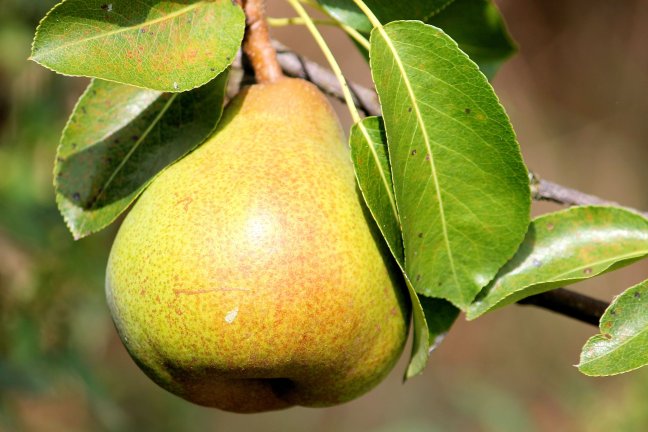
A pear still on the tree. Pixabay image

So, here we have a situation! Thoroughly Modern Millie (that’s me) has embraced Microsoft Bookings and Microsoft Forms, and the people I’m hoping to interview for my research project can book a time to chat with me online via Teams. (Or, indeed, in person in Dundee – at a few agreed times when I’ll actually be there!) I did several test-runs of the booking/meeting process with my patient and willing friends, and it all seemed to work smoothly. I particularly wanted to test it with people who didn’t have Microsoft Teams and would have to start from scratch. After the test-runs, it was “All Systems Go”, and I started on the interviews. I’m having a great time listening to people’s Leng Medal memories, though I do still have a lot more folk I’m hoping to speak to!

But if a scheduled Teams meeting doesn’t happen – by which I mean, I click on the link on my calendar at the appointed time, but the other person doesn’t check in – then that suggests that there’s a problem.

A Teams call isn’t a phone-call. The other person’s phone won’t ring, or buzz, at the meeting time. It’s more like Skype, Zoom or Google-meet. They will have got an email with a link to click. Clicking on that link should eventually take them to a Teams screen showing me waiting at my laptop.

My Brainwave (or was it?!)

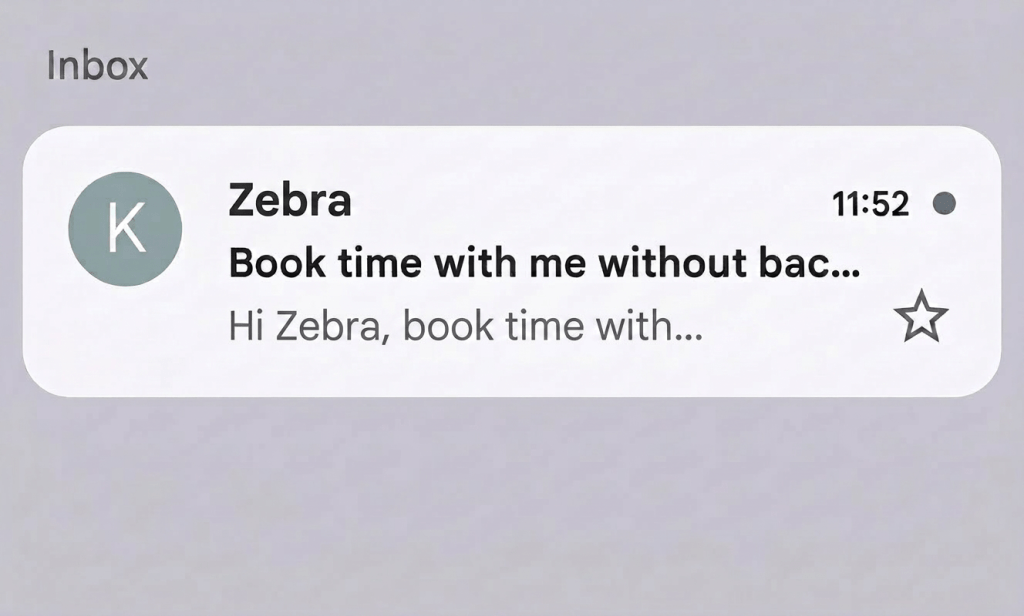
For me, the frustrating thing is not knowing exactly what people are seeing when they click on that link! It’s hard to offer words of advice, when I don’t know what they’re encountering. I wondered if I could arrange a Teams meeting between myself on my work laptop, and myself on my mobile phone, which I could screenshot to demonstrate how it works. So … I emailed myself (the potential interviewee) a link to a Microsoft Bookings page. This is the email subject heading:-

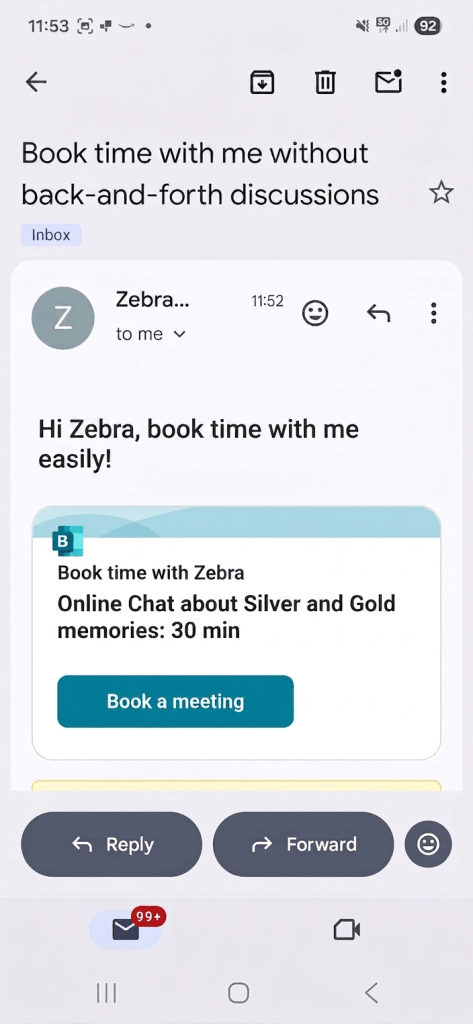
And this is what my Researcher self said to my At-Home self. I soon began to feel as though I had a split personality:-

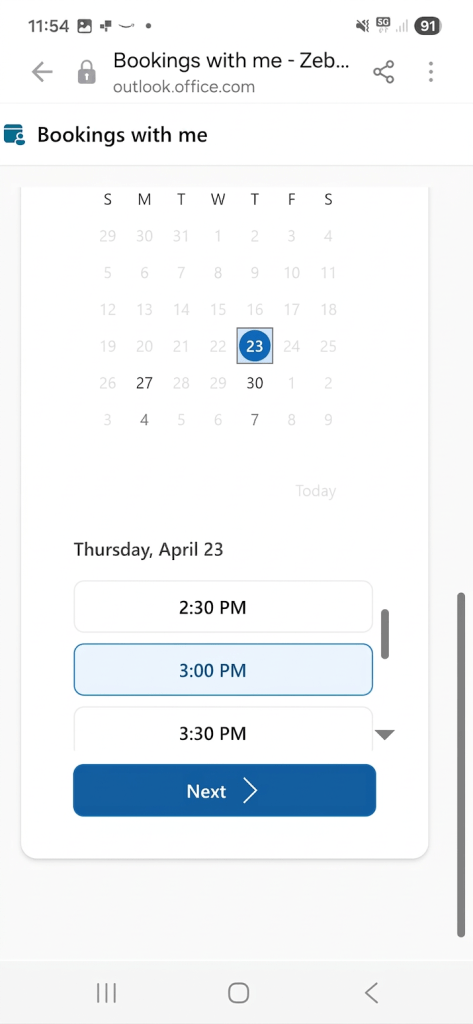
So, my At-Home self clicks on the blue Book a meeting – and this comes up. I have to pick a date and time, then click Next:-

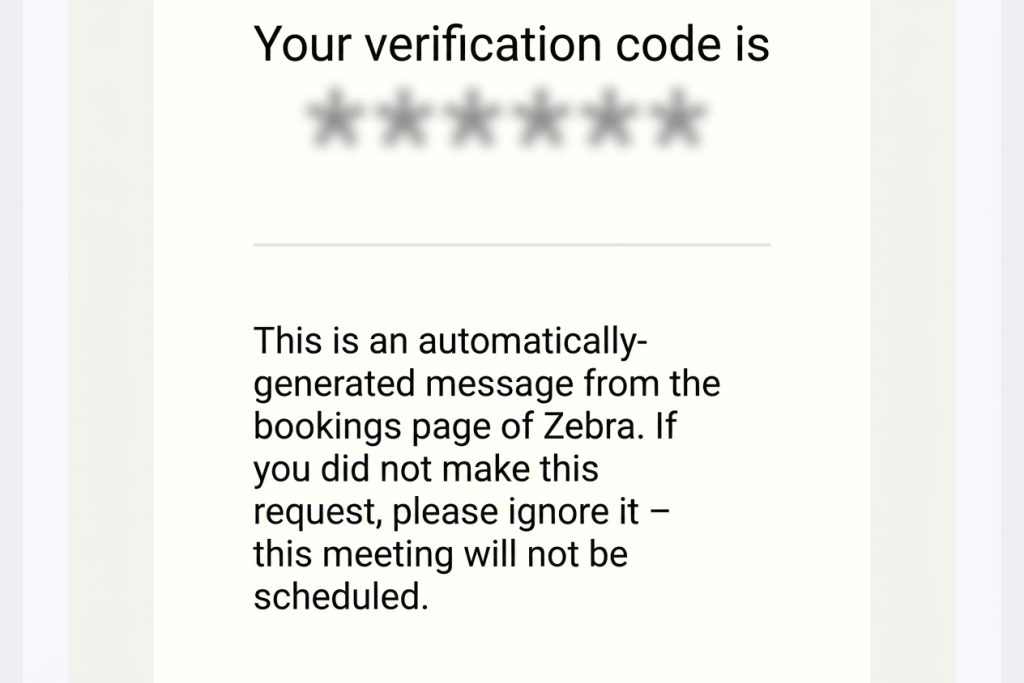
At this point, the potential interviewee will have to verify their email – they will receive a verification code that they need to input. And then they’ll be guided through installing the Teams app. If they already have a Microsoft account, they can use that, or they can join as a Guest:-


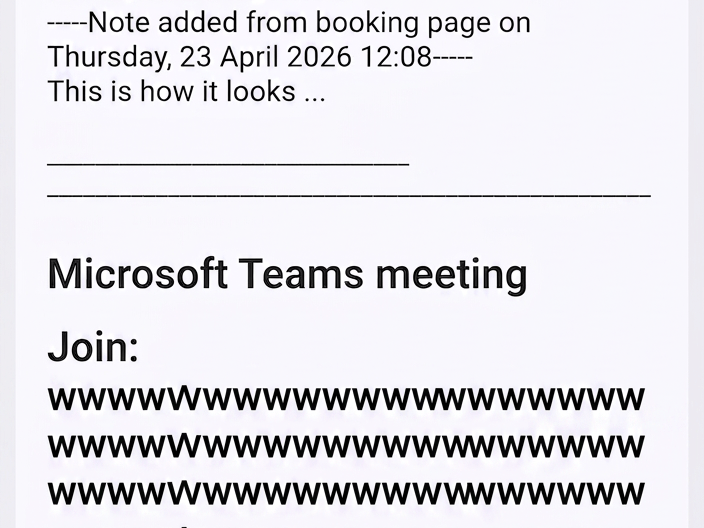
Now my At-Home self receives a hyperlink for joining the meeting at the chosen time. (There’s also a meeting ID and passcode beneath these.)

How to Attend a Teams Meeting if you haven’t got Teams on your Device

1. On your Mobile Phone

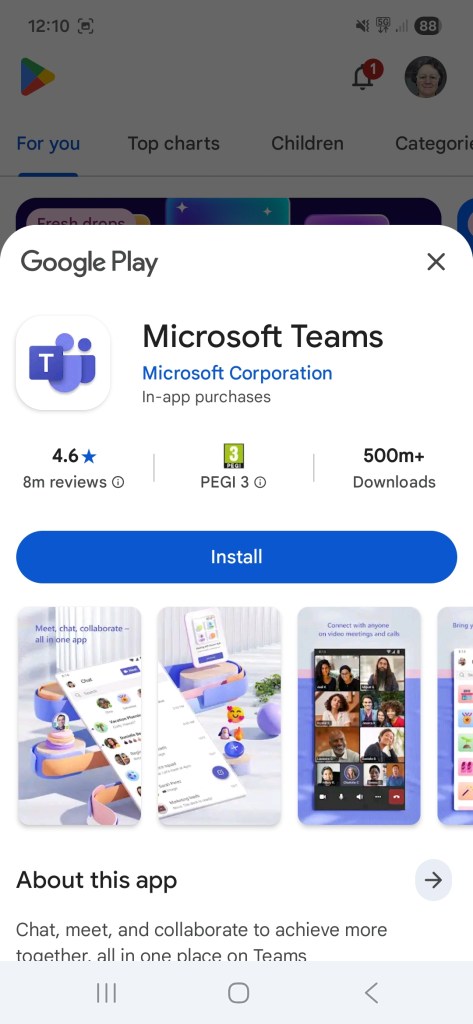
If you’re using a mobile phone, and you haven’t already got Teams, you’ll be invited to download the app, using Google’s PlayStore or Apple’s App Store.

Here, I stopped the experiment, because my phone wanted me to log into my work Microsoft account, and plainly I couldn’t converse with myself from one and the same account!

2. Attending a Teams Meeting on a Computer

I turned to my own personal laptop. Clicking on the Join your Teams meeting link offered the choice of ‘Continue on this browser’ or ‘Join on the Teams app’, followed by, ‘Don’t have the app? Download it now.’ My personal laptop is old – it would only let me continue on the browser. (Shall we just say that operating two laptops side-by-side makes for a completely impossible interview, but I was able to open the meeting on both laptops, so in theory I was conversing with ‘myself’ …. )

The Teams app

I’m assuming that the Teams app would then take you to your appointment. Anyway, you’ll need to click to ‘Join’ the meeting at your chosen time. No bells will ring, no lights will flash. On my work laptop, a reminder comes up, and I can click on that to get into the meeting. Or I can access it via my Outlook calendar.

If it all goes Pear-Shaped

Well, we still have emails! And I’m also arranging some face-to-face interviews in Dundee. One way or another, I’m sure we can find a way to share those precious Leng Medal memories. Because every interview has given me fresh insights and some lovely stories stretching way back into people’s childhoods.

Pear Image by Hans Benn from Pixabay

Silver & Gold Leng Medal Memories, Update no.1

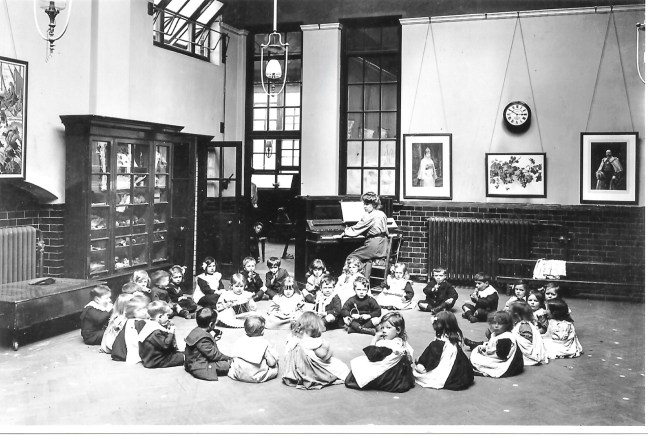
A classroom in Wandsworth, London, 1906 - the year that John Leng died

I’ve heard from many kind people who remember their involvement with the Leng Medal song competitions in Dundee, and now I’m starting to organise myself to speak to (or chat online, or email) everyone who has been in touch and expressed a willingness to share their memories with me.  If you’re one of those people, and you’ve expressed a preference to share your memories via one form of communication or another, I have noted this for future reference. You’ll be hearing from me soon! But if this blog post is the first you’ve heard of my research project, then you can find out more about it here, and you can get in touch with me here. It’s not too late!)

I hoped to hear from a lot of folk, and I certainly did!  So I’m contacting a few people at a time, to make it easier to organise my time.  If I can, I plan to focus on a decade or so at a time – though this idea may end up being rather loosely interpreted!

I’ve just started emailing people who indicated that they could chat online, inviting them to select a day and time.  I’ve allocated half an hour, so that we don’t feel rushed.  But if anyone fears their memories won’t take that long to share – there’s no need to worry – any anecdotes, however wee, will help fill out the story!

Microsoft Bookings

I very carefully set up my Microsoft Bookings page, and so far as I could tell, I did everything correctly. However, when I shared the link, I suspect I ticked a box that should not have been ticked. Anyway, I’ve unticked the box and shared the link again. I only confess this in case anyone received an email from me but couldn’t make the link work! I’ve re-sent the email and hopefully all is now well. Every day’s a school day, as they say.

‘Two notes’

One person has revealed that they sang two notes before the teacher told them to sit back down!

I think I may have mentioned before – I work part-time, so progress will be slow but steady! I’m very much looking forward to hearing more about this remarkably long-lived and successful competition!

Karen McAulay


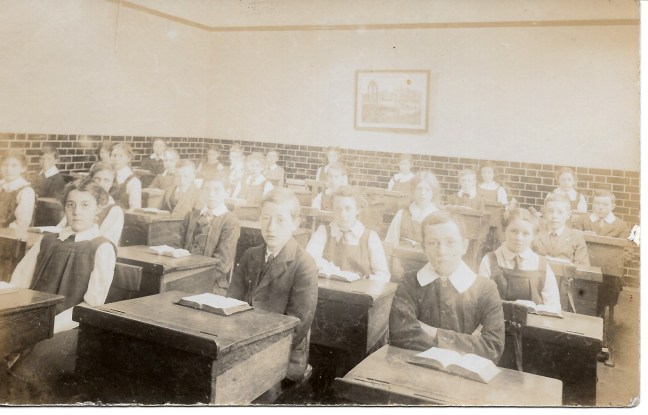
Faded old sepia photo of solemn children (Edwardian?) in a classroom
The ghosts of children long, long past – provenance unknown

Confession: these photos are from my own ephemera collection. They have absolutely no connection with Dundee, but just serve as a reminder of the days when Sir John Leng’s competition was initiated. The photo at the top of this blog was taken in Wandsworth in 1906, the year of Leng’s death. These little tots probably weren’t being taught Scots songs by their elegant teacher. On the other hand, the children at the foot of this blog post look exactly the age that early Leng Prize competitors must have been! This postcard comes with no caption whatsoever.


Links

Shipment for a Semi-Retired Researcher

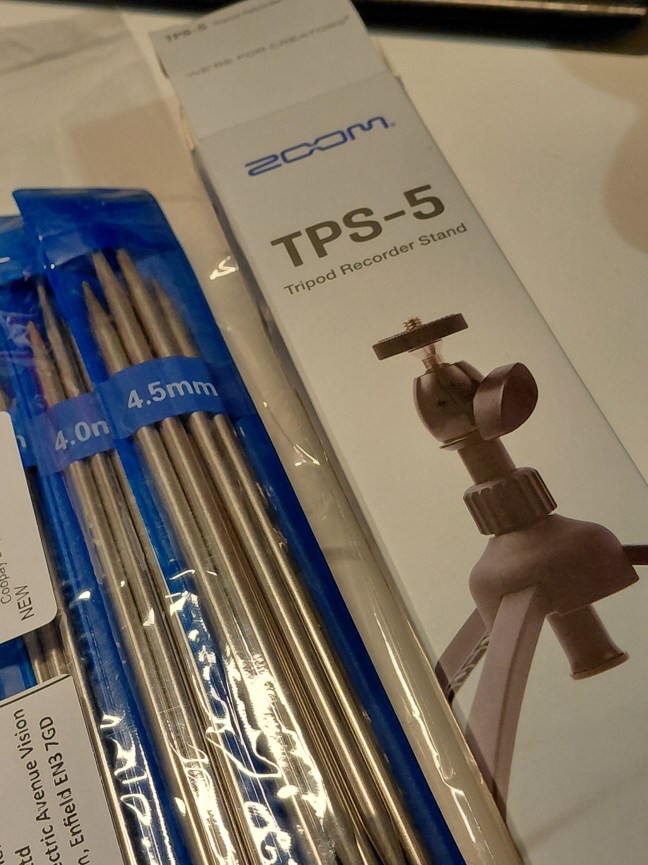
There’s no such thing as a typical semi-retired researcher! But my mail this week pretty much sums up my current preoccupations:  a tripod for the Zoom 5 Handy Recorder (research) and assorted double-ended knitting needles (semi-retirement sock project)! I now have all the tech I need, both for my oral history interviews, and for learning how to knit socks.

Researchwise, I’ve designated this week, The Last Week of Procrastination. I need toย  get started on my interviews – no more ‘I must just …’ prevarication. Florence Nightingale’s ‘invalid’ of last week is not technically an invalid this week; I do know how my various technical options work – why, I even have a wee tripod to help me look the part! – all that remains is to start scheduling. (This is proving easier said than done, but I’m working on it …)

Who’d have thought a tripod was such dangerous tech?!

Retirement-wise, though,  I’m not quite sure where the sock-knitting fixation came from. My feet feel the cold, true. And I need something else to do other than embroidery, at times when I find myself ‘relaxing’ in front of the TV. (Let’s just park those inverted commas for now.)

Sheer Bloody-Minded Determination

But I’ve been driving myself crazy with this knitting malarky! If only I had an amenable granny sitting beside me telling me what to do next. As it is, I’ve downloaded instructions off the internet, bought a couple of books, and sworn quite a bit  … I absolutely hate being beaten by a circular needle and a variable quantity of double-ended needles.  (Manipulating these is worse than trying to hold bagpipes.*)  I can’t admit defeat to a 4-ply woollen sock, for heaven’s sake.  I’m meant to be intelligent. As my late mother said about cookery, surely anyone who can read instructions can do this thing? 

If nothing else, it’s proof that I don’t give up easily.  In the grand scheme of things,  I made a second attempt at a PhD. On this micro level, I will work out how to knit socks.

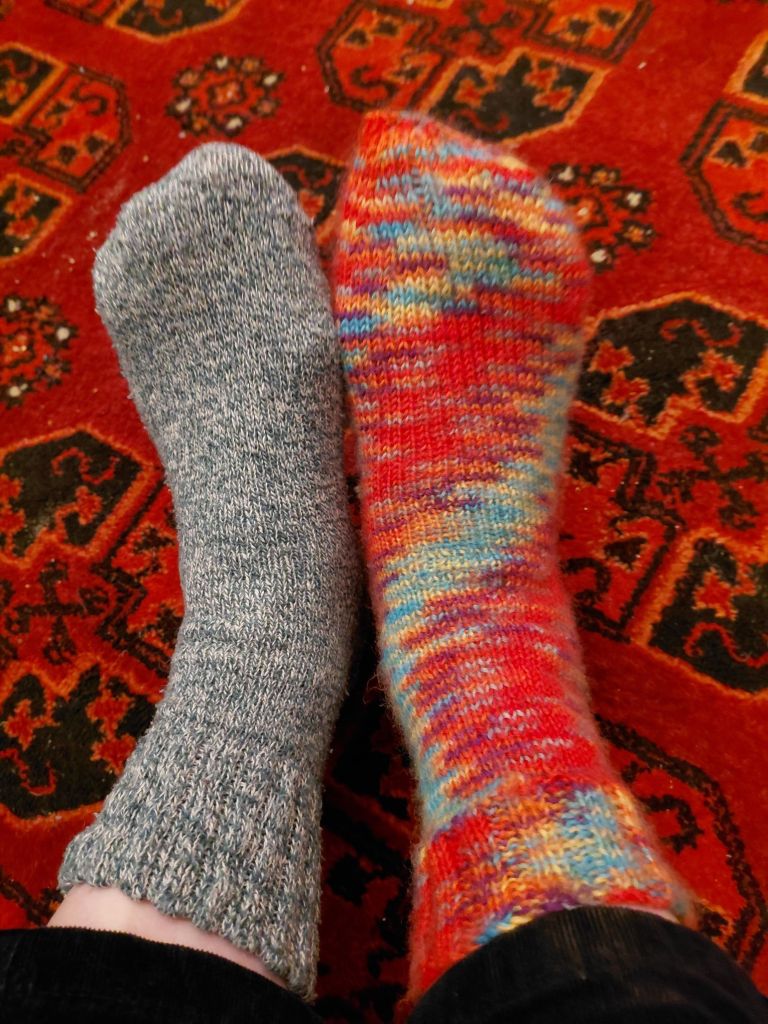
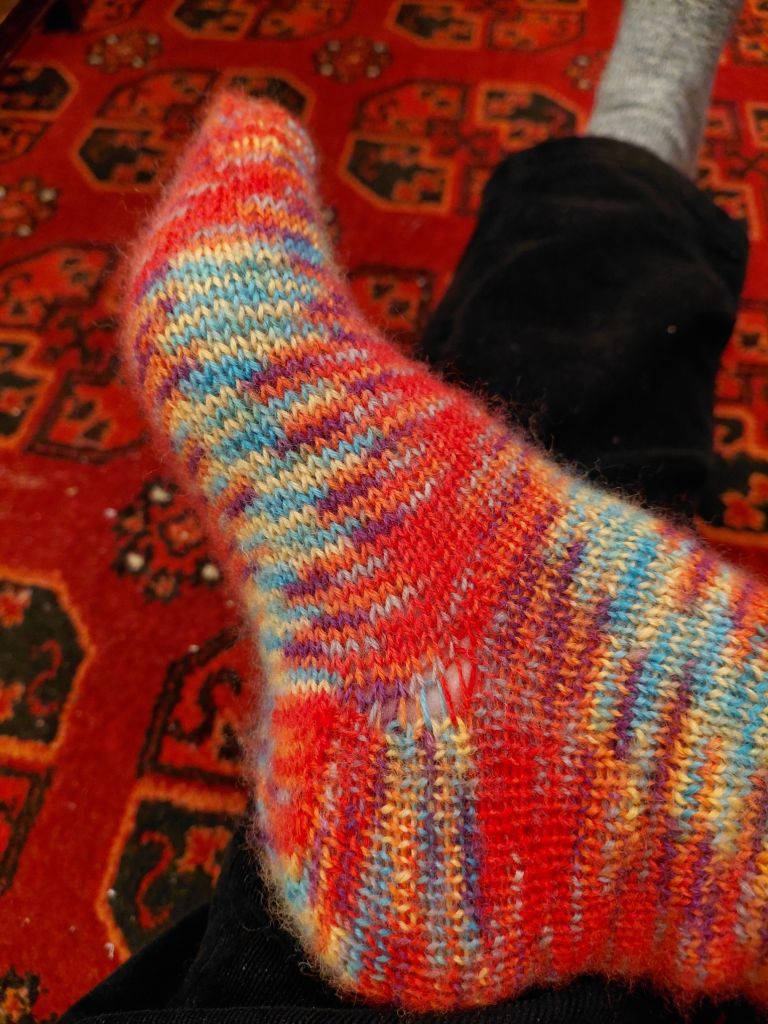
I finally (at the fourth attempt) turned a heel, and arrived at something resembling a sock. If it’s on my foot, it’s a sock, right? Even if Kitchener Stitch is a form of torture, and the sock foot is really only just long enough.

The other one of the pair will be better. And quicker.  I’m getting there.  The BBC recently showcased research proving knitting to be good for one’s mental health.  Relaxing.  Well …

Okay, it’s a ‘neat’ fit!

*Postscript. I did give up on the bagpipes. Learning whilst completing the second PhD was really not a good idea!

Athenaeum Award Research Project: Silver and Gold Leng Medal Memories

Microsoft Forms icon. Cartoon person sitting holding a notebook or tablet.

This research is being funded by an Athenaeum Award from the Royal Conservatoire of Scotland.

The Road and the Miles to Dundee (Cappuccino Concert Today, Research Later)

Today takes me to a Cappuccino Concert in the Wighton Heritage Centre at Dundee Central Library.

As Honorary Friends of Wighton Librarian, I like to show my face as often as I can, especially when the concert sounds exciting!

But I hope that whilst I’m there,  I’ll also be able to chat to friends about my new research project – Silver and Gold Leng Medal Memories. You may recall that I blogged about the project a couple of days ago.

My research is made possible with the support of an Athenaeum Award from the Royal Conservatoire of Scotland.

Already, several people have been in touch, and I’ll be responding next week.  I can’t wait to hear everyone’s stories, and it’s clear there are hundreds of people out there who participated in this competition!

Would you like to help me?  If so, Iโ€™d be very grateful if you could fill in a very short questionnaire, and Iโ€™ll get back in touch as soon as I can to arrange an interview with anyone who has a story to tell!

PLEASE CLICK HERE FOR LINK TO SHORT QUESTIONNAIRE

Image by joesoap1952 from Pixabay