Part of Glasgow’s history: click the link below to read some fun facts that I discovered five years ago, whilst writing my book about old Scottish music publishers …
More fascinating detail about music education in Glasgow? Read my book!


Dr Karen McAulay explores the history of Scottish music collecting, publishing and national identity from the 18th to 20th centuries. Research Fellow at Royal Conservatoire of Scotland, author of two Routledge monographs.
Part of Glasgow’s history: click the link below to read some fun facts that I discovered five years ago, whilst writing my book about old Scottish music publishers …
More fascinating detail about music education in Glasgow? Read my book!
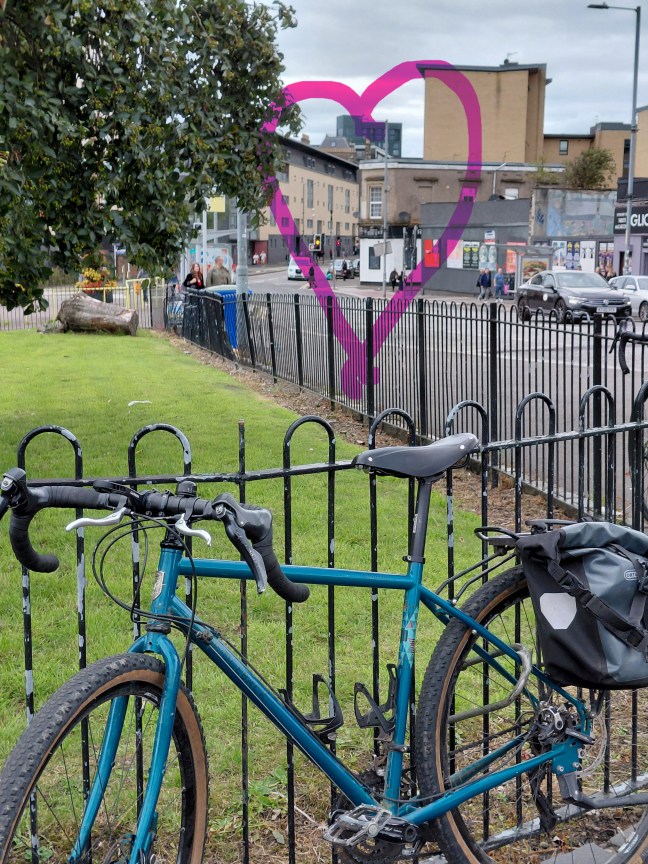
(Or should this be, ‘Holding out for a heroine?’) I love looking for the places where my Scottish music heros and heroines lived and walked. No particular reason – I just like to visualise where they lived. In fairness, it may tell me nothing more pertinent than to inform me that they lived in a very luxurious, upmarket neighbourhood – or one that has seen better times – or indeed, one that may never have been particularly swanky! If they were a church organist or a teacher, or supplied music to dance musicians, it’s nice to see how far they lived from their work. In any case, it’s an innocent enough obsession, and sometimes I manage to find a coffee whilst I’m out prowling!
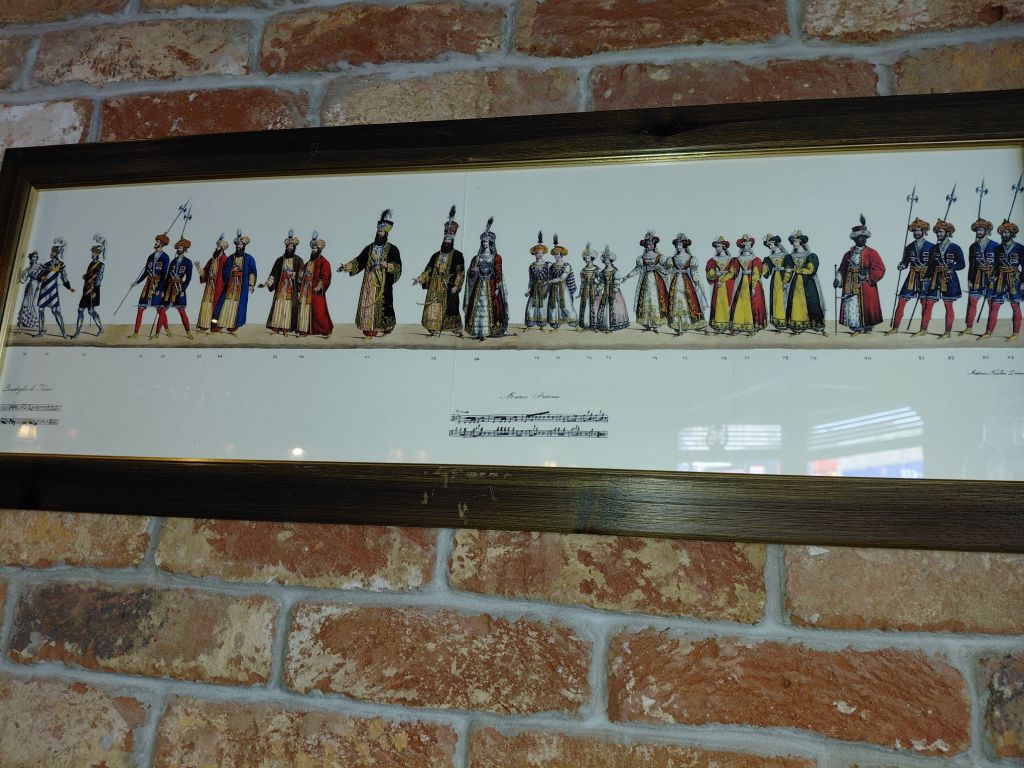
Out we went into deepest Lanarkshire earlier this week, in search of the birthplace of one of the two women I’ll be talking about at the conference in a couple of weeks.* We couldn’t stop for a photo, in a busy street, but I’d seen it on Google maps in any case. We had a coffee just round the corner in the main street. (I believe it’s under Turkish ownership, which might explain the intriguing illustrations of quadrilles in different national costumes, on the walls! Look carefully – there’s a Marcia Persiana amongst them.)

But I didn’t expect, a couple of days later, to find myself looking across at one of the addresses that our budding composer occupied in Glasgow. Buildings change, and it looks as though this one has been reduced to two storeys since our heroine lived there with her mother and a couple of siblings in the 1890s. So … you may or may not be looking at the tenement flat where they lived, but you’re definitely looking at the tenement!
It’s just along from the Fabric Bazaar and the famous Barras market. Since Piping Live has been on, and yesterday it was the second day of the World Pipe Bands Championships at Glasgow Green, there was a distant, constant sound of drones, and kilts swinging round every corner.
Yes, even in the fabric shop, the reason for my outing in the first place. No kidding.
*The Royal Academy of Music’s September conference, Women and Musical Histories, 1789-1914. My paper has possibly my longest ever title-
‘The Trumpet Major’s ‘Poetess’ Widow; the Scottish Shipping Magnate’s Daughter and the Retired Barrister: The Importance of Parental Support to Musically Gifted Girls in the Late Victorian and Edwardian Eras’.
I’m back at work after a month’s vacation (I confess that I was rather lazy), and now I must get back both to my Dundee Leng Medal research, AND to writing a paper for a conference at London’s Royal Academy of Music: Women and Musical Histories, 1789-1914.
I’m reminded by this, my own blog, that I was attending the International Association of Music Libraries’ Congress in Cambridge, this time in 2023. I particularly enjoyed hearing the talks about early film music.
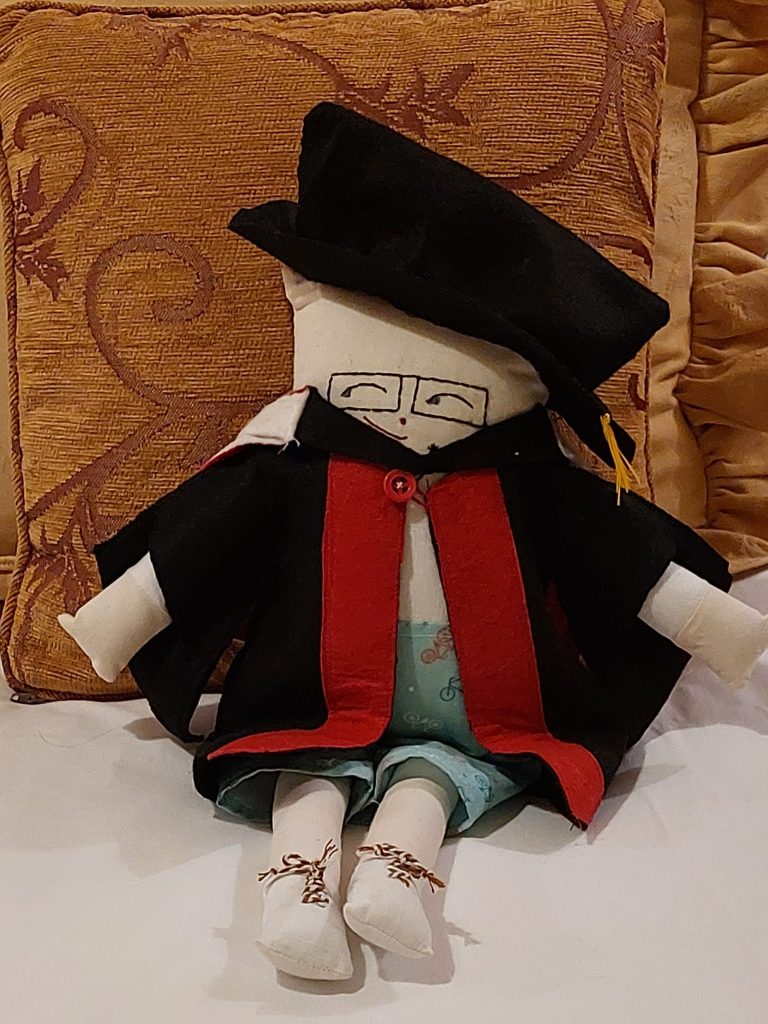
I wasn’t speaking on that occasion. No, my input was merely in various social media aspects: I was running the social media campaign for and during the event, and I’d created a trio of conference mascots – Cam, Bridge and Don – whom I employed in social media posts. (I don’t know what happened to the first two, but Don was given to a wee girl at church, and has enjoyed a comfortable retirement in a family setting.)
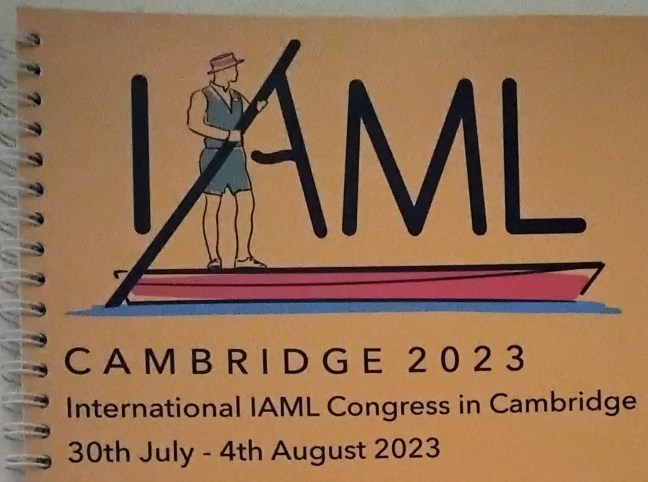
I’d also come up with the IDEA behind the conference logo – a chap on a punt, incorporating the IAML abbreviation. Well, it was Cambridge! I hasten to add – I wasn’t the artist. The IAML Cambridge Congress feels like a long time and another lifetime ago! I was already aspiring to a new part-time research existence, but envied another delegate who already had theirs’ lined up, being a tiny bit closer to retirement age than I!
And by this time in 2024? I’d retired from librarianship, but I was rather busy on final tweaks to my second monograph. And 2025 saw a rather unsettled summer, which we’ll gloss over.
Anyway, this year, I decided it would be a proper vacation, even if I didn’t spend it travelling or sunbathing. I achieved this moderately successfully. However, last weekend I decided I’d ease myself back by having another go at some detective work which had failed on all earlier attempts. My earlier research had focused on this individual’s daughter. Now it was the parent who intrigued me. But again, I drew a blank, after I don’t know how many hours. I cannot trace documented evidence of youthful musical activity by this individual, although I know that she was her daughter’s first singing teacher – and I have my own hunches about some of the books they might have used!
This is not to say that I found nothing. I know where the mother was born – no more than a couple of miles away from where I’m sitting today, in a large house that is no longer there.* It would be fair to say that the neighbourhood has gone down significantly since then! I know where she subsequently grew up (an even larger house in a very nice neighbourhood, again a couple of miles from where I’m sitting today, but on the other side of the M8 motorway). I know where her parents came from, too. And I traced her mother’s retiral from the family business. I even found a blogpost about a family grave in the Glasgow Necropolis.
However, the sad fact is that if a wealthy young woman was musical, but there’s no newspaper documentation of her ever performing publicly, then there really isn’t very much to go on. Try as I will, I can find no mention of her at school, or singing, being a soprano or a contralto, ‘contributing’ (a common word in Victorian reportage of musical events), or even venturing into playing the piano/pianoforte. Her older brother and sister took part in a fund-raising bazaar hosted by the local church, but there’s no mention of ‘my’ subject there either.
I have visions of myself standing dolefully outside the large house that’s still standing, or on the corner of the street where the other house stood, or even in Glasgow Necropolis, literally trying to communicate with ghosts past, in my efforts to intuit how much music occupied her childhood and adolescent years. It would make not a scrap of difference, though!
Ah, well. Back to more pressing topics. Perhaps I have to give up on my Miss Marple endeavours.
*By this evening, I had realised that my bus route to work actually passes the junction where Flora’s mother was born. It’s a curious coincidence, to add to the vacant site a bit further along the route, where James S Kerr’s first music shop was located. Who knew the no.23 bus had such historical links?!
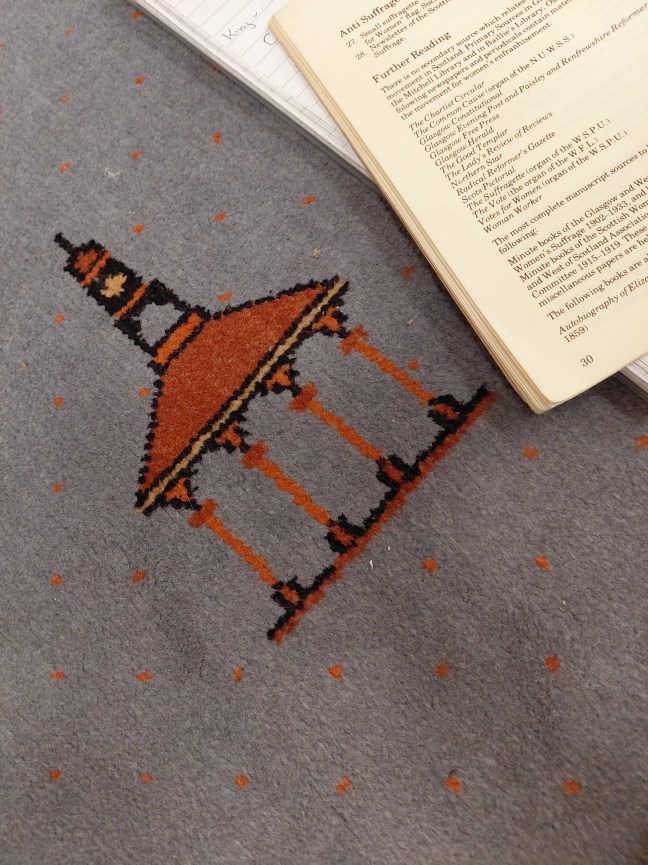
In search of a Victorian-era suffrage connection, I made a trip to Bridgeton. I sat on the rather beautiful carpet, studying suffrage organisations in Scotland. (We musicologists know how to have a good time!) But was there any mention of the women I was looking for?
No.
However, I found an interesting fact about someone else. ( I subsequently spent several hours at home trying to fit this into what I already knew. And I couldn’t.)
However, it wasn’t a wasted trip. I saw several useful books I hadn’t previously known of. I’ve asked questions.
Indeed, armed with a couple more dates, I can see that there must have been many situations when women sympathised with the cause, but were not in a position to take an active part: caring obligations, age, disability or living too far from big cities like Glasgow or Edinburgh in terms of early organised activities. I could be looking, at least in one case, for involvement which would not have been feasible. (I shall not leave any stone unturned in terms of other lines of enquiry, all the same!)
Moreover, before heading home again, I crossed London Road for coffee and a flapjack. At least I had the satisfaction of knowing I’d had elevenses a short distance along the road (formerly called London Street) from where ‘my’ ladies once lived.
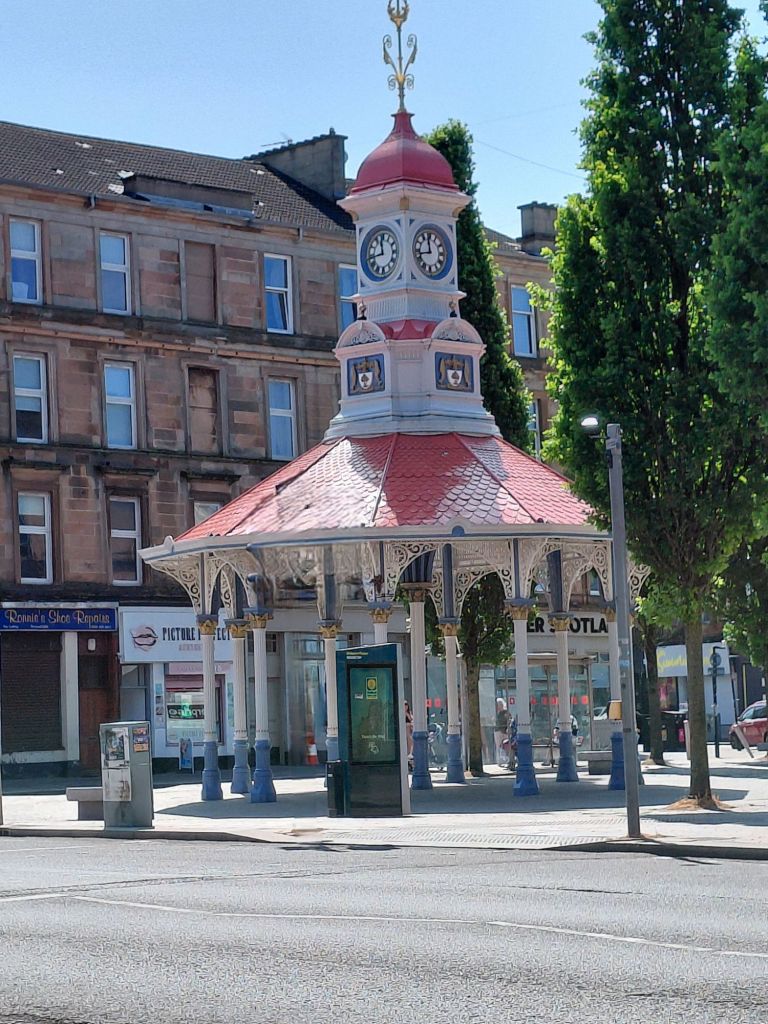
I suppose you win some, you lose some. It was a lovely day for an outing, anyway!

Remembering my fruitful walk on 3 January 2023, I looked outside today – yes, the third of January again – saw the sun shining (athough the temperature was literally freezing out there), and decided to go on another research-and-exercise outing. What could possibly go wrong?
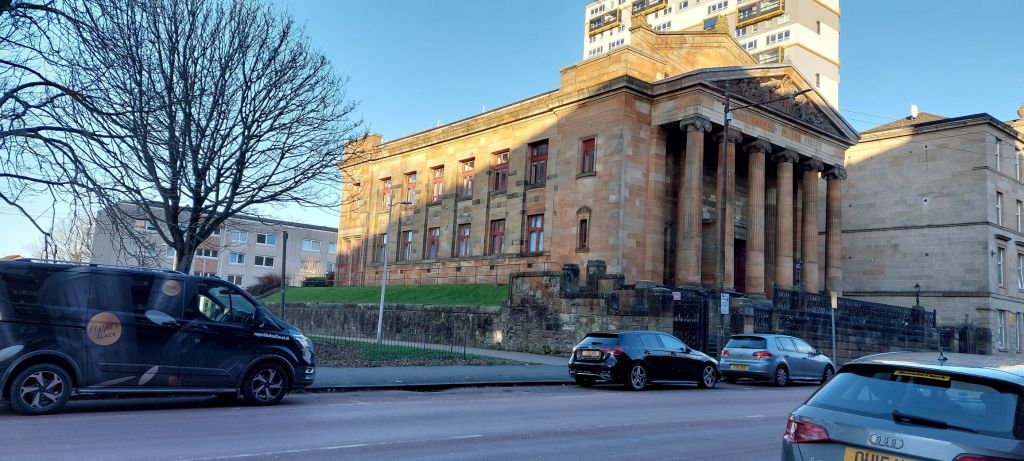
I’ve been exploring the story of a Victorian Glasgow music professor, so I headed for St George’s Cross by subway, to see a former church where he had once been organist. He had started his tenure in an earlier building, which was burned down in a fire, but a new one was built in a mere two years, so he must have resumed duties at that point. I already knew that, as with organist Maggie Thomson’s Paisley church, this Glasgow church had likewise now been converted into rather classy flats.
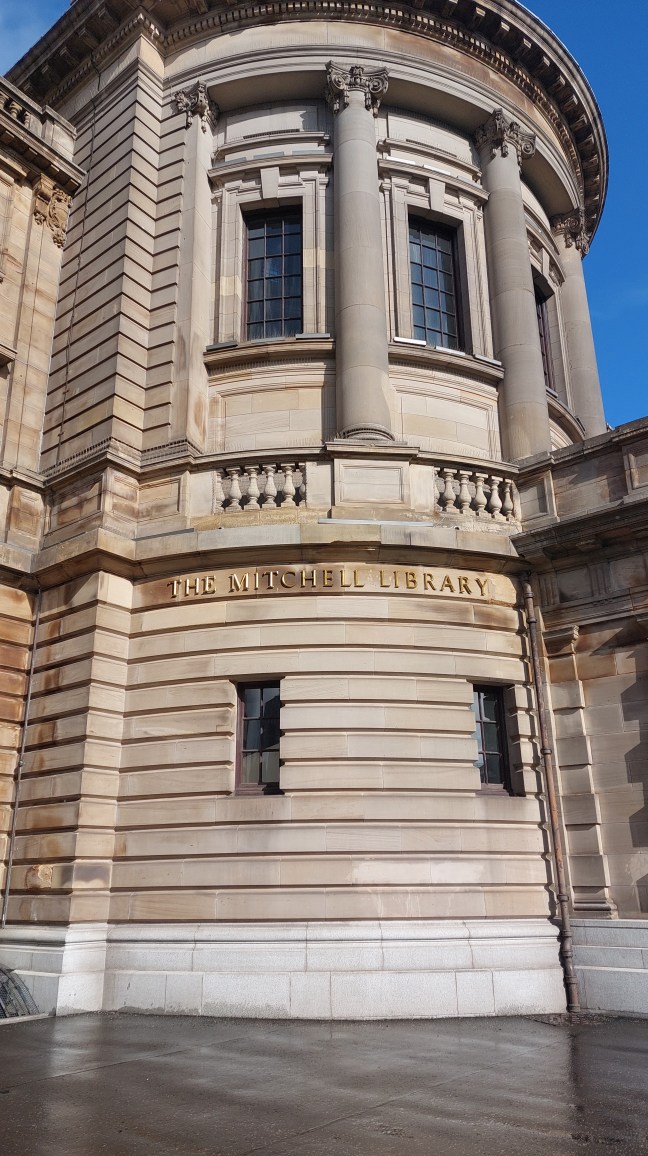
Unperturbed, I headed next to the Mitchell Library, and up to the fourth floor where the old music card catalogue lives; it has never been digitized. This eminent individual certainly composed enough, but mostly in a light-music vein, and not published by any of Glasgow’s bigger music publishers. However, I was still surprised to discover that he is completely unrepresented in the card catalogue.
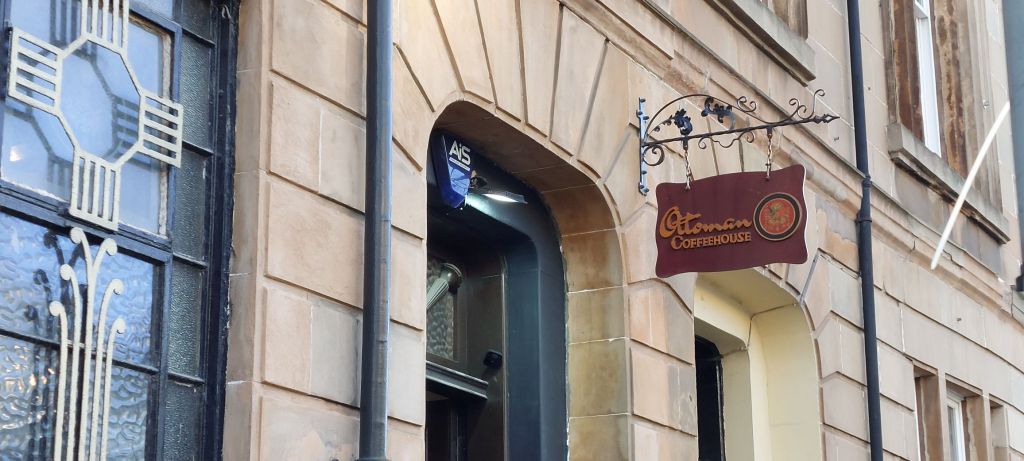
To drown my sorrows, I headed next to a celebrated Turkish coffee shop in Berkeley Street. (The premises had once been a club for Glasgow musicians, and our hero had been included in a song-book that they sponsored; clearly I needed to have a coffee there in his honour.) Foiled again! There was a queue out to the pavement, just to get inside the cafe. Back I went to the Mitchell Library cafe, to get my coffee more quickly!
It was still bright and sunny outside, so my next port-of-call was India Street (on the opposite side of the M8, near Charing Cross station). This had been both of professional significance and latterly home to our hero, and although I knew modern developments had taken place, I still hoped that I might be able to walk the length of the street. Thwarted! Scottish Power sits squatly and solidly across the line of the road, and pedestrian access is blocked by ongoing building works before you even get to it.
I could have headed into the city centre to gaze at the Athenaeum, but I’ve passed it hundreds of times, and there are plenty of pictures on the web – it wouldn’t have felt like much of a discovery. Sighing – for the mere glimpse of a road sign at the wrong end of India Street had not exactly thrilled me – I headed for the bus home.
But fate had one more twist for me: whilst I was looking on the travel app to find out when the next bus was due …
… the next bus sailed past my stop.
I decided that maybe walking briskly to the Subway would be quicker than waiting for another bus. At least the Subway dates from the era when our hero was in his prime and doing well.
‘How did you get on?’, I was asked, when I got back home. I was forced to admit that, apart from St-George’s-in-the-Fields, I had really seen virtually nothing.
On the plus side, my FitBit is as happy as Larry. Finally, it said, she has realised that Christmas is over, and it’s time for the healthy living to resume!

It was foggy all day, I’ll always remember that. The mist still swirling outside, I went to bed and went over in my mind all the places I’d visited.
We met in a small cafe – always a good idea to start off with coffee! It was a short walk to our first stop, the place where much of the city’s music was printed.
A minibus took us to our next port of call – by the river – and then across the river to see where one of our publishers got married. (This raised a few eyebrows, but in fairness, it might have looked different 150 years ago!) From there – to see where he traded from, and then (wishing it was open) past a museum and on to the premises of another local publisher. Again, faded glories, I’m afraid. But it would have been very handy for the shipping!
Our new businessmen would have used trams to get into the city, until the subway started in the 1890s. We took the subway – no trams nowadays! It was time to visit a couple more publishers’ premises in the city centre, not to mention the former Athenaeum. Time for the minibus – there were a couple of former churches to visit (one still standing, another very definitely not); another educational institution, and the street where three music publishers finally found themselves merged into one single entity.
Where next? The Mitchell Library, with all its historical collections, or a nearby cafe? Or indeed, the library cafe? What would everyone prefer? We talked about what we’d seen, and whether it had changed our opinions of all that cheap music, so popular with earlier generations.
I dozed, until finally my busy mind gave in to sleep.
It’s time to confess – the whole story is simply a figment of my imagination – I was dreaming. It never happened – but I’ve thought about it so much that maybe it might have some mileage after all. Would you be interested in such a tour? There are few places we could could actually go into, but I am convinced that a tour of key places would bring the history alive in a way that books can only hint at. It would certainly tie in brilliantly with my second, recently published book. I’m going to think about it a bit more imaginatively … watch this space!

Unless you’re Scottish, you may not have come across Clifford (Cliff) Hanley. He was a Glasgow journalist, writer and sometimes lyricist, born in 1922 and dying in 1999. Dancing in the Streets was first published by Hutchinson in 1958. My own eBay copy is a 1983 reprint by Edinburgh’s now defunct Mainstream Publishing. Amusingly, it came secondhand all the way from a library in Ilford, Essex!
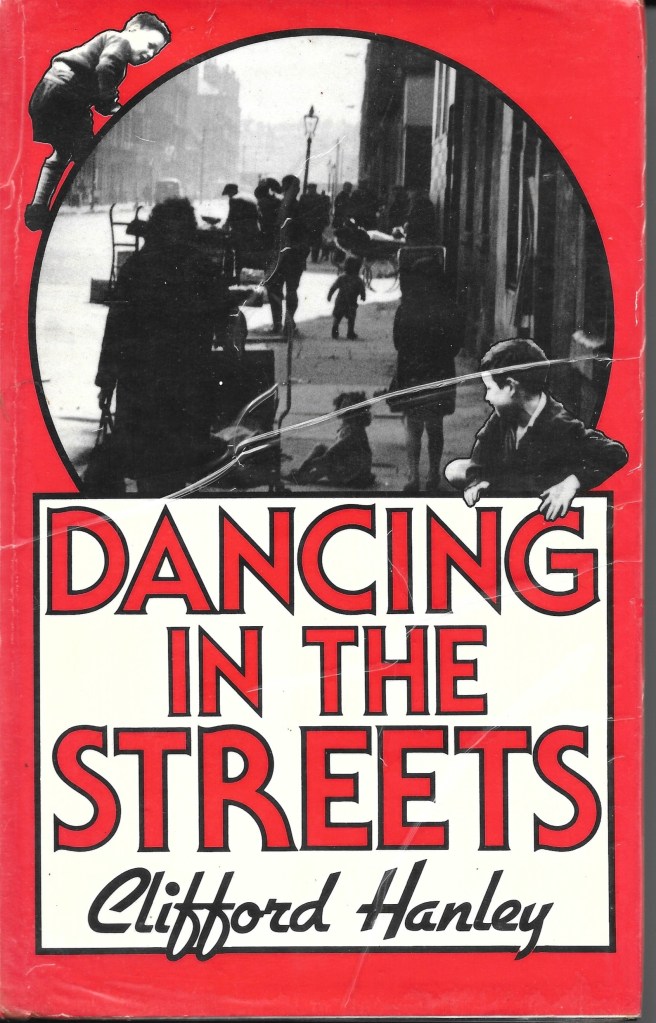
On the second day of my indisposition with Covid, I picked it up, decided that even Glasgow autobiography and social history was beyond me, and turned to Audible. Don’t judge me! But yesterday and today, feeling closer to my normal self, I picked it up again, and read the whole thing cover to cover. This is a man who knew Glasgow inside out, as a local journalist. (You’d like to read his obituary, maybe? Here it is in The Guardian, 14 August 1999.)
Hanley wrote well, and entertainingly. There’s lots of local colour – not to mention wee reminders that times have changed since then. (Go to a party on the night your wife’s in hospital having your firstborn? I think not! I imagine husbands weren’t allowed in the delivery room in those days, but this is still barely a mitigating factor!)
I bought Dancing in the Streets in the hope of tracking down some elusive information – which I didn’t find, as it happened. (It was, admittedly, a long shot!) However, I did recognise names that I’d already encountered, and I was to discover different gems that filled me with some excitement, because odd little passages foreshadow things that I, as an incomer to Glasgow, had later discovered through diligent research, and these convinced me that what I have written in my forthcoming monograph is certainly born out by someone who was actually there in inter-war and postwar Glasgow. I’m quite glad I hadn’t read it until now. It’s useful background, but it’s not on the subject of Scottish music publishing or amateur music-making, so I don’t feel I was negligent in not considering it earlier. However, in bearing out truths that I had to learn the hard way, there were several ‘Yes! See? That’s what I found!‘ moments, amongst the laughs that I couldn’t stifle between coughing!
For example –
Hanley took a holiday job on a cattle-ship from the Clyde to Montreal, as a very young teenager. On page 95 of his book, he meets some Glaswegian expat women there:-
‘How is Argyle Street, son?’ one of them asked kindly. ‘Fine – still the same, big crowds on a Saturday night an’ buskers playin’ the flute.’ ‘Oh, my God!’ She started weeping, but took a hold of herself. ‘It’s that nice tae hear a good Scotch voice. Could you no’ take me hame on your boat, son?’ ‘I wish I could’, I said in desperate pity. ‘Ah know, ah know, son, ah wish you could tae. Don’t you ever leave your hame, son, it’s the best place in the world. Ah wish tae God ah had never left dear auld Glesga.’
You can see how sentimental old (or more recently manufactured) Scottish songs would go down well with such fond emigrants!
I have certainly not suggested that the folk revival started, like flicking on a light switch, in a certain year, but I have highlighted new trends, and the influence of Edinburgh University’s new School of Scottish Studies. It’s fair to say that Hanley was not in this new movement. On the contrary, he seems to be poking gentle fun at it, on pages 208-10 of his book. At the abovementioned party, he describes an actor who ‘wanted everyone to sing folk songs, or Hebridean mouth music’, and a girl who was a potter, who wanted to ‘dance some kind of reel in her bare feet’. Later, she was ‘doing something stooping down and stamping, which apparently was meant to represent walking [sic] the tweed’.
Clifford and the potter were both, I’m afraid, wrong. The word is ‘waulking the tweed’ and Hebridean women used to thump urine-soaked cloth on a table, to soften it. Yes, I know – it sounds gross, put that way! (Feel the same about your genuine old Scottish tweed now?) Anyway, here Clifford has encountered one individual who is more aware of the new trends, and another who has a vague delusion that she understands it! Neither are seen as kindred spirits. Hanley wrote for a living, including the aforementioned song-lyrics, and had occasionally dabbled in performing on stage and radio. Probably a little younger, these partygoers were not part of his usual scene at all.
And on page 242, Hanley writes about the decline of variety theatre, about teenagers’ musical tastes, and a new preference to listening to music at home on gramophones rather than go out to a variety show.
So, unexpectedly, reading this book came as welcome vindication for some of the points I’ve made – a feeling which is always nice, of course. It’s hardly surprising that a book like this actually functions as useful background reading for a study in popular musical culture. But it also came as a welcome reminder that sometimes there’s benefit in stepping back and reading more widely. A book doesn’t have to be a scholarly tome – no index or bibliography here – to contain worthwhile background information. Information, in fact, that I wouldn’t even have recognised as valuable before I embarked on my research, but which came as validation of the most welcome kind.
My own book’s been copy-edited, the proofs have been corrected, and it’s well on its way to being published. I believe orders can be placed at the end of October. But for now, you might just find me heading to the local library to see if I can pick up anything else by Clifford Hanley. You can get Dancing in the Streets very cheaply secondhand, if you’d like to read it for yourself.
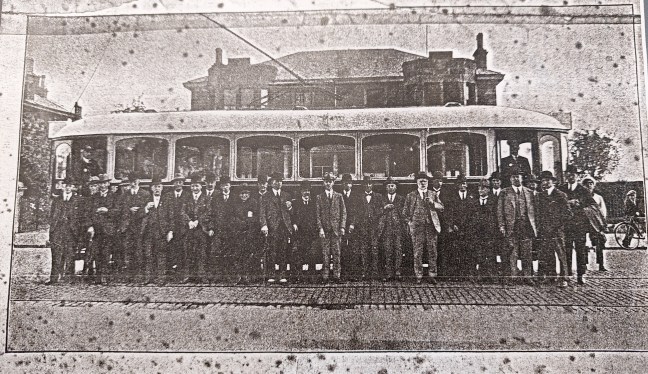

At least a couple of decades ago – long before I was interested in the social history of amateur music-making in Scotland – I came across a curious piece of sheet music. Knowing that my other half is more than a little interested in Glasgow trams, I made a photocopy and kept it safe. Every so often, we would joke that I’d get someone to sing it when it came to ‘final curtains’ time. (It would make a nice change from ‘Abide with me’ and the 23rd Psalm, after all!)
I hadn’t looked at ‘Glasgow’s Tuppenny Tram’ in years, but whilst I was proofreading my forthcoming book, I decided I really should look to see who had published that song. James S. Kerr? Mozart Allan? Galbraith’s in Renfield Street? Certainly not Bayley & Ferguson or Paterson’s. So I looked. The song was self-published in 1926 by the author and composer, an entertainer called R. F. Morrison. The song was actually arranged by Carleton H. Smyth, who was secretary and treasurer of the Glasgow Masonic Burns Club. (You’ll see that Morrison was also the author of ‘Just a wee Deoch-an-Doris’ and ‘Suvla Bay’. Which is interesting, since Harry Lauder’s songsheet of ‘A Wee Deoch-an-Doris’ seems not to mention Morrison at all – but I couldn’t access Morrison’s version without going to the British Library, so I shall have to remain mystified.)
There’s no’ much wrang wi’ Glasgow, auld Glesca on the Clyde;
Glasgow’s Tuppenny Tram / R F Morrison, 1926
St Mungo’s name is known to fame, ower a’ the world wide.
There’s bonnie places roon aboot, that thousands never see,
You need no ship to make the trip, so be advised by me.
CHORUS.
Take a trip on a tuppenny tram, and happy you will be,
From daylight till dark, there’s many a park, awaitin’ for you & me,
Don’t use your hoard for a Daimler or Ford, Like the workers of Uncle Sam,
Since Maister Dalrymple made motorin’ simple, wi’ Glasgow’s Tuppenny Tram.
Whilst we remembered the closing lines of the song (after all, we knew that Mr Dalrymple was a significant name in the history of Glasgow’s tram system, until he disappeared off to Sao Paulo in Brazil as a transport consultant), it’s fair to say we hadn’t looked properly at the whole song.
I’ll spare you the second verse! It lists a number of places you could visit by tram. (As the chorus says – see above – no need to waste money on a car!) Meanwhile, the back page is a large advertisement reminding you that there are 32 parks to visit in Glasgow (and still get home in time for tea), and reminds the reader to take care crossing the road …
It’s rubbish! It does incorporate some bits of Scottish song-tunes, but Carleton H. Smyth’s setting was very humdrum. Only one actual mistake in a chord, to be fair. My book is missing NOTHING AT ALL by not referencing this song.
Oh well, it’s a nice reminder of what Glaswegians would do on a sunny Sunday afternoon, or during Fair Fortnight if they had a bit more time. (Apart, of course, from going to variety concerts to hear the likes of R. F. Morrison! I wonder what the other acts were like?)
Meanwhile, I have now been positively begged not to have the song performed when it comes to the final curtain! What’s it worth … ?!


I went back to the Mitchell Library in my continuing search for old (historically old) lady music publishers. Floor 5 was temporarily operating from Floor 3, but the books I needed could thankfully still be got out for me.

The ladies were nowhere to be seen in the book documenting the Glasgow Society of Musicians. Nor was there any hint of them in another book about live music for Victorian Glaswegians. (Although I did, whilst I was still in the library, get an Ancestry message from one of the ladies’ descendants!)

Undeterred, I headed for Floor 4, to have another look in the old card music catalogue – a really useful resource. Again, I only found two of one composer’s pieces. I already own one of them, but that still means one find. And I also spotted a couple of issues of a journal that interested me. A quick flick through, allowed me to note potentially interesting pages, even if they don’t relate to the present theme. I was in my element.
Closing my laptop, I decided to round off the morning with a coffee downstairs …
Then the fire alarm went off. Everyone filed out, and I looked down the street. Would I find a café?
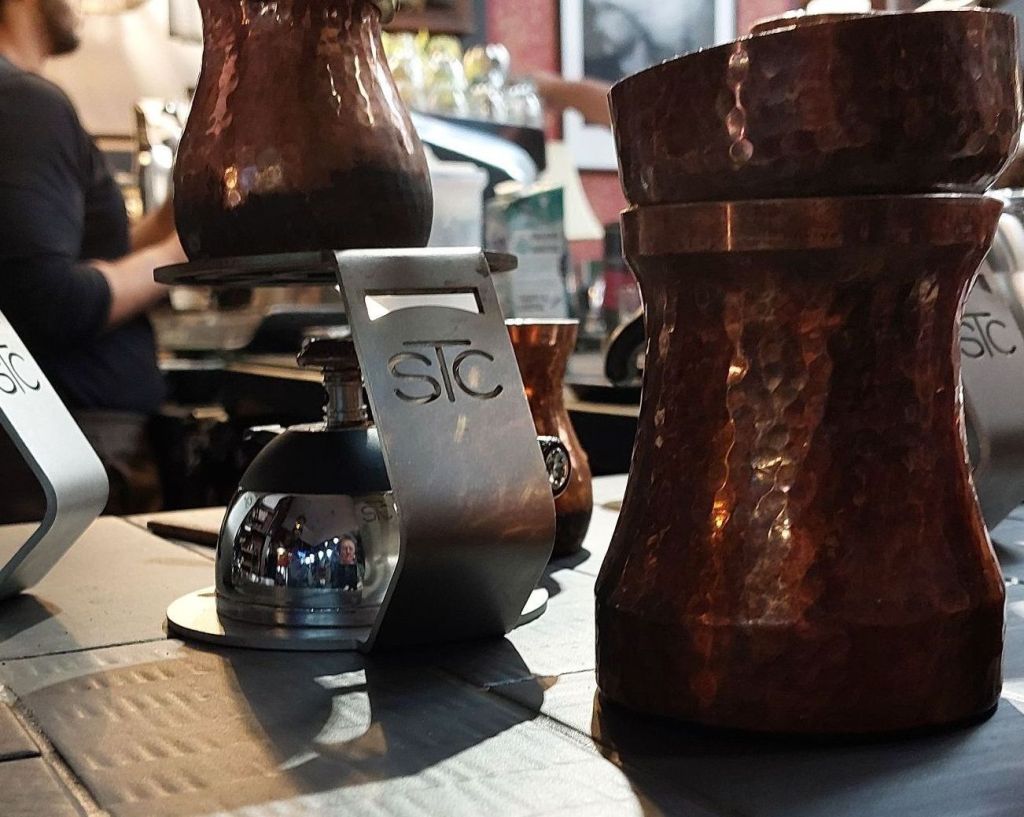
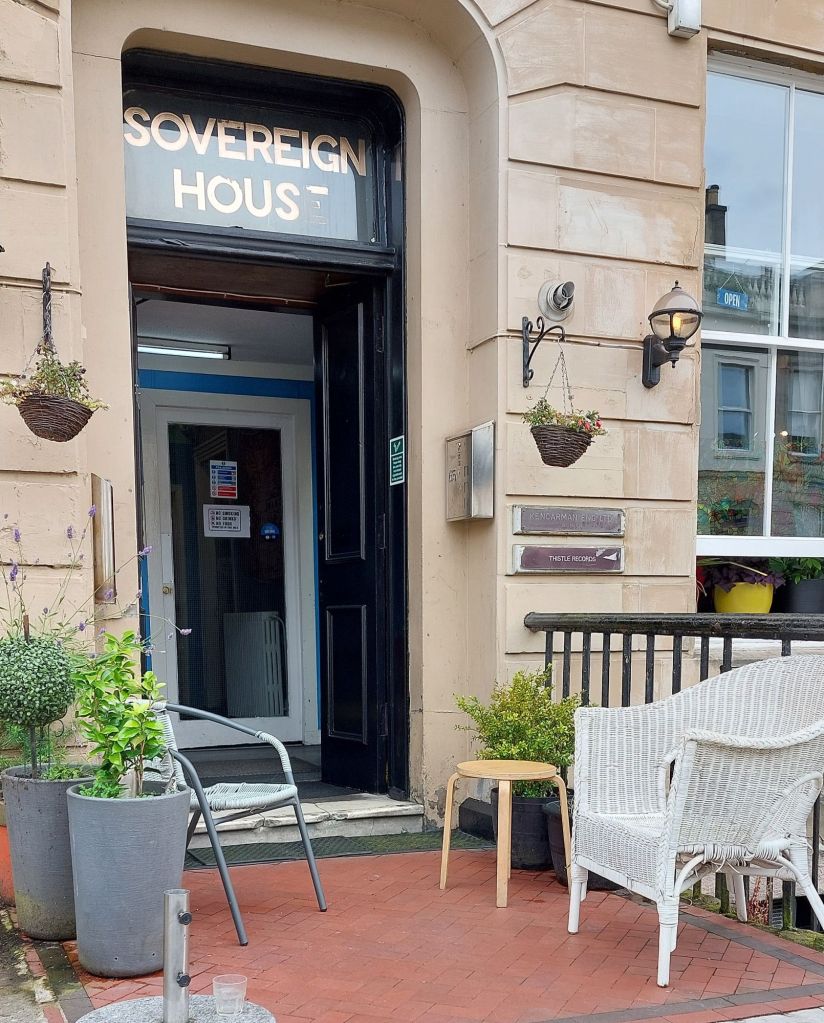
Believe it or not, the Turkish cafe in between what had been Thistle Records, and Kerr’s Music Corporation (Glasgow Music Centre), was in another building with a historical past: no less than the Glasgow Society of Musicians, about which I had just been reading. I got my latte, also snapping a picture of the interior – clearly once the Musicians’ Concert Room – and the art-nouveau front door.
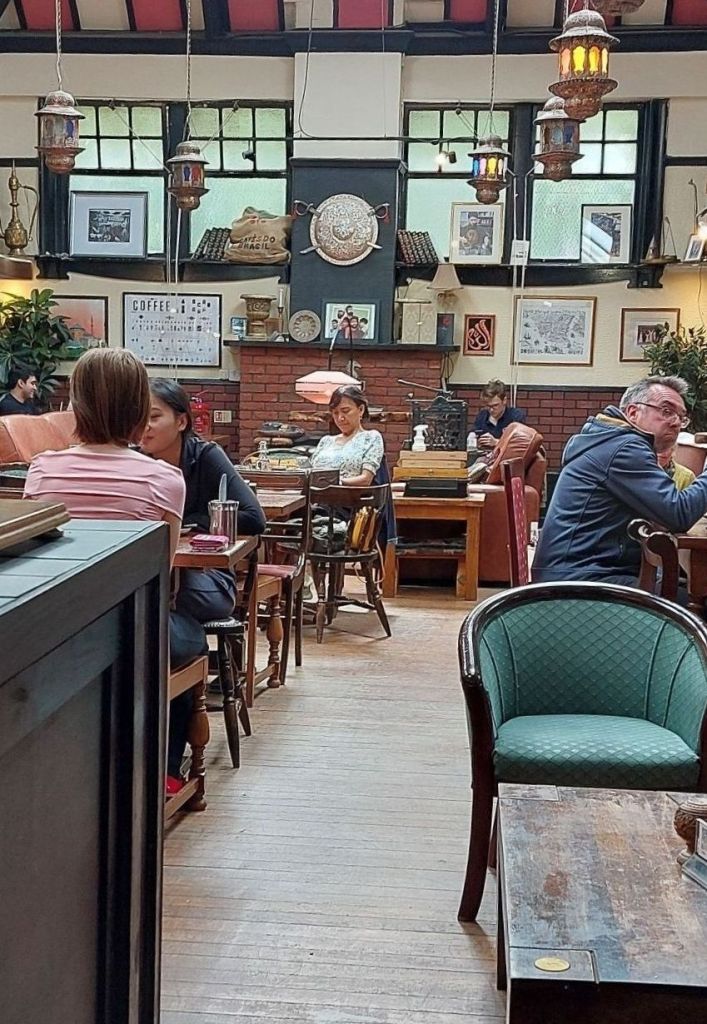

Another time, I’ll make sure I have a coffee ‘to sit in’ rather than takeaway! Glasgow’s most eminent musicians would have enjoyed performances there … whether or not the ladies ever got a look-in!
Yesterday, I set out to track down some music. It’s light music, not great music – almost ephemeral, you could say – but together, it tells a story.
I also wanted to find out more about the life of one of these fin-de-siecle Glasgow woman music publishers.
It’s not that easy. The music is scattered round our legal deposit libraries; the cataloguing isn’t completely consistent; and fin-de-siecle ladies, whether single, married, childless or proud mothers, didn’t leave much record of their daily lives. They’re hidden in the shadows of family members, and, whilst I imagine they knew one another, let me stress that this is NOT a tale of a female publishing cooperative!
I had a nice chat with a local history librarian, making an acquaintance who is now equally keen to find out more; then I headed home – as yet, none the wiser – to devise a complex spreadsheet of music titles. I’m visualising a pinboard with strings criss-crossing between ladies, libraries and work-lists.
So complex, indeed, that I still haven’t planned how best to get to SEE the music.
A weekend task?


