Dr Karen McAulay explores the history of Scottish music collecting, publishing and national identity from the 18th to 20th centuries. Research Fellow at Royal Conservatoire of Scotland, author of two Routledge monographs.
I’ve done quite a bit of work about diversity in library collections – whether diversity in terms of music composed by women, or music composed by people of colour. I’ve also devoted quite a bit of space in one chapter of my forthcoming book, to the influence of the craze for ‘minstrelsy’ music towards the end of the nineteenth century.
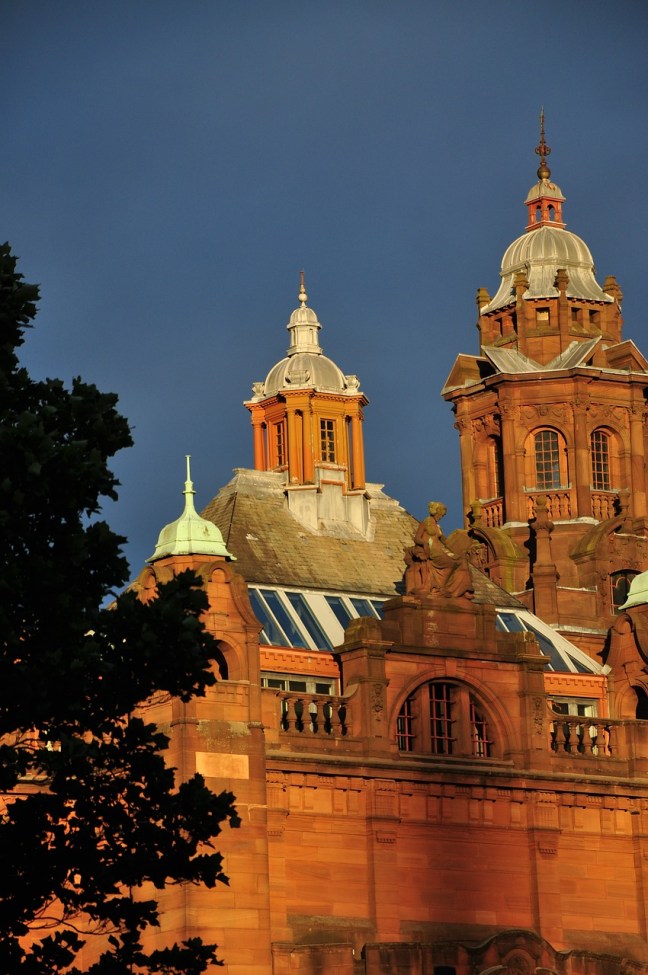
I was very much taken with the exhibition at the Hunterian Museum a couple of years ago, and I’m also very interested in Glasgow’s history as ‘Second City of the Empire’, and finding out more about some of our dubious merchant forebears. So – will I be going to see the Kelvingrove exhibition? You bet I will!
I’m conscious that I haven’t posted with my research hat on this week. Fear not, I’ll be back! But not in today’s posting. The exhibition very much deserves to be showcased in its own right.
If I haven’t been rapturously blogging from St Andrews this week, it’s because I’ve been confined to the West of Scotland and the staff side of a library. My ring-fenced research time found a gap in the fence, and no research has been done. But I’ve conducted a lot of library tours! Discussed historically underrepresented composers, and ordered some more music by women composers (all enjoyable tasks). Weeded some books (rather more mundane). But it has felt like a very long week – the first time I’ve been in the library Monday to Friday, since 2012. Why now?, you might ask. A fair question!
On the plus side, I’ll recoup the missing time in October, and (better still) this situation won’t arise again, because next Autumn I shall have retired from librarianship.
But NOT from research, certainly not. I truly can’t wait to settle into having just one professional role!
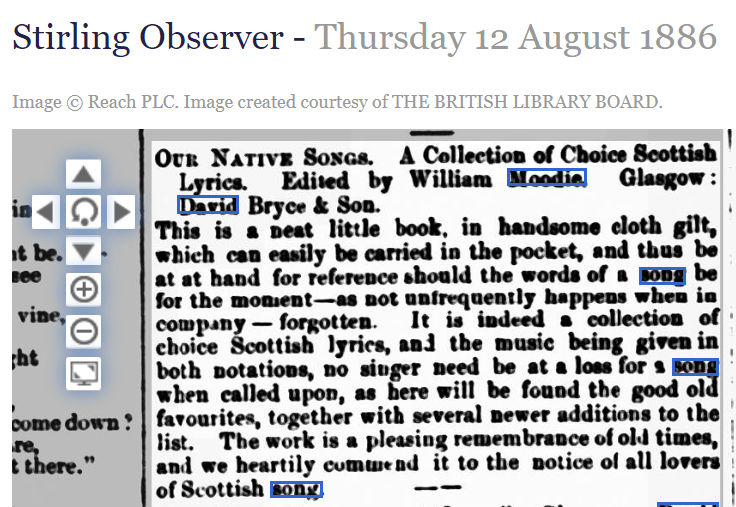
I blogged for the Whittaker Library this morning! It’s about William Moodie’s little book, Our Native Songs. Moodie features in the book that I’ve just finished writing, so I got a bit excited about this little songbook, even though it wasn’t the context in which I had been writing about him before. All the same, it has his words in the Preface, and it has a Glasgow connection, so it was lovely to handle it whilst I catalogued and blogged about it. (And now, I won’t be able to resist investigating the publisher, will I?!)
Since I’m currently working on a book about Scottish music publishers, I suppose it was inevitable that I’d ask myself just one question last night:-
Did 20th century Scottish music publishers publish any music to commemorate the four Coronations of their day?
Well, you’d have thought they might, wouldn’t you? There were militaristic books of marches and national songs in war-time, so why not patriotic books of national favourites when a new monarch acceded to the throne?
A couple of klaxon warnings should be sounded straight away.
It would be easy to say that Kerr and Mozart Allan never published anything related to coronations, but the truth of the matter is that I have plenty of evidence that what survives in libraries is certainly not the same as what was published in the first place. The more ephemeral the music, the slimmer the chance of its surviving. And, without putting too fine a point on it, a library might keep Mozart Allan’s book of songs by Robert Burns, but a flimsy, contemporary song of the music hall or variety performance kind, not designed for longevity, probably won’t have been added to a University Library’s stock at the time it was published, even if there might be scholars today eagerly seizing upon any lucky survivors. Similarly, a ‘Coronation Waltz’ or ‘Coronation March’ wouldn’t have been something studied by music undergraduates studying Palestrina or Mozart in a red-brick British University.
If you’ve been following social media or broadcast news recently, you’ll realise that some Scottish people are decidedly not Royalist in their leanings. However, it would be risky to say this was the reason for Kerr and Mozart Allan’s apparent lack of interest in publishing music on a coronation theme. There is no written evidence about their political views whatsoever.
I searched for pieces with ‘coronation’, ‘King’ or ‘Queen’ in the title. It was a quick and easy search, but certainly not a comprehensive one. (For example, if there was a song called ‘Westminster Pageantry’, without any of my search terms in the catalogue entry, then I would not have retrieved it.)
But the fact remains that music celebrating the coronation of a British monarch appears not to have been of interest to Kerr and Mozart Allan, the two popular music publishers holding sway in Glasgow for the first part of the twentieth century.
Edward VII and Alexandra’s Coronation, 1902
I found just one Scottish publication, the Glasgow and Galloway Diocesan Choral Association’s Book of the Music to be used at the sixth festival service in St. Mary’s Church, Glasgow on Saturday, June 28, 1902 (in connection with the coronation of His Majesty King Edward VII) etc. And that was it!
The English firm Bosworth, on the other hand, published Alexander Campbell Mackenzie’s Coronation March, op.63, in various formats: for piano, a full score, and arranged for piano duet by J B McEwen. Mackenzie (1847-1935) was Edinburgh born, but became Principal of the Royal Academy of Music in 1887. McEwen (1868-1948), another Scot, was professor of harmony and composition at the Royal Academy, and in time became their next Principal. Mackenzie’s Coronation March was dedicated to the King, and first performed at Crystal Palace with anything up to nine military bands. A march was an accessible genre, but the composer was very much part of the English musical establishment.
So, not much to see in 1902, then. But wait!
George V and Mary’s Coronation, 1911
Bayley and Ferguson had offices in Glasgow and London – and had done for some years. On the occasion of George V and Mary’s Coronation, they published Carlo F. Roberti’s The Crowning of our King & Queen; or, The Coronation Song of – Semper fidelis. I know nothing about Roberti, but someone at the Dundee Courier wrote in 1990 that his real name was Charlie Robertson, of Perthshire. (If you have access to the British Newspaper Archive, you can read how the readers responded to this snippet, on 8 February 1990. Robertson was a violin teacher. His song was taught to local schoolchildren at the time.)
The Scottish firm Paterson’s had offices in both Scotland and London, too. They published a Coronation song by a Durham man, Thomas Richardson, who had moved to Edinburgh to become organist at St Peter’s Episcopal Church in 1879, and singing-master at George Watson’s College in 1883. His song, ‘Mary’ had an alternative title, ‘Queen Mary. Coronation Song’, with words by K. Kelly, and was for some two decades popular as what people imagined to be a Scottish song. Which raises the interesting debate as to what makes a song ‘Scottish’!
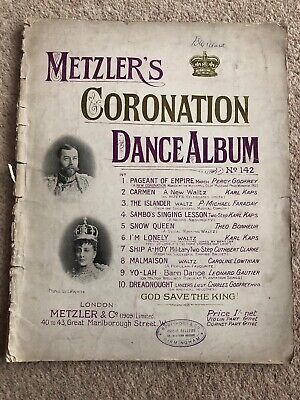
Metzler’s Coronation Dance Album (image from eBay)
Meanwhile in London, light music publisher Metzler published a book of tunes around this time, which included at least one piece composed for Edward’s Coronation: Metzler’s Coronation Dance Album. The precise date is uncertain: Metzler gives 1911 in Roman numerals, and (1909) in Arabic. Very helpful, Mr Metzler!
George VI and Elizabeth’s Coronation, 1937
Paterson’s was essentially a London firm by this time. J Michael Diack, one of the directors, had moved down south some years earlier. And that means that the only Coronation theme publications that I traced were either published in England, or overseas. Perhaps it was the advent of radio broadcasting that made people more enthusiastic about such things, but the outpouring of Coronation-related music was suddenly – well, remarkable! Many people got a wireless in time to listen to the Coronation – the first time such an event could be broadcast.
‘This Most Historic Event’
Which brings me to an advertisement in the Coatbridge Leader on Saturday 27 May 1937. F. Mills & Co sold pianos, organs and radios from his two shops in Coatbridge, a town about a quarter of the way between Glasgow and Edinburgh. (He also had a shop in Motherwell at some point – I haven’t checked dates.) If you bought a piano or organ before the Coronation, he would give you a free stool. If you bought a radio – to listen to the broadcast – then there was a discounted price.
Mr Mills didn’t mention sheet-music, but you’d be surprised how many English music publishers rushed to publish relatively lightweight music for popular consumption, whilst Paterson’s also offered a choral arrangement of a Handel anthem by one of Diack’s favourite composers:-
Let all the people rejoice : coronation anthem S.A.T.B. / Handel; arranged by W.F.R. Gibbs ; edited by J. Michael Diack. (Lyric collection of choral music, sacred. No. 1647) London: Paterson’s 1936
Paterson’s Coronation music book
Royal cavalcade : coronation march / Albert W. Ketelbey, in piano or orchestral score (Bosworth, 1937)
Chappell’s Coronation Album. A Musical Cavalcade, etc. [Marches and Songs.], 1937
The Coronation Waltz / Jimmy Kennedy (Peter Maurice, 1937)
Long live the King (Paxton, 1936)
The Coronation Song / Martin Silver (London: Silver’s, 1936)
Coronation March Album / Granville Bantock (London: Joseph Williams, 1936)
Slightly to my surprise – though it was obvious, when I thought about it, with emigration still high – I found publications from Australia, Canada and America too:-
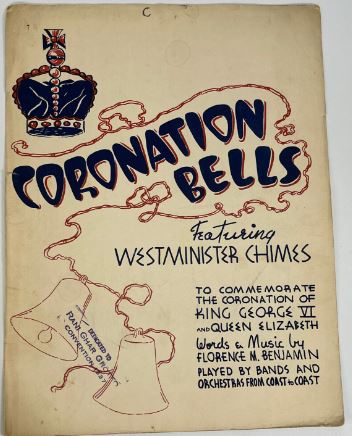
Coronation Bells – image from eBay
Sterling’s Coronation Community Album (1937?) Disappointingly, the contents of this publication from the Antipodes didn’t seem to have anything to do with the – erm, actual Coronation. But I suppose the word ‘Coronation’ would have been eye-catching.
In Toronto, Florence M Benjamin published her Coronation Bells in 1937
And in Chicago, Moissaye Boguslawski’s Coronation March: dedicated to their Majesties King George and Queen Elizabeth of England was published by Calumet Music in 1937
Elizabeth II’s Coronation in 1953
There was a rush to get television sets for Queen Elizabeth II’s Coronation, although comparatively few people in Scotland would have had them this early on. Francis, Day and Hunter published a new dance introduced on television for the Coronation.
However, despite now being basically an English firm, Paterson’s turned to their Scottish roots for their Coronation offerings, which had nothing to do with the television broadcast at all. Indeed, country dancing was very popular across Britain:-
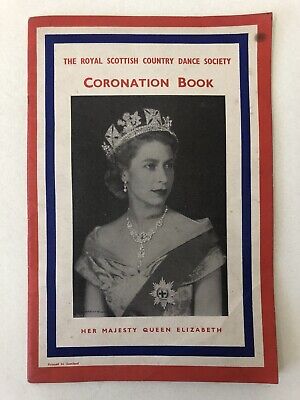
For the Royal Scottish Country Dance Society, Paterson’s published The Scottish country dance book. Book 17 : Coronation book / music arranged by Herbert Wiseman.
Paterson’s also published Pipe-Major William Ross’s The coronation bagpipe march… entitled “The coronation of Queen Elizabeth 1953”
The English Folk Dance and Song Society also published a book of dances: The Coronation Country Dance Book.
Many other publishers produced music in their own preferred genres, but I didn’t see anything from Kerr’s, Mozart Allan or Bayley & Ferguson.
From Bosworth came Coronation march album for piano solo, with music by Ketelbey and a variety of other composers.
Bosworth also published a Coronation Suite for piano by Barbara Kirkby-Mason, who was known for writing educational material.
Francis, Day and Hunter produced Francis & Day’s coronation album in 1952, along with
Archie Alexander’s The Coronation Polka, followed by
Kenneth Wright’s A Waltz For The Queen (Television’s New Coronation Dance), arranged by Sydney Thompson in 1953
The Northern Music Company – a London firm – published Coronation Waltz by Christine Hurst and George Warren, with words by Bill Tomlinson and Stanley Barnes. Reported in The Stage in October 1952, it was written by ‘four northern songwriters’ and received favourable reviews at its introduction in a Butlin’s holiday camp dance contest. If this makes you think of ‘Hi-de-Hi’, then you’re absolutely right – Butlin’s holidays were cheap, accessible, didn’t involve travelling abroad, and as we all know, dance contests have never gone out of favour!
Coronation Waltz- image from eBay
Last night, I was just idly searching to see if ‘my’ Scottish music publishers showed much interest in Coronation-themed publishing. On the face of it, those with an English office did make a token effort. Those based solely in Glasgow may not have done, with the caveat that they might have produced ephemeral material no longer traceable, and there could have been songs that my quick search didn’t reveal.
But I know a lot more about light music publishing in England around those times!
IMAGES: All from eBay!
If you enjoyed this blog post about popular printed music, then you might like to read another post about music with a more serious, ceremonial slant, that I wrote for our library blog, Whittaker Live: Tracing our Musical History through National Events.
So I decided to spend the afternoon at the Mitchell Library. Glasgow is so fortunate to have this wonderful collection!
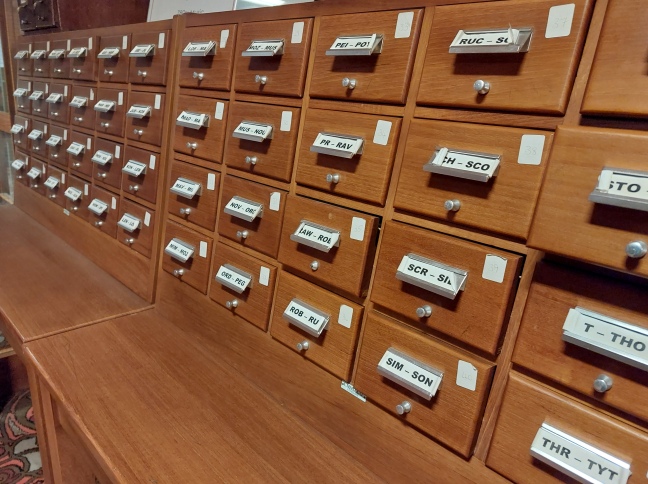
I saw the two publications I had in mind. I took notes. I even had time to look at the card catalogue. (Catalogues are great research tools, even though I am personally sick of actually cataloguing.)
And then I went home. It was only when I went over my notes that I realised I had missed at least one item in the bibliography of one book, which I thought I had been looking out for. I spent the next 24 hours kicking myself, determined to go back to find that elusive reference if it killed me.
And then my librarian self remembered the advice I often give students. If you have copied out a useful snippet, put it into Google Books, in speech marks. Like this:-
“Reader, I married him”
(Try for yourself – it’s a quote from Charlotte Bronte.)
Often enough, Google Books will retrieve 2-3 lines including the words you copied, telling you the book where it found the text – and the page number.
I searched on the book abbreviation for the missing reference, and found I’d missed three! However, I have now traced them, and all is well. All for research into a publisher who only caught my interest two weeks ago.
I have contributed an article about the first organist of Neilston Parish Church, to the Glasgow Society of Organists for the September 2022 issue of The Glasgow Diapason: Newsletter. It doesn’t really relate to my own musicological research, apart from its connection with amateur music-making in the West of Scotland in the late Victorian and Edwardian eras, but I thought I’d share it here as well, since I had a lot of fun writing it!
Trains, Trossachs, Choirs and the Council
Dr Karen E McAulay, Neilston Parish Church
Moving from an Allen organ in a post-war church, to Neilston’s historical tracker action instrument, I’m enjoying the new playing experience, and change of scenery getting there. My research interests in Scottish music history mean I’m also intrigued by the church’s long past. Although not everyone is enthralled by local history, I love finding out what mattered to people in their everyday lives, and I wondered what I could find out about the very first organist. As you’ll see, someone – the organist himself? – kept the local press well-informed about his activities.
Neilston Parish Church Organ
Neilston got its Conacher organ in 1888, when the church decided their three-year old harmonium wasn’t sufficiently supportive of congregational singing. Two ladies of the congregation made generous donations, the balance being found by the rest of the congregation. The organist, master grocer Hugh Gibson Millar (1859-1932), had inaugurated the harmonium, and now led a ‘select choir’ in a grand Friday inaugural musical entertainment, accompanied by Mr Fraser of Queen’s Park Church. The new organ occasioned a new pulpit being built, the old one banished to the manse! (The old manse has been demolished, and the pulpit disposed of before living memory. Maybe when the bachelor incumbent was promoted heavenward, his successor didn’t want this extra furniture.)
Neilston village had not only a flourishing church choir, but also a Tonic Sol-Fa Society. (Despite classically-trained musicians regarding the sol-fa system disparagingly, it was undeniably the means of many working and not-so-working class singers learning to perform music, at home or in a choir, from the late 19th century well into the 20th.) Some people were in both, causing problems when the same day was double-booked for a concert in December 1888. There was a flurry of angry “letters to the Editor” about this, with Neilston Parish Church Musical Association wading into the fray!
Millar was the son of a Kilmarnock shoemaker. Marrying in Kilmarnock, he lived and worked as a grocer in Glasgow for a couple of years, but they moved to Gertrude Place in Barrhead sometime between 1881-1883. By 1896, he had shops in Barrhead and Neilston, and the following year he was advertising for a boy to work in an ironmonger’s shop.
Ambitious and undoubtedly talented, he got a Mus. Bac. from the University of Trinity College, Toronto in 1896. This external qualification (early distance learning?!) was discontinued in 1897, and the University merged with the University of Toronto not long after. By the 1920s, degrees like his were dismissed as bogus by many. Nonetheless, the press reported significant exam successes by his pupils. (Millar’s degree was reported by the press in connection with any musical activity, but not with his trade.) The year he got his degree, one of his female pupils excelled in practical and ‘Musical Knowledge’ exams with Trinity College London, whilst in 1901 Robert Craig of Barrhead got top marks in Musical Knowledge, and was reported as studying organ, harmony, counterpoint and music history with Millar.
The newspaper reported a Christmas service led by Millar and the choir in 1898, including what was performed. The choral items later appear in the United Free Church of Scotland Anthem Book (1909), clearly popular choices.
Smith, R. A., How beautiful upon the mountains,
[Elvey or Hopkins] Arise, shine, for Thy light is come
Hatton, J. L., Let us now go even unto Bethlehem
Batiste, Édouard, Angelic voices [organ]
Handel, G. F., March in Scipio [organ]
Choir outings were popular in the two decades before the Great War. (You have only to look at eBay listings for choir trip postcards!) The Barrhead News reported an outstandingly successful choir outing by train to Callander and the Trossachs, led by Millar and the Revd. Robert Barr in June 1899. They had a great time, with unspecified high jinks in the railway tunnel between Queen Street and Cowlairs; a picnic by the banks of Loch Katrine, provided by the young ladies of the choir; and singing and violin playing on the way home, arriving back at 11pm. An evening party on another occasion seems to have ended after midnight! Being in a church choir plainly enhanced one’s social life.
Within a month, though, he was moving to play a Willis organ at Clark Memorial Church in Largs – reported as a step up, with a good organ and a better salary. Indeed, his census return in 1901 finds him living in a fine terraced house with a sea view on Aubery Crescent, Largs with his wife and thirteen-year old Andrew. Millar was described as an organist – not a grocer – and Andrew as an organist’s apprentice. Hugh and Sarah’s two older boys had clerking jobs, and were apparently staying with an ironmonger’s family back in Gertrude Place. The Millars seems to have had homes in both Largs and Barrhead from then on, as later confirmed by his death certificate.
He was barely at Clark Memorial two years, when the Barrhead News announced in September 1902 that he had left, and was resuming music teaching in Barrhead. His home, ‘Hughenden’ in Gertrude Place, by now had a Conacher organ of its own, available to pupils for practising; there’s no further mention of being a church organist.
1903 saw him becoming local secretary for an examination board called the International Music College, a one-man concern run by a music-teaching organist in London. Millar also made enquiries about the water supply for a water-powered chamber organ – another domestic instrument, or was he moving the Gertrude Place instrument? – in a house he proposed to build on Neilston Road. Described again as a grocer, 1904 saw him standing for election as a councillor in Barrhead. The following year, Councillor Millar, Mus. Bac., FRSM, did have all his qualifications reported! In time he became a bailie, and finally, Provost.
Millar died in 1932, in Aubery Crescent, Largs, but his death certificate gave his usual residence as ‘Sandringham’, Paisley Road, Barrhead. The Scotsman published his obituary:- ‘Hugh G. Millar carried on business in Barrhead, was a member of the Town Council for about 25 years, and served two terms in the civic chair. He also represented the burgh on Renfrewshire County Council for a long period. He had a residence in Largs for 30 years, and took a keen interest in local municipal affairs, being Chairman of the North Ward Ratepayers Committee. The ex-Provost, who was 73 years of age, is survived by a widow and three sons.’
A man of many talents, he seems to have had a comfortable, varied and interesting life. His shoemaker father would never have guessed that his tradesman son would end up probably the first Barrhead provost with a music degree, a diploma, two homes and his own chamber organ!
It was a lovely sunny afternoon, and we felt like going out.
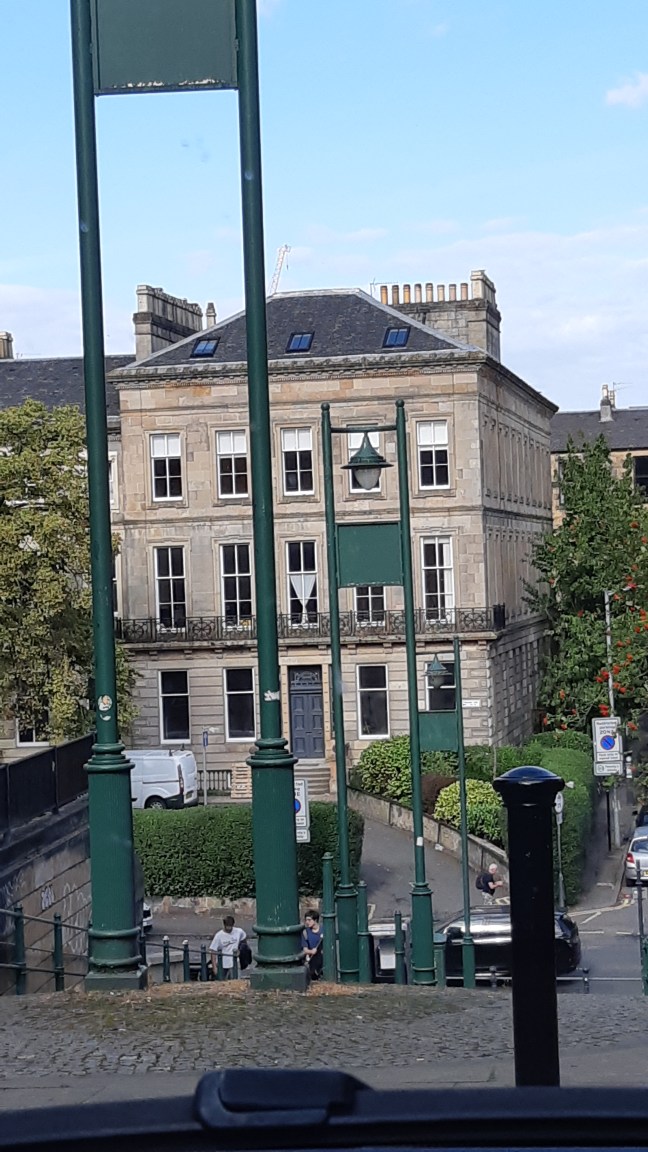
Let me show you the Glasgow & West of Scotland Conservatoire of Music (1889-1892). Musician Julius Seligmann had been running a girls’ school in the premises for some years. Aged 72, he reinvented it as the Glasgow & West of Sotland Conservatoire of Music! It only survived three years – it has absolutely no connection with today’s Royal Conservatoire of Scotland.
After that he went on teaching not only from his home (not far away) but he and his son also taught in the new Athenaeum School of Music. That institution did survive, eventually becoming the Royal Conservatoire of Scotland where I work today.
And does Mr Seligmann have anything to do with Glasgow music publishers? Not a lot, to be honest. But he did write a review for James S. Kerr’s Pianoforte Tutor.
We’ve found a leaflet with three dances composed by Dr A. K. Tulloch for the Students’ Celebrations of Glasgow University Fifth Centenary back in 1951. Yes, I know – dated 9th January 1951, the Commemoration Ball is nine days beyond my research cut-off date of 1950! Still, it was held at the City Chambers, and A. K. Tulloch wrote a jig, strathspey and reel for the occasion.
Jimmy Shand, Accordion demonstrator, 1953 (British Newspaper Archive)
Who was A. K. Tulloch? Sandy (Alexander) Tulloch (1918-2006) was an eye consultant in Dundee. An accordion player, he was a good friend of Jimmy Shand’s. He even named the commemoration reel after him. You can read all about Sandy in the Box and Fiddle Archive, which has a page based on an interview with him in 1988, and an obituary from 2006. (I was all set to share one of the tunes, but it’s still in copyright, so I’ll respect that!)
But although it makes sense that the jig would be called (or dedicated to) Glasgow’s patron Saint, St Mungo – and I’ve already mentioned the reel named for Jimmy Shand – I haven’t personally come across the name of Peter Dewar was, for whom the strathspey is named. He may have had a Glasgow significance, maybe even a University connection, or a person particularly important to the student body.
We’re notifiying the University Library of our find – so really, I could put it aside now – but I was curious, so I went on searching. There’s information about the quincentenary on Archives Hub, but no immediate reference to the ball in the City Chambers. This doesn’t mean to say the archival materials themselves don’t hold anything relevant, but Archives Hub only indexes what documents are there and maybe a rough idea of what they’re about.
There are also a few newspaper announcements in the British Newspaper Archive.
Looking up Dr Tulloch, however, is far more interesting. A couple of years later, In 1953, he wrote to the Dundee Courier in defence of accordions. Bravo, Sandy!
And a couple of weeks later, he wrote to the paper again – clearly the argument had continued to rage. But Sandy wasn’t going to let it drop! Indeed, we do still play accordions, but they’re perhaps not quite as fashionable as they were in their heyday.
British Newspaper Archive. Same newspaper, Saturday 10th October 1953
Courier and Advertiser obituary, Tues 24 Jan 2006, via Dundee Local Studies Library. Some of the music he owned is now in Dundee’s Wighton Collection.