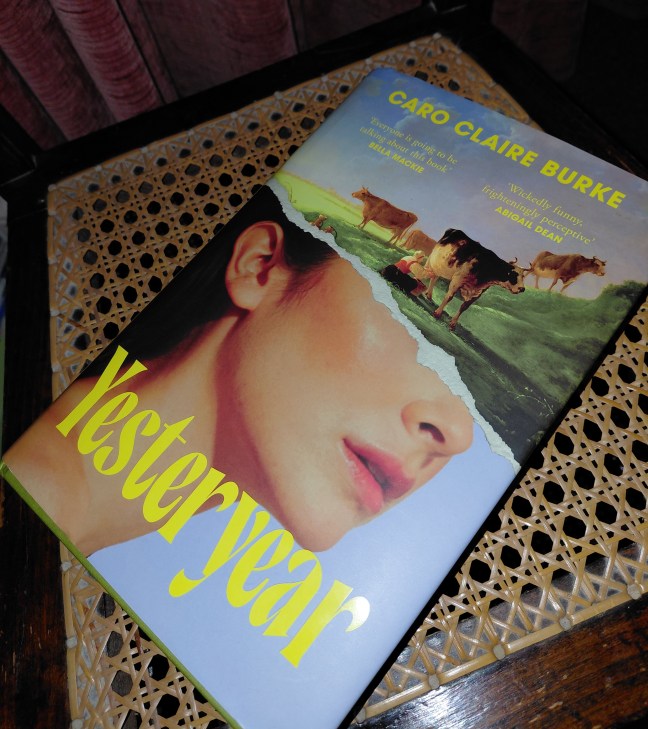
Yesteryear: a First Novel by Caro Claire Burke

Reviewed by Rhiannon Lucy Cosslett as Book of the Day in The Guardian, and an ‘instant Sunday Times top ten bestseller‘ on Amazon, the basic plot of this novel is the juxtaposition of the two different lives of our heroine Natalie – as modern social media influencer par excellence on the one hand, and virtual prisoner on a devoutly Christian farmstead in 1855, on the other. Modern Natalie was living the dream as a traditional Christian wife – a ‘tradwife’ –  but she wasn’t exactly depicting their farmstead life completely honestly. Her followers saw her living a simple country life – but not all the extra help that enabled her to do it.

In my own 1904 house, last Friday saw me condemned to a few days without a working washing machine – handwashing essentials at the kitchen sink in what was originally the scullery/wash-house. I felt as though I was reenacting the drudgery of an earlier age – but still with modern detergents and fabric conditioner.

What does this have to do with someone else’s first novel? Well, my own temporary ‘step back in time’ meant that the fundamental premise of Burke’s first novel certainly resonated with me, and I rushed to order a copy. (After all, I deserved a treat in between wringing wet washing and hanging it out to drip-dry!)

I’m not always enamoured of novels where chapters alternate between different viewpoints or different eras, but it was tightly written, insofar as there weren’t too many characters to hold in mind at any particular time. After a couple of chapters in each era, I was engrossed, wondering how exactly the author was going to resolve the bottom-line question: if Natalie had somehow slipped into a time-warp, then how? And how was she going to get back? And what was going to happen to the family she left behind in 1855?, assuming she would eventually be returned to the present-day for good.

Some characters were less convincing than others. Mary, the oldest girl in 1855, was quite frankly a bit of a bitch, and it surprised me that 1855 Natalie was so submissive towards her own teenage daughter. Moreover, Old Caleb in 1855 was a domestic tyrant, and would have been guilty of rape in modern terms – there was nothing to like about him.   By contrast, the modern-day rather feeble and unmotivated Caleb was unexciting rather than unpleasant, but despite being an unsatisfactory and rather disinterested lover, he somehow still fathered a big family.  Reviewer Lucy Cosslett highlights other aspects which don’t ring true – I don’t need to reiterate them here.

I’m not going to spoil it for you – the denouement certainly came as a surprise, but it did make sense.  I t was darker than I’d expected, but then again, Burke had got Natalie into such a predicament that it’s hard to imagine any happy-ever-after ending that would have been truly satisfactory.

Whether you can label something as a top ten bestseller, one-third of the way though the year, is a moot point, but I certainly found it hard to put down. Currently at a bargain price  – you can’t go wrong, really!
World Book Day

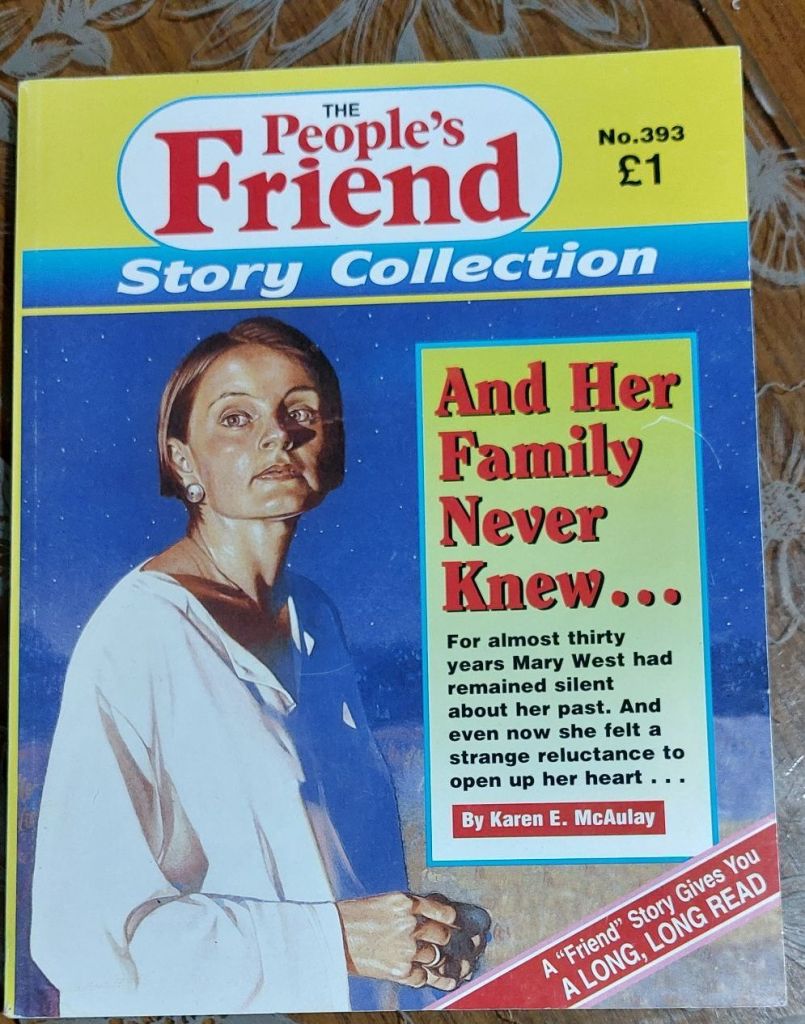
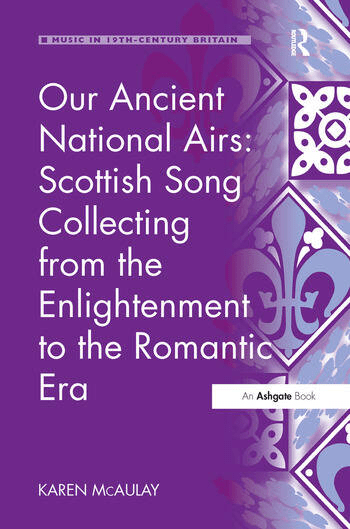
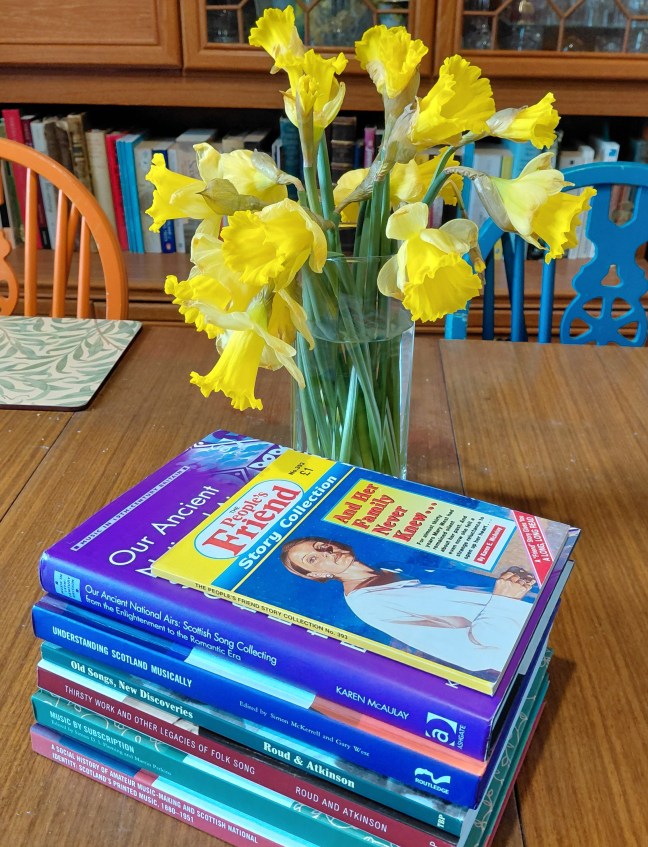
My two monographs, four contributed chapters, and a People's Friend paperback, on the dining room table, with a vase of daffodils.

Something you may not know is that my first book was by no stretch an academic one; it was actually a People’s Friend serial-turned-paperback, published in 1996.

And Her Family Never Knew

Fiction

Not many people know (there’s a theme here!) that I published 30 short stories and that serial, long before I made my second start at an academic career.  Writing helped finance my first maternity leave, and even enabled me to replace my car at the end of it. OK, it was a comparatively little-used Lada. But it had four gears compared to the previous Lada’s three, and more significantly, I’d earned it through writing. I was proud of that. I owe a big debt of gratitude to D. C. Thomson, who gave me these writing opportunities, and plenty of feedback along the way.

Writing Skills: Clarity

Our Ancient National Airs

I honed my writing skills. Clarity was one thing: a story must progress logically, and readability is crucial. I still try to avoid big words for big words’ sake, unless they are the obvious, unavoidable choice. 

And Writing about People

Writing about people was another skill, and I have continued to enjoy this in my subsequent work.  No, it’s more than enjoyable  – I love it! I’m never happier than when I’m writing about people whose lives I have researched; I feel as though I actually know them. Walking through Edinburgh, their ghosts surround me, and I’ve often reflected that I probably know as many deceased Edinburgh musicians and publishers as live ones!

I turned my PhD thesis (2009) into my first monograph (2013), then came a few contributed book chapters, amongst other writings:-

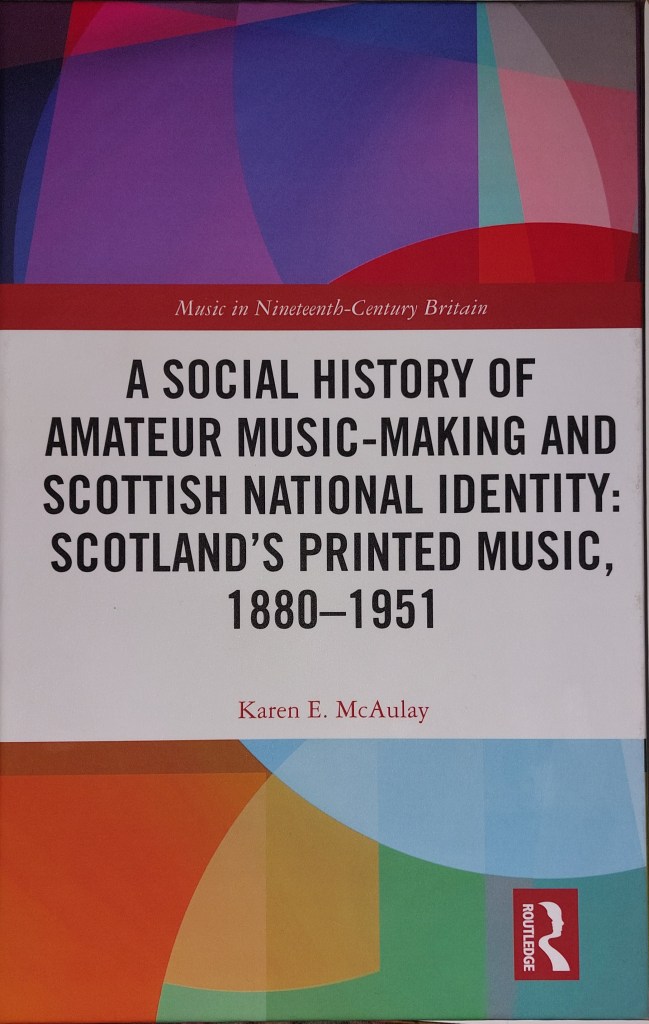
Book cover: A Social History of Amateur Music-Making and Scottish National Identity: Scotland's Printed Music, 1880-1951
A Social History of Amateur Music-Making and Scottish National Identity

My second monograph was published at the end of 2024.  Research has never occupied as much as half my working week, with the exception of last year’s IASH postdoctoral fellowship, so I have to resist making unfavourable comparisons with other full-time academics’ output; mine doesn’t compare.  But, taken in context, I can hold my head up pretty well.

But enough of celebrating my books for World Book Day – I need to get back to the research that will ultimately, I hope, give rise to my third monograph. I’m making up for lost time …

Book Stack

Bibliophilia

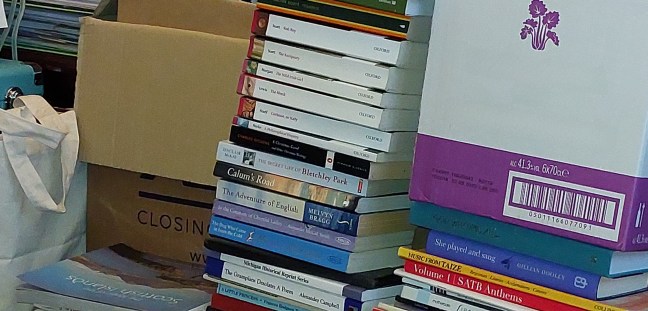
Piles of books on the floor whilst their usual room is redecorated.

I forgot to add .. the decorating delays are apparently our fault for having so much stuff. It’s my books and music in the dining room that the painter’s alluding to.  (He has no idea about Himself’s collection, many of which were originally secretly delivered to his workplace so that I wouldn’t see them, and are now scattered in various parts of the house.)

Last November, one of the electricians also innocently asked why I had so many books. I answered lamely, ‘Well, so I could write these two.’  Which didn’t seem terribly convincing to me,  but seemed to satisfy him!

  • Scholar
  • Former librarian
  • Organist
  • Writes books about music books …

I don’t feel guilty about the books, but I really must reduce the collection before my family have to clear the house once I’m gone! Some are going on eBay, others to the charity shop.

Bag a Bargain! Routledge has a Black Friday Sale

It would be remiss of me not to point out that Routledge’s Black Friday sale makes the e-book version of my book very affordable! (Maybe someone might even buy you it for Christmas?).

Those preferring to read a hard copy might point out to their library that there’s no time like the present…

A Social History of Amateur Music-Making and Scottish National Identity: Scotland’s Printed Music 1880-1951

Its forerunner, Our Ancient National Airs, is also in the sale. 

There! Your Christmas reading is sorted.

[Dangerous] Women who Dared

Earlier this year, IASH blogged about an exciting book that Ben Fletcher-Watson and Jo Shaw would soon be releasing.  And yesterday, I attended its launch – the third book of the Dangerous Women project:- 

The Art of Being Dangerous: Exploring Women and Danger through Creative Expression (Leuven University Press, 2021) edited by Jo Shaw and Ben Fletcher-Watson

Dangerous Women: fifty reflections on women, power and identity (Unbound, 2022) edited by Jo Shaw, Ben Fletcher-Watson and Abrisham Ahmadzadeh

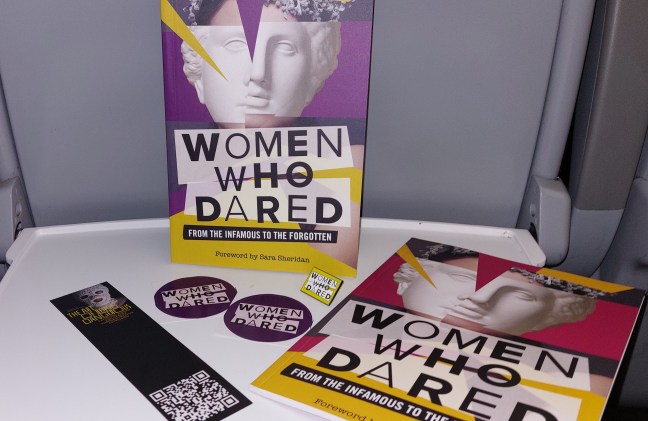
Women Who Dared: From the Infamous to the Forgotten (Edinburgh University Press, 2025) edited by Ben Fletcher-Watson and Jo Shaw

It was a lovely book launch, and we had excellent speakers, who had all contributed to the book: Jo Shaw, Sara Sheridan, Ruth Boreham and Jo Spiller. 

Women who Dared is an anthology of short biographies – all of them historical ‘women who dared’.  I chatted with the speakers afterwards, and enjoyed hearing more about their work. There are so very many women of note, whom history has entirely forgotten about, so books like this are both very welcome, and very necessary.

Edinburgh University Press link

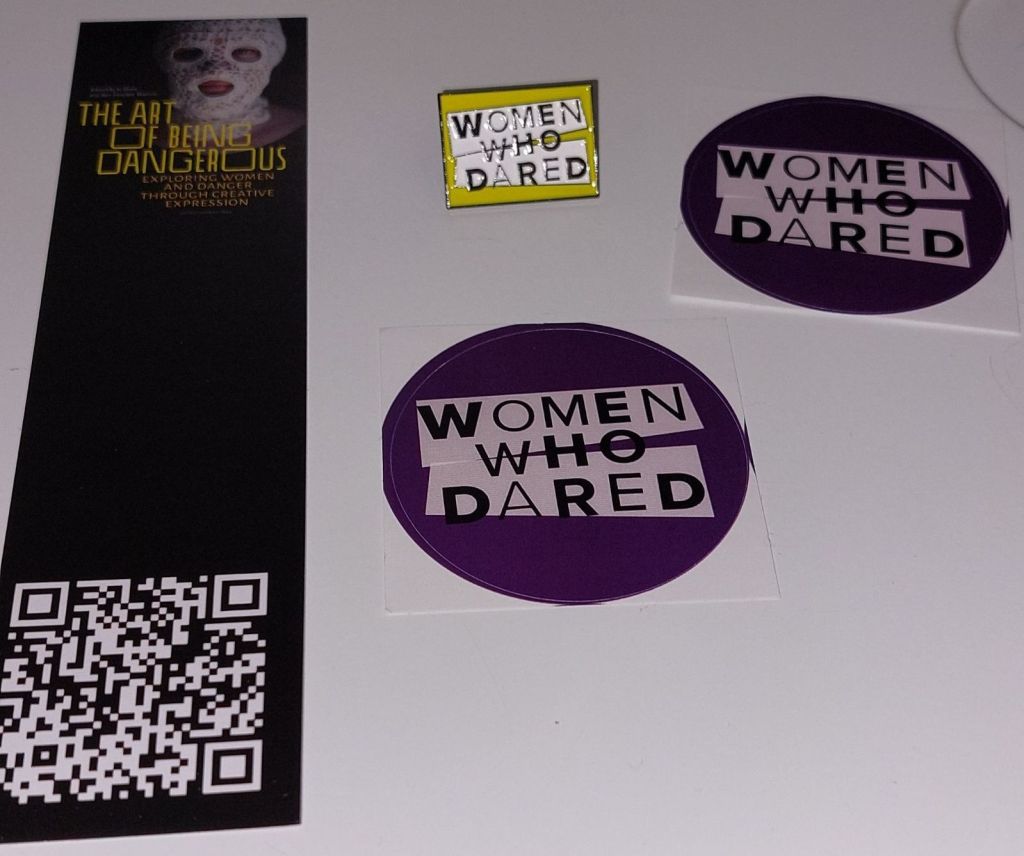
Book launch spoils!

Jobs for Girls and Boys in the 1950s

Yes, I’m afraid I have been distracted in my archival search for the editor of some teaching materials.  I identified a run of box files for the right years, but it turns out not to be from the editorial team. The sales department was obviously crucial, once the books were ready to market and sell, but if my present quarry had only had any evident input into one solitary published title, then frankly those boxes probably don’t concern me in my present research.

Nonetheless, I inspected four boxes fairly closely, before deciding to stop looking at the boxes from 1953. 

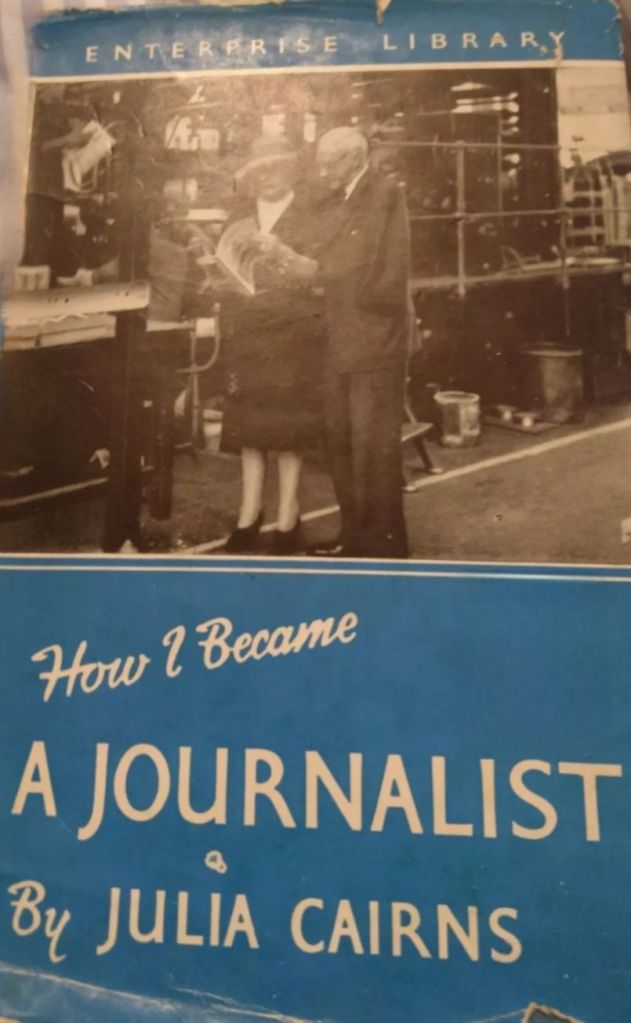
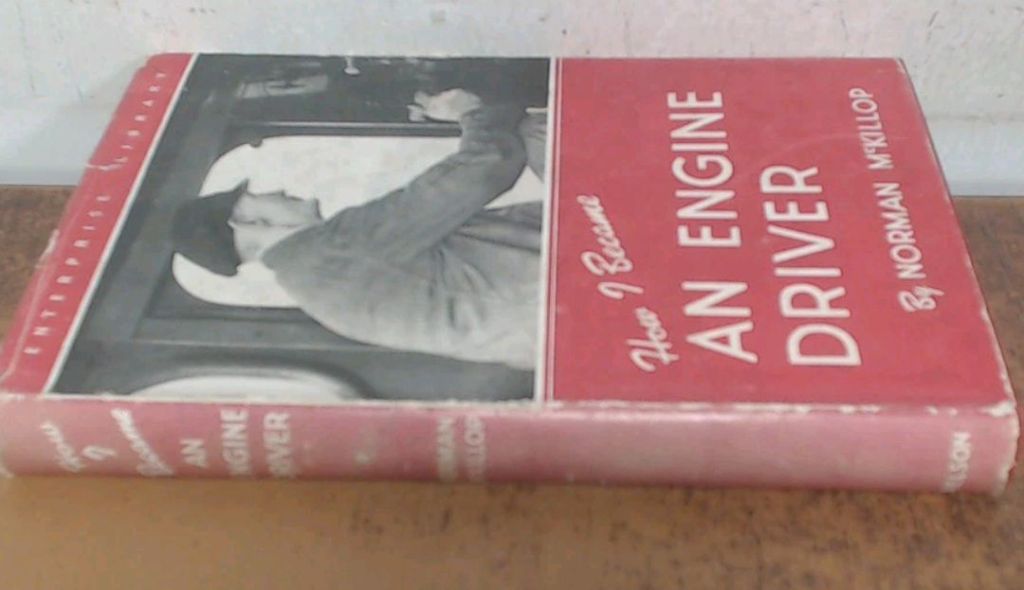
In passing, in the ‘Nelson Juniors’ series, I  encountered some careers-related books from the 1950s. The choices – apart from that of journalist – are rather stereotyped! On the other hand, the girls seem to have more choices … curious, that! Maybe they meant to publish more titles, before the series rolled to a halt with the ‘engine driver’ in 1960.

Found on eBay!
Yes, also on eBay

How I became a … (by women authors)

  • Ballet dancer
  • Fashion model
  • Journalist
  • Librarian
  • Nursing Sister
  • Air Stewardess

How I became a … (by male authors)

  • Cricketer
  • Detective
  • Engine Driver
Also on eBay!

The first and last of these seem to have attracted some interest! The ballet book was reviewed in an American dance magazine – Dancing Star, by the editor of a British magazine called Ballet Today. The Ballet Annual wanted to review it. (A lot of announcements were sent to relevant organisations and individuals.) Moreover, The Psychologist Magazine wanted to review both the ballet book and How I became a Nursing Sister. (Nursing, I can understand. But reviewing a children’s book about the career of ballet dancer? Was it to gain insight into a young ballerina’s mind …?)

And even if nowadays, it looks pretty mundane, Meccano Magazine and The Model Engineer both requested review copies of How I became an Engine Driver.  The Stephenson Locomotive Society were also sent a review copy, along with 2750: Legend of a Locomotive, and they promised to publish a review in the Society’s Journal. Indeed, Thomas Nelson sent a presentation copy of the book to the Lord Reay Maharashtra Industrial Museum in Bombay in response to a request for books for the museum library being set up there – just that one book!

Image by Alana Jordan from Pixabay

Mother and Son both Routledge Authors

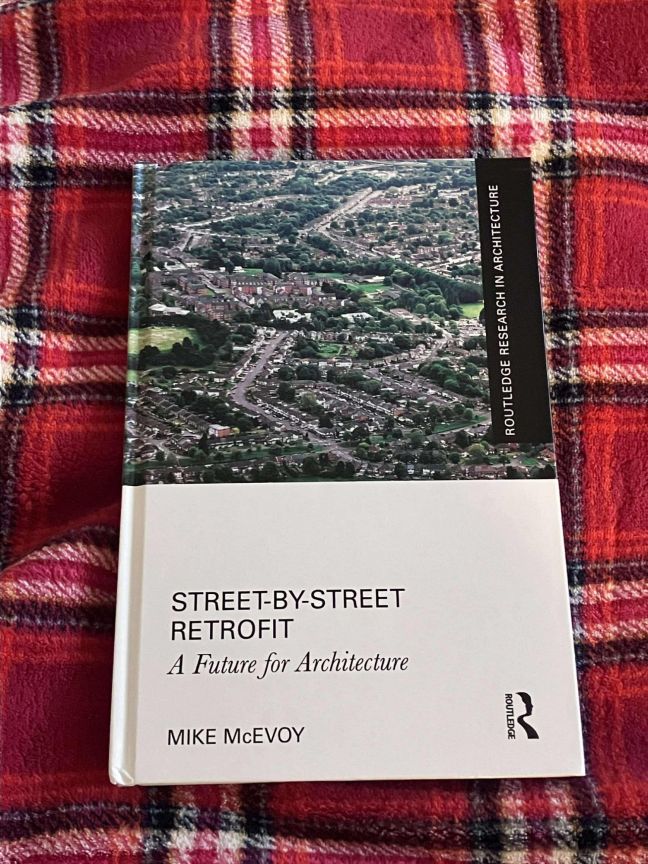
Book cover: Street-by-Street Retrofit

Our talented son, Scott McAulay, has just shared with us an image of his latest triumph – a foreword in another Routledge book. (He’s less than half my age, so who knows how much he’ll have published by the time he reaches my advanced years!)

So, this year, between us we’ve had a hand in three Routledge books, or four if you include the paperback edition of one I contributed to earlier:-

Scott McAulay (foreword), in Mike McEvoy, Street-by-Street Retrofit: A Future for Architecture (2024)

Karen E. McAulay, A Social History of Amateur Music-Making and Scottish National Identity: Scotland’s Printed Music, 1880-1951 (2024)

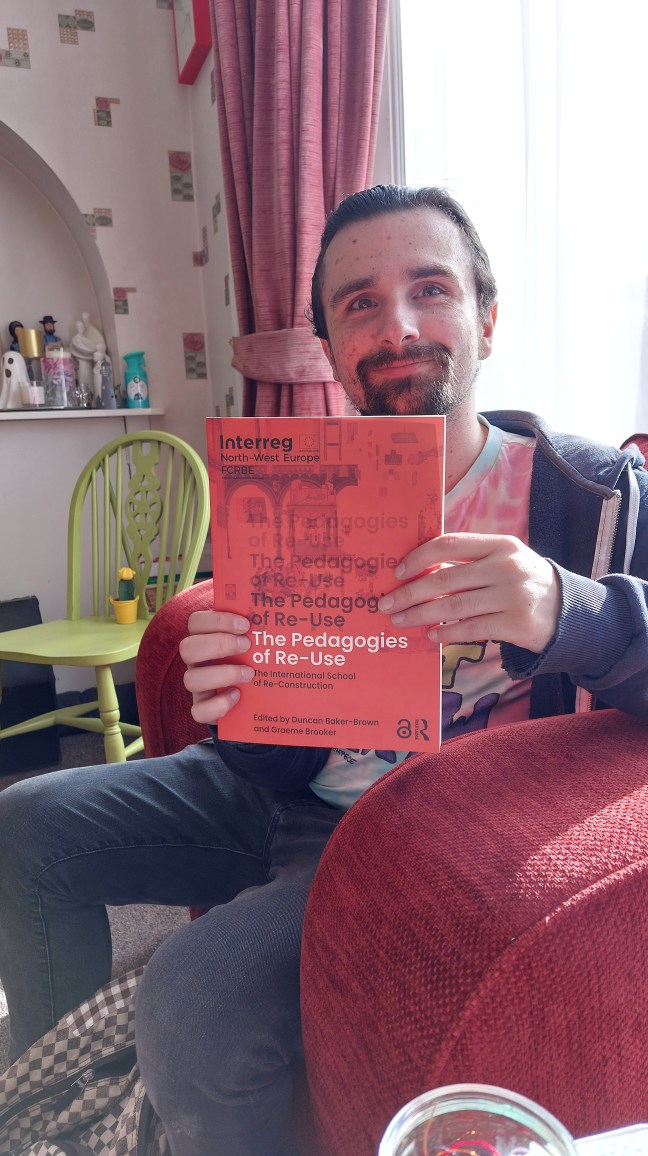
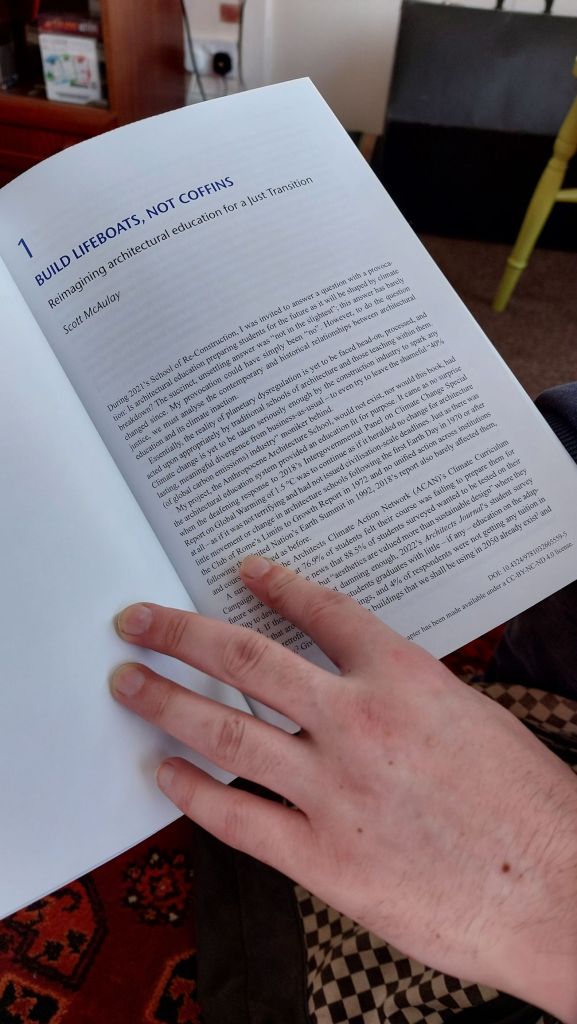
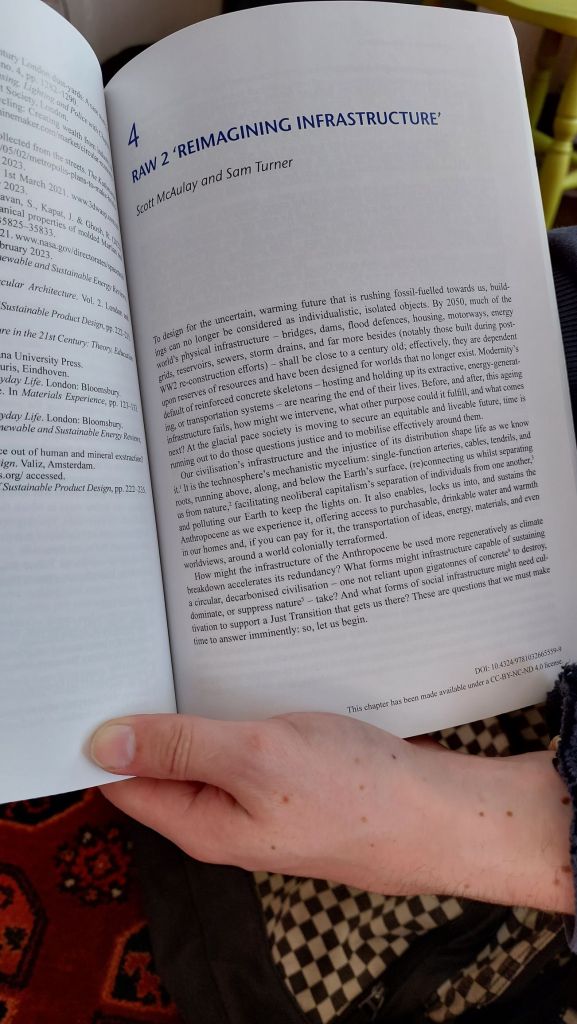
Scott McAulay (chapter and a co-authored chapter) in The Pedagogies of Re-Use: The International School of Re-Construction (2024), ed. Duncan Baker-Brown, Graeme Brooker

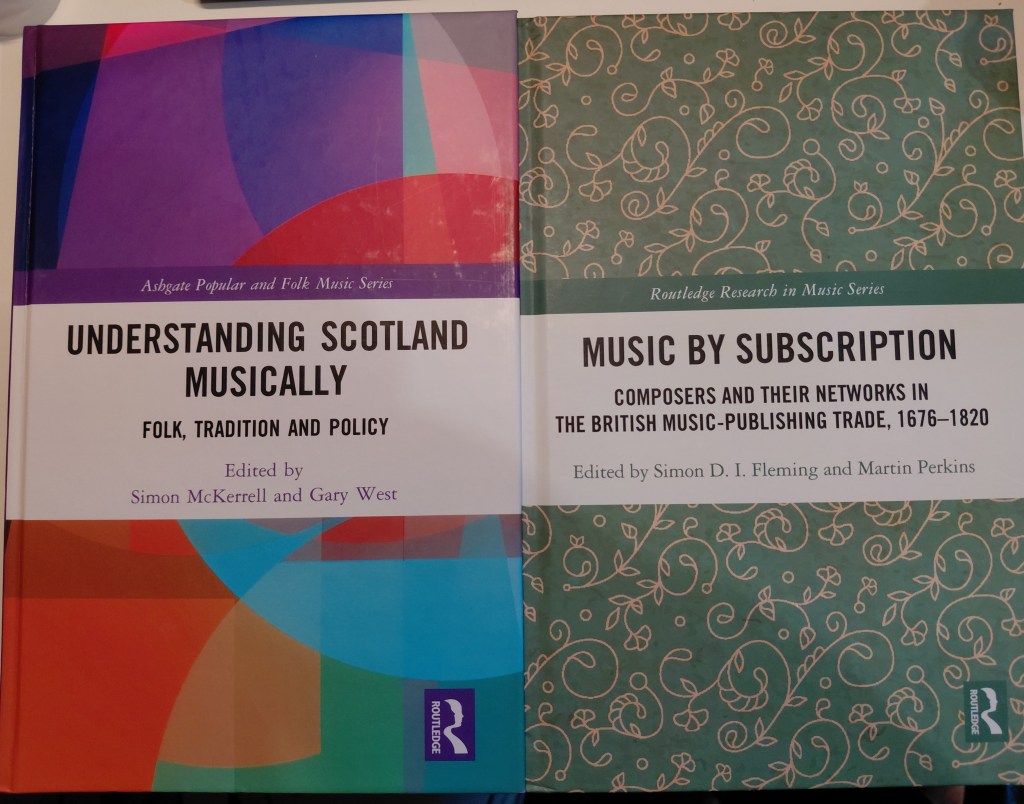
Karen E. McAulay (chapter) in new paperback edition of Music by Subscription: Composers and their Networks in the British Music-Publishing Trade, 1676–1820 (2024, hardback 2022)

Keeping it in the Family: our Routledge Year

The book I’m getting published later this year is not my first.

But our son Scott McAulay has beaten me to it, in being the first to see a Routledge publication this year – two chapters in this essay collection.  And I understand he’s in another collection, too.  Scott has an architectural background – we have very different specialisms! I’m a proud mum.

The Pedagogies of Re-Use

One of Scott’s illustrations is by his older brother, by the way!

Daily Distractions (Cough, Splutter)

He went on holiday, and all he brought me back was this measly chest infection. Well, I’m back at work now, but not entirely 100% yet. Take today. On my agenda is the intention to re-read both versions of my how-to-index-a-book guidelines, and make a start. But that couldn’t happen before a telephone GP-appointment, followed by an actual one …

Then my home desk needed decluttering, after a week’s indisposition. Finally, I remembered that I’d wanted to check a 1951 exhibition catalogue for something that had occurred to me between coughing fits. It was, I thought, only viewable in a handful of Scottish libraries – which would be problematical if I was keeping my intermittently-coughing self away from places where I’d be undesirable. (It’s definitely not Covid, but I can hardly wear a placard saying so.)

And then ….

I found a Copy to Purchase!

I can’t tell you how much better I suddenly feel. I’m like a child whose mum has just bought them a wee treat to help them feel better! Now I can look closely at the catalogue without embarrassing myself by coughing in a public place. I’ve wanted to get my hands on this item for ages – since I saw a library copy a year or two ago. Even though I have already written a book essay about what I found then, I now have another question to ask it, so owning my own copy will be very exciting. Hurry up, postie!

Okay. It’s lunch-time. Here’s hoping I manage to avoid distractions this afternoon!

Image (pile of catalogues) by Lutz Peter from Pixabay

Check out “Books and Borrowing Database Launch” on Eventbrite!”!

How could I resist this event?! After all my efforts a few years ago, researching the borrowing of legal deposit music at the University of St Andrews in the early 19th century, I simply HAVE to attend this. It’s somewhat ‘meta’ for a scholar librarian to take a research interest in the borrowing habits of readers who ‘checked out’ centuries ago, isn’t it?

I’ve rearranged my research hours accordingly, so I  can finish the week on a research rather than a librarianly note:-

Books and Borrowing Database Launch Date: Fri, Apr 26 • 16:00 BST Location: University Avenue, Glasgow, G12 8QQ https://www.eventbrite.ca/e/books-and-borrowing-database-launch-tickets-879501281007?aff=ebdsshother&utm_share_source=listing_android