AI and the Spurious Promise of a Resurrection

Multicoloured image of a computer 'brain'

This is not a blog for entering the debate about the dangers of AI becoming too powerful. Oh, no. I leave that debate to the experts.

Let me just share with you that I have a public Facebook page for my research into Scottish music publishers. It’s really there just to highlight small snippets and research discoveries, and to point curious readers towards this blog. This is the link:-

Scottish Music Publishers 1880-1950, with Karen McA

Well, today, I discovered I had a new ‘follower’. I’d like to know how anyone can possibly help to monetize the activities of a bunch of defunct Scottish music publishers. I have visions of Messrs Bayley, Ferguson, Kerr and Allan walking down Sauchiehall Street, enthusiastically discussing the new interest in their latest publications … amazed that anyone would be willing to help promote their work, which ceased more than half a century ago.

It’s okay – I’ve blocked the ‘follower’. I’m just annoyed that I had to waste time doing so!

All the Crazy People

Is there no end to it? Looking for a particular email that I’m expecting but haven’t received, I thought I’d better check my Junk mail. (It wasn’t there, so I’m still waiting.) But there was a firm wanting to charge me several thousand pounds to turn my RMA Research Chronicle article into a professionally-made podcast. (Really? I’m a semi-retired musicologist research fellow – I have time to do this myself, and I’m not paying a scientific organisation to do it for me.) And then – in the same folder – I find another firm offering to turn my PhD thesis into a book. Yes, right. I did that, with Ashgate, over a decade ago.

The world has gone mad. Can we turn it off and on again?

Image by Felix Martinez from Pixabay
A Blue Ribbon – I Stand Corrected

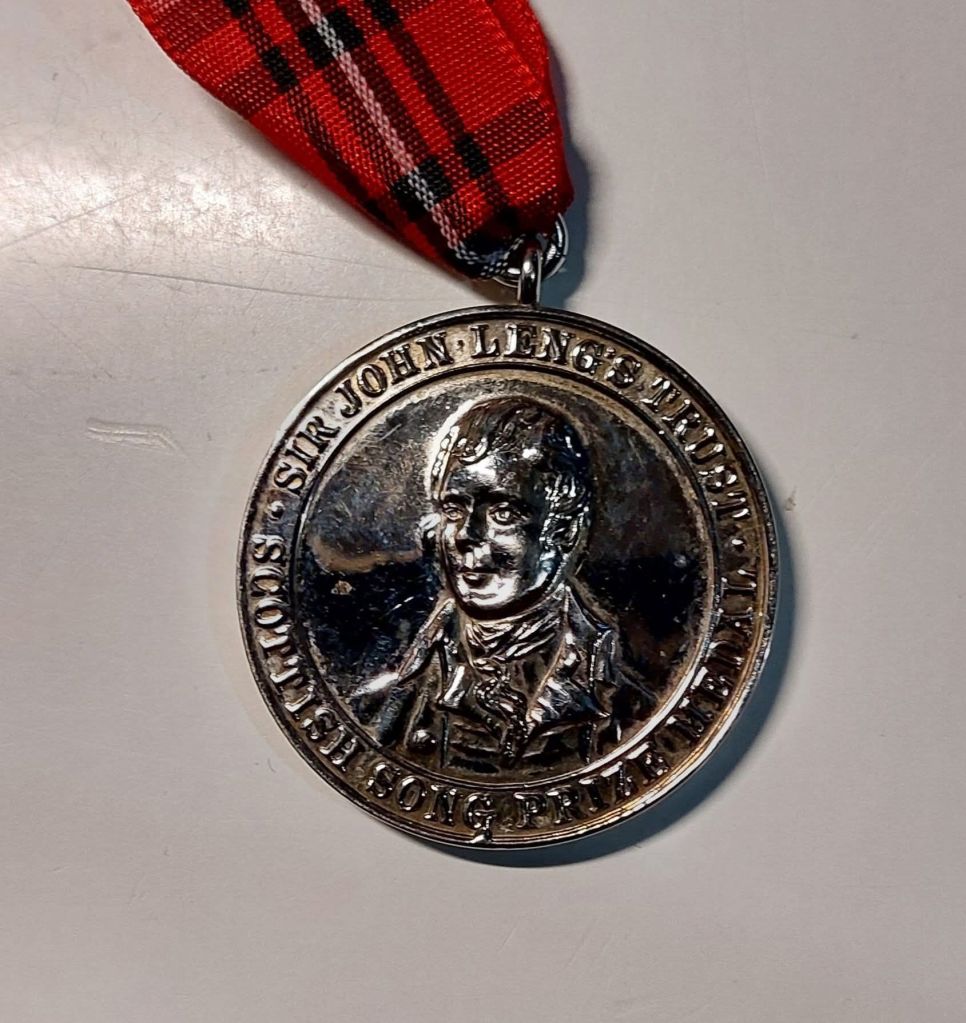
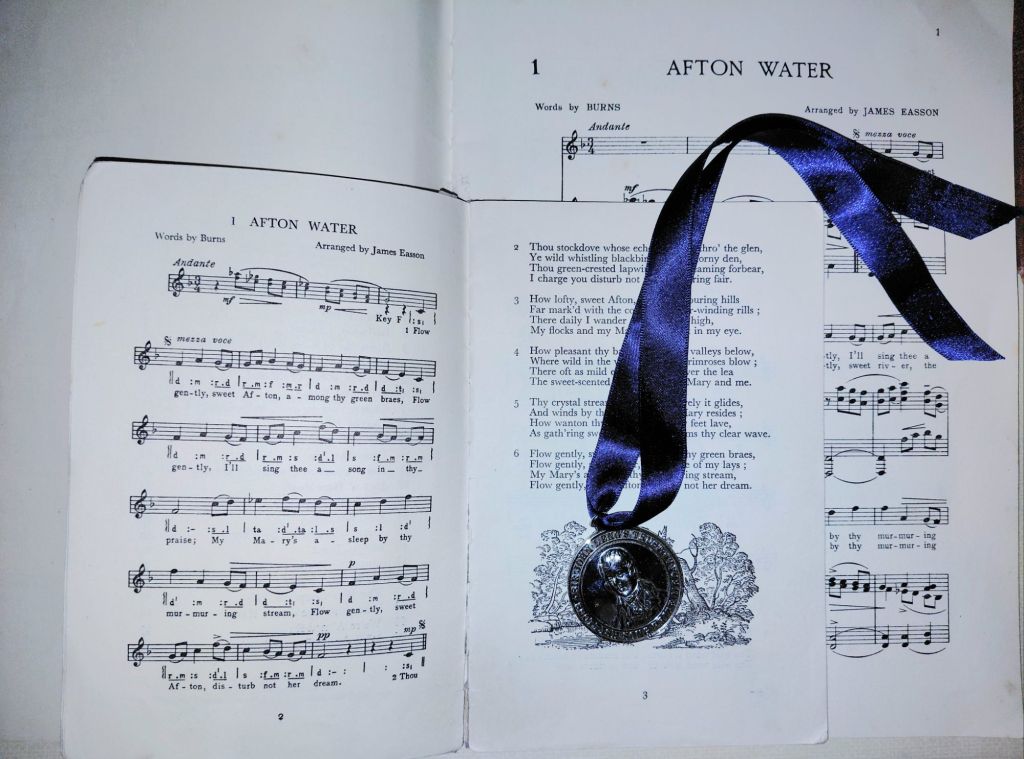
I’m English, although I’ve lived in Scotland most of my adult life – and I live in Glasgow,  not Dundee.  I’ve never entered the Leng Scots Song competitions.  However,  I do own a Leng silver medal – I got it on eBay, because I wanted one to illustrate postings about my Leng Medal research project. I put it on a bonnie red tartan ribbon and felt quite pleased with myself. 

My faux pas – the decidedly wrong ribbon!

But there’s a wee problem! I learnt this week that silver medals came on a narrow blue ribbon. My red tartan gave me away as a rookie. Suitably embarrassed, I rooted around in my ribbons bag and found something more suitable.


And – breathe! That’s better.

(If today’s blog post is the first you’ve heard of my research project, then you can find out more about it here, and you can get in touch with me here. It’s not too late!)


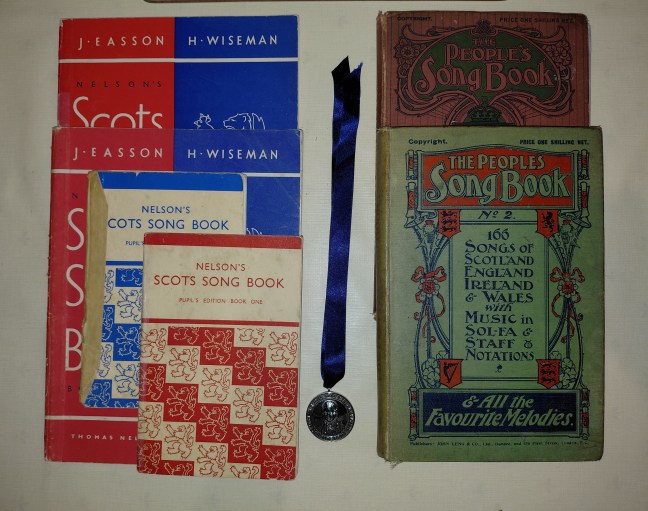
(Cover pic: Nelson books to the left, Leng books to the right.)

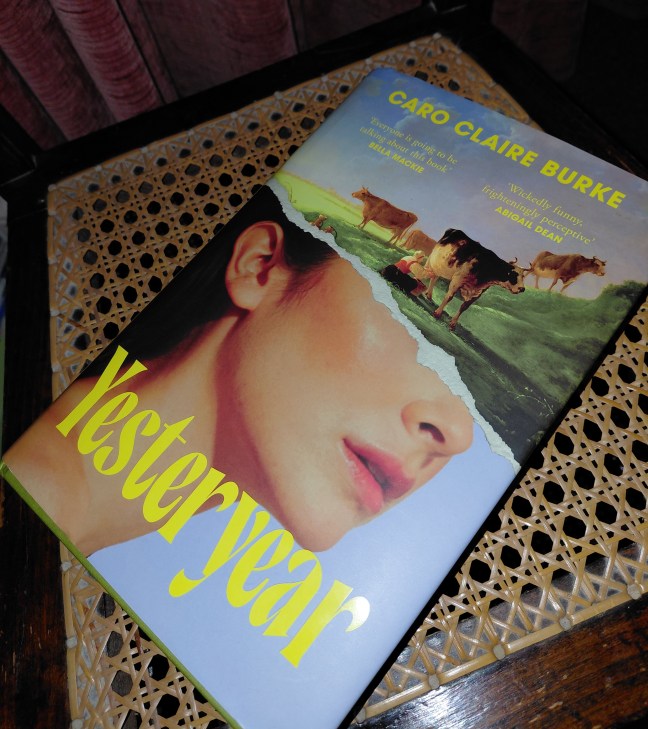
Yesteryear: a First Novel by Caro Claire Burke

Reviewed by Rhiannon Lucy Cosslett as Book of the Day in The Guardian, and an ‘instant Sunday Times top ten bestseller‘ on Amazon, the basic plot of this novel is the juxtaposition of the two different lives of our heroine Natalie – as modern social media influencer par excellence on the one hand, and virtual prisoner on a devoutly Christian farmstead in 1855, on the other. Modern Natalie was living the dream as a traditional Christian wife – a ‘tradwife’ –  but she wasn’t exactly depicting their farmstead life completely honestly. Her followers saw her living a simple country life – but not all the extra help that enabled her to do it.

In my own 1904 house, last Friday saw me condemned to a few days without a working washing machine – handwashing essentials at the kitchen sink in what was originally the scullery/wash-house. I felt as though I was reenacting the drudgery of an earlier age – but still with modern detergents and fabric conditioner.

What does this have to do with someone else’s first novel? Well, my own temporary ‘step back in time’ meant that the fundamental premise of Burke’s first novel certainly resonated with me, and I rushed to order a copy. (After all, I deserved a treat in between wringing wet washing and hanging it out to drip-dry!)

I’m not always enamoured of novels where chapters alternate between different viewpoints or different eras, but it was tightly written, insofar as there weren’t too many characters to hold in mind at any particular time. After a couple of chapters in each era, I was engrossed, wondering how exactly the author was going to resolve the bottom-line question: if Natalie had somehow slipped into a time-warp, then how? And how was she going to get back? And what was going to happen to the family she left behind in 1855?, assuming she would eventually be returned to the present-day for good.

Some characters were less convincing than others. Mary, the oldest girl in 1855, was quite frankly a bit of a bitch, and it surprised me that 1855 Natalie was so submissive towards her own teenage daughter. Moreover, Old Caleb in 1855 was a domestic tyrant, and would have been guilty of rape in modern terms – there was nothing to like about him.   By contrast, the modern-day rather feeble and unmotivated Caleb was unexciting rather than unpleasant, but despite being an unsatisfactory and rather disinterested lover, he somehow still fathered a big family.  Reviewer Lucy Cosslett highlights other aspects which don’t ring true – I don’t need to reiterate them here.

I’m not going to spoil it for you – the denouement certainly came as a surprise, but it did make sense.  I t was darker than I’d expected, but then again, Burke had got Natalie into such a predicament that it’s hard to imagine any happy-ever-after ending that would have been truly satisfactory.

Whether you can label something as a top ten bestseller, one-third of the way though the year, is a moot point, but I certainly found it hard to put down. Currently at a bargain price  – you can’t go wrong, really!