AI and the Spurious Promise of a Resurrection

Multicoloured image of a computer 'brain'

This is not a blog for entering the debate about the dangers of AI becoming too powerful. Oh, no. I leave that debate to the experts.

Let me just share with you that I have a public Facebook page for my research into Scottish music publishers. It’s really there just to highlight small snippets and research discoveries, and to point curious readers towards this blog. This is the link:-

Scottish Music Publishers 1880-1950, with Karen McA

Well, today, I discovered I had a new ‘follower’. I’d like to know how anyone can possibly help to monetize the activities of a bunch of defunct Scottish music publishers. I have visions of Messrs Bayley, Ferguson, Kerr and Allan walking down Sauchiehall Street, enthusiastically discussing the new interest in their latest publications … amazed that anyone would be willing to help promote their work, which ceased more than half a century ago.

It’s okay – I’ve blocked the ‘follower’. I’m just annoyed that I had to waste time doing so!

All the Crazy People

Is there no end to it? Looking for a particular email that I’m expecting but haven’t received, I thought I’d better check my Junk mail. (It wasn’t there, so I’m still waiting.) But there was a firm wanting to charge me several thousand pounds to turn my RMA Research Chronicle article into a professionally-made podcast. (Really? I’m a semi-retired musicologist research fellow – I have time to do this myself, and I’m not paying a scientific organisation to do it for me.) And then – in the same folder – I find another firm offering to turn my PhD thesis into a book. Yes, right. I did that, with Ashgate, over a decade ago.

The world has gone mad. Can we turn it off and on again?

Image by Felix Martinez from Pixabay
AI Hallucinations

Scrabble letters spelling 'False Statement'. Also on the table, a gavel and a pen.

Why this matters:

I’m not a Luddite, and I fully appreciate that AI can do truly remarkable things – but I don’t entirely trust AI. It gets things wrong. It disrespects the concept of intellectual property. And it has the capacity to perpetuate fallacies – attributed and unattributed – on a scale which gives me misgivings for the work of future scholars.

To my horror, I found a tiny example of this today. I had trusted a Google AI summary. Yes, I know – it was reprehensible, and I should have known better. It was when I was writing my posting about ‘Durisdeer’.

Correct

Kenneth McKellar did indeed sing it – you saw the YouTube video that I shared.

Incorrect

Now then, a recording of a modern Scottish song by Kenneth McKellar was certainly used over the opening credits of a film in 1963. However, that modern Scottish song was not ‘Durisdeer’, which as we know, was a Victorian creation by Lady John Scott. Google’s AI summary put two and two together and made five. I was somewhat alarmed to discover that by repeating this fallacy, my blog post was now highlighted as an authoritative statement about it.

We can’t have this!

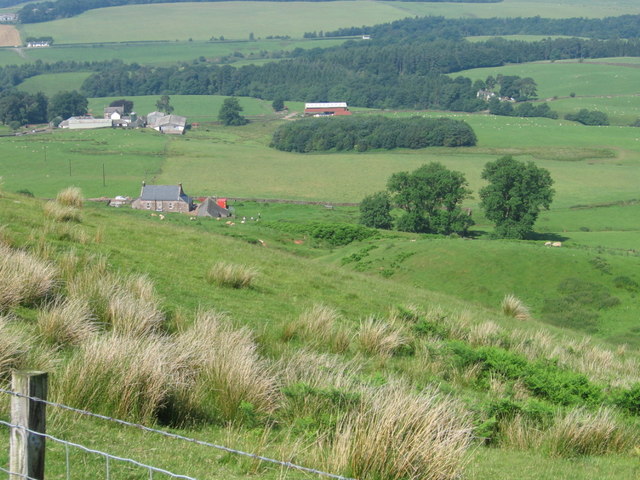
Near Durisdeer, by Chris Wimbush

https://www.geograph.org.uk/photo/197537

Two Songs, not One

I have now corrected my earlier posting about ‘Durisdeer’, ensuring that I have not perpetuated the hallucination connecting the man-and-the song, with the man-and-a-different-song-and-a film. As attractive and appealing as the hallucination was, it was just plain wrong.

Image: False statement by Nick Youngson CC BY-SA 3.0 Pix4free