

This week in Scottish publishing history:-
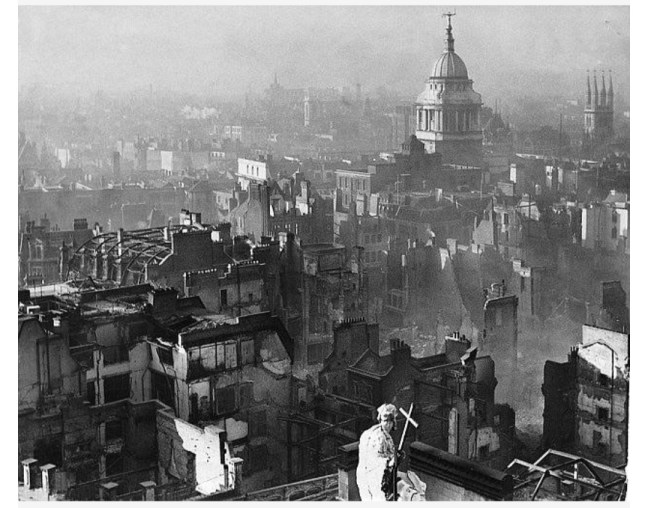
There ain’t no Paternoster Row
Those were the words of a London Bobby (policeman) the following day, when someone asked about the bombing damage.
Luckily, Thomas Nelson had moved quite a few staff up to their Edinburgh offices at the start of the Second World War, but some remained in London. But the London offices at 35-36 Paternoster Row were destroyed in the Blitz, on Sunday 29 Dec 1940.
I find myself wondering how strange – indeed, traumatic – it must have been, to head into work the next morning and find first of all, that public transport was disrupted, and then later, by whatever means, to learn that the firm’s premises were flattened.
Temporary premises were found with another publisher, Duckworth at 3 Henrietta Street. Not until 1954 were larger premises found for Nelson’s at 36 Park Street, in Mayfair.
Publishing in flames on Paternoster Row
Listen to the first episode of this series on Radio 3, 5th May 2025 (14 mins). Series: Books for Brighter Blackouts:- ‘As the BBC marks the 80th anniversary of VE Day, Professor Emma Smith uncovers five unexpected stories about how World War Two changed books, publishing and reading forever.’ The essay is about that very night of destruction. I was thrilled to find that Professor Smith interviews Professor Andrew Pettegree, an eminent authority in the University of St Andrews; and Liam Sims from the University of Cambridge; amongst other experts.
 Karen McAulay, Musicologist