


I have a tiny cutting on my pinboard, which reminds me that,
Many of life’s failures are people who did not realise how close to success they were when they gave up. – Thomas Edison
It’s painfully true in life, but it’s also particularly pertinent in archival research!
Yesterday, I was trawling the most random of files. To be fair, a couple were even labelled ‘Miscellaneous’ in the handlist. However, they date from an era I need to know more about, so I was going to look at them! I entered a rabbit warren of curiosities.
- Rejections, marked ‘Refused’, or ‘Returned’
- Objections:- ‘You interviewed my son and sent him for a medical before deciding he was too old for an apprenticeship. Why?’ [My precis, not a quote]
- Union matters. ‘If you don’t join the union, you put yourself and us in a difficult position because we can’t work alongside you’ [again, my summary]
- Sob stories, like the widow whose friends said her story ought to be made into a film, or a book. Apparently, she was robbed and then incarcerated in a lunatic asylum in America, and now she wanted Nelson’s to publish her story of those calamities … (‘Refused‘)
- Inks
- Plant (machinery)
- An Indian paper mill under the mistaken impression that Nelson’s were interested in a collaboration …
By 4 pm, I had a splitting headache, and was quickly flicking through pages as fast as I dared – the paper was fragile, and I still didn’t want to miss something important.
Why not admit defeat and give up on this box file?, I mused. There was nothing relevant in it. Interesting, but irrelevant.

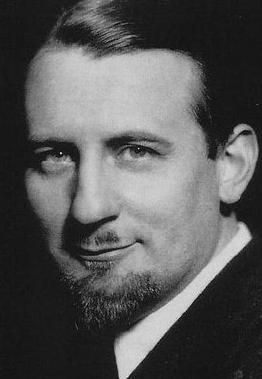
Then I saw it. A beautiful little note from no less than British composer Peter Warlock! In the grand scheme of things, it’s not of huge significance – it’s just an apology for his delayed response, and a request to correct a small detail before publication – but it does confirm the editor’s identity (something I hadn’t yet managed to do, apart from finding a footnote in someone else’s biography), and it reminds me that I should index the Nelson collection that contains Warlock’s unison choral song.
This handwritten note from March 1929 was written less than two years before Warlock died on 17 December 1930, aged only 36. He is thought to have committed suicide over a perceived loss of his creativity. I believe he was something of a tortured soul, though I’m not familiar with his detailed biography.
I so very nearly didn’t find this note! Yet again, that maxim has proved true. Dogged persistence wins every time. The tragedy is that Warlock (Peter Heseltine) was too tormented to be able to keep going at all. What else might he have achieved? How much more might he have written?


 Karen McAulay, Musicologist