

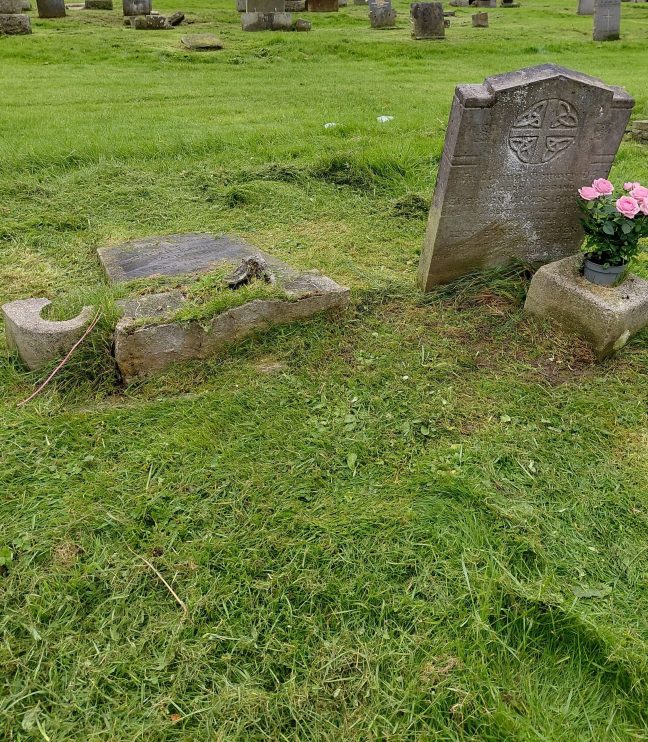
Finding myself with more freedom and free time than usual for a short while, I decided I would squeeze every ounce of enjoyment out of my unusually unscheduled days. So what else would I choose to do, but go and see where Rose Smith and her family are buried?
Following a bus route that I hadn’t followed before, with only a vague idea where I had to walk after that (I have a hopeless sense of direction); and no idea how or when I’d eventually come home, felt decidedly daring and unconfined. I wouldn’t want to give the impression that I’m a princess locked up in a tower, but I am normally expected to know, and say, what time I’m returning. From anywhere. Even if it’s dark, I’m on a bus or train, and can’t see where exactly I am.
I don’t entirely love the Traveline Scotland app – I find it a bit clunky – but it did ensure that I got one bus all the way to the cemetery. Googlemaps got me to the cenotaph, half a mile or so away, and Traveline saw me onto a different bus, latte in hand, to get me home again by a circuitous route, but without having to change buses.
But why did I want to see Rose’s grave? I’ve been interrogating that question myself! This is why today was a good time to go exploring, because I didn’t want to have to justify an apparently illogical outing which really doesn’t tell me anything more about Rose and her family. So … why?
Rose’s Music
I’ve looked at Rose’s surviving music, which consists of a handful of songs, and a few simple piano pieces. Several others aren’t even in the British Library or National Library of Scotland. She did write a cello piece – but didn’t publish it. She also wrote a musical play – only three songs from it were published. But it’s capable, tuneful music, and I do feel her name needs to be remembered. So, I included her in an article about four Glasgow women involved in publishing music, and in a conference paper about parental support of women musicians at the turn of the nineteenth-twentieth centuries.
Rose’s Life
I only have one handwritten page written by her, which basically regurgitates what’s available in digitised newspapers, but I’ve also got enough data to write a reasonable, factual biography. By which I mean, I have hard facts aplenty, not enough for a book but certainly for something fairly substantial. I know where she worked; where they lived; and a couple of artistes who worked with her. However, with a few exceptions, I don’t know much about how she felt or what she thought about anything!
And the Athenaeum Connection
Rose taught junior pianists at the Athenaeum for a couple of years after completing her own studies there. So, she was effectively one of our students, and then one of our teachers. That’s one connection I have with her. The other is that she was a church organist, as I am.
Private Tragedies
I know when Rose and close family members died. It appears her own grave is unmarked, but alongside a headstone for another family member, which names several more.
But what really moves me is the private, personal sadnesses of events that come into any life, but which don’t all beset one person quite as much as they did Rose Smith. She was raised by her widowed mother, who died within a year of Rose’s getting married. Rose’s eldest son was killed at the end of the Great War. Her husband died only a few years later. Her second son died just a month after getting married. And I haven’t seen any dated music from after her husband died, raising the question as to whether she stopped composing around then. I cannot tell.
So that left Rose and her adult, working daughter. Rose’s daughter, son-in-law and grandson were living with her during her declining years.
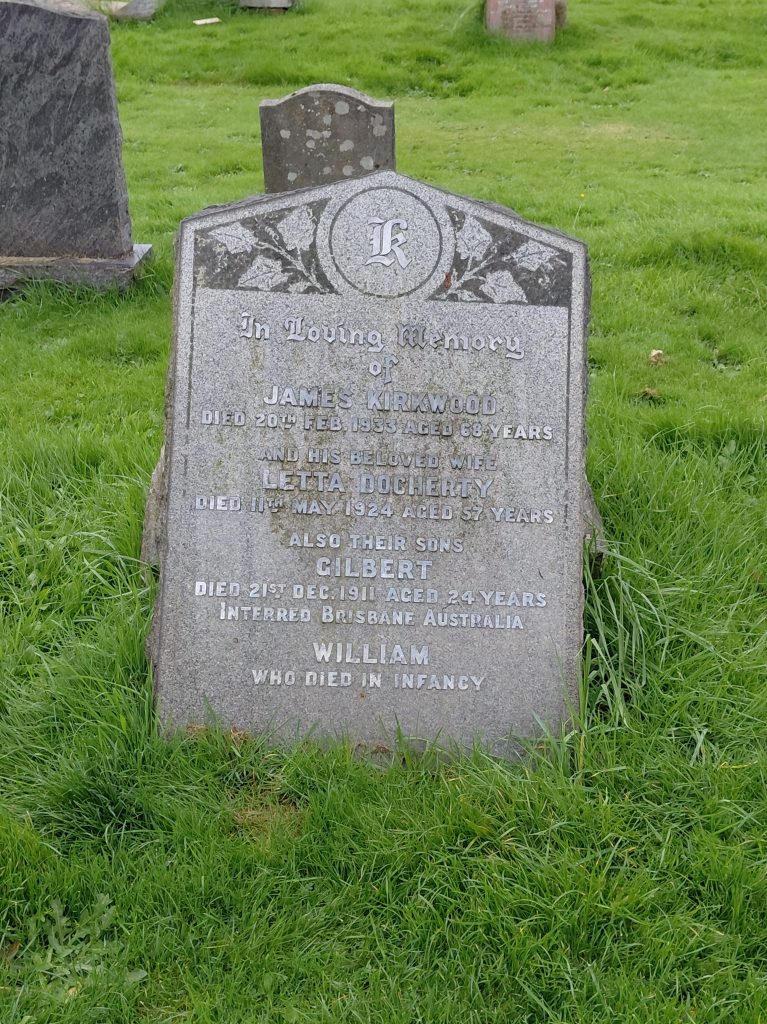
As I walked back through the cemetery noticing other headstones, I began to realise that the pattern of tragedies may not have been quite so unusual in those days. I noticed a family where all three children died – one in infancy, one as a child and one as a young adult. And another where one child died as a baby, and the other died as a young man in Australia, with his bereaved parents alone in Scotland. Child deaths and emigration to other parts of the diaspora were part of the everyday experience, as were the thousands of deaths in battle. No less tragic, but far more common.
Now, Rose can’t posthumously know that she has been ‘seen’ (to use a modern expression) or that today’s audience is now hearing about her life and work. But I felt the urge or obligation to recognise this working musician who had attended the same institution at which I now work today. And I think these are the reasons that I wanted to find her grave, and visit it.
Does that make sense?

