Networking with Other Networks: Romantic National Song

I’ve mentioned before that I am a member of the Romantic National Song network, spearheaded by scholars at the University of Glasgow. There’s a lot of new content on the website today, so I’m happy to share some links which you might enjoy.

The new content website includes the concert video, programme and gallery and two new blog posts reflecting on the concert.

Please do share with interested colleagues. If you use social media, please share or tag @UoG_RNSN!

Quiet Contemplation: but You can Help!

direction-1033278__340

I’ve reached the point where I need to find more grant-funding! I seem to be at a bit of a cross-roads, needing to decide whether to forge ahead immediately with the Stationers’ Hall research, or take another road which will bring me back to it eventually, having gathered more useful data on the way.

There’s also the question of my own status as a researcher.  Neither “new” enough nor “old” enough for early-career or emeritus awards, nor established enough to say that I’m in a “permanent academic post”.  Permanent, yes.  Academic-related, certainly. But ….!

Meanwhile, please do give me feedback on what the Claimed From Stationers’ Hall network has achieved so far.

  • What have you enjoyed?
  • What have you learned/gained from following it?
  • Has it given you fresh ideas?
  • Have you shared information with other people  or taken new actions yourself?

I posted similar questions on the Facebook page yesterday.  I am more than happy for you to talk to me and share your ideas!


Why have I fallen silent? Well, not totally mute, but the thing is … I’m looking for more grant-funding and trying to…

Posted by Claimed From Stationers Hall: Early Legal Deposit Music on Wednesday, March 20, 2019


Networking with Other Networks – both funded by the Royal Society of Edinburgh

Glasgow Mitchell LibraryToday, I attended the first meeting of a new research network – the Cultural History of Glasgow Network, organised jointly between the Open University in Scotland, and Glasgow City Archives, and funded by the Royal Society of Edinburgh.  It was hosted by the Mitchell Library, Glasgow’s impressive flagship central public library.  It’s always interesting to be involved with a new collaboration introducing a different mix of people, and this one’s particularly interesting being so close to home, as it were!

As the session ended, I pulled on my coat and headed back to the Conservatoire for a concert organised by another of the networks I’ve been involved with – the Romantic National Song Network, led this time by Dr Kirsteen McCue of the University of Glasgow, but drawing  performers from British and Irish music colleges.  Again, it was funded by the Royal Society of Edinburgh.  Here, we heard national songs largely from the Romantic era and slightly earlier – British, English, Scottish, Irish and Welsh songs were all represented, introduced by experts, and performed to an exceptionally high standard.  I’m not going to attempt to review the event – I’m too close to all involved to be considered an impartial witness!  But it was great, and I am proud to have been involved with the network.  More of my own reactions will appear on the RNSN website in due course, so watch this space!

Networking with Other Networks: the 1820s: Innovation and Diffusion

ScotishMinstrelThyCheek
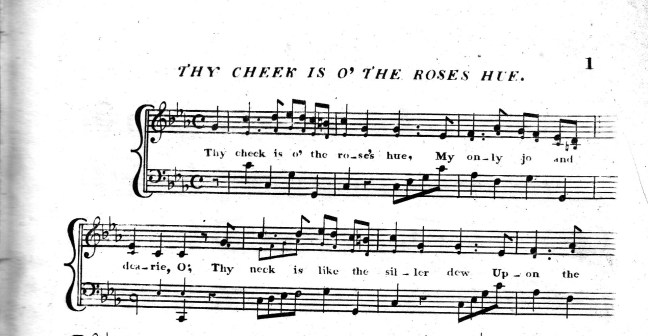
The era of Smith’s Scotish Minstrel (1824)

Hosted at the University of Glasgow, Thursday 11th – Friday 12th April, this is a conference I find very tempting – the 1820s were my favourite era during my doctoral studies, and they’re pretty interesting in current Legal-Deposit-Music-From-Stationers-Hall terms, too.  Will I manage to attend some or all of this one, though? I have 10.5 research hours per week: we’ll see!

Here is the conference page, with EventBrite booking and programme:-

https://1820s.net/conference-information/

Networking with Other Networks: Reframing Heritage through Art Practice at the University of the West of Scotland

Out of the Past, Into the Present: Reframing Heritage through Art Practice

The other day, I saw details of the abovenamed event hosted at the CCA by the University of the West of Scotland’s Creative and Cultural Industries course in the School of Media, Culture & Society.  It took place today, and I spent my morning there, hearing about music as a creative response to global warming, music using heritage technology (synthesizers), and documentary film about post-industrial Ravenscraig, about Irish women’s role in rural society some decades ago, and about a pioneer woman engineer.

CCA cafeYou might ask what any of this has to do with Georgian legal deposit music?  On the face of it, not a lot.  This is partly because although the web announcement named UWS and the titles of the talks, it didn’t name the department or that a couple of the presentations were based on Masters students projects.  The department has a contemporary and recent contemporary, rather than a centuries-old historical focus, so there was a divergence of approaches between theirs and mine.  Also, partly because I saw the words “reframing heritage” and “art practice”, and I read what I wanted to read.  And that’s my fault –  but don’t we often do this?! Obviously, “heritage” does not have to mean Georgian.  “Reframing” can also include responding musically to something other than music, whilst my own research places heritage music as the primary focus and looks for ways to reframe that, to make it relevant and appealing to people today.  But my research response is not to write music (although I’ve been known to write the odd self-indulgent tune!), and – until today – it wouldn’t have occurred to me to produce a documentary film about it.

So, I felt a bit of a dinosaur, really – here were people responding to real global issues, using music and film, whilst I am exploring the history of centuries-old music.  You could say I’m reframing it to make it interesting to new audiences, but not in quite the same way!  Would anyone be interested in a documentary film about Stationers’ Hall legal deposit music?  My fear is that there would be a smaller audience than for the topics being discussed today!

Anyway, back to the drawing-board now.  I’m looking for new grants and new directions to take the Claimed From Stationers’ Hall research – better get on with it!

Networking with Other Networks: Women’s Book History

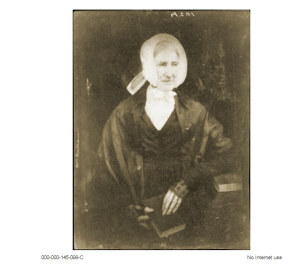
Mrs Bertram by David Octavius Hill
A CFSH subject herself, Mrs Bertram by David Octavius Hill

How I’ve managed to get through this networking project to date without encountering this group is beyond me, but now I’ve found them on Twitter, I want to share their details with other Claimed From Stationers’ Hall network members:-

WomensBookHistory

@GrubStreetWomen


“Bibliography of sources on women’s writing and labor. We tweet CFPs, conferences, etc. in gender and #bookhistory#dh & textual studies.”

Pomona, CA

womensbookhistory.org

So there you are – introductions performed!  I look forward to following the twitter feed and shall keep an interested eye on the website!


Networking with Other Networks: Reframing Heritage through Art Practice

I’ve just seen an upcoming event that looks very relevant, so I’m sharing it here with fellow Claimed From Stationers’ Hall networkers:-

UWS presents Out of the Past, Into the Present: Reframing Heritage through Art Practice

Wed 6 March 2019

Venue: CCA

Book here

Networking with Other Networks: Women in the Arts in the Long 18th Century

nature-1242617_640

Another invitation: I’m also part of the EAERN Network (Eighteenth-Century Arts Education Research Network), and EAERN members have just been notified of an event taking place in Sheffield. Perhaps it might interest a few members of the Claimed From Stationers’ Hall music research network, too?

:-

Registration is now open for ‘Women and the Arts in the Long Eighteenth Century’. EAERN members would be very welcome to join us at the University of Sheffield for this event on Friday 8th March. Further details available via the registration link below:

https://onlineshop.shef.ac.uk/…/…/english/women-and-the-arts

Networking with other Networks: Romantic National Song Network website

spider-web-with-water-beads-921039__340

Simultaneously with instigating the Claimed From Stationers’ Hall research network, I’ve also been involved with another network based at the University of Glasgow – the Romantic National Song Network.  The website has literally just gone live, and I’m delighted to share the announcement, sent to me by Dr Brianna Robertson-Kirkland, Research Assistant to RNSN.  Do visit the website and take a look – you’ll find some fascinating stories!

Homepage of the Romantic National Song Network: https://rnsn.glasgow.ac.uk/

As Brianna says,

“I  am pleased to announce that our website is now live and we have some fantastic content available.  Can I draw your attention to Kirsteen’s blog post which tells the story so far: https://rnsn.glasgow.ac.uk/rnsn-so-far/

Also – A wonderful blog by Isabel Corfe who was invited to attend the British Library meeting in June: https://rnsn.glasgow.ac.uk/erin-go-bragh/

And the first of our song stories; True Courage by Charles Dibdin created by our very own Oskar Cox Jensen: https://rnsn.glasgow.ac.uk/true-courage/

As we approach the concert which will be taking place at the Royal Conservatoire of Scotland on Monday 18th March at 6pm we will be releasing regular content, so please do share across your colleagues.

We also have a brand new Twitter page @UoG_RNSN so if you are a Twitter user, please do follow, share and retweet!”

BRK, Research Assistant, Romantic National Song Network

Enthusiasm in Edinburgh

Edinburgh Alison House Nicholson Square Historic Environment Scotland image
http://portal.historicenvironment.scot/designation/LB29414


My research lecture at Edinburgh University went well last week (though I say it myself!) – I was delighted to have received such a warm reception.  Here’s my powerpoint, also uploaded to the Calendar tab of this blog.  It was good to have the opportunity to give a talk focusing on a collection (well, what’s left of the legal deposit music!) that hasn’t had a great deal of exposure before, and I was absolutely delighted to make the acquaintance of a former Edinburgh academic who is probably the only person to have investigated Edinburgh’s legal deposit music in a systematic way.  Apart, of course, from Hans Gal’s bibliographic efforts, which noted some but not all of the Reid Music Library’s contents dating pre-1850.  I’m about to start reading some notes that I was generously given after my lecture – it’s a great privilege to be given them.

Whilst St Andrews has its magnificent collection and all the related documentation and archival material, I’m keen to stress that Edinburgh has different strengths: not nearly as much legal deposit music, but an entire historical musical instrument collection, and the wonderful St Cecilia’s Hall which not only exhibits them, but also offers unique performance spaces.  Nothing would make me happier than to learn that students were inspired to explore the music on the historical instruments!  Early printed music is fascinating in musicological terms, but bringing it back to life in terms of sound is something special – as the Sound Heritage network has been keen to demonstrate in many wonderful ways.

Next stop, meetings in Dublin and London – and then the EFDSS conference.  Better get writing again!