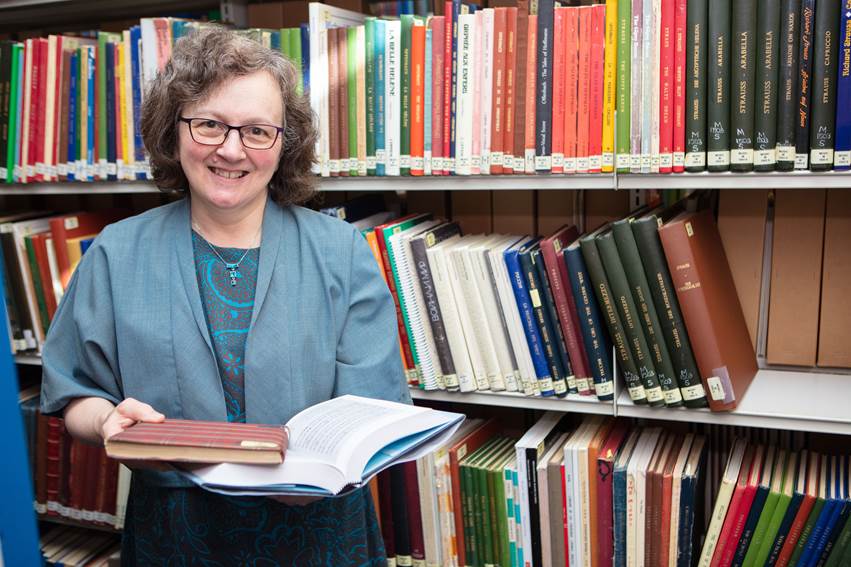
Dr Karen McAulay explores the history of Scottish music collecting, publishing and national identity from the 18th to 20th centuries. Research Fellow at Royal Conservatoire of Scotland, author of two Routledge monographs.
So I decided to spend the afternoon at the Mitchell Library. Glasgow is so fortunate to have this wonderful collection!
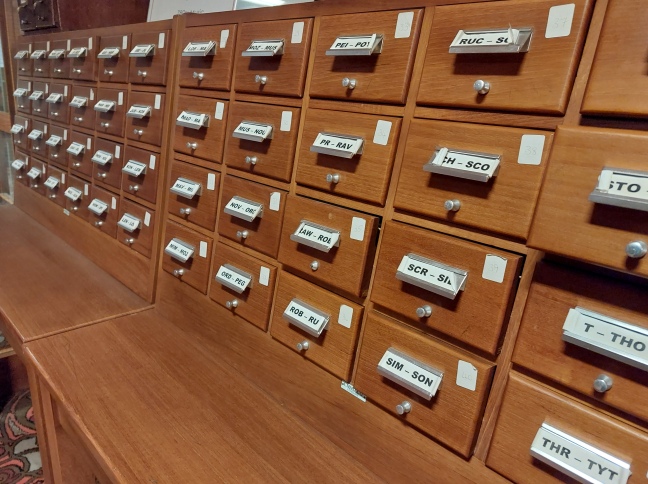
I saw the two publications I had in mind. I took notes. I even had time to look at the card catalogue. (Catalogues are great research tools, even though I am personally sick of actually cataloguing.)
And then I went home. It was only when I went over my notes that I realised I had missed at least one item in the bibliography of one book, which I thought I had been looking out for. I spent the next 24 hours kicking myself, determined to go back to find that elusive reference if it killed me.
And then my librarian self remembered the advice I often give students. If you have copied out a useful snippet, put it into Google Books, in speech marks. Like this:-
“Reader, I married him”
(Try for yourself – it’s a quote from Charlotte Bronte.)
Often enough, Google Books will retrieve 2-3 lines including the words you copied, telling you the book where it found the text – and the page number.
I searched on the book abbreviation for the missing reference, and found I’d missed three! However, I have now traced them, and all is well. All for research into a publisher who only caught my interest two weeks ago.
I still don’t know if this kind of post is helpful. To anyone who hasn’t many/any visible outputs, reading someone else’s list of what they achieved is probably the very last thing they need to brighten their day – and I apologise. You’ve probably achieved other, equally or even more important things, which didn’t take the form of words on a page!
From my vantage point, as a researcher who sentenced herself to a career in librarianship, not necessarily as a first choice but what seemed at the time to be a reasonable one, I look at other academics’ lists of achievements and struggle not to compare myself – although realistically I cannot achieve as much research in 1.5 designated days a week as the average full-time academic. My research line-manager is more than content, so maybe I should remind myself of that more often.
So, what have I achieved?
As a librarian, I have spoken at two conferences, a panel discussion and as staff training for another library, about EDI (Equality, Diversity and Inclusion) in our own library. I have a paper being published in an academic journal next year, on the topic of women composers in libraries; but my proudest achievement was actually in sharing a song by a Victorian woman teacher in the junior department of the Athenaeum, that I had discovered in a research capacity, and which a singing student eagerly learned and presented as one of their competition entries in a recent singing competition at RCS. Discovering something, having someone else declare it lovely, and hearing them perform it beautifully, is a very special privilege.
Still hatching
As a researcher, I have another paper forthcoming in an essay collection, though I can hardly list details here before it has even gone through the editorial process. And another magazine article which has been accepted for 2024. Can’t include that either. Nor can I yet include the monograph I’m halfway through writing. I’ve done a ton of work in that respect, but it doesn’t count in a retrospective list of successes!
I’ve also applied for a grant which I didn’t get, and a fellowship for which the deadline is just today, so no news on that front for a little while.
That leaves this little list, the last item of which appeared through my letterbox at the turn of last year, so I’ve cheekily included it here again.
Forthcoming
‘Representation of Women Composers in the Whittaker Library’, Journal of Perspectives in Applied Academic Practice. Arises from a paper given at the International Women’s Day Conference hosted by the University of the Highlands and Islands, 2022. Peer-reviewed and pending publication.
Arrived
‘Alexander Campbell’s Song Collecting Tour: ‘The Classic Ground of our Celtic Homer’, in Thirsty Work and Other Heritages of Folk Song (Ballad Partners, 2022), 180-192
‘Burns and Song: Four New Publications’, Eighteenth Century Scotland, no. 36 (June 2022),12-15.
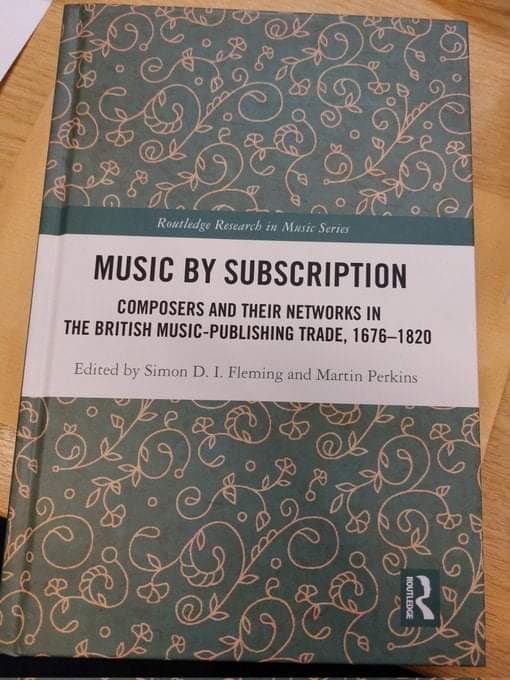
‘Strathspeys, Reels and Instrumental Airs: a National Product’, in Music by Subscription: Composers and their Networks in the British Music Publishing Trade, 1676–1820, ed. Simon D. I Fleming & Martin Perkins. (Routledge, 2022), 177-197
Meanwhile, as an organist, I’ve completed my first year in Neilston Parish Church, which has been a very healing experience. I love it there! This Christmas has seen three of my own unpublished carols being performed, one in Neilston and two in Barrhead; and earlier in the autumn I contributed a local-history kind of article to the Glasgow Diapason, the newsletter published by the Glasgow Society of Organists. Another publication! Might as well add it to the list:-
‘Trains, Trossachs, Choirs and the Council: Neilston Parish Church’s First Organist’, in The Glasgow Diapason Newsletter
Confession time. Sewing is my relaxation of choice, often influenced by something I’m researching. This year’s project, a Festival of Britain canvas-printed linen piece, relates to the aforementioned chapter that I’ve contributed to someone’s book.
I know I would get more research writing done if I didn’t sew in my leisure time, but I need that for my mental health. Swings and roundabouts…
When I graduated with my PhD in 2009, there was a flurry of interest in me as a ‘mature’ postgraduate, and my ‘portfolio career’. There’s only one problem – it isn’t a portfolio career! I work in one place, full-time, on a full-time salary. I’m not self-employed, nor do I do a little bit of this and that for different employers. It’s correct that I spend 0.7 of my time as an academic librarian, and 0.3 of my time as a researcher. If I had any aspirations at the start of my librarianship career, it was to be a scholar librarian of some kind, and as you see, that IS where I’ve ended up. I don’t claim that it exactly reflects who I am now – in my head, I’m more scholar than librarian.
So, if I don’t consider myself a good example of a portfolio career, then here’s another conundrum: do I do interdisciplinary research? If at some times I’m writing about librarianship, and at other times I’m writing about nineteenth to twentieth-century music publishing, does that make my research interdisciplinary? I guess it probably does, even if the librarianship and the music publishing seldom meet! I’m often contemplating the social context of whatever I’m researching. And just occasionally – like my recent article about Clarinda Webster – I manage to mention librarianship, music publishing AND social history in one fell swoop.
At other times, my research finds its way into the librarianship quite naturally. This week, the RCS Library is having a series of events throwing a Spotlight on Diversity. I’ve written a short blogpost about Scottish Women Composers as one of my contributions. The names I’ve suggested are just a start – and I haven’t attempted to include every Scottish woman who wrote a tune, because I’m assuming our students are basically looking for recital repertoire. My research has led me to several more women who made their own unique contribution, but they’ll get a mention in the book I’m currently writing. Their pieces aren’t necessarily recital repertoire, or even easily sourced today.
Librarian. Time mainly spent cataloguing and working on the library equality and diversity project. In connection with this, I’m commited to giving a talk next month, and to submitting a librarianship-related journal article arising from a talk I gave earlier this year.
Musicologist. [2nd] book proposal submitted. Already committed to producing two book chapters for essay collections being edited by other folk.
Librarian meets Musicologist. Article straddling both worlds, due out in the next month or so. Also giving a talk in Edinburgh in June, in my capacity as Honorary Wighton Librarian.
If only I had a garden big enough for a secluded Writing Shed!
There comes a time in every funded researcher’s year, when they have to upload evidence of writings and speakings and anything else that may have emanated from their funded research.
Research Fish – as imagined
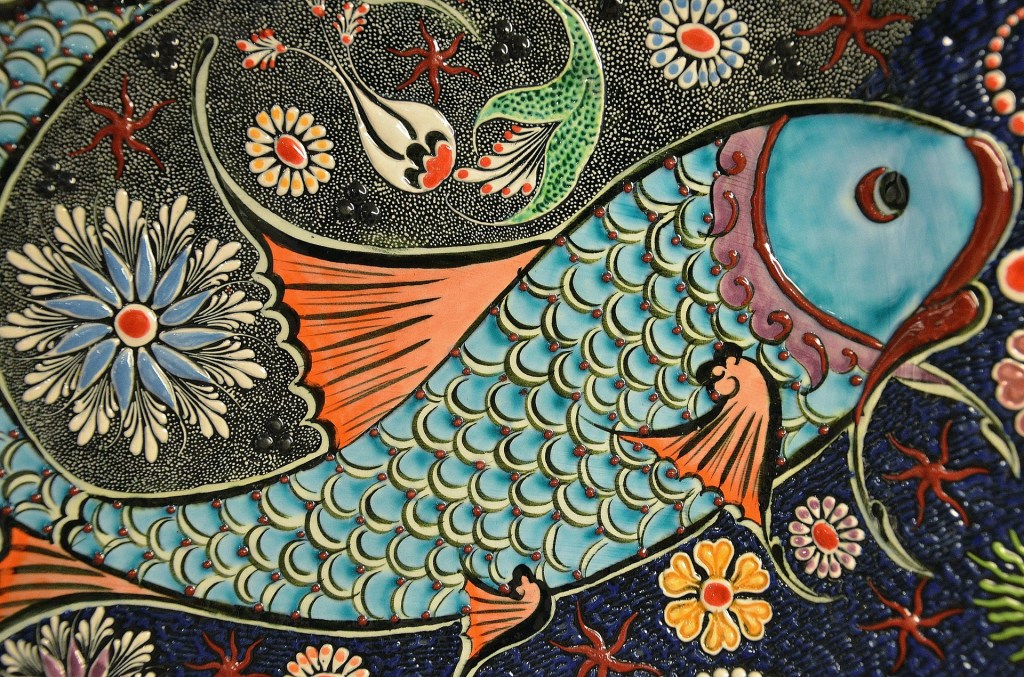
I struggled this month. There didn’t seem to be much to report, given that I’ve been focused largely on my present writing project, which is not (currently/yet, depending on optimism) funded. Nonetheless, I did it. And cheerfully tweeted my relief that it was done. I shared my favourite image of a fish mosaic on social media to celebrate.
Today, imagine my surprise – ResearchFish actually SENT me a Research Fish! I shall treasure this gesture.
Outreach and engagement
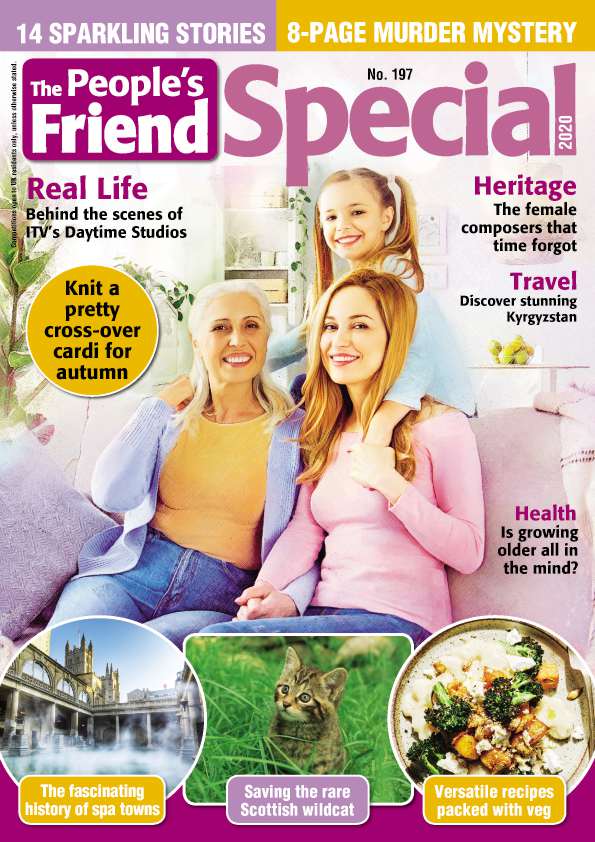
(On a slightly more serious note, this is possibly the first time an article in The People’s Friend has been cited as a research output – it counts as outreach!)
I have just catalogued a book containing my chapter on music subscribers to published strathspey and reel collections in the late 18th to early 19th centuries. (Not every author gets to catalogue what they contributed to! Still, it means it’s now available in the library at RCS.
Here it is:-
Chapter 10. ‘Strathspeys, Reels, and Instrumental Airs: A National Product’
And the book itself:
Music by subscription : composers and their networks in the British music-publishing trade, 1676-1820 / edited by Simon D.I. Fleming, Martin Perkins. (Routledge, 2022)
Returning visitors to these pages may find the content thinner than it used to be. Now that I’m working on my next book, I want my best content to be honed to perfection and triple-checked before I commit it to print. Rather than leave extended writings – which I posted as ‘work in progress’ – sitting on the internet, I’ve pruned what is here. In general, I continue to research the topics I posted here (Scottish music publishers James Kerr, Mozart Allan and many others, and interrogations of cultural issues), and any new details or dates which I didn’t know at the time of blogging, could potentially change what I originally wrote. And also, of course, I want readers of the book to be surprised and delighted by new insights that no-one knew before!
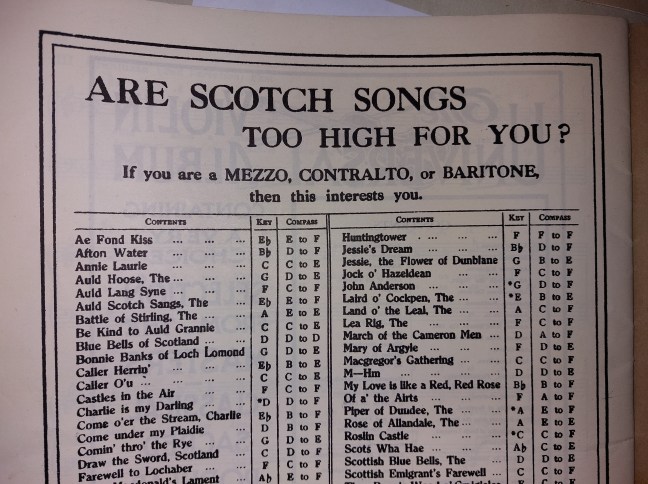
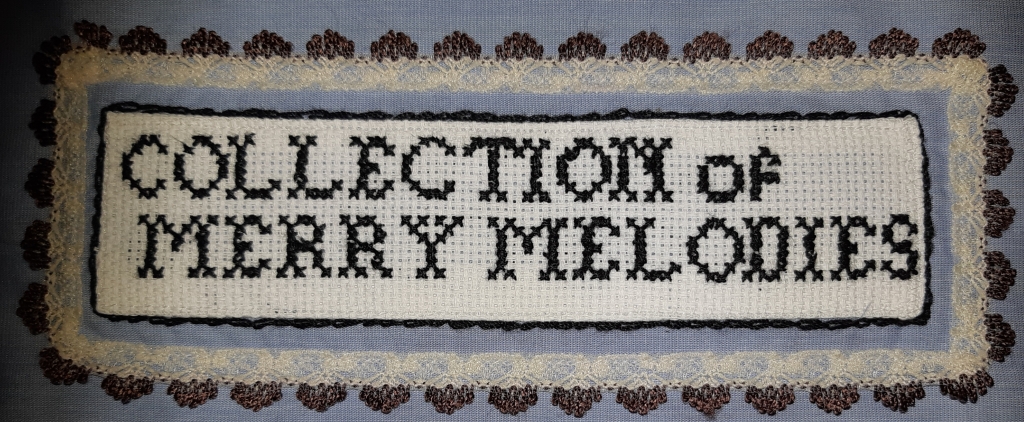
Collection of Merry Melodies
I shall continue to blog, of course. How could I not? I have so many ideas buzzing round my head that it’s hard keeping them all to myself!
I’m speaking at the second Pondering Paratext seminar next Wednesday afternoon between 2.30 and 4 pm. There will also be a talk by Dr Hazel Wilkinson.
My talk is entitled ‘Scottish Songs and Dances ‘Preserved in their Native Simplicity’ and ‘Humbly Dedicated’: Paratext in Improbable Places’. Amongst other delights, I’ll be sharing some of my recent findings about subscription lists to Scottish fiddle tunebooks.
(Musicologists of this kind of music – do take a closer look at the tune pictured above. The book it comes from is riddled with errors in the basslines – I know this for a fact. So, the first bar and the third bar here are actually very similar, and I’m tempted to play the first bar with the bassline that the third bar uses. I promise not to talk such heresy in my talk, of course, when I shall focus on the paratext rather than the notes themselves!)
I was one of the speakers doing a short talk for Glasgow University’s Hunterian museum on Tuesday 16 March evening – my talk was about Alexander Campbell, editor of Albyn’s Anthology (1816-18).
Someone on Twitter asked, ‘What have you achieved this year that you’re proud of?’
DISCLAIMER (also posted on my Teaching Artist blog). It troubles me slightly that earlier in the pandemic, reading other people’s updates about all their achievements just made me feel guilty. All I was doing was working from home and keeping everyone safely looked after. Nothing heroic, nothing remarkable. I’ll be honest, my kneejerk reaction to such postings was a combination of, “come on, guys, do you have to?” and “well, I can’t be seen to be slacking here!” But the truth of the matter is that no-one fully knows other peoples’ situations – how much they’re struggling, whether they have caring responsibilities, or indeed, what their work-life balance is – whether they’ve chosen it or found it forced upon them.
Comparisons are Futile
I suppose the moral is that it’s pointless to try to compare oneself with other people. I’ve been in Glasgow nearly 33 years, still on the same grade, despite having gained a doctorate, a teaching certificate, and two fellowships. Written a book, published a lot, given plenty of research papers. Still – in terms of time allocation – more of a librarian than a postdoc researcher.
“You’re a bloody librarian, woman!”
I was once told, “You’re a bloody librarian, woman!” In the west of Scotland, the “I kennt your faither” philosophy – not allowing someone to forget their place or where they came from – is still alive and well, and if I’m on the same grade, I’m forced to conclude that my value has not increased. It’s very depressing.
Failed in the Eyes of One who Climbs Ladders
A former colleague once said that if one wasn’t moving jobs and climbing the ladder, then one was a failure. This philosophy favours men and people without children. I do admire people with ambition. I also admire and envy people who are less ambitious, but who are content with where they’re at. As for me, I’m still struggling with thwarted ambition, three and a half years before retirement! I should very much like to have moved jobs and climbed the ladder – anyone who thinks I’m unambitious, really doesn’t know me. However, I’ve raised three sons (who have benefited enormously from the Scottish education system, which is why we didn’t want to leave Scotland!) and I got those extra qualifications whilst working full-time. (Apart from statutory maternity leaves, I’ve always worked full-time.) If I’m a failure for not getting promoted – guilty as charged – then I do have a few good excuses. And I did recently get a Special Note of Commendation from my CILIP researcher colleagues, which was heartening.
Coast Downhill? No Way!
During the Covid pandemic, I’ve pushed myself to achieve as much as I could, because I didn’t want to find myself sliding towards an unwanted, age-related slowing down. I am not yet of retirement age, and I can’t bear to think that inactivity might see me slipping out of the research scene before I’m ready. So this is posted in the spirit of demonstrating that I’m still here, still research-active, and not yet ready to be written off!
So here goes!
Not everything is a ‘research output’, obviously. I stitched my lockdown journal, for a start. (I even made a video about it.) I learned the concertina, and I wrote tunes for it.
I broke my foot, baked banana bread, put on weight, and once my foot was better, I put myself on a diet and exercise regime to lose some pounds. I’ve made gallons of soup, and done 95% of the housework. (Two of the three of us are over sixty – and two are oblivious to housework or the absence of our weekly cleaner!)
But in terms of research? Working from home since March, I’ve benefited from a mostly peaceful dining room (albeit a thoroughfare to the kitchen), and gained my commuting time along with the new responsibility of cooking most weekday meals. The allocation of my time to library (70%) and research (30%) is unchanged. I’ve done my user education and made several training videos in my library role, and I love this side of it. But I fight a compulsion to answer library emails at any time of the day or night (even the day after Boxing Day) for fear of being considered unhelpful if I don’t – whilst research would swallow me up whole, without any resistance from me, if I didn’t occasionally get dragged away from it! I freely admit that I have absolutely NOT limited my research activities to ten hours a week. It makes me excellent value, but I’m reaching the point where I feel I cannot try much harder, and it won’t really make any difference to my career trajectory. If one can have a flat trajectory in the first place!
Quite apart from wanting to achieve “outputs”, I have tried to take the attititude that it is easier to attend a Zoom conference than to arrange for everything to run smoothly in my absence attending a “real” live event in a diffferent city.
So, how have I done this very weird year? I am not dissatisfied.
‘A Music Library for St Andrews: use of the University’s Copyright Music Collections, 1801-1849’, in Journal of the Edinburgh Bibliographical Society no.15 (2020), pp.13-33.
Romantic National Song Network blogpost, 9 Sept 2020, ‘Revisiting the Achievements of Song-Collector Alexander Campbell’
‘The sound of forgotten music: Karen McAulay uncovers some of the great female composers who have been lost from history’. The People’s Friend, Special Edition, 11 Sep 2020, 2 p. Dundee : D C Thomson.
‘Performative Silence in the Library’, Icepops Annual 2020: International Copyright Literacy Event with Playful Opportunities for Practitioners and Scholars, ed. Chris Morrison and Jane Secker, p. 32-33
Guest co-editor (and contributor) of Brio vol.56 no.2 (Winter 2019), dedicated to Claimed From Stationers Hall network-related writings.
PRESENTATIONS (whatever would we have done without Zoom and Teams?!)
University of Glasgow Scottish and Celtic Studies Department, ‘Alexander Campbell’s song-collecting for Albyn’s Anthology’ (17 November)
Traditional Song Forum, ‘Scottish song-collector Alexander Campbell and his ethnomusicological exploits’
EFDSS Conference, London, ‘All the right notes, but not necessarily in the right order’: musical resemblances over the border.’
CILIP Metadata Group Conference, ‘The Cinderella of Stationers’ Hall: Music (and Metadata) in Georgian Legal Deposit Libraries’
I’ve also facilitated an event for the Friends of Wighton, made a mini video presentation about my research for a Scottish research event …
… and made the aforementioned video about my stitched lockdown journal. I’ve done quite a few training videos with my library hat on, too, but I’ll spare you the details of those!