Dr Karen McAulay explores the history of Scottish music collecting, publishing and national identity from the 18th to 20th centuries. Research Fellow at Royal Conservatoire of Scotland, author of two Routledge monographs.
You can tell I’ve spent too long in the late nineteenth century – in the research sense, that is. Dizzy with excitement at the thought of seeing a silent movie – yes, it might actually come to pass, albeit not for a few months – I was almost deliriously pleased to discover that one of my research interests made British Pathe ‘shorts’ during the Second World War. My aim is to contrast two singing careers, started only a decade apart – and here’s the first contrast. One began their career during the First World War and the silent movie era. The other made British Pathe shorts during the Second.
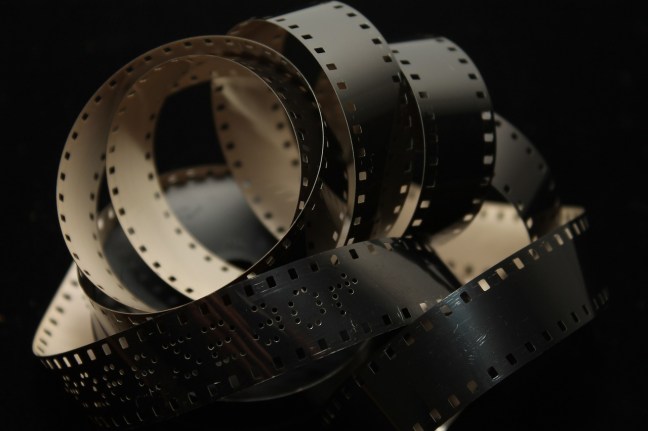
We think we’re so advanced, with our internet and our AI, electric cars and digital sound … but anyone born in the late nineteenth or early twentieth century might have been amazed by their own advances in technology. A fin-de-siecle child treated to a magic lantern show, might have sung along to hymn or Scottish song texts projected on a magic lantern screen, the singing led by whichever grown-up had been co-opted in to help. When silent film came along, any music would be provided by a cinema pianist or a small ‘orchestra’ – possibly no more than a piano trio. What you heard would partly depend on who was playing and the bundle of music they’d brought with them.
But when the children became adults, they would would find themselves listening to the wireless or going out to ‘talking’ movies. Watching, in adulthood, a short film performance by a contemporary star vocalist would have been unimaginable a decade earlier.
However, I must still cool my heels as I wait to see if (and when) the silent movie that I need to see, can be converted into a modern format. Meanwhile, I’m trapped in the nineteenth century with the printed novel that gave rise to the movie. As I read, I wonder how they managed to condense the story into a couple of hours, and then convey the whole plot by wordless gestures.
‘LUCERNA is an online resource on the magic lantern, an early slide projector invented in the 17th century.
‘For more than 350 years the magic lantern has represented and fed into every aspect of human life and every part of the world. It is still used today, both in its original form and through direct descendants like the modern data projector.
‘LUCERNA includes details of slide sets, slide images, readings and other texts related to slide sets, lantern hardware, people and organisations involved in lantern history, and much more.’
I’ve taken a couple of days’ leave whilst we’re having work done at home. I’m far too distracted by the banging and crashing around me to be able to sit and write scholarly thoughts. I just can’t!
‘Satan finds work for idle hands to do’ (Proverbs 16:27-29)
However, it appears I can quite easily go shopping on eBay. For some weeks, I’ve covetously watched a handful of old 78-rpm recordings, the sensible voice in one ear drowning out the sentimental voice in the other. The latter is whispering,
‘Look! He conducted that. You can listen to him actually conducting something he arranged! How cool would that be?’
Inner voice
That’s not the voice of a sensible, frugal scholar! Reader, I resisted the sentimental voice. I was being firm, resolute, and admirably sensible until a glorious thought occurred to me: when I’ve finished my book, publication will also entail a book-launch of some kind. And I’m sure to want to give talks about some aspect of the book topic. These records aren’t just artefacts – they’re multimedia soundfiles! Oh yes, indeed. How dreadful it would be, for my future self to remember the records that slipped through my fingers through misguided sensibility?
You also have to understand that my previous research was into an era when there were no sound recordings of any kind. So my present investigations into music between 1880 and 1950 mean stepping into the era when one could listen to recordings (gasp!), view projected slides and even access broadcast media. All very, very exciting at the time.
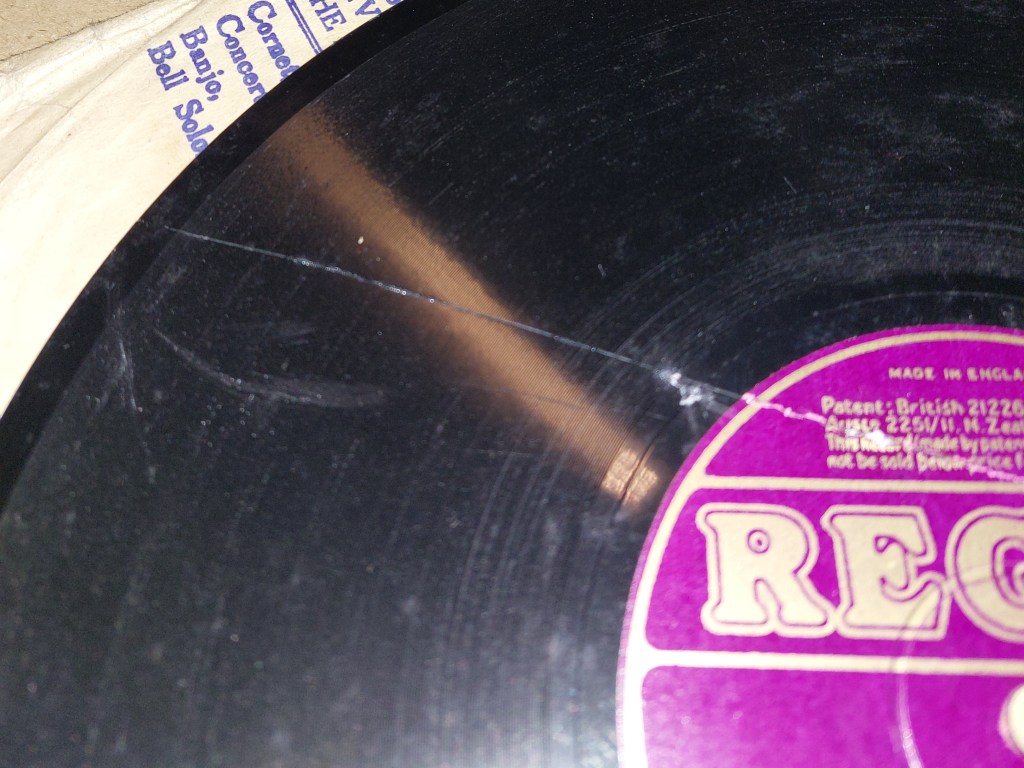
Broken Record
I did do a bit of bargaining, having resolved that I couldn’t have them unless I negotiated the price below a certain figure. The last shellac record I bought arrived in bits, so I hope that if these are travelling as a threesome, they might be a bit more robust – safety in numbers.
And I’m afraid I succumbed to a small music publication, too. (What am I going to do with all these scores when the book is written and they revert to being cheap, forgotten old titles again?!)
Today, we share with you something completely different. Dr Eva Moreda Rodriguez, Music Lecturer at the University of Glasgow, writes for us about Spanish legal deposit and its value in terms of historical sound recordings. It underlines the importance of legal deposit in a much wider variety of contexts than one would at first imagine.
————————————–
Shortly after Claimed from Stationers’ Hall was set up, I had the opportunity to experience first-hand how the requirement to submit copies of every printed work to a library can, if satisfied, change our understanding of music and musical cultures of the past in radical ways. Indeed, when I started to research the arrival of recording technologies in Spain from 1878 onwards and the responses of Spaniards to them, I was faced with the issue of a lack of sources. I did indeed have newspaper and magazine articles – but these were often brief announcements or texts intended for scientific dissemination which did shed little light on how the average Spaniard would have reacted upon hearing a phonograph for the first time. References to the phonograph in Spanish literature were surprisingly scarce, and memoirs and journals did not shed much light on the issue either. Discovering, at the Biblioteca Digital Hispánica (BDH), a zarzuela by successful composer Ruperto Chapí named El fonógrafo ambulante (The travelling phonograph) and dated 1899 prompted the question: did any other theatrical and musical plays of the time feature phonographs and gramophones, and if so, can they shed any light on cultural attitudes towards recording technologies at the time?A search at the BDH website, as well as at The Internet Archive and at the premises of the Biblioteca Nacional de España (BNE) revealed that at least fifteen plays were premiered in Spain between 1885 and 1914 which featured a phonograph or gramophone in a significant role. Most of those works (libretti and, on some occasions the music) arrived at the BNE through the legal deposit mechanism. This, in itself, tells us a lot about both legal deposit in Spain and the significance of theatrical genres in the late 19th and early 20th century. Indeed, some sort of legal deposit requirement (privilegio real) had existed in Spain from 1716, but a full, comprehensive legal deposit norm was not introduced until 1957. In practice, this meant that, through the 19th century and early 20th century, legal deposit requirements were often met haphazardly, and not all authors deposited copies of their works at the BNE, then the only legal deposit library in Spain.
Source: Biblioteca Valenciana
Theatrical authors, though, had an incentive to do so. Theatre-going was, at the time, one of the preferred pastimes of Spaniards of all social classes, particularly in urban areas. A number of popular theatre genres, combining music with the spoken word to different extents (sainete, zarzuela, revista, invento, pasillo), flourished in an ever-growing number of theatres. Intended for consumption and entertainment, many of these plays were replaced after a few runs, forcing the authors to constantly come up with new ideas: there was, indeed, money to be made, but the environment was competitive. In this climate, one of the few weapons authors had in order to protect themselves from unscrupulous impresarios who might stage their works without compensating them financially was to deposit copies of their works at the BNE so that authorship could be conclusively proven in case of legal disputes.
A happy consequence of this practice is that works that might not have survived otherwise – because they were generally ephemeral, inconsequential and often of limited artistic merit – have made it to our days, providing us with a fascinating corpus to study both theatrical culture in Restoration Spain and broader social and cultural issues during this period. These plays were written primarily to entertain, and as such they satirized certain aspects of contemporary politics and society – but they never decisively challenged the status quo and ultimately celebrated the Spanish pueblo as a community of individuals happy to live by traditional, conservative values: for example, a number of these plays may feature fiery, memorable female characters, but at the same time the genre mocked the nascent first-wave feminist movement relentlessly.
In my research, I have been working under the hypothesis that these plays would have presented ideas and discourses around recording technologies that would have resonated with their audiences – always within the generally conservative, paternalistic framework I have described above. For example, several of the plays develop the idea of the phonograph being able to reproduce reality with the utmost fidelity – by recording in private, by accident, statements that individuals would not have dared making in public – and then playing them back. Wives are found out not to love their husbands, and vice-versa, and politicians are found out to lie to their electorate in pursuit of votes. Such episodes, however, were developed purely for comic effect, and one never finds even the slightest suggestion that technological modernity – which was generally seen as critical to the advancement of Spain – should be coupled up with social or political modernity. This is too the case with El fonógrafo ambulante, to which I have referred earlier: the travelling phonograph that arrives in a remote Andalusian village at first threatens to destabilize the social order by making the heroine, Araceli, consider breaking her engagement to the town’s mayor and instead marrying Antero, the phonograph operator, instead. However, once it is established that both Araceli and Antero are true representatives of the Spanish pueblo, young and resourceful but ultimately attached to traditional values, the phonograph, which has brought them together, becomes a guarantee for social order, and the play ends with all villagers gathered around the device and listening in fascination.





 Karen McAulay, Musicologist