Facility, Steadiness and Precision: Mlle Merelle published a harp tutor

On this day, 10th October 1799, Broderip and Wilkinson registered Mademoiselle Merelle’s harp tutor at Stationers’ Hall. In two volumes, her New and Complete Instructions for the Pedal Harp … Containing all the necessary rules, with exercises, preludes, etc, calculated for acquiring facility, steadiness and precision on the instrument was a mere 50 pages in total, but it took the beginner from ignorance to an astonishing level of dexterity by the end of the second book! It was dedicated to her pupils, whom one would imagine must have taken quite some time to master the exercises until they could play the exotic flourishes that brought the tutor to its triumphant conclusion.

I am rather pleased to note that Mrs Bertram and her daughters appear to have borrowed a book containing this work, from the University Library at St Andrews. They ran a girls’ boarding school – who knows who actually played from this book!

A Seattle website called Harp Spectrum (2002-2014) contains an article by Mike Parker, in which he says that Mlle Merelle was a London harp teacher.(1) Whether she was the first woman to publish a harp tutor, is not something I’m in a position to comment upon at the moment. Hers does seem to be the first one authored by a woman and registered at Stationers’ Hall in London, but that’s no guarantee that others weren’t published elsewhere in the world – or published in the UK but not registered at Stationers’ Hall.
There are very few copies surviving. It was therefore with a small cry of triumph that I discovered a digitised copy in Denmark! You can look for yourself, here:-
New and Complete Instructions for the Pedal Harp. In two books.
There are lots of arpeggios and broken chords – and (at first glance) no national melodies, which is markedly different to piano tutors of the same era!
Mlle Merelle also published Les Folies d’Espagne, avec des nouvelles variations pour la harpe, registered by Broderip & Wilkinson on 13 June 1799, and a book of harp tunes, Petites Pieces pour le Harpe, registered by the same publishers at Stationers’ Hall on 24 March 1803. Again, few copies survive. The first is also in digital format at the British Library, but I believe only on-site.

(1) The Eighth Pedal – Fact or Fiction?
by Mike Parker
Networking with Other Networks: Women’s Book History

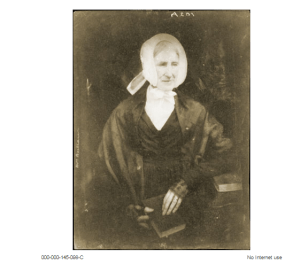
Mrs Bertram by David Octavius Hill
A CFSH subject herself, Mrs Bertram by David Octavius Hill

How I’ve managed to get through this networking project to date without encountering this group is beyond me, but now I’ve found them on Twitter, I want to share their details with other Claimed From Stationers’ Hall network members:-

WomensBookHistory

@GrubStreetWomen


“Bibliography of sources on women’s writing and labor. We tweet CFPs, conferences, etc. in gender and #bookhistory, #dh & textual studies.”

Pomona, CA

womensbookhistory.org

So there you are – introductions performed!  I look forward to following the twitter feed and shall keep an interested eye on the website!


Networking with Other Networks: Women in the Arts in the Long 18th Century

nature-1242617_640

Another invitation: I’m also part of the EAERN Network (Eighteenth-Century Arts Education Research Network), and EAERN members have just been notified of an event taking place in Sheffield. Perhaps it might interest a few members of the Claimed From Stationers’ Hall music research network, too?

:-

Registration is now open for ‘Women and the Arts in the Long Eighteenth Century’. EAERN members would be very welcome to join us at the University of Sheffield for this event on Friday 8th March. Further details available via the registration link below:

https://onlineshop.shef.ac.uk/…/…/english/women-and-the-arts

Mind-Maps? Not This Time!

Thinking about the whole corpus of legal deposit music in the late 18th and early 19th centuries:-

  • Where it went
  • How it got there
  • What was retained
  • Who was involved in its immediate and subsequent curation
  • Whether it was used
  • What about the materials not retained?
  • The approach to this material in different institutions
  • Women composing music
  • Women performing music
  • Women teaching music
  • Music composed in response to war
  • Music in cultural history – what was popular, when, with whom?
  • Music for dance
  • Music pedagogy prior to the mid-19th century
  • Music for particular instruments (eg harp) or ensembles
  • Musical arrangements, music re-purposed in some way (and copyright issues)
  • National music – privileged in terms of retention?
  • Religious music – I haven’t separated out any strands here yet
  • Hymn books – published with and without music. Another strand I have yet to explore
  • Documentation, cataloguing
  • Big data (when more collections are catalogued online)
  • Comparison of retention patterns between different libraries
  • Digitisation
  • Performance possibilities
  • Finally, last and by no means least – The big picture. Even acknowledging the contribution of the European great masters to music of this era, have we underestimated the importance of contemporary British music? Some is good, admittedly some is bad, and some is indifferent – but much of it is significant in revealing cultural trends at the time. This, I believe, is the true importance of the Georgian legal deposit music corpus.

Women In Music – Forgotten Female Composers

Looking at the historical copyright music collections, certain categories do leap out … theatrical music, single songs, instructional material, instrumental music, Napoleonic-era music … and music by women.  Now, there are various websites detailing women composers, and it would be rash (indeed, unnecessary) to create another one, but for the purposes of the Claimed From Stationers’ Hall network, what we need is a list of the women composers represented in and around the Georgian era – say, from 1760-1840.

I found all the women’s names in the “Authors” index of Michael Kassler’s Music Entries at Stationers’ Hall, 1710-1818 (Routledge, 2004), and then added in some extra names that appeared in St Andrews’ University Library Copyright Music Collection – specifically, in the volumes that have been catalogued online, from Vol.130 to Vol.385.  (Kassler also lists writers of lyrics, performers, and dedicatees, in separate indices – I have not included these.)  The resultant list can be found here:- Women Composers of the Georgian Era. (List compiled by Karen E McAulay, Royal Conservatoire of Scotland, 07/2018).

A WORD OF CAUTION! Researchers should cross-refer between Kassler and Copac, to ensure that works post-1818 are also represented, and to eliminate any names which may have other than strictly authorial responsibility for the works cited.

Kassler’s book is one I consult almost daily.  It’s available in a number of university libraries, both as hardback and e-book.  Recommended!


I tweeted about this earlier today, and I’ll reiterate it here – please do share any links to Pastoral scene ladiesuseful lists of historical names!  If your list has both “ancient and modern”, I’ll still be happy to include the link.  However, to keep it relevant, let’s not add lists of women composers from the 20th century onwards.  The Claimed from Stationers’ Hall network is about predominantly Georgian music, published in Britain and legally deposited in British libraries – that’s the network’s remit, and that’s what the research funding is enabling!


Useful Books