Dr Karen McAulay explores the history of Scottish music collecting, publishing and national identity from the 18th to 20th centuries. Research Fellow at Royal Conservatoire of Scotland, author of two Routledge monographs.
Composer Chris Hutchings established an organisation called Choirs For Climate, using choral music to raise awareness of environmental issues arising from climate change. After an initial workshop last autumn, a choral concert of 55 voices took place in Edinburgh’s Greyfriar’s Kirk on Sunday 5 March. It was funded by Creative Scotland, and attracted about 150 in the audience raising several hundred pounds for Greenpeace.
I was delighted that my own Extinction Calypso was included. Although I wasn’t able to attend last week, Chris has shared the video with me, and I have his permission to share it here. The video is the work of Andy Henderson of ah-media.co.uk. Video of the entire concert will appear on Choirs for Climate in due course.
This is an article that I wrote whilst on vacation at the New Year, for the Glasgow Society of Organists’ newsletter, The Glasgow Diapason. I’m reproducing it here, because it may become hard to find copies of a newsletter with a comparatively small circulation, in years to come. I’ve added some information to Table 2, indicated as Addenda, and I’ve added two scans from The National Choir Vol.1.
The image above is (was) St George’s Church in Paisley – it has now been converted into flats.
The citation details of my article are as follows:-
Karen E McAulay, ‘‘Our Heroine is Dead’: Miss Margaret Wallace Thomson, Paisley Organist (1853-1896)’, The Glasgow Diapason, March 2023, 10-15.
I’m currently writing a book about Scottish music publishers and amateur music-making. Thinking to do a little light research over Christmas, I borrowed J & R Parlane’s The National Choir, a collection of part-songs published first in separate numbers from 1887, and subsequently in two volumes by ca. 1895. This Paisley firm was a significant producer of all kinds of books, including educational music in staff and Tonic Sol-Fa notation. The collection met the need for straightforward choral material for a growing number of amateur choirs; with over 100 contributors, it bore out the editor’s boast that it afforded opportunities for many local professionals and amateur composers and arrangers to make contributions. Containing predominantly Scottish song settings, the second volume also set out to broaden the scope a little further by including national songs from elsewhere in Britain, amongst other items.
Let us now praise famous men … (Ecclesiasticus XLIV)
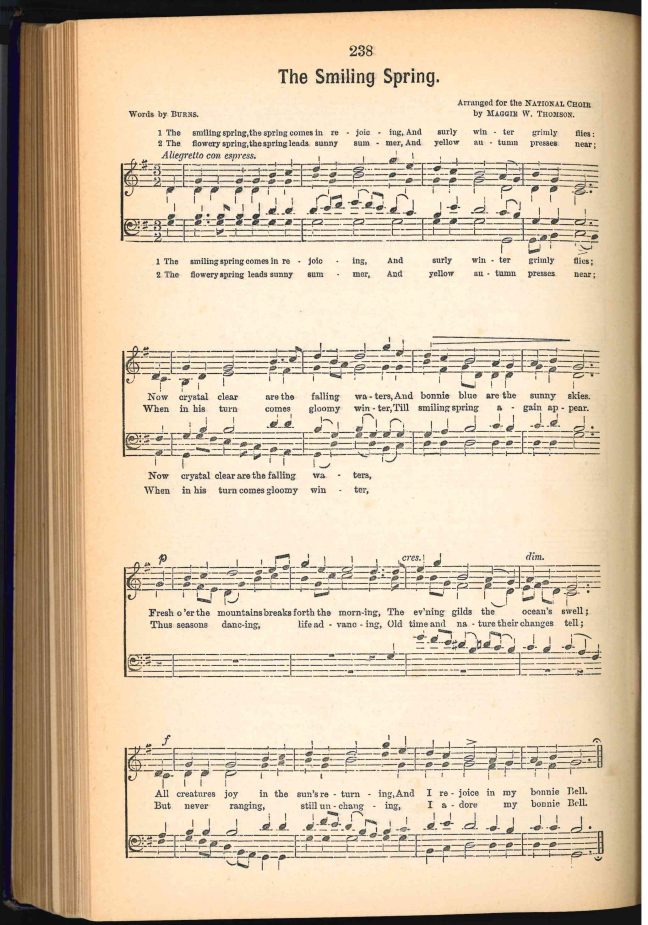
Only a musicologist would sit down and tabulate every single contributor in 768 pages of music, and only a musicologist with an interest in women composers would count the number of female contributors. Margaret Wallace Thomson of Paisley was one of only two women represented, with an arrangement of Burns’s ‘The smiling spring’ and a song of her own, ‘The weary day’. (The other lady was Mrs R. Broom, a songwriter who had contributed the melody for one song, ‘Over the sea’.) Both ladies appeared in the first volume, the prefatory notes informing us that Miss Thomson was a Paisley pianist and organist, whilst Mrs Broom had written several popular songs. The latter remained an enigma, but there were numerous mentions of Miss Margaret (or Maggie) Thomson in the local press; she had a good reputation as an organist, piano accompanist and music teacher. Indeed, accompanying the Paisley Choral Union for some two decades, she received a gift of a gold watch and chain after her first three years with them, and generous tributes upon her untimely death at the age of 42.
I was particularly curious about her, since I was once a Paisley organist myself. Once I started looking, I found out more and more – another musical woman who had been forgotten through time, her lack of publications probably partly to blame.
Margaret’s father Alexander was an Irishman, who had seemingly come to Scotland before he met Susan Wallace, a Paisley girl. They both worked in the weaving trade as pattern setters. Susan still did this in 1851, when they had started their family, but seems not to have been doing it by 1861. Later, Alexander was a flower lasher, carrying out an intricate weaving process for Paisley shawls. Three sons and a daughter came along before Margaret’s birth, although her nearest brother died when she was only three. Alexander, the firstborn, became a manufacturer by trade; a violinist, he conducted the Paisley Musical Association orchestra in his spare time. Her sister Isobella became a qualified teacher, and was the first woman teacher at Paisley Grammar School before she left to marry. Margaret herself would attend that school. They had a younger brother, James Paterson Thomson, who also became an organist, violinist and music teacher.
By the time she was 20, in 1873, Margaret was advertising her services as a music teacher, working from home. She continued to advertise as a music teacher until 1895, the year before she died. Appointed organist at St George’s Parish Church in Paisley in 1876, she had already acquired experience at Paisley’s Trinity Episcopal Church. James was organist at North Church from 1884. Margaret’s adverts always identified her as ‘organist of St George’s’, but James’s1895 teaching advert did not allude to his being an organist that year. When he died of alcoholic poisoning in 1897, the records say that he was a violinist; maybe he had stopped playing in church.
The many press notices of Margaret’s appearances bear witness to a number of regular activities. In her capacity as organist, she gave annual concerts with St George’s choir. As accompanist to the Paisley Choral Union, she accompanied a number of the Saturday Afternoon Concert series taking place in the George A. Clark Town Hall. She was also involved with the massive annual summer outdoor concerts commemorating Tannahill at “The Glen” on the Gleniffer Braes, contributing arrangements of Scottish songs for choir and band, for performance under the direction of Mr J. Roy Fraser, a Paisley music-seller. Proceeds were being saved towards a statue for Robert Burns’s impending centenary in 1896. (As an indication both of the popularity of these concerts, and the enthusiasm for choral singing, it is worth noting that on a rainy summer’s day in 1889, it was regretted that the audience was uncharacteristically probably under 10,000, and that the choir sadly numbered under 200 singers!)
She provided music for other entertainments and talks; including accompanying children in music exams; accompanying the Wallneuk Mission Choir; and, ironically, participating in a concert for inmates at Riccartsbar Asylum, where she herself would later die. She seems to have played piano, harmonium or organ depending on the engagement, but is never recorded as having conducted a choir; this was probably considered unseemly for a genteel woman of the time.
The choral repertoire that she was accompanying was is a mixture of established ‘greats’ still performed today, and other works now long forgotten:-
William Bradbury (1816-1868)
Esther: cantata
Alfred R Gaul (1837-1913)
Ruth: cantata
Gounod
Jesus, Word of God
Handel –
Judas Maccabaeus: oratorio (excerpts)
Handel
The Messiah
Handel
Samson (excerpt)
Haydn
Creation
Henry Lahee (1826-1912)
The building of the ship: cantata
Mendelssohn
Elijah: oratorio (excerpts)
Mendelssohn
St Paul (excerpts)
Mozart
12th Mass (excerpts)
John Owen (1821-1883)
Jeremiah: oratorio
T Mee Pattison (1845–1936)
The Mother of Jesus: cantata
Scotch Selections
(piano contribution)
Sullivan
Oh, love the Lord
Sutcliffe
The voice of Jesus
Table 1: Repertoire
Such as found out musical tunes
Maggie probably falls into the category of amateur contributors to The National Choir. Her musical arrangements and occasional compositions are very slight. She provided an arrangement of a Burns song, and one original piece; each occupy only one side, and are competent, but not outstandingly original. The titles of a few more of her Scottish song settings can be gleaned from press reports of the Tannahill concerts, and the only other extant musical item is a setting of Tennyson’s ‘Break, break, break!’, which was a collaboration with Alexander Wallace Waterston – another Paisley musician, who could conceivably have been a relative. Her own song, ‘The voice of the deep’, remains untraced.
Break, break, break!, by Wallace Waterston, piano accompt by MWT (1894, published Paterson’s) – [addendum: copy in British Library – catalogue entry here.]
Gala Water, arr. MWT [choir & band?] (1884)
The garb of the Gaul, arr. MWT for choir & band (1883)
The lass o’ Ballochmyle, arr. MWT for choir and band (1885)
The lassie wi’ the lint-white locks, arr. MWT for choir and band (1885)
She’s fair and fause, arr. MWT for choir and band (1895)
The Maid of Islay, arr. MWT for choir and band (1895)
The smiling spring, words by Burns, arr. by MWT for The National Choir [Addendum: Vol.1 p.238 (Parlane, 1891)]
The voice of the deep (1883), bass song, written and composed by MWT [Addendum: referenced in a newspaper report of a concert that took place in St George’s Church, Paisley. A positive review!]
The Weary day, original words and music, by MWT for The National Choir [Addendum: Vol.1 p.312 (Parlane, 1891)]
Table 2: Compositions and Arrangements
‘The Weary Day’ by Margaret Wallace Thomson, as published in National Choir 1‘The Smiling Spring’ by Margaret Wallace Thomson, published in National Choir 1
And recited verses in writing
Ca.1889, Maggie’s name was included in a book, Robert Brown’s Paisley poets: with brief memoirs of them, and selections from their poetry, revealing another facet of this seemingly very modest but quite talented young woman. Five of her poems are included, two of which are on musical subjects: ‘Alone with the organ’, and ‘Verses suggested by a happy musical evening.’ Her poems were noteworthy enough to feature in A History of Scottish Women’s Writing (Douglas Gifford, Dorothy McMillan, 1997). Furthermore, she is on record as having exhibited amateur watercolours in Paisley, although there are no further details of what she painted.
And some there be which have no memorial?
As a spinster, Maggie would probably have been the main carer for her elderly mother; her married sister lived in Bonnybridge, a distance away. Her mother died of senile debility on 20 February 1896 aged 77. Grief-stricken, Maggie died on 12 April the same year, of exhaustion, nervous debility and ‘mania’, having fallen out of her bed in Riccartsbar Asylum. A lengthy, and adulatory obituary appeared in the Paisley and Renfrewshire Gazette. To quote but a fraction of it,
Her well-known musical talents suffered from the wise old proverb, “a prophet”, she was held in high respect by the whole community, and yet it is no less true that in any other community than her native one, she would have commanded higher financial rewards. [She] was very successful as a teacher, and though a stranger would probably have asked and received higher fees, she always commanded a fair share of patronage.
A week later, the same newspaper published the eulogy delivered by the Revd. John Fraser at St George’s Church (‘We make no moan, we utter no cry; we say our heroine is dead’), echoing praise of her many musical talents, and applauding a modest and Christian life well-lived.
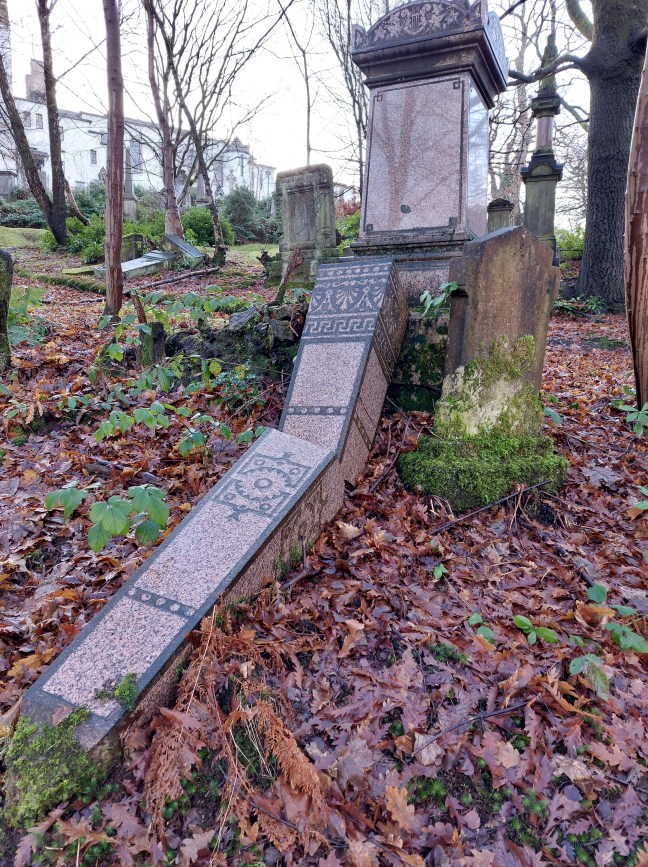
Woodside Cemetery has two lairs belonging to the family, bought by Maggie’s father Alexander Thomson. Today’s online database tells us who lies where, but there is no gravestone erected by the family. However, Maggie’s passing did not go unnoticed. The Paisley Choral Union subscribed to erect an imposing marble tombstone, topped with a nine-foot obelisk. (This has sadly fallen off, and lies in two pieces behind the gravestone, on the hillside behind Woodside Crematorium.)
Margaret W Thomson
Died April 12th 1896.
Erected by present and former members of the Paisley Choral Union, as a mark of their esteem and appreciation of her musical services.
(Margaret Thomson’s Gravestone)
To have been commemorated in such generous style gives us some indication of the affection in which Maggie was held, and the talent which she clearly displayed. On a damp, January morning, I paused silently for a few minutes, as squirrels scampered past me, and water gently leaked into my trainers. There was no-one in earshot as I murmured, ‘Maggie, you are not forgotten.’
Vol. 11 No. 1 (2023): Special Issue on Breaking the Gender Bias in Academia and Academic Practice
Special Issue of JPAAP exploring and addressing issues, dimensions and initiatives related to ensuring a greater gender parity and representation within academic institutions, academic and academic-related work, and related professional practices. Guest edited by Alexandra Walker and Keith Smyth. (Published:2023-02-22)
I took a 2-volume book of part-songs home over Christmas, in connection with my Scottish music publishers research.
Our heroine’s church in Paisley
Just two women had contributed to the collection. Researching one of them occupied much of last week’s annual leave! But I ended up with a respectable article for a local newsletter. Not peer-reviewed, not likely to hit the headlines, but it got all my findings sorted into a narrative which I can draw upon again later. And I enjoyed my week!
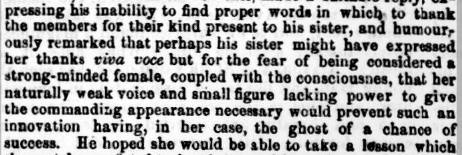
Moreover, I’ve just managed to get her a mention in Chapter 4 of my book. Her brother would think this most audacious! When she got a presentation, he stood up and accepted it for her … because …..
I still don’t know if this kind of post is helpful. To anyone who hasn’t many/any visible outputs, reading someone else’s list of what they achieved is probably the very last thing they need to brighten their day – and I apologise. You’ve probably achieved other, equally or even more important things, which didn’t take the form of words on a page!
From my vantage point, as a researcher who sentenced herself to a career in librarianship, not necessarily as a first choice but what seemed at the time to be a reasonable one, I look at other academics’ lists of achievements and struggle not to compare myself – although realistically I cannot achieve as much research in 1.5 designated days a week as the average full-time academic. My research line-manager is more than content, so maybe I should remind myself of that more often.
So, what have I achieved?
As a librarian, I have spoken at two conferences, a panel discussion and as staff training for another library, about EDI (Equality, Diversity and Inclusion) in our own library. I have a paper being published in an academic journal next year, on the topic of women composers in libraries; but my proudest achievement was actually in sharing a song by a Victorian woman teacher in the junior department of the Athenaeum, that I had discovered in a research capacity, and which a singing student eagerly learned and presented as one of their competition entries in a recent singing competition at RCS. Discovering something, having someone else declare it lovely, and hearing them perform it beautifully, is a very special privilege.
Still hatching
As a researcher, I have another paper forthcoming in an essay collection, though I can hardly list details here before it has even gone through the editorial process. And another magazine article which has been accepted for 2024. Can’t include that either. Nor can I yet include the monograph I’m halfway through writing. I’ve done a ton of work in that respect, but it doesn’t count in a retrospective list of successes!
I’ve also applied for a grant which I didn’t get, and a fellowship for which the deadline is just today, so no news on that front for a little while.
That leaves this little list, the last item of which appeared through my letterbox at the turn of last year, so I’ve cheekily included it here again.
Forthcoming
‘Representation of Women Composers in the Whittaker Library’, Journal of Perspectives in Applied Academic Practice. Arises from a paper given at the International Women’s Day Conference hosted by the University of the Highlands and Islands, 2022. Peer-reviewed and pending publication.
Arrived
‘Alexander Campbell’s Song Collecting Tour: ‘The Classic Ground of our Celtic Homer’, in Thirsty Work and Other Heritages of Folk Song (Ballad Partners, 2022), 180-192
‘Burns and Song: Four New Publications’, Eighteenth Century Scotland, no. 36 (June 2022),12-15.
‘Strathspeys, Reels and Instrumental Airs: a National Product’, in Music by Subscription: Composers and their Networks in the British Music Publishing Trade, 1676–1820, ed. Simon D. I Fleming & Martin Perkins. (Routledge, 2022), 177-197
Meanwhile, as an organist, I’ve completed my first year in Neilston Parish Church, which has been a very healing experience. I love it there! This Christmas has seen three of my own unpublished carols being performed, one in Neilston and two in Barrhead; and earlier in the autumn I contributed a local-history kind of article to the Glasgow Diapason, the newsletter published by the Glasgow Society of Organists. Another publication! Might as well add it to the list:-
‘Trains, Trossachs, Choirs and the Council: Neilston Parish Church’s First Organist’, in The Glasgow Diapason Newsletter
Confession time. Sewing is my relaxation of choice, often influenced by something I’m researching. This year’s project, a Festival of Britain canvas-printed linen piece, relates to the aforementioned chapter that I’ve contributed to someone’s book.
I know I would get more research writing done if I didn’t sew in my leisure time, but I need that for my mental health. Swings and roundabouts…
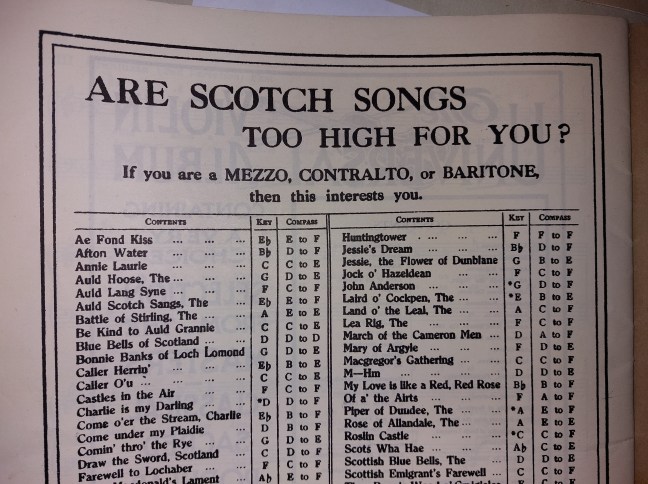
My latest article is on the IAML(UK & Ireland) website, in the members’ area, but paper copies will land on subscribers’ doormats and music library shelves this week! It’s about a strong and determined Victorian music teacher, who survived domestic abuse and made a remarkable career for herself – and I reveal her survey of music in Victorian public libraries, that I discovered literally by digging around online. (I’m rather pleased with this one – and it’s illustrated!)
Here are the details and the abstract:-
McAulay, Karen E., ‘An Extensive Musical Library’: Mrs Clarinda Webster, LRAM, in Brio Vol.59 no.1, 29-42
Although there has been the perception that middling-class women’s lives were confined to domestic circles, there are plenty of examples that directly challenge this idea. The late Victorian Clarinda Augusta Webster ran a music school and a school for young ladies. She escaped domestic violence, overcame personal tragedy, and created a highly successful career first in Aberdeen and then in London. She published, gave talks, was active in professional circles, and travelled both to Europe and America. She also conducted a ground-breaking survey on music library provision in late nineteenth century Britain, delivering her findings to the Library Association. Although her report has not been traced in its entirety, many of its findings were reported in newspapers, enabling us to piece together the results of her investigations. This article celebrates the sheer determination of a talented woman to make the most of her skills and create opportunities for advancement. It also demonstrates the perceived importance of music in wider late Victorian life.
It should be possible to read this Brio article in a music library somewhere near you, and it will also eventually appear on the RCS research repository (Pure). But if you can’t get sight of a copy, please feel free to message me and I’ll share the proofs.
I have just contributed a blogpost to a research project blog that is hosted by the University and Stirling. The project is called, Books and Borrowing 1750-1830: an Analysis of Scottish Borrowing Records. There are a large number of participating partners – visit this page to find out more.
I revisited Miss Elizabeth Lambert (later Mrs Williams), Mrs Bertram and her daughters, and Principal Playfair’s daughter, Janet. Here’s the blogpost:-
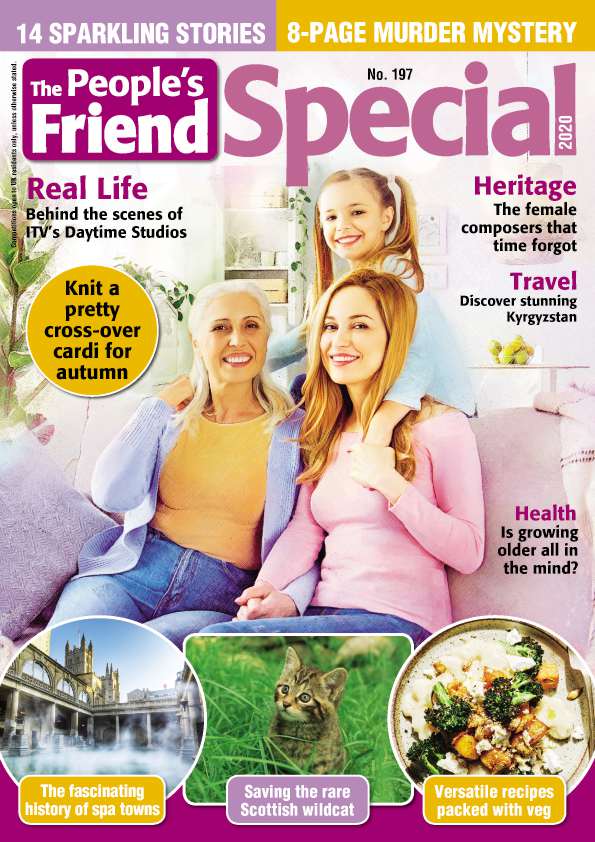
Heritage: The Female Composers that Time Forgot (The People’s Friend Special Issue no.197, 2020)
Earlier this year, I was commissioned by The People’s Friend to write a feature about forgotten women composers. You might wonder why I’m excited about this, but there are actually several reasons:-
It’s an important subject – and it’s important for school and university students today, too!
The People’s Friend average circulation is 157,380 per issue, so even though my feature appeared in a special issue, it has the potential to achieve wildly greater public engagement than anything else I’ve written about a research topic.
Whilst getting published in academic circles is crucial – and sometimes difficult to achieve for us scholars – it isn’t easy getting published in popular magazines either.
Well over two decades ago, I authored over 30 short stories and a serial for The People’s Friend (yes – shock! Actual popular fiction!) I’m completely convinced that this experience helped me to develop a readable style. Indeed, one of my PhD examiners said that I ‘really made the characters come to life’, and my unspoken response was along the lines of – yes, I know I can do that! At any rate, it feels good to have, in a sense, come home to a magazine which was formative for me in a different metier – so I’m actually very happy to have received this commission.
You could say my earlier serial had a prophetic title, because my own Norfolk “family never knew” I was doing my PhD – my second attempt at one – until I had actually got it! (The serial was totally different, and certainly not autobiographical – I have no secret, lost children, only the three that everyone knows about!)
‘And Her Family Never Knew’ – People’s Friend serial no.393 (1996)
To the curious:- my latest commission is logged in Pure, our institutional repository, so you can take a look. The serial will be harder to find. I have my own authorial copy, and more recently bought the only copy that I could find on eBay at the time. If you manage to get hold of a copy – well done! Make a cuppa, get a HobNob or two, and I hope you enjoy reading it.
The story of a very early female music cataloguer at the University of St Andrews
by Dr Karen E McAulay, Royal Conservatoire of Scotland
Introduction
Prior to her marriage to George Williams, Elizabeth Lambert (1789-1875) produced a handwritten catalogue of the University of St Andrews legal deposit music collection, which was accumulated by legal entitlement from the 1790s to 1836. Elizabeth was paid a nominal sum (one shilling) for producing the first catalogue volume in 1826, and continued adding to it, commencing a second volume which someone else presumably completed after she married and moved to London in 1832. [1] This youthful involvement with the University of St Andrews’ Library music collection is more significant, and had a more far-reaching effect, than has hitherto been recognised, for her catalogue would have significantly contributed to the use and enjoyment of the University Library’s music collection. Her subsequent married life in London is minimally documented.
This article would have been added to the Wikipedia Wiki Project, Women in Red, which is promoting entries about women to redress the current male/female balance; however, since the present narrative is based on new research – and there are no books with biographical details of Miss Lambert – it does not fit into the remit of that admirable project.
Childhood
Born in 1789, the year of the French Revolution, Elizabeth Lambert was the firstborn child of clergyman, Revd. Josias Lambert and Dorothea Lambert (née Rotherham). She was christened in St Mary’s Parish Church in Lancaster (Lancashire) on 13 June 1789. [2] Two brothers and two sisters followed in close succession, the youngest being born a few months after their father’s death in 1799. Their widowed mother sold their Yorkshire home, Badger Hall in Burneston, to Col. W R L Serjeantson that year, [3] and relocated the family to St Andrews in Scotland. There, they lived with her brother, Professor John Rotherham, until he died in 1804.
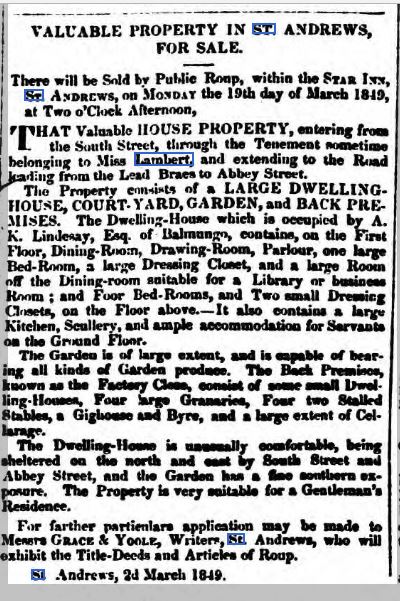
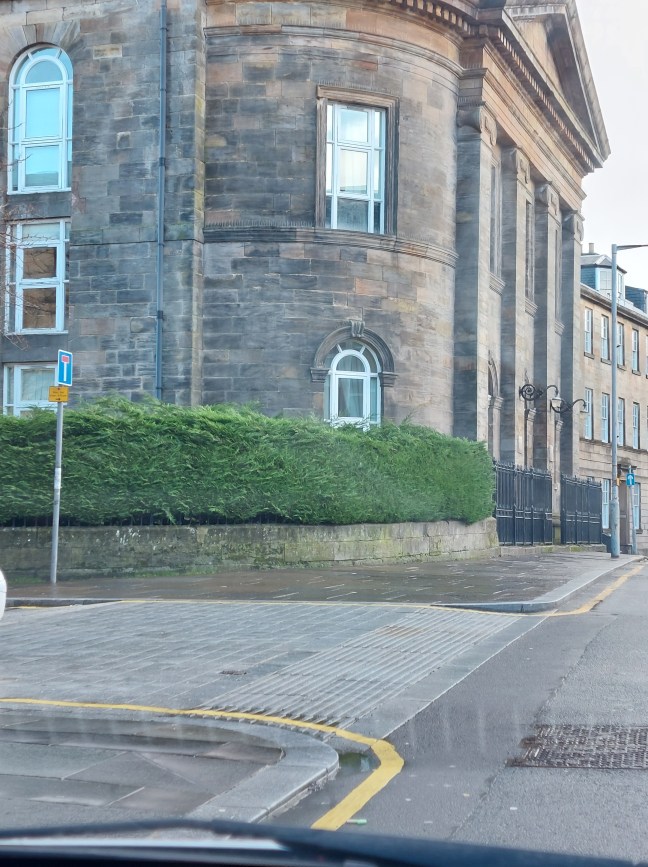
House in South Court, South Street, St AndrewsElizabeth’s mother originally hailed from Northumbria, but remained living in a house at South Court, South Street in St Andrews until her death in 1839. [4] Both of Elizabeth’s sisters died at St Andrews in childhood.
Teens and young adulthood
South Court from South Street, St Andrews
Elizabeth’s brothers attended the University, making use of the library facilities, but Elizabeth and her mother were also able to borrow from the library through the good offices of professorial friends. Elizabeth borrowed widely:- books on conchology, botany and horticulture, divinity and travel, as well as novels and music, and she continued to borrow on a visit to Scotland after her marriage. [5]
She borrowed sacred and secular vocal music – returning to borrow Mozart’s Masses more than once, and also enjoying operatic arias, and Irish, Scottish and Welsh songs – as well as piano music and piano duets. Instrumental music seems to have attracted her – one such book that she borrowed contained concertos, harp and guitar music as well a piano instructor by Cramer, and this wasn’t the only instrumental volume to have appealed to her. She also enjoyed a music journal called The Harmonicon, which enjoyed a brief but very popular run from 1823-33, and borrowed a book about Haydn and Mozart.
Elizabeth’s interest in conchology went beyond reading about the subject, for she was cited in several textbooks for having identified a particular shell (Patellaelongata) inProfessor John Fleming’s cabinet collection in 1814. [6]
Elizabeth built up a shell collection of her own, giving her collection of British and foreign shells to the Natural History Society of Northumbria in 1873 (foreign shells) and 1874 (British and foreign shells). The Society still has a record of her donation, although the collection has been integrated into their own larger collection and can no longer be identified. [7]
Involvement with the University of St Andrews Library
Elizabeth’s uncle John Rotherham had taken responsibility for organising an earlier book catalogue in the library, though it is unlikely that he would have done the cataloguing himself. Nonetheless, his interest, added to Elizabeth’s interest in conchology, does suggest a family disposition towards organising and codifying things!
Sederunt Dr Buist Rector, Principal Haldane, Drs Hunter, J. Hunter, Jackson and Briggs. University Library 29th August 1826. “There was laid upon the Table by the Rector a Manuscript Catalogue of the Music belonging to the Library made out by Miss Lambert. The Rector was requested to convey to her the thanks of the University for the great pains she had been at in making it out. [signed] Geo. Buist Rector. [8]
It is probably worth noting, as an aside, that 1826 was also the year in which the University of St Andrews published a proper catalogue of the entire library holdings – excluding the music, that is! See their Catalogus librorum in Bibliotheca Universitatis Andreanae, secundum literarum ordinem dispositus online via the Wellcome Collection website. (I noticed that the library had the 1788-93 edition of Linnaeus’ Systema naturae, a book which would have enabled Elizabeth to identify that sea-shell in Professor Fleming’s cabinet: “Patella Elongata”, aka “Ansates Pellucida” is none other than a special kind of limpet …)
Although Elizabeth was paid for cataloguing the St Andrews University copyright (legal deposit) music in 1826, the second catalogue book continued to be added to, presumably by someone else and with rather less care after she had married and moved away, until a change in legislation meant that the Library ceased to claim legal deposit books in 1836, instead being awarded a book budget, in common with the other Scottish universities.
Entries in the borrowing registers for 16 October 1827 and 22 May 1828 record Elizabeth taking music ‘to be arranged’, which can be interpreted as an involvement in assembling the music into usable volumes which would then be bound by a commercial bindery. [9] Different volumes were compiled for instrumental music, piano music, songs, harp music and so on.
Marriage
Elizabeth married George Williams in Islington in 1832, where they lived with his mother and brothers. [10] They had no children. George died in Halton Street Islington in 1853. [11] Elizabeth Williams died at 18 Well-Walk Hampstead, Middlesex, 23 years later on 16 February, 1875. [12] There is very little documentation of her life after her marriage.
Significance of Elizabeth’s Music Catalogue
Elizabeth was clearly not a University employee, but was nonetheless entrusted with the task of compiling this catalogue of the music, listing the contents of each numbered bound volume. This is very early documented evidence indeed, of a woman being involved in any way with the organisation of a university library sub-collection. Contributing factors are likely to have been the fact that she was a niece of a deceased professor who, himself, had taken an interest in the library, and also the fact that families and friends were entitled to borrow from the entire collection through association with the professors. Her reading matter shows her to have been an educated woman, and the library’s borrowing records [13] provide ample evidence of both unmarried and married women making use of the music collection – a category in which some of the other legal deposit libraries seemingly took little enough interest for much of the nineteenth century.
Elizabeth’s catalogue was hardly a detailed bibliography, generally listing only composer and title, and sometimes conflating several linked separate publications into one entry. There are occasional spelling errors, which led researcher Elizabeth Ann Frame to suggest that Miss Lambert was dictating entries to another individual. [14]. This cannot be conclusively proven either way. Nonetheless, it would have been very difficult for readers to select music with any degree of precision until the catalogue was written, presumably instead reliant on serendipity, or searching out the latest bound volumes back from the bindery.
Indeed, in this context Miss Lambert’s catalogue represents a kind of endorsement of the University of the value that they attributed to their music collection, since the catalogue facilitated the use of the entire music collection by professors, a few quite young male undergraduates, and friends and family of the professors. There is evidence of the catalogue itself being borrowed by a few keen male borrowers, whether for their own perusal or for consultation by their family or friends, and the music collection was heavily borrowed during the first four decades of the nineteenth century.
The present website was set up for the the British AHRC (Arts and Humanities Research Council) funded postdoctoral network, Claimed From Stationers Hall, which supported further research into legal deposit music collections across Georgian Britain. This research followed on from the present author’s research at the University of St Andrews Library, which has excellent archival documentation to support a well-organised collection.
If you have enjoyed this posting, you might also like to read about another Library reader from St Andrews – Professor Playfair and his family. He appears in another article about the Claimed From Stationers’ Hall network, on the Library’s Echoes From the Vault website.
And there’s more! A boarding school proprietress, and her three teacher daughters, also made use of the library. You can read about Mrs Bertram on another network blog, this time curated by EAERN (Eighteenth-Century Arts Education Research Network): Mrs Bertram’s Music Borrowing: Reading Between the Lines.
University of St Andrews Library Muniments UYLY108/1 – Music Catalogue, 1826
Dorothea’s obituary appeared in The Gentleman’s Magazine and the Perthshire Courier. She was described as the widow of the late Rev Josias Lambert, M.A., of Camp-hill Yorkshire. South Court, her address off South Street in St Andrews, is now passed by visitors to the famous Byre Theatre.
University of St Andrews Muniments UYLY 206/8 (1821-1832)
Professor John Fleming was a member of the Royal Society of Edinburgh and was later cited by Darwin (not in connection with shells). ArchivesHub describes him as Scotland’s first zoologist. An ordained minister, he was also appointed as a professor at Aberdeen in 1834. Edinburgh University holds his papers.
Transactions of the Natural History Society of Northumberland, Durham, and Newcastle upon Tyne. Vol.5 p.368. [List of donations], A collection of British and Foreign Shells. Mrs Elizabeth Williams, Well Walk Hampstead.
Senate Minutes, University of St Andrews Muniments UY452/14/145 University Library 29 August 1826.
University of St Andrews Muniments UYLY 206/8 (1821-1832)
13 September 1832: ‘George Williams, of the Parish of St Mary, Islington, married by Rev Dr Haldane, Principal of St Mary’s College, University of St Andrews’. Old Parochial Register, St Andrews and St Leonards, via Scotland’s People.
Probate. Effects under £6000. The Will with a Codicil of Elizabeth Williams late of 18 Well-walk Hampstead in the County of Middlesex Widow who died 16 February 1875 at 18 Well-walk was proved at the Principal Registry by Henry Cardew a Major in the Royal Artillery stationed with his Battery at Newhaven and Thomas Francis Leadbitter of 158 Leadenhall-Street in the City of London Gentlemen the Executors. Ancestry England & Wales, National Probate Calendar (Index of Wills and Administrations), 1858-1966, 1973-1995. https://www.ancestry.com/
University of St Andrews Muniments UYLY206/5 (1801-16), UYLY 206/6 (1814-19), UYLY 206/7 (1817-21), UYLY 206/8 (1821-1832)
Elizabeth Ann Frame, ‘The Copyright Collection of Music in the University Library, St Andrews: a brief account’, in Edinburgh Bibliographical Society Transactions, Vol.5, issue 4 (1985), pp.1-9










![House in South Court, South Street, St Andrews [2016-08-31]](https://karenmcaulay.files.wordpress.com/2019/11/2016-08-31-14.23.15.jpg?w=169)