PLEASE SHARE THIS! Equality & Diversity in Global Repertoire 2025/26: Launch of Donne Report

Why This Matters:

Here we are in 2026 and women composers still don’t get their share of concert performances. Neither do those from the global majority.  I’d appreciate it if, after reading this post, you could please share it as widely as possible. Thank you!


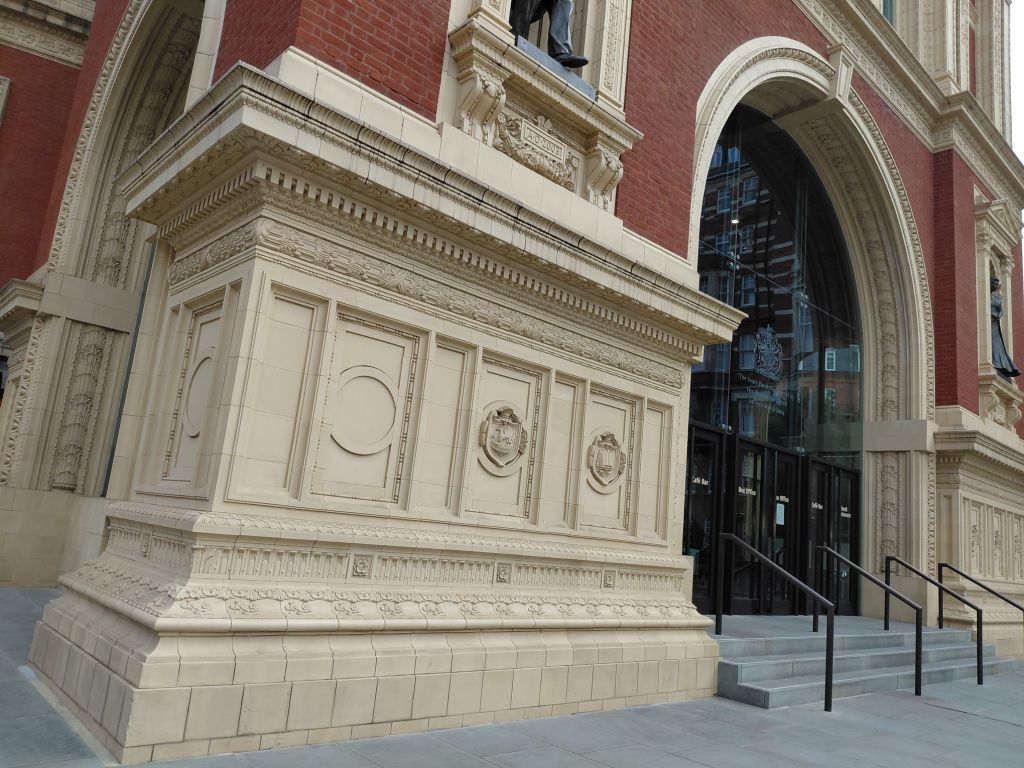
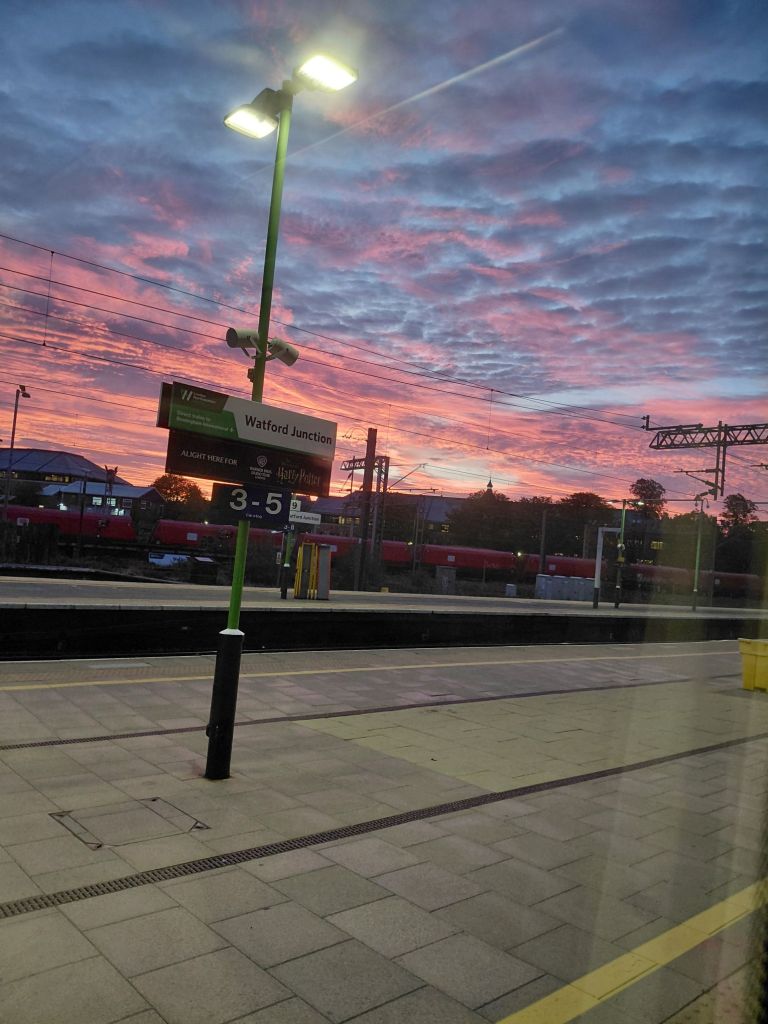
When I received an invitation to the launch of the Equality and Diversity in Global Repertoire 2025/26 report – at the Royal Albert Hall, no less – I hesitated for only a few seconds – it’s not exactly just down the road! And the trouble with the overnight sleeper (apart from the insomnia) is that you get there far too early…
But, as I outlined in my last post,

If an opportunity presents itself, and you find yourself hesitating, ask yourself this one question:- If I pass this up, am I likely to regret it later? That, rather than other peopleโ€™s opinions, should be your deciding factor.

Karen McAulay Musicologist blog, 22 Sept 2026

You have to be ‘in the room’ to be part of the change you want to see effected.  So, since I had been invited, there I was. 
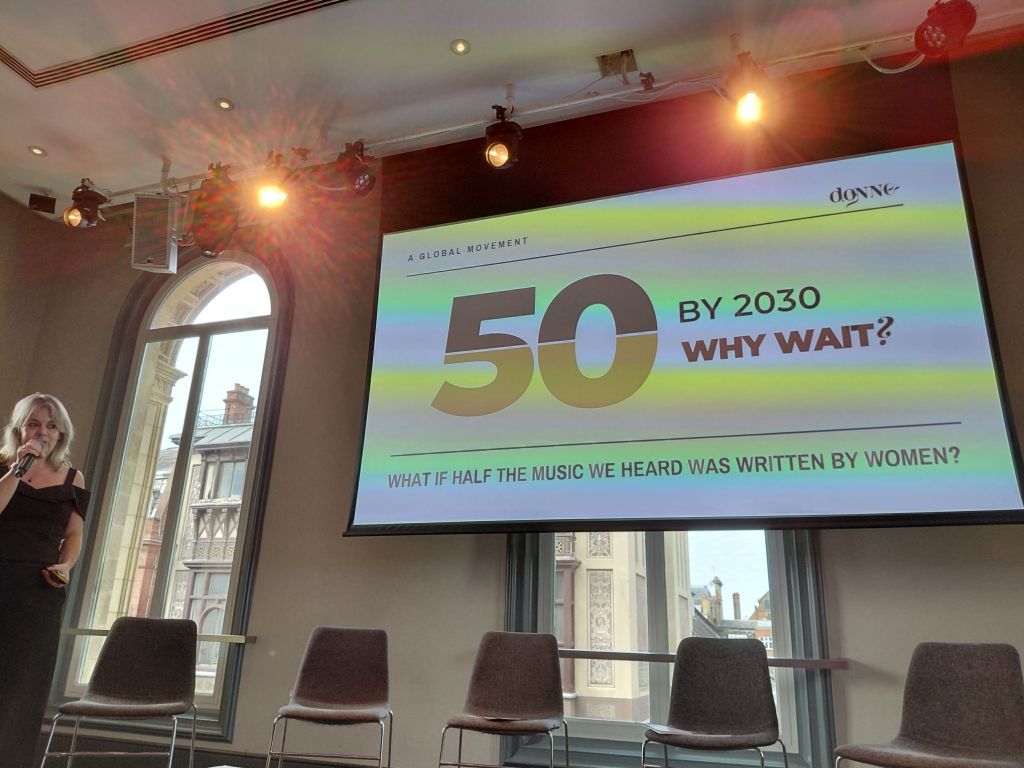
Gabriella Di Laccio addresses the invited audience

I considered it an honour to attend the launch of the latest report of orchestral performances, comparing ratios of music by men and women, broken down further into music by living and deceased, white and global majority composers. The previous report had actually shown a slight downturn in the figures for women and global minorities, but things were marginally on the up again this year. However, Donne are impatient to see much bigger changes, and much of the talk not only by panellists but also invitees, was about how to quicken the pace.

It depends on so many things – boldness in programming. Funders. It’s not that the will isn’t there, amongst performers – artistic directors also need to be ready to make the changes.  Not just having a ‘token’ woman’s piece on a programme. Capturing the interest of the audience. And recognising that it’s not enough just to premiere a new piece – because often we need to hear something more than once before we feel it’s something we like and would like to hear more of.

https://donne-uk.org/

A distinguished panel had been convened, drawn from PRS Foundation; Black Lives in Music; the Musicians’ Union; one of the Oxford Colleges; and the Association of British Orchestras.

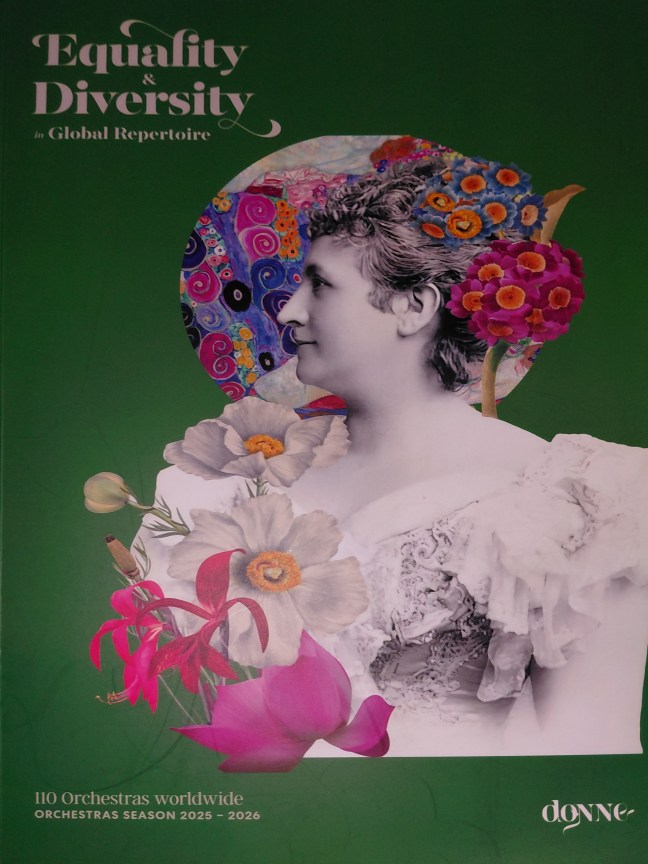
Equality and Diversity in Global Repertoire: 110 Orchestras Worldwide, Orchestras Season 2025-2026 / Donne, 2026.
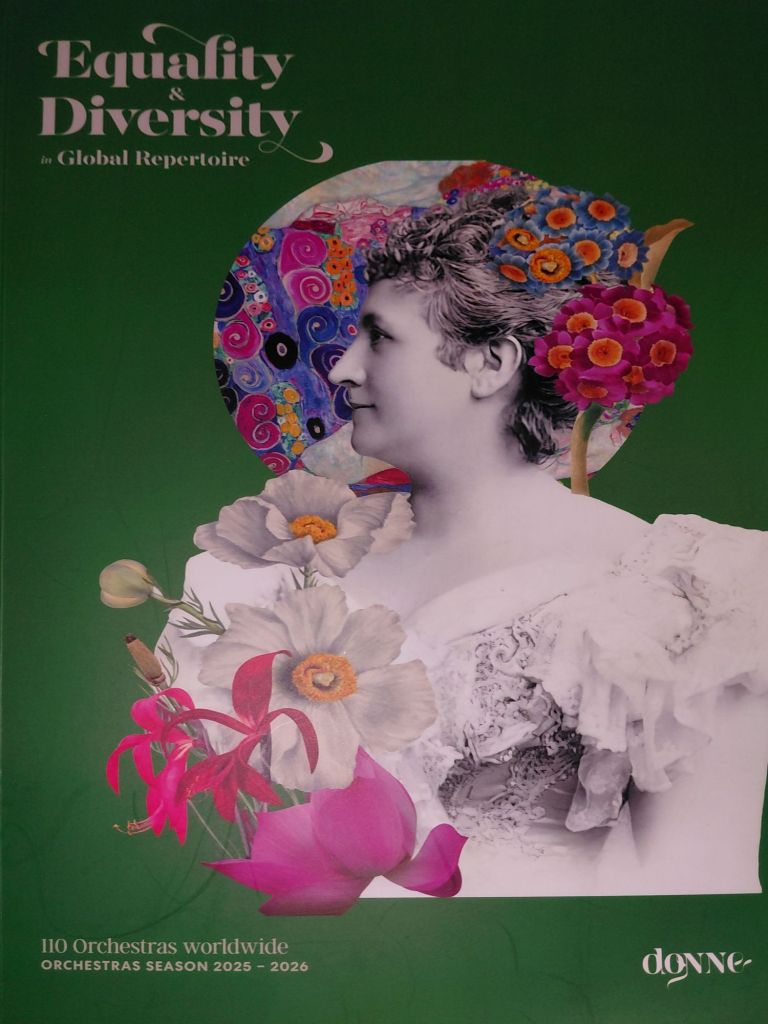
The 2025/2026 Report.

You can find the report via the Donne – Women in Music Facebook page.  It’s also worthwhile signing up to receive news from Donne (it’s the Italian for ‘women’, so you pronounce it ‘Don-ne‘) – I’ve just received the link to the latest report and highlights from the analysis.
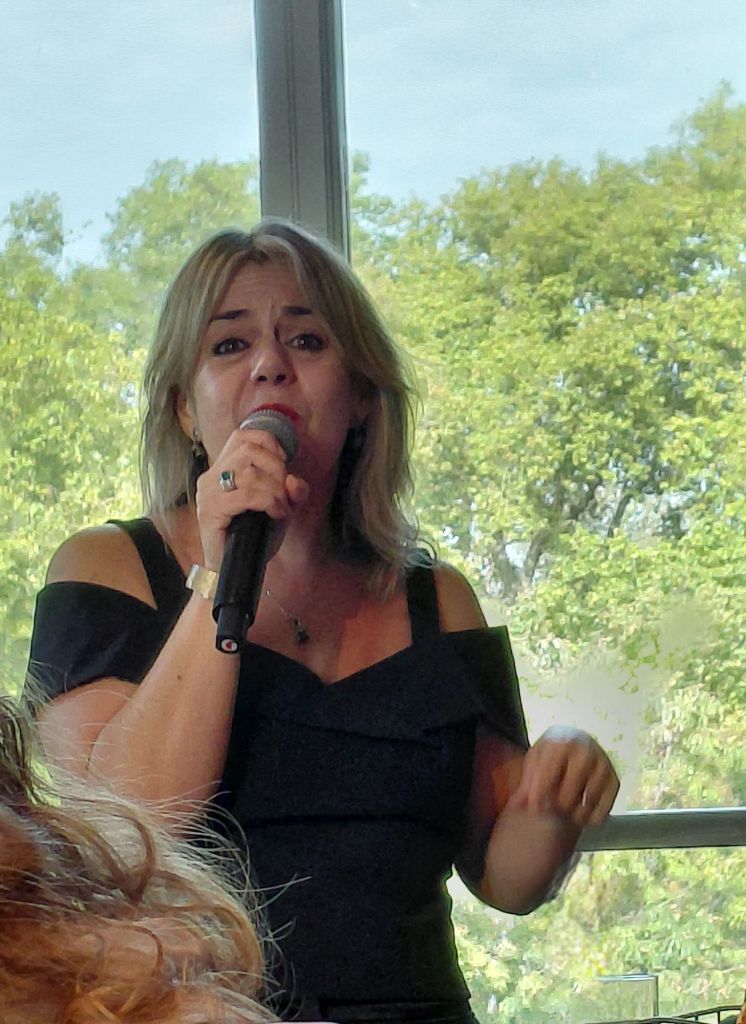
And you’ll also learn about the latest very ambitious initiative, ’50 by 2030′. Donne founder Gabriella Di Laccio, MBE, is impatient to see a 50:50 balance of music by women and men by 2030. The current 8% ‘is not enough’, she says.
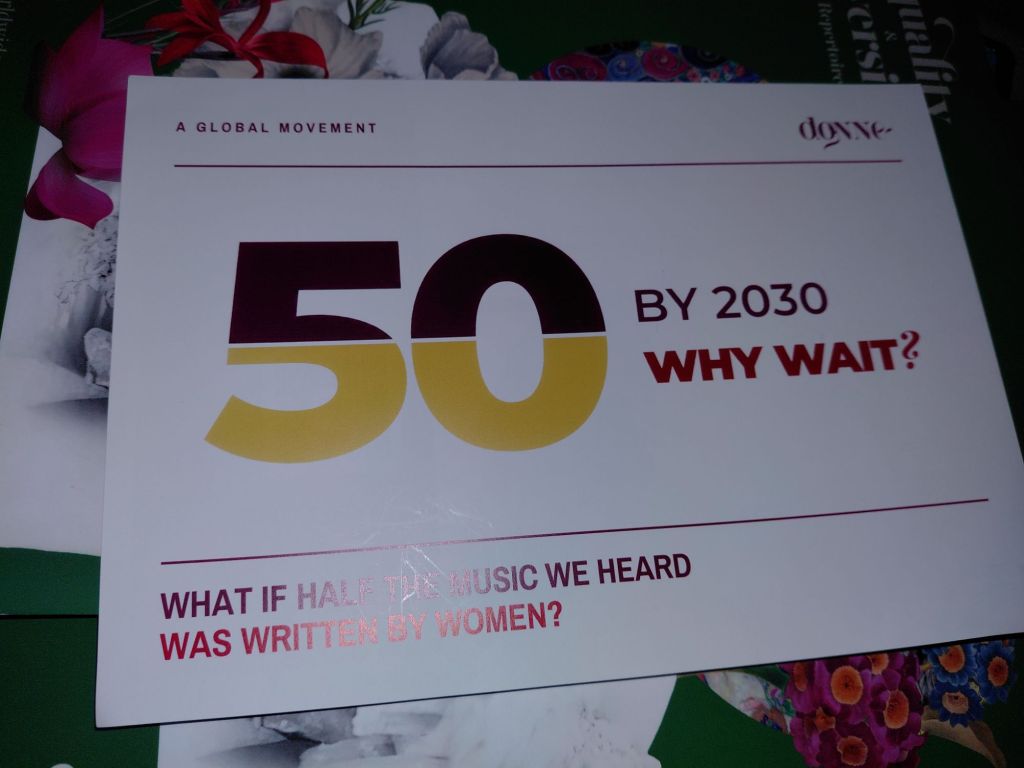
(50 by 2030 flyer)

Put that way, who could argue?!

From the floor, we were encouraged to share our own insights.  I hung back, but eventually couldn’t contain myself, and shared my opinion that if we wanted children to know about women’s music, and not just canonical (mostly deceased) white men’s compositions, then most crucially, we needed to target student teachers.  If teachers aren’t sufficiently well-informed about women’s compositions, then the next generation will continue to miss out on what women have created.

I also mentioned my efforts to get as much music by women composers as possible into the Whittaker Library at the Royal Conservatoire of Scotland  particularly in my last five years as a librarian there. (I got applause! There you are – my reward for speaking up.)

After the formal discussions, there was time to network before we all went our separate ways. I caught up with an acquaintance and met lots more.

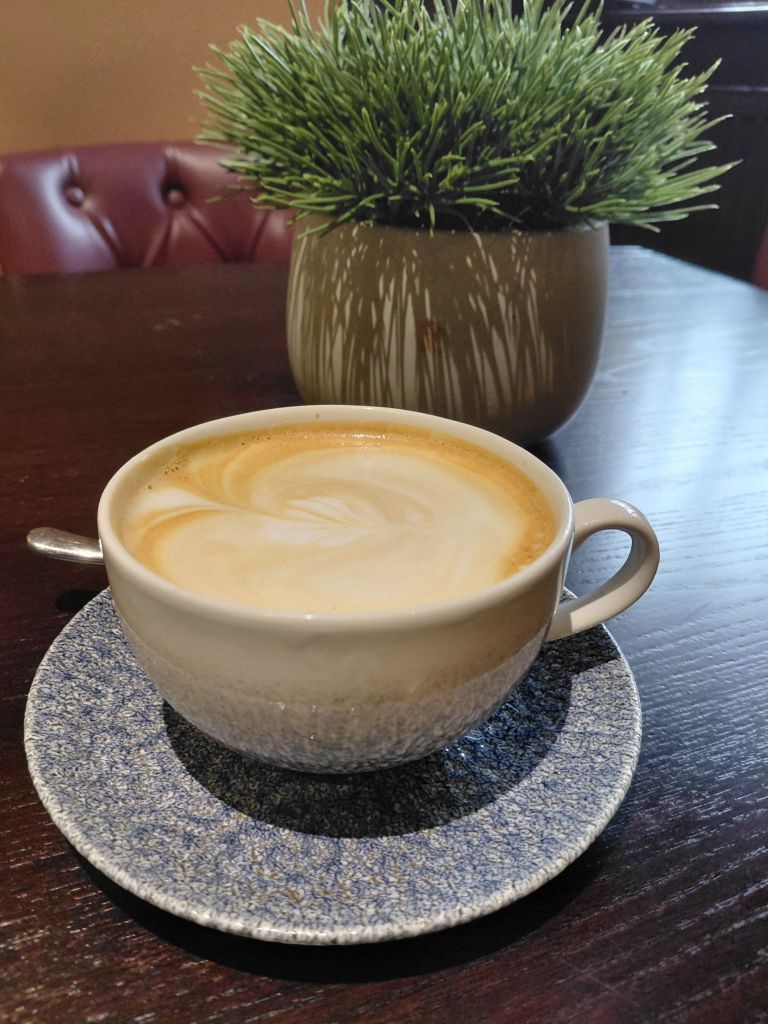
And managed coffee with our London-based offspring before heading back home. A great day out!


Please don’t forget to share this!

Glass Half-Empty or Half-Full?

I’ve just given myself a strict talking-to.  On the face of it, I’ve published nothing of significance since January 2023.  The shame of it!  And me a 0.3 FTE researcher and all!  But when I remind myself that by the end of December 2024, I shall hopefully have published another monograph, two book chapters and an article, it doesn’t look quite so bad.  I really must stop comparing myself with full-time academics.

Women Composers

My last substantial article was actually written with my librarian hat on – maybe that’s not surprising, given that 0.7 of my role is as a librarian.  I wrote about my work getting more music by women composers into RCS Library:-

โ€˜Representation of Women Composers in the Whittaker Libraryโ€™, Journal of Perspectives in Applied Academic Practice. Vol. 11 No. 1 (2023): Special Issue on Breaking the Gender Bias in Academia and Academic Practice, pp.21-26. (Paper given at the International Womenโ€™s Day Conference hosted by the University of the Highlands and Islands, 2022.) DOI: https://doi.org/10.56433/jpaap.v11i1.533

Watch out for my forthcoming article in History Scotland in December 2023. It’s about two Scottish women singers, one still famous (albeit not for her singing) and the other now forgotten. I’ve seen the proofs – it looks nice!

Historically Under-Represented Composers

Since writing the ‘Representation of Women Composers in the Whittaker Library’ article, I’ve continued adding music by historically under-represented composers to the library at RCS – it’ll be some kind of legacy to leave when I retire from the library in 38 weeks’ time!ย  I want to know that if students are looking for this kind of repertoire, there will be plenty to choose from.

Climate Change – Vocal Repertoire

I’d also like to see more songs about the climate crisis, a topic that colleagues have already been working on in the wider library collection.  If you’re reading this and know of published music suitable for young professional singers, do please get in touch.  I’m also looking out for decent publications of songs about environmental issues for classroom use, to benefit our trainee teachers in the Conservatoire.  If I can capitalise on the connections I’ve made through social media, to gather more information about this repertoire, then the collection can only benefit.  I’m just looking for songs – 38 weeks isn’t long enough to glean more than that, and it’s not as though the library won’t get on capitally without me next year in any case!! No-one’s indispensible.

Like this …

The music has to be commercially published – we’re not trying to build an archive of unpublished material with all the copyright complexities concomitant with such output.

But not this …

My own Extinction Calypso was performed in Edinburgh this March at Chris Hutchings’ Choirs for Climate concert, but it’s precisely NOT the kind of thing to end up in a Conservatoire library – fun, but lightweight, unpublished, and certainly not to be preserved for posterity!  It doesn’t make me any the less pleased with it, but I make no pretence of being anything other than a rather third-rate composer.  So – please tell me about proper works by serious composers, but not the likes of this:-

When I retire from the library, I shall still go on being a researcher professionally at RCS.  (No doubt I’ll also compose and sew pieces of nonsense in my retired-time!)  But it’ll be summertime before that happy day.  So for now, it’s on with the day-job, and the enjoyment of my Fellowship in St Andrews on Wednesdays and Thursdays!  More about that research in due course.

Image from Pixabay

Representation of Women Composers in the Whittaker Library

I’m delighted to see my article, Representation of Women Composers in the Whittaker Library, published in the Journal of Perspectives in Applied Academic Practice (pp.21-26) this week!

Vol. 11 No. 1 (2023): Special Issue on Breaking the Gender Bias in Academia and Academic Practice

Special Issue of JPAAP exploring and addressing issues, dimensions and initiatives related to ensuring a greater gender parity and representation within academic institutions, academic and academic-related work, and related professional practices. Guest edited by Alexandra Walker and Keith Smyth. (Published:ย 2023-02-22)

Direct link to entire issue:- https://jpaap.ac.uk/JPAAP/issue/view/34