Dr Karen McAulay explores the history of Scottish music collecting, publishing and national identity from the 18th to 20th centuries. Research Fellow at Royal Conservatoire of Scotland, author of two Routledge monographs.
This is my second podcast. In my previous podcast, I discussed a musicological topic – the career of the Glasgow Athenaeum School of Music’s second Principal (Edward E Harper), and his longer career as an organist. Today, I’ll continue the church organ theme, but this time I’m thinking about my own practice – specifically, about how I write a last verse arrangement for a church hymn. Hopefully it’ll be helpful to anyone who didn’t have the benefit of harmony classes at uni! I introduce chromatic harmonies, passing notes, suspensions and minor sevenths.
Listen to Podcast No.2:-
I’m sharing my harmonic analysis (more like an overview!) and audio examples separately from the podcast.
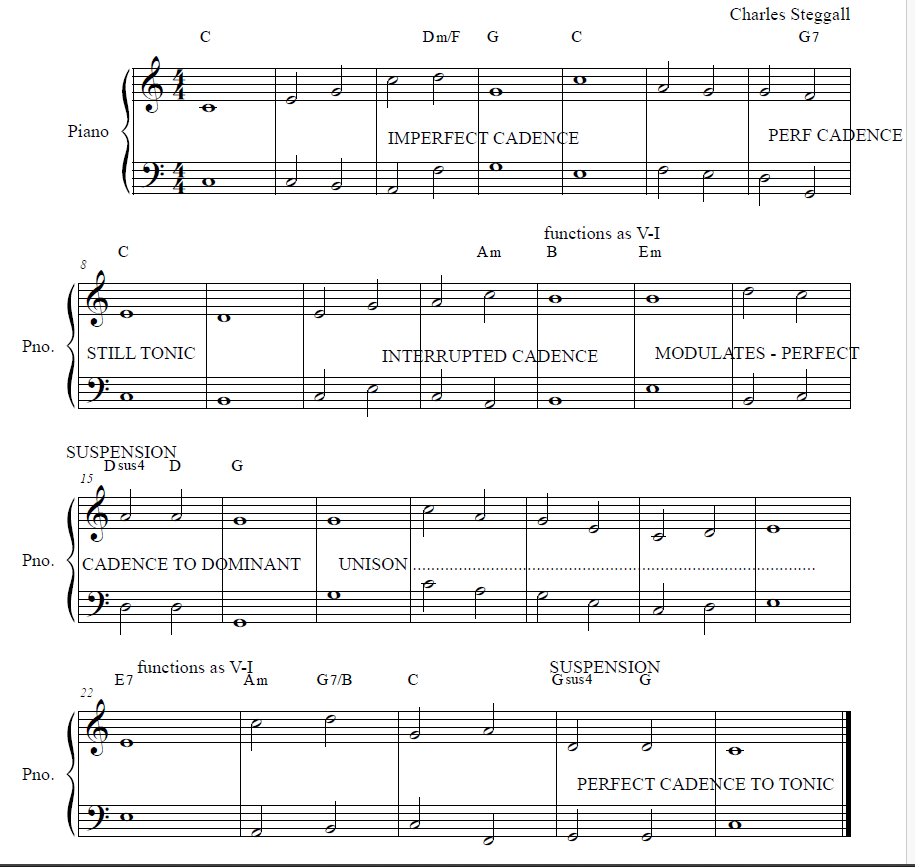
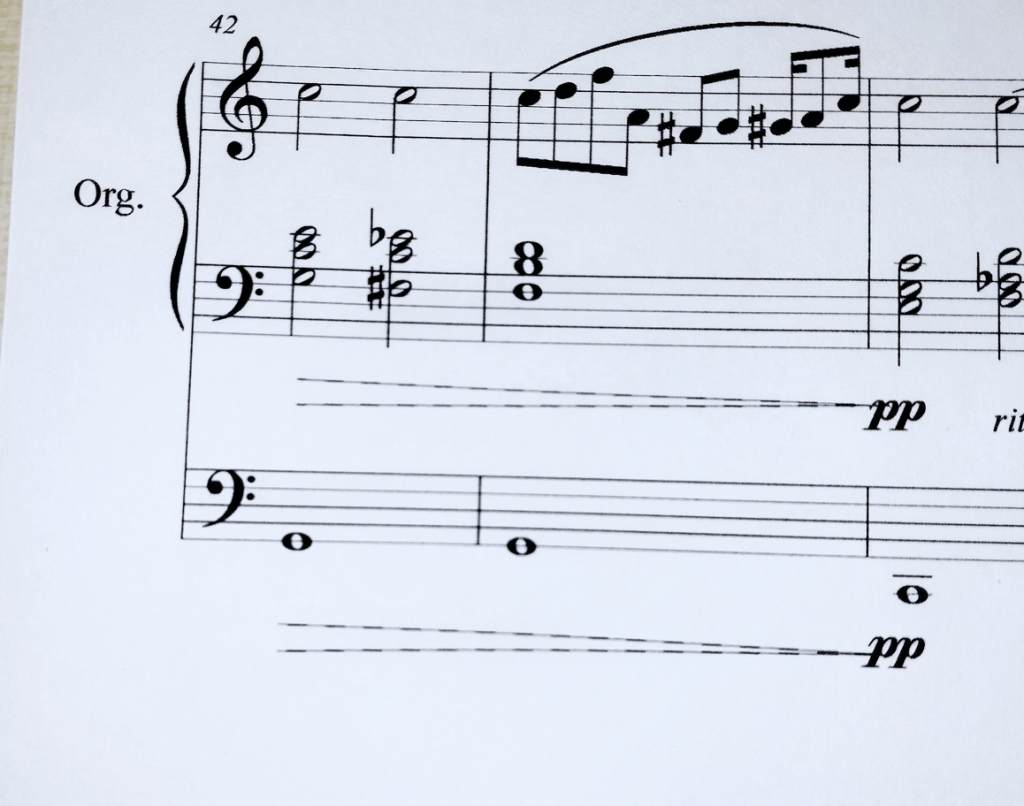
So, here is the harmonic analysis of Charles Steggall’s hymn, ‘Christchurch’:-
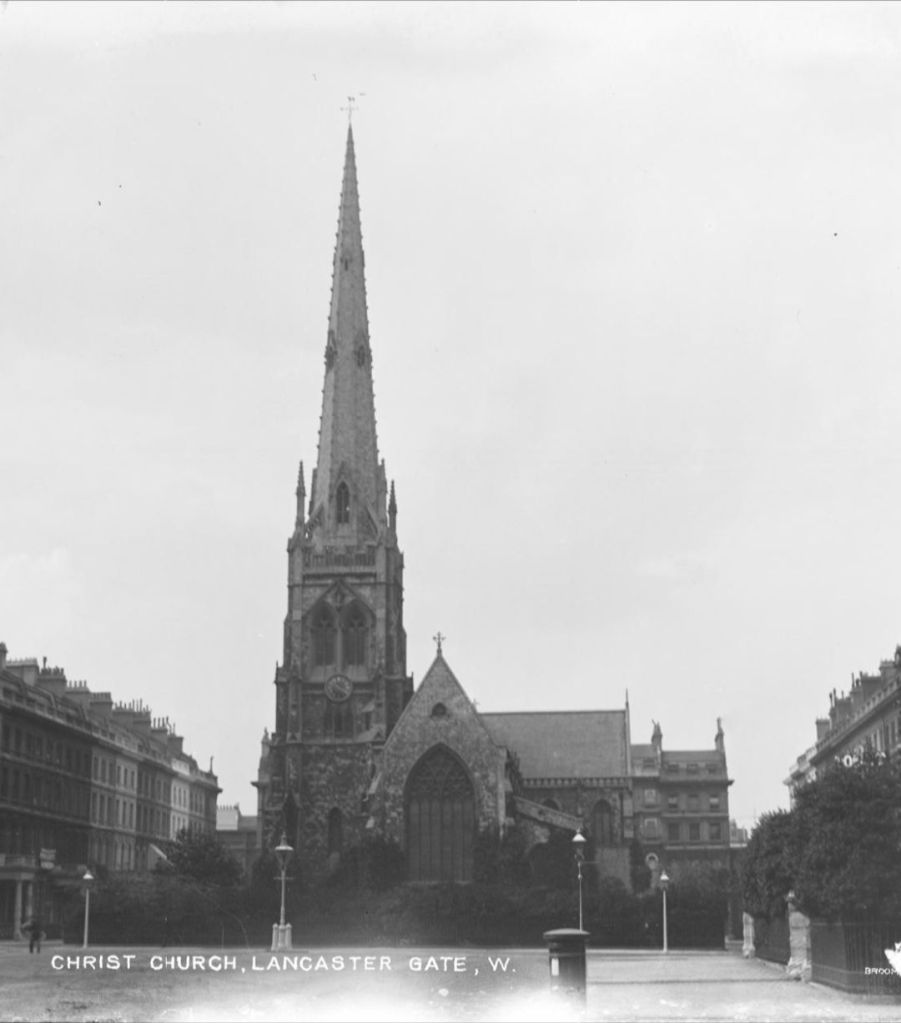
Christ Church, Lancaster Gate, London
And if you’d like to hear how I did my final arrangement, compared eight bars at a time with Steggall’s original, then you can hear it here:-
Organist Reveals All
Just a brief note. I had criticism of my last blog posting’s title, which apparently didn’t make sense. Well, it did to me, but feedback is always useful. I’ve tried to make today’s title clear and unambiguous.
However, I might observe that – much to my line manager’s amusement – the piece of my writing which has attracted the most interest was the double-entendre in my article about paratexts, back in 2015. In marketing terms, ‘sexy’ means something is appealing to readers, and paratexts do ‘reveal’ more about a publication than you might think:-
(Now, that is an obscure and incomprehensible – but intriguing – title!)
Off-the-Shoulder Gown?
So, if I wanted to make today’s podcast have more crowd-appeal, and (crucially) attract more hits, then I really should have come up with a more intriguing title. And I have! How about, ‘Organist Reveals All’? I’ll wear my gown off-the-shoulder on Sunday!
I’ve had my Finale Songwriter music engraving software for a very long time, and it has served me well. Apart from occasional glitches, that is. However, it’s no longer sold, no longer supported – and is installed on a very old laptop. (I only keep it for Finale.) This week, I took it into my head to arrange a hymn for my church choir. All went well until …
RIP Finale Songwriter
The Finale Songwriter sound crashed. And with it, the scrolling playback. I tried to fix it. I tried a system restore, which takes hours and hours, but has always fixed it in the past. However, the system didn’t restore. (It’s a very old laptop.) With much persistence, I retrieved some kind of sound, but not the sampled sound. Hooray – I could playback my efforts with a tinny MIDI sound, and it scrolled obediently along. But it’s not how it should be. It was time to get new software for the new laptop. Before that, however, I thought I’d prune my Finale files, so that I’d have less to transfer across.
I file most of my Finale documents by year, and I’ve only reached 2020 in the pruning exercise. This will take a while! I’m deleting tunes that were either transient, functional versions of hymns, or really not worth saving for even family posterity.
Invisible Organist
But I found a piece I’d written for organ, back in the Covid pandemic lockdown. Entitled, Invisible Organist’s Blues, I can no longer remember if I wrote it whilst literally locked down at home, or if it was written at some stage in the next strange months when we conducted services with no congregation, or no singing. I may have written the piece whilst I was not only invisible but also almost inaudible – with not much to play. It felt as though little notice was taken when I did play.
In other words, I was disgruntled. Invisible Organist’s Blues was born out of sadness and frustration. I think it was only played once. It is blues-y. It ends with ‘Nobody knows the trouble I’ve seen’, and that was chosen intentionally. I suspected I might have written something that really didn’t sound very agreeable, but I wanted to hear it again before I deleted it. Finding this piece brought back a lot of unpleasant emotions. In my last months there before I left in 2021, I felt my mental health suffering. I cried behind my glasses and face-mask each Sunday – no-one would have noticed the tears streaming. And I cried as I drove home, which was certainly not ideal. I felt marginalised, and for long enough, I told myself to ‘man up’ and accept that it was all in my head – I was imagining it.
Reality
Until, finally, I came to the conclusion that the sadness was real. Was I imagining my shrinking role? It was shrinking. Churches are absolutely entitled to change ways of doing things, and the organist just has to understand that. Was I imagining that the choir and organ were unmentioned throughout an online Zoom group meeting that I attended? They weren’t mentioned. If I was suffering, then that, too was real. Yes, times were changing – and it was time for me to accept it. I did accept it. A few months after my resignation, I was fortunate to find another organist position, where the welcome was as embracing as a warm hug. This was more how things were meant to be!
Neilston Parish Church, West of Scotland, my new church.
Fast forward back to this present week. My finger hovered over Invisible Organist’s Blues. Should I just delete it, and its uncomfortable memories? I played it back with my tinny, defective Finale Songwriter playback, prepared to be disgusted.
But I wasn’t! The tinny playback certainly didn’t enhance it. It lost any semblance of a deep pedal bass-line, but it felt as though there was something worth keeping. I tried it on the piano at home (and any organist will tell you that playing organ music on the piano is weird, because you have somehow to accommodate music that’s intended for two hands and two feet, without having an organ pedal-board) – and I was quite gratified by the results.
Today, I headed for church and tried it there. Tweaked a couple of chords, and – yes, two movements will be played tomorrow. The third does need a bit of practice. I need to decide whether the rhythms are not only too difficult, but unnecessarily so. (Nobody will hear the trouble I’ve seen, either!)
It would be nice to think that by resurrecting the piece and playing it sensitively, I can put the ghosts to rest, and make use of something that I put a lot of work into.
I’ve installed new music-engraving software. I haven’t even tried it out yet, but I did bite the bullet, decide which one to go for, and pay for it! Maybe at some point I’ll convert Invisible Organist’s Blues into music XML and transfer it across. Alternatively, I could just save it as a pdf and accept that that’s it, finished and unchangeable!
I’m not going to share it here yet – not whilst it’s still technically a work-in-progress! However, here’s a Scottish folk song that I played as my warm-up when I was practising this morning – Flow Gently, Sweet Afton – clattering tracker action and all!
I wrote a tune the other day – a perfectly respectable tune. But I was worried; I admire lots of professional fiddlers and accordionists, and I would hate to think I’d plagiarised them. The trouble is, there are only a finite number of notes, and clearly the most common combinations will have been used countless times. So much for originality! I did ask one friend if they recognised it. They didn’t think so.
However, when I was playing it over last night, it suddenly dawned on me that there’s a Scottish song – which I sang only a couple of weeks ago in a talk – that has a similar opening. The song itself sometimes begins on the tonic (doh’), sometimes on the dominant (soh), and in that instance, sometimes has a flattened leading note in between dominant and tonic (soh te doh’). It’s been used with various words.
Here’s the version I sang, with a simple soh-doh’ start:-
My love’s in Germanie, arranged by James Easson (Nelson’s Scots Song Book)
‘My love’s in Germanie’ is in the minor, quadruple time. Meanwhile, my own tune is in the minor, but triple time, with a three -quaver lead-in.
Wait, ‘Ashokan Farewell’ starts with the same soh te doh’ three-quaver anacrusis in triple time, but it’s in a major key.
In fairness to myself, it’s only the first few opening notes that may have been influenced by ‘My love’s in Germanie’, aka ‘Ye Jacobites by name’. The first full bar above became two bars in my tune. The rest goes its own way, and it’s an instrumental tune rather than a song! Just goes to show how easy it is to be subconsciously influenced, with absolutely no intention of ‘copying’ anything. It’s just musical memory.
In the circumstances, I have at last come up with a name for my tune:- ‘My love’s in Germanie – Again’. (It can commemorate a series of European tram-riding summer jaunts made by my husband and his friends over a number of years!)
Is it just me, or is there something strangely comfortable about allowing oneself to be an amateur and just enjoy a creative process?
This is how it is for me with sewing, and composing music. Whilst I can spend hours, days, weeks (and more) striving for high-end results in writing about musicology, I take a good deal of pleasure in just sitting and sewing, or writing lyrics and music, enjoying less pressure on myself to produce perfect results. Indeed, several decades ago, when I was writing light fiction for a modest fee, I briefly attended a writing society, but concluded quite quickly that I preferred to row my own boat, solo.
I am chronically perfectionist where I have to be, but I can allow myself a bit of slack with spare-time occupations.
Last weekend I encountered a challenge to write a song in the hour gained between British Summer Time and Greenwich Meantime. I wrote the lyrics in advance, but did complete the song and the score in an hour.
However, I had to change a couple of chords and un-double a few octaves before ‘recording’ my effort as a computer audio file. Sing it, accompanying myself? No chance! Now, that would be embarrassing.
I’m a rank amateur when it comes to composing, but I quite enjoy the freedom of neither having elevated expectations of myself, nor of being under any pressure to be compared with ‘real’ professional composers!
I wrote a couple of choral pieces about the climate crisis, not long ago. Both have been trialled at workshops run by composer Chris Hutchings in Edinburgh. One was even programmed by a choir putting on a couple of concerts down in England last weekend. That’s beyond exciting. Â
Songs of Hope for a Planet in Peril, St Mary’s Ivinghoe
(Ivinghoe is near Leighton Buzzard – near Luton, to those of us unfamiliar with the locality!)
Workshops
You can hear both being tried out, here. The most recent was, Not like Noah. Before that, I wrote the Extinction Calypso.
Flushed with success, I thought I’d write another piece this year, and I did make a start at the weekend. However, these things can’t be hurried. It is still a work in progress.
Chris Hutchings has put together a website where choirs can find a wide range of different pieces on the subject of climate change – Choirs for Climate. Do take a look!
It’s also Climate Week in the Whittaker Library (where I work) this week. I can’t take any credit for all that’s happening – my capable colleagues set it all up. But of you’re interested, do visit the library blog, here.
I make no claims to be a professional composer! I have nonetheless written a number of short, mainly choral/vocal pieces, along with instrumental/choral arrangements. I’ve sold a few copies through the ArrangeMe website, and most of my pieces are on SoundCloud.
I won’t be there, but my choral piece, Not Like Noah, is one of the songs being tried out at this workshop.
I’m proud that, although I’m primarily a musicologist and librarian, my composition is getting a chance to be performed. Yes, it’s another piece about climate change. I hope the singers enjoy it!
[Later] And I have heard a recording. Gratifyingly successful, I must say. When there’s a weblink, I’ll share it here. Sounds as though the sopranos enjoyed doing their ‘howling gale’ glissandi, too!