How an Organist Writes a Fancy ‘Last Verse’ Arrangement for a Hymn Tune

This is my second podcast. In my previous podcast, I discussed a musicological topic – the career of the Glasgow Athenaeum School of Music’s second Principal (Edward E Harper), and his longer career as an organist. Today, I’ll continue the church organ theme, but this time I’m thinking about my own practice –  specifically, about how I write a last verse arrangement for a church hymn. Hopefully it’ll be helpful to anyone who didn’t have the benefit of harmony classes at uni!  I introduce chromatic harmonies, passing notes, suspensions and minor sevenths.

Listen to Podcast No.2:-

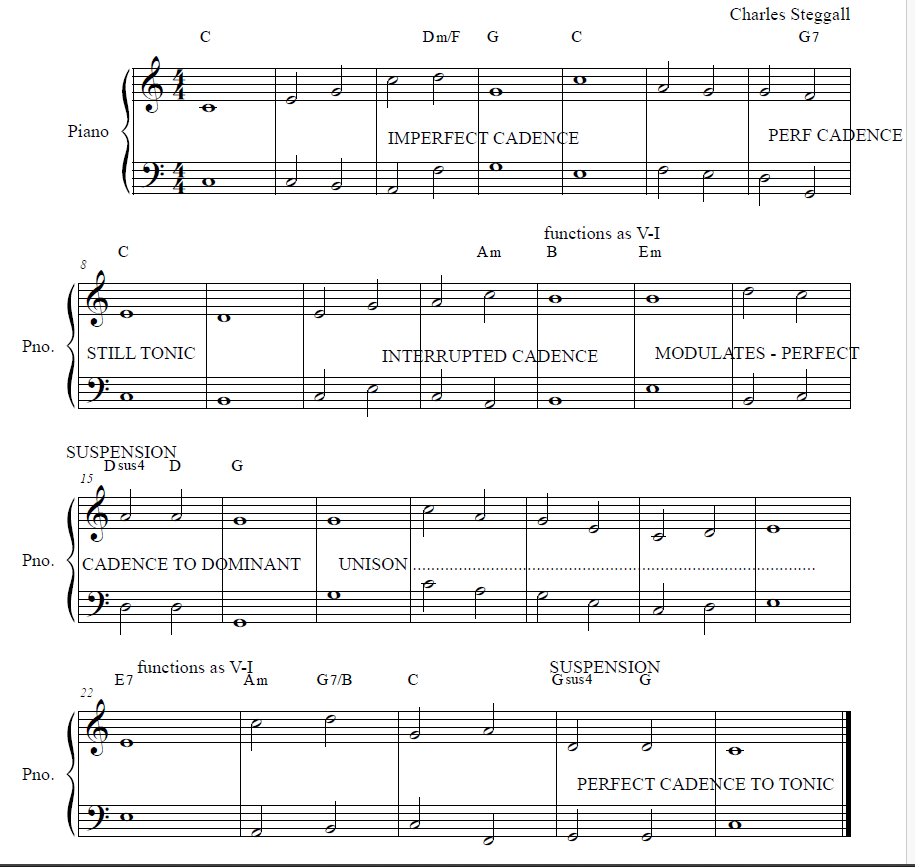
I’m sharing my harmonic analysis (more like an overview!) and audio examples separately from the podcast.

So, here is the harmonic analysis of Charles Steggall’s hymn, ‘Christchurch’:-
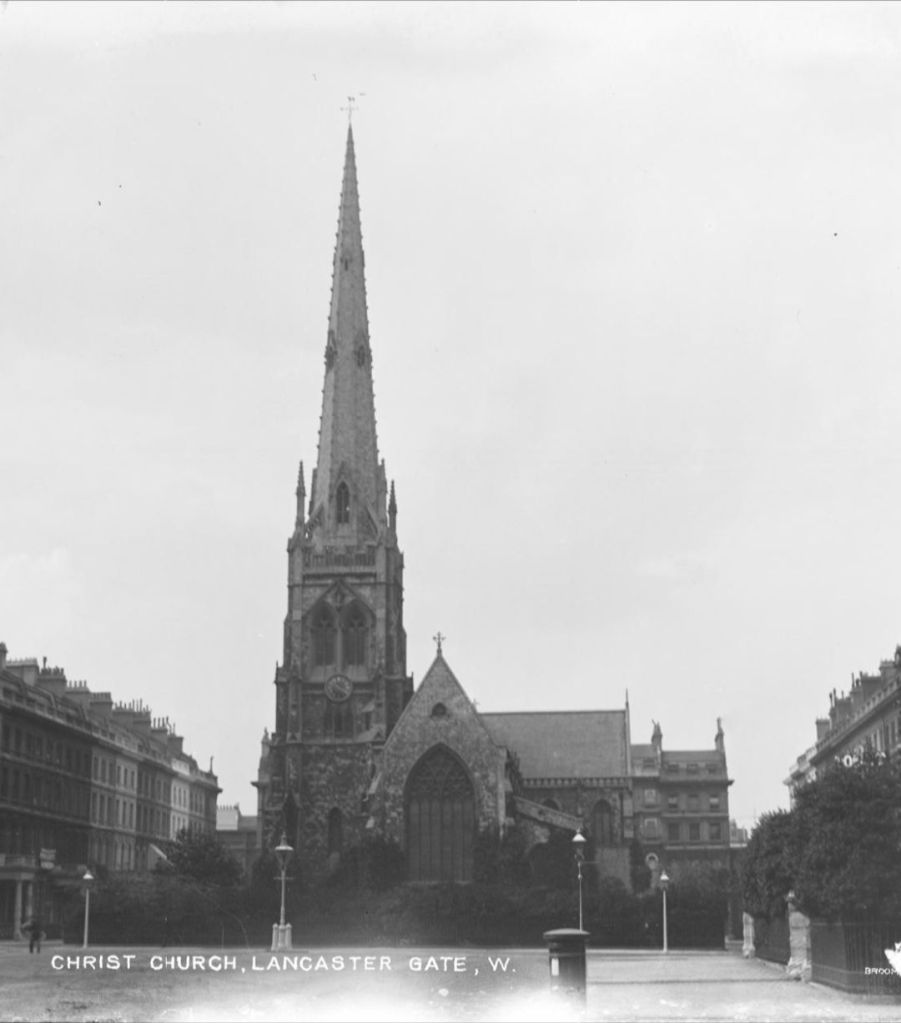
Christ Church, Lancaster Gate, London

And if you’d like to hear how I did my final arrangement, compared eight bars at a time with Steggall’s original, then you can hear it here:-

Organist Reveals All

Just a brief note.  I had criticism of my last blog posting’s title, which apparently didn’t make sense. Well, it did to me, but feedback is always useful.  I’ve tried to make today’s title clear and unambiguous.

However, I might observe that – much to my line manager’s amusement – the piece of my writing which has attracted the most interest was the double-entendre in my article about paratexts, back in 2015. In marketing terms, ‘sexy’ means something is appealing to readers, and paratexts do ‘reveal’ more about a publication than you might think:-

‘Sexy Bibliography (and Revealing Paratext)’, Library Review Vol.64, Iss.1/2, (2015), 154-161, http://www.emeraldinsight.com/doi/abs/10.1108/LR-09-2014-0104

(Now, that is an obscure and incomprehensible – but intriguing – title!)

Off-the-Shoulder Gown?

So, if I wanted to make today’s podcast have more crowd-appeal, and (crucially) attract more hits, then I really should have come up with a more intriguing title.  And I have!  How about, ‘Organist Reveals All’? I’ll wear my gown off-the-shoulder on Sunday!
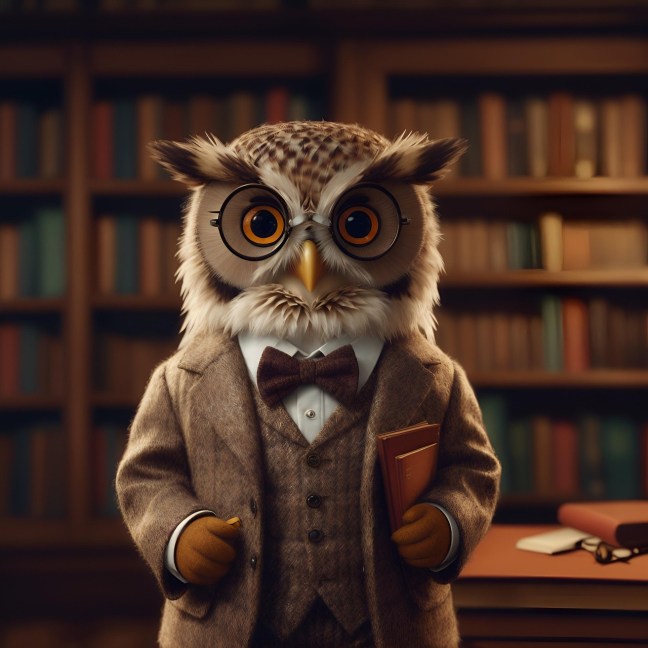
The Value of Using a Sensible, Meaningful Title

AI-generated owl in tweeds, with library shelves in background

Some years ago, I wrote an article about bibliography and paratext – for a librarianship journal, The Library Review. Taking a marketing term, I discussed ways of trying to make bibliographic citation more ‘sexy’, ie, appealing to students.

Oh, how I regretted that article title. Too late, I feared no-one would take it seriously.  All the advice says that an article title should say what it means, directly. 

After all, if we’re going to be very ‘meta’ about it, what attracted you to this blog post? I said it was about article titles, and here I am, writing about them. It does what it says on the can, to use a colloquial expression. If you were looking for advice about entitling your article, you might conceivably have thought you’d arrived at the right place.

So, why hadn’t I just entitled that earlier article,

‘Getting undergraduates interested in library-based teaching: bibliographic citation and historical paratext’

But I didn’t. Library Review Vol. 64 Iss 1/2 pp. 154 – 161 is there for all to see, with that cringeworthy article title:-

‘Sexy’ bibliography (and revealing paratext)

I learned my lesson. Titles have to be plain and meaningful, so that everyone knows exactly what they’re about. No messing.  Otherwise,  the danger is that people looking for conventionally sexy and revealing material might stumble across my pedagogical peregrinations and feel cheated. Whilst pedagogues might not even find my article.  (Which would be a shame.)

Today, however, my line manager was digging about in Pure, our institutional repository. And – well, I’m a bit stunned to find that my poor little article got far and away the most views. Over 8,700 views, to be precise!

If you’re interested in pedagogy, and specifically, in librarians teaching, then I commend it to you. It’s not a bad article. You can access it here.

However, if you’re expecting a sultry-looking librarian in an off-the shoulder chiffon number, then I’m afraid you are going to be bitterly, bitterly disappointed! I reveal only my experimentation in making bibliographic citation and historical paratext interesting to music undergraduates!

AI generated image by Kalpesh Ajugia from Pixabay

Bibliographies, Lists

Am I a listophile?  I started the list to end all lists, on Saturday evening. (Yes, I know. Sad, isn’t it? It’s surely better than the Saturday night trips to the laundry in my student days, though.) I’m going through my book manuscript, tracking EVERY sheet music title that I’ve mentioned.

I should already have them in my epic Zotero bibliography, but for this exercise, I’m also checking off which chapters they appear in.  It could be handy when I’m indexing the book in due course. Not only that – if I encounter any date discrepancies, at least I will have the chance to put them right.

But have I created a Monster?

This, dear reader, truly is turning out to be a mega-list. I’m approaching the end of my trawl through Chapter 3 now, and the list is already quite lengthy. On the other hand, since I am likely to be the most knowledgeable authority about publications and publication dates for these particular Scottish publishers, there surely must be some value in this.

And – there are just a few ‘lost books’ amongst them. What could be nicer but more tantalising for a librarian/musicologist/book historian?

Going, Going…
Image by Mike Cuvelier from Pixabay

Image by tookapic from Pixabay