UK Copyright Literacy has uploaded presentations and photos on their website – click here!
Teaching About Musical Paratext
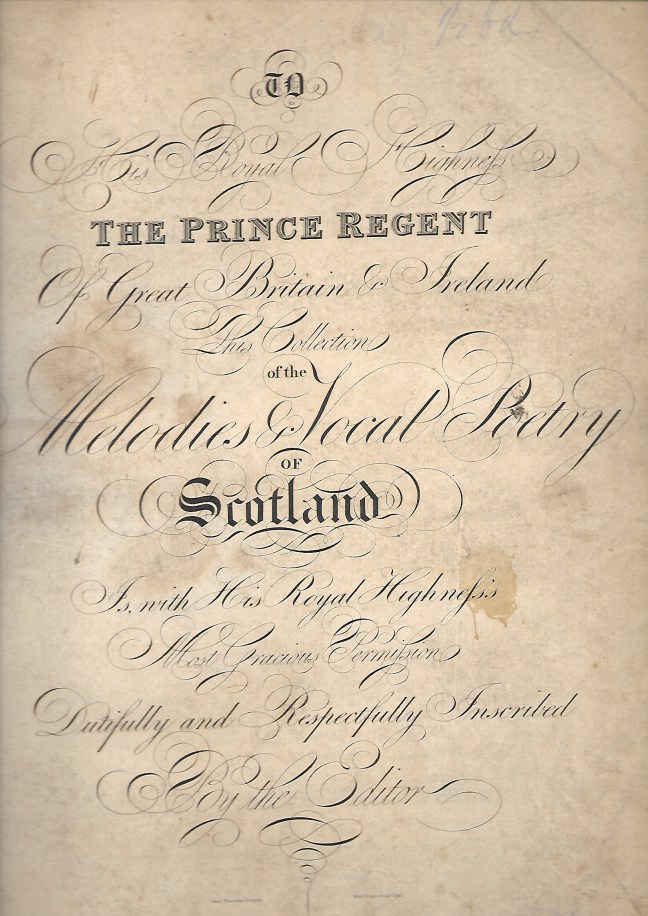
A few years ago, I published an article in a librarianship journal, about librarians teaching, and the question of teaching music students about paratext in early national song collections.
Let me state here and now, my approach to article titles has changed, and I would never again try to be ‘clever’ or controversial in this regard. A perfectly acceptable article was made to look flippant, or even worse, by my woeful enjoyment of puns and double-entendres.
Nonetheless, because I’d like to share the article, I’ll endure the embarrassment of sharing the title with you. This is a pre-publication version, which I’ll also upload to our institutional repository in the near future:-
‘Sexy’ bibliography (and revealing paratext)
Engaging with students in teaching bibliographic citation, and demonstrating the significance of paratext in historical national song collections.General information
- Number of pages: 8
- Pages: 154-161
- Publication date: 2015
- Peer-reviewed: Yes
- Link to pre-publication version
Niel and Nathaniel Gow’s Controlling Influence? | Bass Culture in Scottish musical traditions

In connection with my continuing interest in paratextual matter in national song and dance music, I’m sharing some postings I wrote whilst I was a postdoctoral researcher on the Bass Culture project. (See hms.scot for the web outcomes of that project).
Shared link no.2:-
Italian Style | Bass Culture in Scottish musical traditions

In connection with my continuing interest in paratextual matter in national song and dance music, I’m sharing some postings I wrote whilst I was a postdoctoral researcher on the Bass Culture project. (See hms.scot for the web outcomes of that project).
Shared link no.1:-
Stationers’ Hall music and David Daube’s collection by Dalia Garcia
Absolutely delighted – and that’s no exaggeration – to see the Stationers’ Hall music at Aberdeen being studied with enjoyment by MSc placement student Dalia Garcia. I was thrilled to learn that Dalia’s been investigating some of the scores in this collection, and am equally excited to read this blogpost, bringing the collection to the attention of a wider audience – deservedly!
Silence in the Pecha Kucha
I’ve already mentioned that I would be attending Icepops 2019 at the University of Edinburgh yesterday – a conference about copyright literacy, and providing appropriate training to students, researchers and other staff colleagues.
(Icepops = International Copyright-Literacy Event with Playful Opportunities for Practitioners and Scholars).
My challenge was to deliver a Pecha Kucha which mentioned my research into historical legal deposit music, and ALSO touched on library user education into matters pertaining to copyright. ‘Silence in the Library: from Copyright Collections to Cage’, did just that. I have never spoken about John Cage’s controversial piece, 4’33” before. Neither have I deliberately inserted six seconds of silence into a format DESIGNED for brevity and concision! If you Google how many words you can fit into 20 seconds, you’ll find it’s just 60 words. That’s if you don’t use long words! So giving up a third of a slide to silence was, I felt, a calculated risk, but how else was I to demonstrate what you might hear during a silent episode?! All went well, and my calculations worked out – what a relief!
The conference was about a playful (lusory) approach to copyright education. In that regard, I discussed how Cage’s piece – silent though it was – still has copyright in the concept, and how students could be encouraged to contemplate how intellectual property can reside in the most unlikely situations – whilst also pointing out that 4’33” cannot be performed or even hinted out without dire legal consequences. You don’t believe me? I’ll put my presentation on our Pure institutional repository, and you can follow the references for yourself!
I mentioned playing the piano during the evening social? Oh boy, did we play?! I wasn’t alone – there was also a clarinet duet, and I staggered through a piano duet, unknown to both of us, with one of the (multi-talented) clarinet duo. The same clarinettist, on clarinet, kindly gave the premiere performance of a piece I’d recently written. That was definitely a first – I’ve never had an instrumental composition (as opposed to an arrangement) of my own performed publicly before.
Definitely an out-of-the-ordinary conference, then. I seem to be making a habit of this! Better get back to the eighteenth and early nineteenth centuries, now …
Networking Again: Forthcoming Engagements
In a strangely sychronistic way, the different topics I’ve focused on as a researcher are now intertwining and demanding to be considered alongside one another. My forthcoming engagements are a perfect example of this!
Next week I’m going to see the Copyright Collection at the University of Aberdeen. That’s directly related to the Claimed From Stationers’ Hall network activities.
The following week I’m sharing a Pecha Kucha at Icepops 2019 (an ‘International Copyright-Literacy Event with Playful Opportunities for Practitioners and Scholars’, in Edinburgh). In 20 slides each lasting 20 seconds, I’m combining historical research, intellectual property, and modern academic librarianship, in ‘Silence in the Library: from Copyright Collections to Cage’.
And I’ll be playing the piano, purely in a background music capacity in the evening! Nothing scholarly about that part – I cannot call it practice-based research in the least.

July will see me speaking about paratext at the International Society for Eighteenth Century Studies congress in Edinburgh (‘Reading Between the Lines: Paratext in National Song and Fiddle Tunebooks of the Georgian Era’), and also having some vacation!
By August, hopefully my next grant application will either be taking shape, or have been submitted. Exciting times.
September, talking about songs in the Napoleonic era at a conference held at King’s College London: the British Commission for Military History’s War and Peace in the Age of Napoleon conference. My talk is entitled, ‘Napoleon’s Songs: the Artistic Responses of Composers and Performers to Contemporary Current Affairs’.
And in November, I’ll be talking about Scottish song-collecting at the Centre for Scottish and Celtic Studies at the University of Glasgow: ‘Scottish Song Collecting in the Context of Cultural Heritage: “A Mission of National Importance” (to quote Alexander Campbell)’.
By then the dedicated Stationers’ Hall issue of Brio will be hitting your letterboxes, too!
Literary Print Cultures – database reviewed
One of our network members has spotted a useful review of Literary Print Cultures, in Reference Reviews. I’m very grateful to be alerted to this.
For your interest, I share details:-
Literary Print Culture: The Stationers’ Company Archive, London
Author: Wenzel, Sarah G11 Bibliographer of Literatures of Europe & The Americas, University of Chicago Library, Chicago, Illinois, USA
Publication info: Reference Reviews ; Harlow Vol. 32, Iss. 4, (2018): 3-4.
https://www.emeraldinsight.com/doi/full/10.1108/RR-12-2017-0260 (Published by Emerald Insight, this is also available via Proquest, if your institution subscribes.)
June 2019 Newsletter
It’s time for another news round-up! Top up your coffee-cup, sit back and enjoy ….
Claimed From Stationers Hall June 2019 Newsletter
And that was Paris
Monday last week saw me flying to Paris, to talk about the Highland/Gaelic cultural side of Sir John Macgregor Murray. Most of the workshop papers were about Persian manuscripts he had either commissioned or collected, but the interesting common thread was his careful collecting of information about different aspects of life in India, whether religious, agrarian or otherwise. My paper was paired with a paper about his correspondence concerning the preservation of the Taj Mahal. You might not imagine that Highland culture had much in common with an Indian mausoleum, but in fact the papers sat together really well. They show an awareness of the importance of cultural heritage, and an appreciation of the need for fieldwork to document different aspects of that heritage.
If you follow this blog, then you’ll realise that I had done quite a bit of digging around to find out more about his Highland/Gaelic activities, since I previously only really knew of him in the context of his bringing Joseph Macdonald’s draft piping thesis back to Scotland, and assisting Alexander Campbell in devising an itinerary for his song-collecting expedition. I hadn’t intended to pursue his manuscripts etc any further after this week, but I suspect I may have to, since I can’t bear to think there could be something interesting lurking in some British or European archive or library that I haven’t unearthed yet. I haven’t yet found him writing ABOUT music other than reports of a few comments to the Highland Society of Scotland and their piping contestants – but what if there was something out there that I don’t know about? Oh, we can’t have that!
So, I’m very grateful to have been an invited speaker at the workshop, and to have been allowed an insight into the work people of other disciplines have been doing into the activities of this Highland chief, who is comparatively unknown today. Add to that a wonderful Italian evening meal at the end of the day, which had the added novelty of Japanese saki, brought by one of our session chairs from his home country.
(And I didn’t get myself lost on public transport, thanks to Google maps – remarkable for someone with absolutely no sense of direction. Not only that, but I found I was perfectly capable of buying beer and a bagel, coffee and a cake, en francais! I returned to Glasgow with my head held high … )