Edinburgh, Dundee, Paris …

I’m a bit of a juggler at the moment!  The Claimed From Stationers’ Hall network has a dedicated Brio issue forthcoming in November, which I’ll be co-editing with Martin Holmes, the regular editor.  Various articles have been promised, and I need to do some writing as well.  Not to mention needing to do some book-reviews.  I have several ideas there – I need to order some books that I’ve recently come across, to decide if they’d be usefully reviewed for our music librarian audience.

I also need to revise an article for another journal – I first wrote it a couple of years ago –  to reflect the fact that the network came into being and more work has since been done.

Solvyns, Franz Balthazar, 1760-1824; The 'Charlotte of Chittagong' and Other Vessels at Anchor in the River Hoogli
Solvyns, Franz Balthazar; The ‘Charlotte of Chittagong’ and Other Vessels at Anchor in the River Hoogli; National Maritime Museum; http://www.artuk.org/artworks/the-charlotte-of-chittagong-and-other-vessels-at-anchor-in-the-river-hoogli-175648

But before that – next week I’m heading to the Sorbonne in Paris, as an invited speaker, to talk about Sir John Macgregor Murray’s involvement in Gaelic culture and song-collecting.  The man who got a couple of passing mentions in my thesis and book, has been a major focus for historians interested in his involvement in commissioning and collecting Persian manuscripts on Indian customs and culture, whilst he was active in the East India Company’s private army.  I’ll be the only musicologist there – I’ve polished my paper within an inch of its life, so hopefully it will be of interest to scholars from a different discipline and with a different focus.  I made a page about Sir John, which you can visit if you’d like to know more about the man.

I’ve been awarded an Athenaeum Award by the Royal Conservatoire of Scotland, to enable me to attend the whole of the International Society of Eighteenth Century Studies conference in Edinburgh in July, where I’ll be joining a panel on paratext.  I think paratext is probably one of my all-time favourite research topics, so this is very exciting.

But to clear the decks for some serious writing about paratext, I got my next speaking opportunity all written up and timed well ahead of schedule: I’m talking about copyright and John Cage in a Pecha Kucha presentation at the CILIP Icepops seminar on copyright literacy education towards the end of June.  Writing to fit 20 slides each lasting for 20 seconds is a rather different challenge to writing a conference paper!  Here’s a hint: if you Google it, you’ll find yourself recommended to write 60 words per slide.  However, if you use a lot of long words, then this advice is not for you!!  Take it from one who [now] knows!

I’m attending the Icepops conference in Edinburgh with my librarian hat on.  In fact, I was at Edinburgh a couple of weeks ago for the National Bibliographic Knowledgebase roadshow – an interesting update – and a couple of days ago, I went to Dundee for a Rare Books Scotland meeting.  Again, I wore my librarian hat, but had the opportunity to share an update on the Claimed From Stationers’ Hall network whilst I was at it.

And what else?  As I mentioned, I have a glorious idea for a new grant application … but I’ll keep that under my hat until plans are a bit more advanced….

From Stationers’ Hall to the Wider World

With my most scholarly hat on, I can announce …

I have a magnificent idea for a research project, building upon my doctoral AND postdoc work, papers I’ve written, networks I’ve been involved with, and so on. I’ve written it all down as a discussion paper – I really think it could work. Watch this space!


Chasing After Ossian: the Impossible Mission

Today, I went to the Royal Highland and Agricultural Society of Scotland (the successor to the Highland Society of Scotland) to explore various manuscripts in their archives.  In my search for documentation about Sir John Macgregor Murray’s Gaelic interests, I felt it only right that I should inspect these mss to see if they shed any more light on the man and his obsessions.

As well as letters by Sir John, I looked at someone else’s 1807 tour of the Highlands in search of Ossianic “reciters”.  Mr Stewart referred to himself as the “Tourist” in his list of interviews with twenty different individuals from all walks of life.  Oral history transcription never was straightforward, and poor Mr Stewart didn’t have it easy at all! When you imagine this kind of activity being pursued by a number of “tourists” over several years, as they endeavoured to prove what exactly James Macpherson had used back in 1760, it’s not too hard to extrapolate a complex picture of overlapping expeditions, and I wonder how many people got sick and tired of being interviewed, cajoled into reciting their precious repertoire, or declining more or less graciously to cooperate!

I shared some of Mr Stewart’s experiences on a Twitter stream this evening.  It’s really going off at a bit of a tangent, considering he only alluded to Sir John three times, but I was interested because of my own doctoral researches into the musical side of Scottish song collecting.

Anyway, here’s the story as it appears on Twitter:- My curated Twitter “Moment”

Incidentally, Friends of Wighton associate, harpist Simon Chadwick has shared with me some live recordings of Ossianic verse being declaimed in more recent years – I’ll share his link, and you can explore it for yourself! Early Gaelic Harp Info: Lays: Recordings

Image: ‘Ossian Relating the Fate of Oscar to Malvina’ – from The Poems of Ossian by James Macpherson -artist, William Brockedon, via ArtUK


Networking with Other Networks: Romantic National Song

I’ve mentioned before that I am a member of the Romantic National Song network, spearheaded by scholars at the University of Glasgow. There’s a lot of new content on the website today, so I’m happy to share some links which you might enjoy.

The new content website includes the concert video, programme and gallery and two new blog posts reflecting on the concert.

Please do share with interested colleagues. If you use social media, please share or tag @UoG_RNSN!

The Dead Mouse

I’ve typed so much, and moved so much text around – not to mention manipulating images on the PowerPoint – that my mouse has died.

Yes, it has been another working weekend – I’ve edited and resubmitted a librarianship article to a librarianship journal, licked my seminar paper about Sir John Macgregor Murray into its final, polished shape, and totally indulged myself sourcing suitable images for the PowerPoint!   No kidding – I have had to abandon the mouse, which I’ve left twitching at the back of my desk.  It has had a long and interesting life.

I do have a day-trip planned for this week, to the archives of the Royal Highland and Agricultural Society of Scotland.  I’m off to inspect more Macgregor Murray documents – I can’t NOT see them!  It has been an interesting assignment, because I’ve found out so much more about him than I knew at the time of writing my PhD.

And then … back to grant-writing.  And thoughts of Stationers’ Hall music, amongst other things!

A Working Weekend?


Try as I will to avoid the temptation, my research interests overspill into my weekends. Saturday saw me inventorising the late Jimmy Shand’s less-antiquarian accordion music at the Wighton Collection in Dundee.  I had much amusement looking at the accordion instruction books!  There might be mileage in a wee general-interest article about these, so I can see I’ll have to look at them more closely when I return to finish my “honorary librarian” duties another time.  (I’m obsessed with paratext for its value as cultural context, and music instruction books are a bit of a spin-off from this – even if they’re not from the Georgian era!)

Back at home on Sunday, I did a little more work on my Sir John Macgregor Murray paper.

A Biteable Bank Holiday

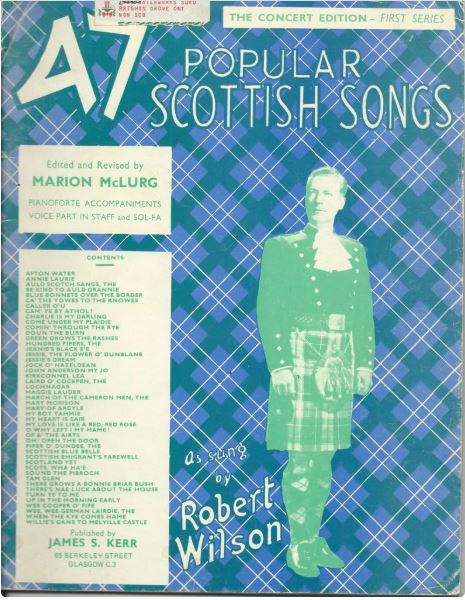
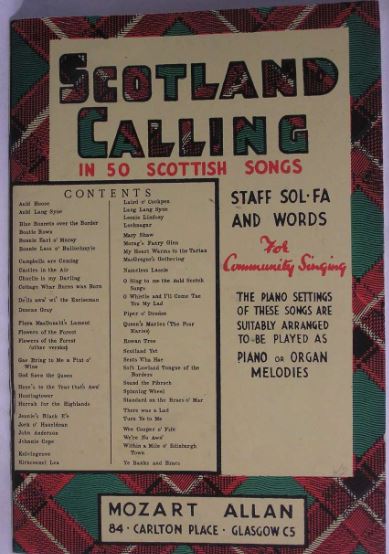
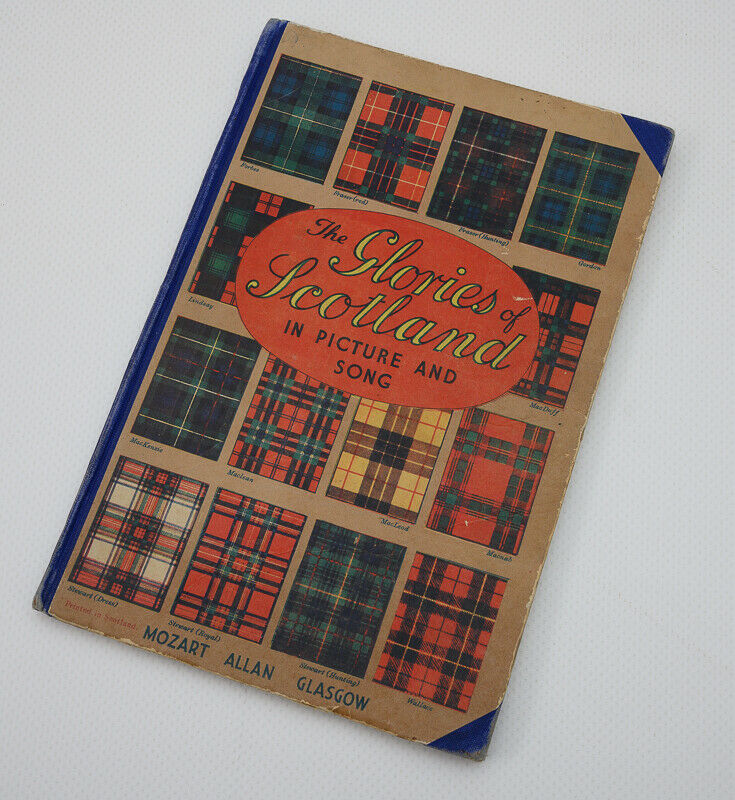
I couldn’t help myself – this afternoon, I was finding out more about Sir John Magregor again – initially by rereading Ronald I. Black’s article, ‘The Gaelic Academy’ in Scottish Gaelic Studies vol.XIV part 2 (Winter 1986), 1-38, and then by visiting the British Library’s 19th century Newspapers website.  This was very absorbing – possibly too much so!  It was, however, nice to discover that Clan Gregor offered their condolences to Sir John’s son Evan, when their clan chief died – and that the toasts on that evening were punctuated alternately by music from Gow’s band, and by a piper.  Sir John would have liked that, I’m sure of it.  (He was a judge for Highland Society of Scotland piping contests, and was also responsible for rescuing Joseph Macdonald’s draft bagpipe tutor from India and returning it to Scotland.)  Admittedly, once I’d learned that Clan Gregor met at Oman’s Hotel, I didn’t really need to find out where the hotel (aka Oman’s Tavern) actually was …  I did find out, but decided to stop delving any further.

Maybe I also didn’t really need to make a biteable video about Sir John! I have by no means encapsulated all his contributions to Gaelic culture – in 90-odd seconds, that simply wouldn’t be possible.  However, perhaps it does illustrate why he is a character worth remembering.  Here it is:-

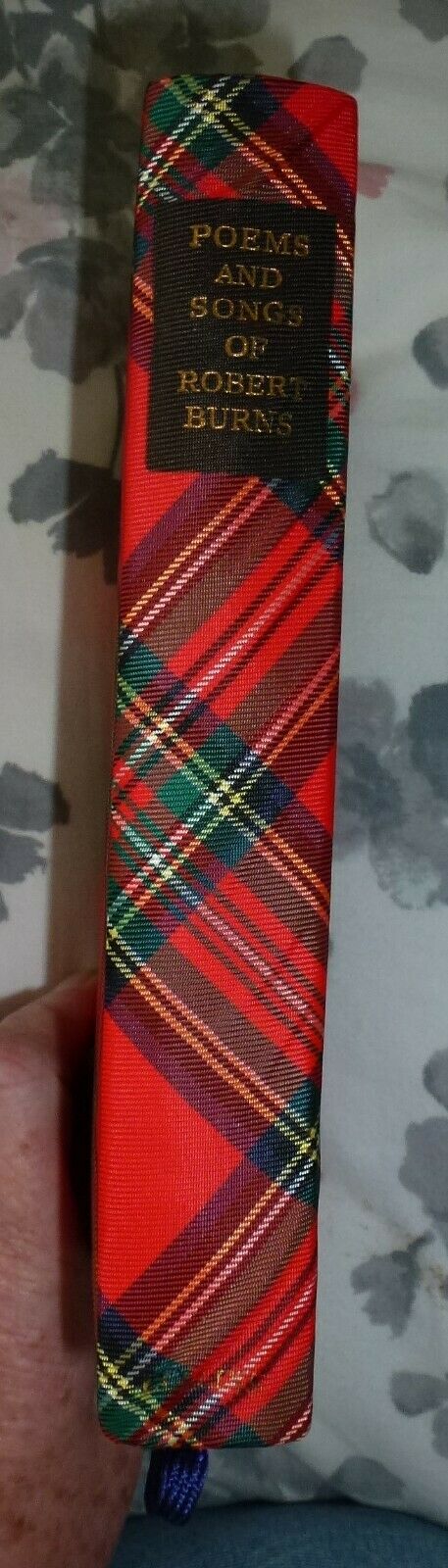
Pipes, Tutors and Tartan

Writing about writing (sharing a blogpost by Dr Jane Secker)

I know this isn’t about copyright music! But it’s a very interesting blogpost by someone who does write elsewhere about copyright-related matters! Jane articulates very well the benefits of reflective writing.

via Writing about writing

Torn between Copyright Music and the East India Company!

I’m back from vacation with a vengeance, here.  I’ve thought of not one, but two future projects worth pursuing, so I am getting in touch with people whom I think might be interested.  One project is closely linked to the Claimed From Stationers’ Hall network, whilst the other idea could be said to tie together several strands from all the research I’ve done in the past decade or so.  Obviously, grant-writing time is approaching again!  Watch this space.

An interesting news snippet is my recent discovery that a librarianship student from Robert Gordon’s University has been doing a placement at the University of Aberdeen’s Library Special Collections – and looking at their Copyright Music collection!  This really is very exciting – I love to hear of people getting engaged with these materials, and I’m really happy to think that Aberdeen’s collection is attracting attention.  Retired music librarian and rare books cataloguer Richard Turbet did much work on it a few years ago, but it’s definitely time to be woken from its slumbers with some more close study!

So much for copyright music.  I still have more writing to do for a substantial journal article about the UK’s repertoire, amongst other things.  And we have the Brio journal issue to work towards, later this year, too. All this will be done!

Perso-Indica workshop on “John MacGregor Murray (1745-1822): Persianate and Indic Cultures in British South Asia” – Paris, May 28th 2019.

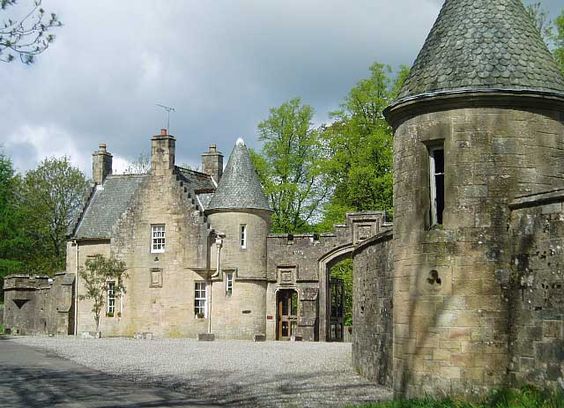
However, right now, I’m focusing on writing a paper for a seminar at the Sorbonne, which takes place at the end of May.  Sir John Macgregor Murray took an almost obsessive interest in Scottish and clan culture, but it appears he was as interested in Indian culture, commissioning translations and texts in Persian, on matters relating to Indian religion, festivals and agriculture.  His career was spent in the private army of the East India Company, so maybe we shouldn’t be too surprised that he took an interest in the customs of the land that was his home for more than two decades.  He did have a base in Scotland too, having bought Lanrick Castle in his mid-twenties, though I haven’t investigated how often he came home, or whether his wife and son ever stayed there without him.  (Much as I’d like to know, I have to remind myself that I’m interested in his cultural activities, not his entire biography!)

800px-Portrait_of_East_India_Company_official from VAM.ac.uk via wikipedia
By Dip Chand (artist) – https://collections.vam.ac.uk/item/O16731/painting-portrait-of-east-india-company/, Public Domain, https://commons.wikimedia.org/w/index.php?curid=18728491 from Wikipedia

(The above image is dated 1760, a bit before Sir John joined the East India Company, but it was so lovely, I just had to include it!)


Buttrey MS Presentation by Tracy Macdonnell

A fascinating manuscript – and here’s the guy who listed the contents! Congratulations, and thanks, Tracy!

sagcameron's avatarButtrey Military / Social Tunes 1790-1840

The Drum of the Crown Forces were very privileged to hear Tracy Macdonnell repeat his London, Ontario, Buttrey Manuscript presentation at Fort York on Saturday. It was a delight to hear.

Tracy Macdonnell - Buttrey Presentation

Tracy is the person responsible for creating a list of all 1,061 tunes in the manuscript. Without that list to work from, this website would not have been created, Eamonn O’Keeffe would not have commented on it and told me about Ross Flowers, Drum Major of the Drums of the Crown Forces. Ross would not have taken photos of all the melodies and encouraged me to keep uploading them to this website and the Village Music Project people would not have found the photos and transcribed the entire manuscript !!  Now how’s that for serendipity !!

When asked why this manuscript was special, Tracy says, “Simply because it exists ! The sheer number of tunes and that it was…

View original post 1 more word