But How DO You Bring a Career to a Close?

Pocket watch with chain

I’m only semi-retiring; I’m leaving the main part of my job, but turning the research secondment into a new part-time contract. The technicalities are one thing: fill in the appropriate forms for receiving your pension. Decide what to do about outstanding holiday entitlement. Set things in motion for a new contract. Wait. Start counting the weeks, and then the days. Wait some more.

As I said in an earlier post, you can try to inject a few fun things into lunch-breaks, to brighten up the days. (I’m grateful to work in a place where there are loads of performances going on.) Meanwhile, you’re still at work in the old job. You know, and everyone else knows, that in a couple of months you won’t be there. In my unrealistic mind, I’d hoped to go out in a blaze of glory, but I don’t feel glorious or triumphant at all. How are you supposed to FEEL?, I asked a considerably older friend. They looked at me in a way that said they’d never asked themselves that!

Clearing Clutter (and Treasures)

I sit cataloguing donations and glumly eyeing piles that everyone would like to be cleared out of the way before I clear off! A late night email (which I found the next day) seemed to hint at that. But if I haven’t cleared the piles of donations by now, working steadily, then am I reasonably going to get the whole lot out of the way in two months? Am I not working hard enough? It’s a bit depressing, actually. On the other hand, when I arrived in 1988, there was a half a rolling stack full of donated materials. I used to wonder if I’d still be needed once I’d catalogued them all. Of course, they were all dealt with decades ago. None of our donations are remotely that old; there aren’t nearly as many; and no, I wasn’t discarded when the original donations were all done and dusted! Maybe it’s unrealistic to expect a final, purging blitz on what’s there now. Leave something for my successors.

Occasionally I get over-excited about treasures that crop up amongst the more routine stuff.  (Over 200 years old?  How could I NOT be excited?!  One of the joys of having two parallel careers is having research knowledge that illuminates historical library materials.  Sharing that knowledge sufficiently so that everyone else is aware of the treasures – that’s another thing entirely.  Who wants to be trapped by an old librarian keen to share stories about ancient scores and famous poets?)

The Paranoia about Becoming Irrelevant – ‘Yesterday’s News?’

I’ve been keeping a ‘handover document’ for almost a year now, and every so often I think of something to add to it. Often things occur to me after I’ve had to deal with something, and realise that maybe it needs noting down! ‘It won’t be your concern in a few weeks’, my older spouse tells me. It’s hard adjusting to the certainty that things will be done differently once I’m gone. Things that I think should be done one way, will assuredly be done differently, and that’s to be expected. Even the things that I value aren’t necessarily of the same value to other folk – that’s the hard bit! (Mind you, some of the things I value have historical AND monetary value.  My valued things aren’t valued without good reason.)

Silhouette of woman at computer desk in library
Image by Chen from Pixabay

On the plus side, of course, is my list of research things to investigate, calls for papers and articles and chapters. I haven’t run out of steam, intellectually – far from it. My second book about to commence the copy-editing process. A research paper to write for a conference in July. New adventures on the horizon – oh, I really can’t wait for some new adventures! (I’m not a dull cataloguer – I’ve just ended up backed into a wee cataloguing corner.  Neither does everyone find cataloguing tedious, but I have really done too much of it!)

You get lots of advice about how to write a CV, how to start your career with a flourish, how to make your mark. How to get on in the world. How to progress. But it seems there’s little advice about how to gracefully bow out!

This isn’t something unique to me – retirals happen all the time. What do other people do? Do you set up appointments to say goodbye to people? (Hard, when I’ll still be around, albeit in a different department.) Do you try to set up one last workshop/seminar/whatever before you go? [Post Script: you don’t!]

Or just try to be inconspicuous until the Last Day arrives?!

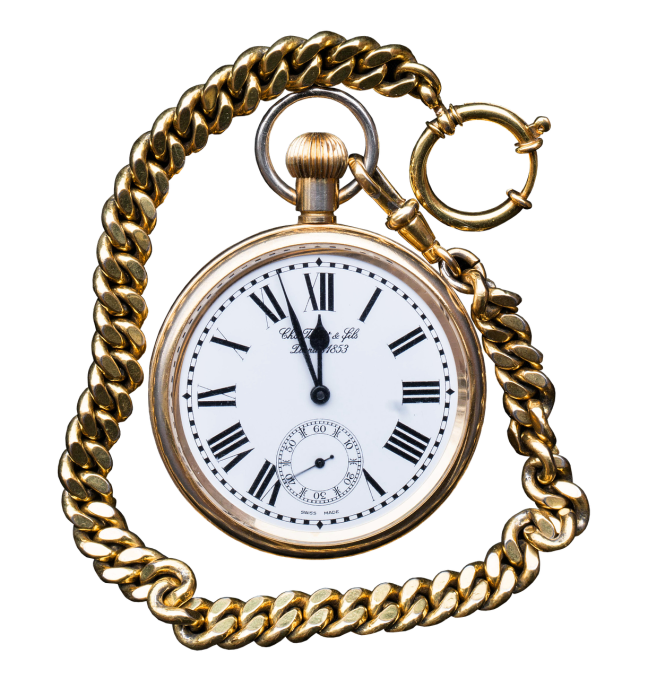
Old pocket watch Image by Bernd from Pixabay

We’ve been Spoiled! (Virtually)

It’s Sunday evening, when anyone with any sense is sitting with their feet up, relaxing before the next week starts. So what do I do? I attempt to sort the vacuum cleaner and order it some new filters; eye the ironing basket balefully; and try but fail to contact the dishwasher warranty people. Yes, I know – it’s a Sunday – but the website categorically said there was someone to help me from 8 am to midnight every day of the week. They didn’t say that the ‘someone’ was a bot, who would advise me to phone a particular number, which in turn would require me to answer loads of questions and then tell me they were closed. Technology and online services are conspiring against me tonight.

So, I thought, I’d go over tomorrow’s talk one more time. Inevitably, even though I’ve successfully given my talk once ‘in real life’, I still found things I thought I could improve upon. The only problem was, I’m sitting at home, and what I needed was neither on my shelves nor available digitally.

  • A three-volume book of Scottish songs, which I can see in the library at RCS tomorrow. But there’s only one ‘pupil edition’ book of ONE of the volumes available for purchase anywhere online, and I rather think I’d like the whole set of the teacher’s edition, for myself. In my dreams!
  • So … I had already worked out that the title hadn’t made much of a stir in the contemporary press. Indeed, I think I’ve returned to this question several times, so I needn’t have imagined I would reach a different conclusion today. I searched again. I failed again. We’re not used to searching and not coming up with results!
  • Ah, of course. There’s a particular magazine which might have a review in it. I have a rare copy of the first issue, which I found on eBay a couple of years ago. But my copy is a bit too early to hold the review I’m hoping for. Where is this magazine to be found? One library, in Edinburgh.
  • Not to be found in electronic format.
  • And … no direct trains to Edinburgh this week – they’re clearing up after last week’s storms – whilst I’m tied up all February.
  • So … A couple of desperate emails on the off-chance that they might yet be in other libraries, albeit not in an online catalogue. And I wait. Because it’s Sunday night, isn’t it? And I hope they’re nowhere near their laptops!

When I think that, doing doctoral studies the first-time round, I would have looked things up in books and journals in the library, or gone home and written a letter to ask if I could visit another library half-way across the country – then waited for a reply – and even the second, completed doctoral attempt was fitted in around full-time employment – I can’t help feeling a little guilty that I’ve become so impatient. In any case, the paper is good enough. I changed a few words, and I’ll print it out again tomorrow. 

(Moreover, in my early postgrad student days I washed things up in a wash-hand basin, so dishwasher repairs weren’t even on my radar! There are advantages to being in employment.)

Some things don’t change, though. I still need to do the ironing. Gah!

Image by Capucine from Pixabay

Unexpected Blessings

‘I was talking’, said a colleague, ‘to someone who found a stash of an elderly relative’s music ….’

Now, you’ve possibly picked up on my mixed feelings about donations. Grateful, curious, but also sometimes experiencing a sinking feeling when I realise that a recently donated bagful of music really can’t be added to the library stock. We welcome music if it’s historically important, or a serviceable copy of core repertoire. However, the bottom line is that we want our musicians to use up-to-date or at least respectable standard editions, and a lot of old music is neither historically important nor serviceable core repertoire.

So today, I cautiously asked what kind of music it was?

Sol-Fa.

Postcard from eBay – school and date unidentified!

How often have I sighed at that word? Our students don’t use old Sol-Fa notation. It fell out of use by the mid-1960s, and ‘modern’ or avant-garde classical music never made it into Sol-Fa; the system doesn’t lend itself to harmonically and rhythmically more adventurous music. But today was different, because my own research has meant my spending quite a bit of time finding out more about the use of Sol-Fa in elementary music education. And to cut a long story short, I am very much looking forward to seeing this music. I now know what I should be looking out for, from the perspective of ‘my’ Scottish music publishers. A few tantalising snaps of this donation have really whetted my scholarly appetite. What will I find? How will it augment what I already know?

I can’t wait!

If you find Granny’s old Sol-Fa music in the attic, do give it more than a passing glance. See what the music is. See who published it, and where. (Scotland? England? Somewhere else?) Was it for children? Adults? A male-voice or ladies’ choir? Church? A municipal choir? A school or college? Is there a date on it? (You’ll be lucky! But you never know.) Is it part of a series?

What at first sight looks humdrum, mundane, and unusable can sometimes prove to be a fascinating piece of a musical history jigsaw-puzzle. And strangely enough, you don’t actually have to sing from it, to learn more of that history – a close inspection tells so much.