Dr Karen McAulay explores the history of Scottish music collecting, publishing and national identity from the 18th to 20th centuries. Research Fellow at Royal Conservatoire of Scotland, author of two Routledge monographs.
I learnt the hard way that words with more than one meaning can attract unwarranted attention. ‘Se*y’ has a different meaning in marketing, to the more usual connotations. There must have been a lot of disappointed visitors when they realised that I was ‘reveal’-ing nothing more than the importance of a good bibliography!
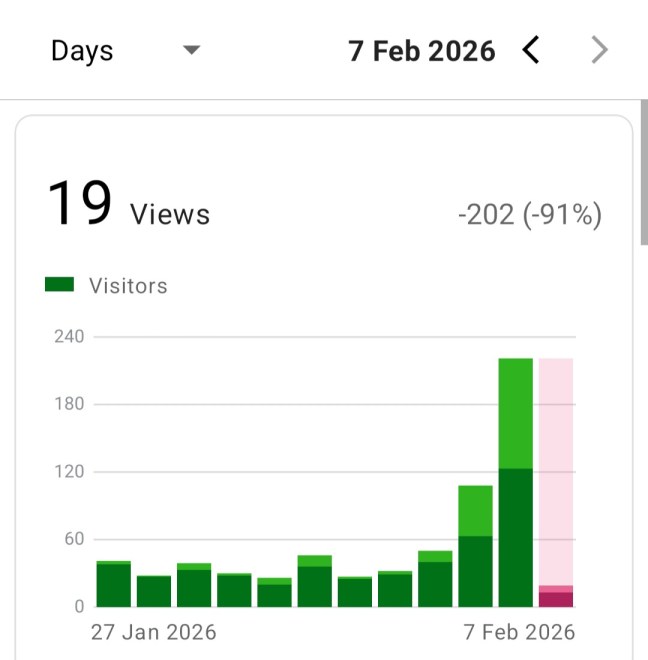
Well, I blogged about a research project last week. There was another red-flag word, and guess what happened to this blog’s stats?
See the stats have dropped again? I went in and edited out the red-flag!
Maybe tomorrow I’ll try another experiment, but not today. I want to let the stats settle …
How to Assess whether a Song Book was Aligned with Contemporary Tastes
There were once four books of Scottish songs in a mini-series: just under 100 songs, all told. They weren’t much advertised, and few copies are now extant. If they were intended mainly for school use, then I need to know to what extent their contents were standard Scottish song repertoire for their day. (Each generation has its favourites, noticeably different from the previous ones.)
Now then, I spent a very long time indexing song books as a librarian; that library catalogue is now a reference resource in its own right. Last night, I listed the contents of those four books, and next, I shall look each song up in our RCS library catalogue. I’ll end up with two figures for each song:-
How many times the song is listed altogether: a high figure means popularity over a long period.
How many times the song is listed between 1930-1970: this will be a shorter range of numbers. If it’s as high as, say, five hits, then it was popular amongst quite a few compilers over that 40 years. If it’s not in any other books between 1930-1970, then it’s either old-fashioned, or a more obscure ‘rarity’ from less well-known or very old collections.
And THEN, I can look up the rare ones in the National Library of Scotland’s Digital Gallery.
This is the only accurate way of ascertaining whether the contents themselves might have been off-putting to the very audiences that they were meant to attract. I hope that’s not the case, because the compilers were well-placed, indeed ideally-placed to know exactly what went down well with school children. Nonetheless, I want hard evidence, and comparing the repertoire with two significant sets of data – the RCS more standard books, and NLS rare books – seems to me a pretty good way of doing it.
I enjoy writing this blog, because it helps me clarify in my mind what the big issues are that I am addressing. Writing for a wide audience, which may or may not have exactly the same scholarly interest in the topic as I do, is a good way of reminding myself to write accessibly, and hopefully interestingly, about the things which occupy my thoughts as I pursue my research. Do I succeed? You tell me!



 Karen McAulay, Musicologist