Bibliographies, Lists

Am I a listophile?  I started the list to end all lists, on Saturday evening. (Yes, I know. Sad, isn’t it? It’s surely better than the Saturday night trips to the laundry in my student days, though.) I’m going through my book manuscript, tracking EVERY sheet music title that I’ve mentioned.

I should already have them in my epic Zotero bibliography, but for this exercise, I’m also checking off which chapters they appear in.  It could be handy when I’m indexing the book in due course. Not only that – if I encounter any date discrepancies, at least I will have the chance to put them right.

But have I created a Monster?

This, dear reader, truly is turning out to be a mega-list. I’m approaching the end of my trawl through Chapter 3 now, and the list is already quite lengthy. On the other hand, since I am likely to be the most knowledgeable authority about publications and publication dates for these particular Scottish publishers, there surely must be some value in this.

And – there are just a few ‘lost books’ amongst them. What could be nicer but more tantalising for a librarian/musicologist/book historian?

Going, Going…
Image by Mike Cuvelier from Pixabay

Image by tookapic from Pixabay

Diversifying the Repertoire

Choosing more diverse repertoire is challenging for instrumentalists and singers. For four or more years, I’ve been working hard on increasing our stock in this area – music by women, music by BIPOC composers, and, of course, music by women who are BIPOC composers – and I’ve compiled some helpful lists of music in stock at the Royal Conservatoire of Scotland’s Whittaker Library. They’re posted on the library WhittakerLive blog.

I intend this to be my legacy when I retire from the Library in July 2024.

Image by Gerd Altmann from Pixabay

The Gentle Art of Bibliography: a Footnote

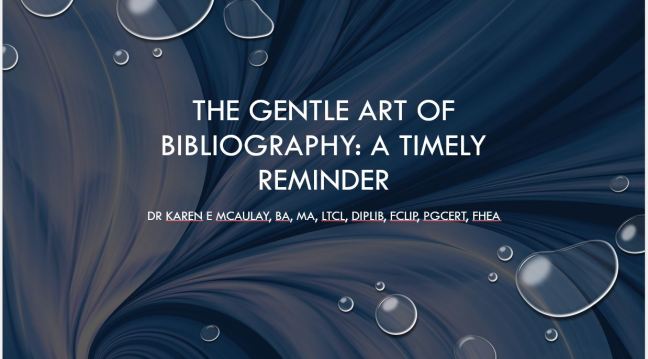
Title slide for my talk, The Gentle Art of Bibliography. No image, just an abstracct grey background.

My talk for the Scottish Graduate School of Arts and Humanities was incredibly well-attended. It was lovely to be able to talk about one of my specialisms to people who were genuinely interested. My thanks to you for attending, if you were one of those people! At least one individual had just started their bibliography, so hopefully I was able to share some useful tips.

I’ve uploaded my PowerPoint and text to my Conservatoire Pure account – our institutional repository – please click here.

If anyone tried to sign up, but experienced a problem getting into the meeting, please contact me via the SGSAH Summer School organisers.

Thank you Karen for a fantastic talk

😊
An attendee

It was such an excellent and helpful session!

Another attendee

SGSAH Summer School: The Gentle Art of Bibliography

An entirely new venture for me: I’ve offered to give a talk at the Scottish Graduate School for Arts and Humanities Summer School later this month – next week, to be precise! It’s a summer school for all Arts and Humanities doctoral researchers in Scotland. When the opportunity came up to participate, I initially wondered if I had any expertise that I could share, leaving aside my own niche research interests. But then it occurred to me that people seem to enjoy my talks and writing about the process of research, as much as my talks about the research itself, so the obvious thing was to talk about one of my favourite things – bibliography. A lot of people have signed up – I’m so pleased.

Today felt like a good day to get it written, powerpoint and all.

The Gentle Art of Bibliography: a Timely Reminder (Quick Talk)

I might share the talk later, after it has actually taken place. For now, here’s a taster for any Scottish postgraduate researcher deciding which talks to attend!

“Have you ever forgotten where you read something useful?  You know the scenario – whilst you’re searching for something, whether on the web, in the library or in a database, you flick past something that’s perhaps only of tangential interest, only to realise later that it was more significant than you thought.  Or you’re just killing time, so you’re not in full scholar-mode, and you find something interesting that is so relevant that you just know you’ll be able to find it again? But you can’t. 

Isn’t it an awful feeling?”

When I submitted my proposal for this talk, I had to describe the learning outcomes. Here’s what I’m aiming to do:-

Learning Outcomes:- By the end of this session, participants will have a greater understanding of the options available to them, in terms of building, maintaining and deploying a bibliography in scholarly writing. By the end of this session, participants will also understand the importance of starting to build one’s bibliography at the earliest opportunity.

Full Programme of the Summer School here

A Good Description (Bibliographers will understand!)

Two school music books entitled "Pictures in Song"
Tonic Sol-Fa notation
Tonic Sol-Fa

My latest eBay purchase will teach me to look more closely at the photos. (Of which there were a lot, I might add.) But the words DESCRIBING the pair of books nowhere said that one was a staff edition, and the other Tonic Sol-Fa!

The cover title was correctly transcribed, although the seller hadn’t indicated that the one without the words “School edition – Staff” was, in fact, the School edition in Tonic Sol-Fa. Had I looked right through the photos, I would have got to the picture of the Sol-Fa title page and an example of the Sol-Fa itself. My mistake!

However, in this case it’s not too much of a problem – I’m more concerned with the contents of the books and their paratext, than actually playing or singing the music. And if I want to practise my sol-fa reading skills, well, I now have another book to practise with!

Wrapping Things Up

CFSH Bibliography

Followers of the Claimed From Stationers’ Hall research network are probably already aware that there’s an extensive bibliography of writings to do with legal deposit and copyright, most specifically historical music legal deposit and copyright – but also a bit of library history, book history, cultural history of various kinds, and bibliography.

It has been updated periodically, and is now in its 7th edition, but when the special issue of Brio (vol.56 no.2) rolls off the printing press, a significantly extended 8th edition of the bibliography will be posted on this website.  It’ll include every article and review in the special issue, and virtually every reference or footnote cited by each author of ditto.  I wouldn’t be so bold as to say that not one citation concerning historical music legal deposit has been missed, but the chances of having missed anything significant are probably fairly slender!


History of Music Collections in Edinburgh University Library – 2 new articles!

Edinburgh_University_Library_2017
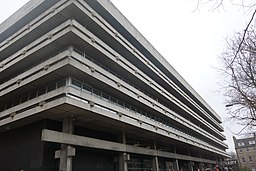
Edinburgh University Library (Wikimedia Commons image)

Readers of Brio (the professional journal of IAML UK and Ireland) will already have read the two-part contribution by Alastair Macdonald and Elizabeth Quarmby-Lawrence, which appeared in Autumn/Winter 2018 and Spring/Summer 2019.  However, if you don’t subscribe or have access to that august journal, you might not have seen them. They’re a major contribution to the field, so it’s important that they’re publicised! And yes, they’ve been added to the Claimed From Stationers’ Hall network bibliography on the present website, too.

  • Alastair Macdonald and Elizabeth Quarmby-Lawrence, ‘From General Reid to DCRM(M): Cataloguing the Music Collections of Edinburgh University Library. Part 1, The Early Reid Professors and the First Catalogues, 1807-1941’, Brio, 55.2 (2018), 27–49
  • Alistair Macdonald and Elizabeth Quarmby-Lawrence, ‘From General Reid to DCRM(M): Cataloguing the Music Collections of Edinburgh University Library. Part 2, Professional Librarians and Automation, 1947-2019.’, Brio, 56.1 (2019), 62–83.


https://wordpress.com/page/claimedfromstationershall.wordpress.com/1661

Teaching About Musical Paratext

A few years ago, I published an article in a librarianship journal, about librarians teaching, and the question of teaching music students about paratext in early national song collections.

Let me state here and now, my approach to article titles has changed, and I would never again try to be ‘clever’ or controversial in this regard.  A perfectly acceptable article was made to look flippant, or even worse, by my woeful enjoyment of puns and double-entendres.

Nonetheless, because I’d like to share the article, I’ll endure the embarrassment of sharing the title with you.  This is a pre-publication version, which I’ll also upload to our institutional repository in the near future:-

‘Sexy’ bibliography (and revealing paratext)

bluebells-1429817_960_720Engaging with students in teaching bibliographic citation, and demonstrating the significance of paratext in historical national song collections.
General information


A Working Weekend?


Try as I will to avoid the temptation, my research interests overspill into my weekends. Saturday saw me inventorising the late Jimmy Shand’s less-antiquarian accordion music at the Wighton Collection in Dundee.  I had much amusement looking at the accordion instruction books!  There might be mileage in a wee general-interest article about these, so I can see I’ll have to look at them more closely when I return to finish my “honorary librarian” duties another time.  (I’m obsessed with paratext for its value as cultural context, and music instruction books are a bit of a spin-off from this – even if they’re not from the Georgian era!)

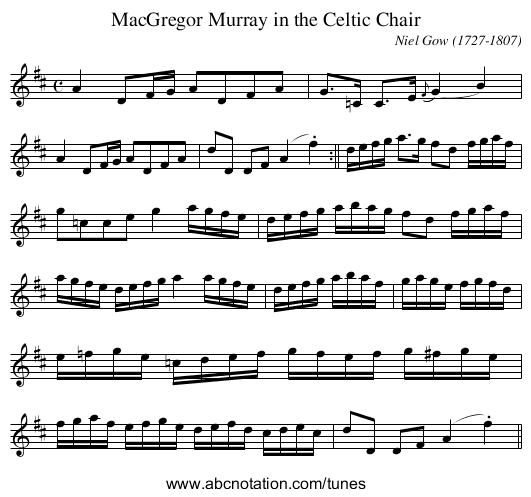
Back at home on Sunday, I did a little more work on my Sir John Macgregor Murray paper.

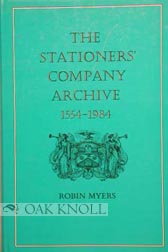
Invaluable Resource: The Stationers Company Archive 1554-1984, by Robin Myers

robin myers book coverBy and large, this book is aimed at book and publishing historians – it enumerates the contents of the Stationers’ Company Archive from 1554-1984, at Stationers’ Hall. The compiler, Robin Myers, was for a long time Honorary Archivist there. (She has the status of Liveryman at the Stationers’ Company.)

Not the first attempt at documenting this complex body of material, but certainly the most comprehensive, I commend especially the Preface (xiii-xiv) and Introduction xvii-xxxvii), which gives an overview of the history of the Archive. Significantly, the creation of a proper muniment room in 1949 made visits more convenient for researchers, and also saw the awakening interest of musicologists looking for first London editions by famous composers.

Next, cast your eye over the Contents, and in particular Section I – the Entry Books of Copies & Register Books 1557-1842; Registers of Books Sent to Deposit Libraries 1860-1924; a Cash Book & Copyright Ledger Book 1895-1925; and Indexes of Entry Books 1842-1907 appear between pp.21-30. The Entry Books cover several years at a time for the earliest period, and a couple of years at a time for the era that our project has been covering. As I may have mentioned already, I’m quite interested in the book commencing June 1817, and we find in the listing that the wording, ‘Published by the author and his property’ “begins to appear not infrequently in this volume.” This would seem to imply a greater sense of intellectual property, although there may be another more technical explanation of which I’m not aware!

Much of the rest of the book concerns leases, freedoms, wardens’ vouchers and other documentation which are maybe of little concern to the average musicologist, but it would do no harm to glance through the contents if only so that you know what else is there. A complicated web of documentation of which many of us are blissfully unaware!

Myers, Robin (ed.) The Stationers’ Company Archive 1554-1984 (Winchester: St Paul’s Bibliographies, 1990) ISBN 0906795710

The records of the Stationers’ Company are now available as digital images via publisher Adam Matthew: Literary Print Culture: the Stationers’ Company Archive, 1554-2007. As well as the records themselves, there’s also a wealth of background information, including commentary by Robin Myers. You can view a short YouTube video here.