


I spent the day authoring and starting to disseminate the first network Newsletter; actually, it’s both an update and an invitation to particate! After spending some time this evening reading MailChimp’s instructions, I worked out how to get the hyperlink for viewing in your browser. Triumph! Click the link to read it, here.
By way of light relief, I opened my favourite book – Kassler’s Music Entries at Stationers’ Hall* – to see what was registered on this day, over 200 years ago. Two surprises awaited me. In 1784, John Valentine of Leicester registered Thirty Psalm Tunes in Four Parts, and eleven copies are still extant, not only in legal deposit libraries. Plainly psalm tunes were considered worth keeping (or leaving to libraries!); not only that, but Trinity College Dublin has a copy, and they didn’t as a rule show much interest in trivial matter such as legal deposit music.
The second surprise was some piano trios by Pleyel, dedicated to Miss Elizabeth Wynne and registered on 20th September 1790. According to Copac, several copies survive in UK, and the British Library also has copies with a later date posited. And there could still be others not yet catalogued online. But here’s the exciting bit – you can access a German edition on IMSLP. Who wants to be first to play it?!
http://imslp.org/wiki/3_Keyboard_Trios,_B.437-439_(Pleyel,_Ignaz)
* Michael Kassler, author of Music Entries at Stationers’ Hall, 1710-1818 : from lists prepared for William Hawes, D. W. Krummel and Alan Tyson (Ashgate 2004), advises us that ‘since the demise of Ashgate, it is now published in hard copy and as an e-book by Routledge, and the e-book is £30 cheaper. See https://www.routledge.com/Music-Entries-at-Stationers-Hall-17101818-from-lists-prepared-for/Kassler/p/book/9780754634584
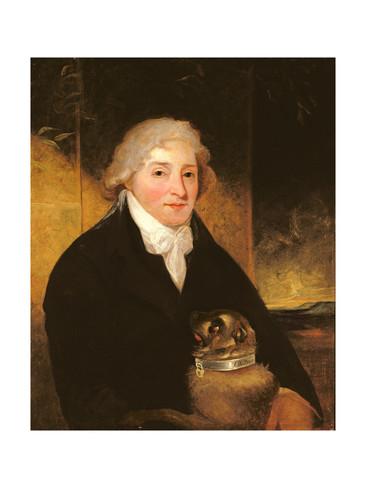 On 19th September 1797: Singer and singing teacher Rauzzini registered no.7 of his Periodical Collection of Vocal Music. Few copies survive, and it’s a bit hard to tell which volume contains no.7, though I know an expert who could probably locate it!
 Also OTD in 1797, Bland & Weller registered James Hook’s Vauxhall Gardens song, Maidens would you know?, along with Hook’s Welsh song, Jem of Aberdovey, and his When the sprightly fife and drum. It’s all pretty typical fare – a song by a popular Bath impresario, and some Vauxhall Gardens songs including a ‘national’ and a military song, by composers still (just) known today. As it happens, there were also imprints of another ‘Jem’ song by Hook under English, Irish and Scottish imprints – Jem of Aberdeen! – but that’s not part of the 19th September story. You can trace a few copies in Copac, but certainly not in all of the legal deposit libraries.
 Meanwhile, exactly two hundred years ago yesterday, Bath musician John Charles White registered his piano rondo, The Fairy Queen on 19th September 1817. There are seemingly three surviving copies in the UK. However, there could be further copies of any of the aforementioned titles, because not all of the early legal deposit music has been catalogued online. That’s the intriguing part of this story!
 had my ‘librarian hat’ on, primarily, but even that hat has a musicological lining, so I couldn’t help thinking research-minded thoughts from time to time. In particular, one train of thought was provoked by the discovery of a pile of early 20th century popular songs with eye-catching cover art, betraying cultural trends and prevailing preoccupations such as patriotism around war-time; nostalgia; family ties; romantic relationships; or the portrayal of children. Not ‘serious music’, this, but the pictures and the content, not to mention musical styles such as ragtime, all tell us about
 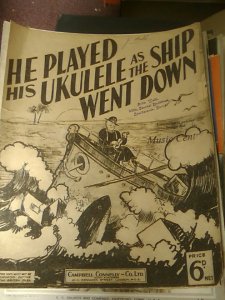 Is it worth keeping, then? It might be. Not for the classical musicians to attempt to analyse as they would a Haydn string quartet, but to inform us about cultural history. So, if early twentieth century popular music can inform us in this way, then it follows that the Georgian and early Victorian songs and other material appearing in legal deposit music collections will have their own stories to tell … and any statistics about library usage tells us just which volumes were popular with the borrowers. I’ve made a start on this with the St Andrews historical copyright music collection, having collated the music borrowing records from 1801-1849 and started gathering statistics.
 Karen McAulay, Musicologist