Dr Karen McAulay explores the history of Scottish music collecting, publishing and national identity from the 18th to 20th centuries. Research Fellow at Royal Conservatoire of Scotland, author of two Routledge monographs.
Exciting news. Thanks to CILIP’s Library and Information History Group, I shall be attending a fascinating conference in Stirling soon!
Books and Borrowing 1750-1830.
The conference is 17-18 April in Stirling, and the programme for ‘Reading and Book Circulation, 1650-1850’ is on their Events page:- borrowing.stir.ac.uk/events/
My interest in this topic
It’s of special interest to me because of my work on music borrowing at the University of St Andrews in the days of the old Copyright Libraries: I examined the borrowing habits of two particular women, Miss Elizabeth Lambert and Mrs Bertram, and contemplated the changing readership over the three and a half decades under examination. This work led into my successful application as Principal Investigator of an AHRC postdoctoral research network, the Claimed From Stationers’ Hall network (2017-2018) investigating music surviving from legal deposit in the old copyright libraries.
‘A Music Library for St Andrews: use of the University’s Copyright Music Collections, 1801-1849’, in Journal of Edinburgh Bibliographical Society, 15 (2020), 13-33.)
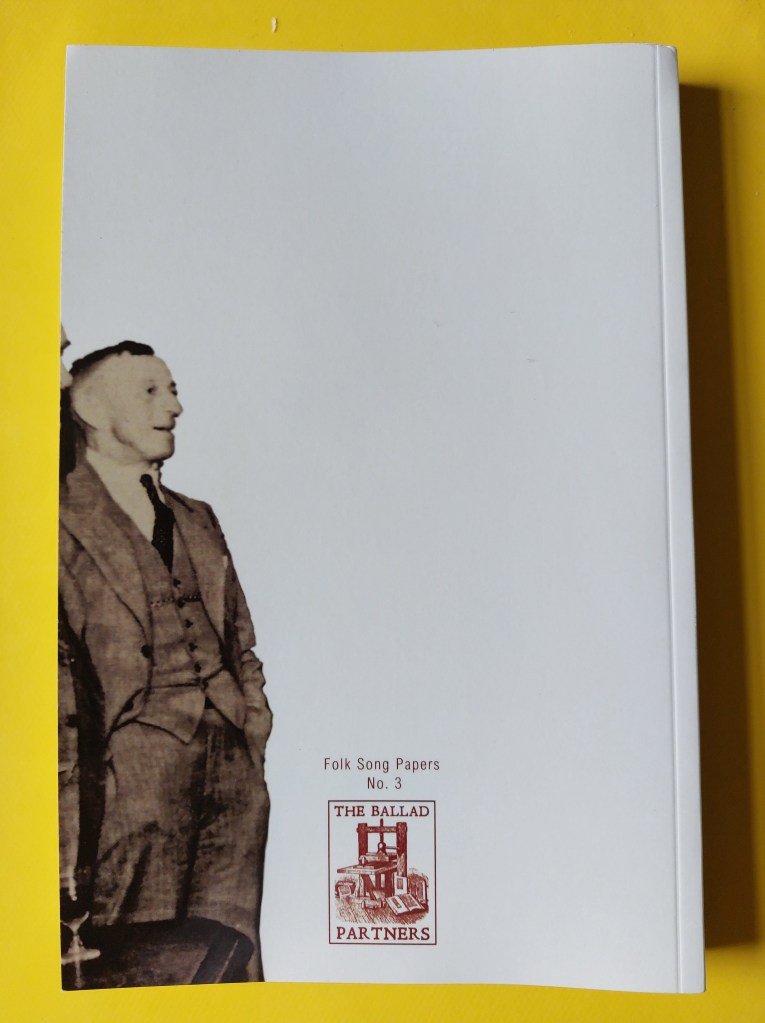
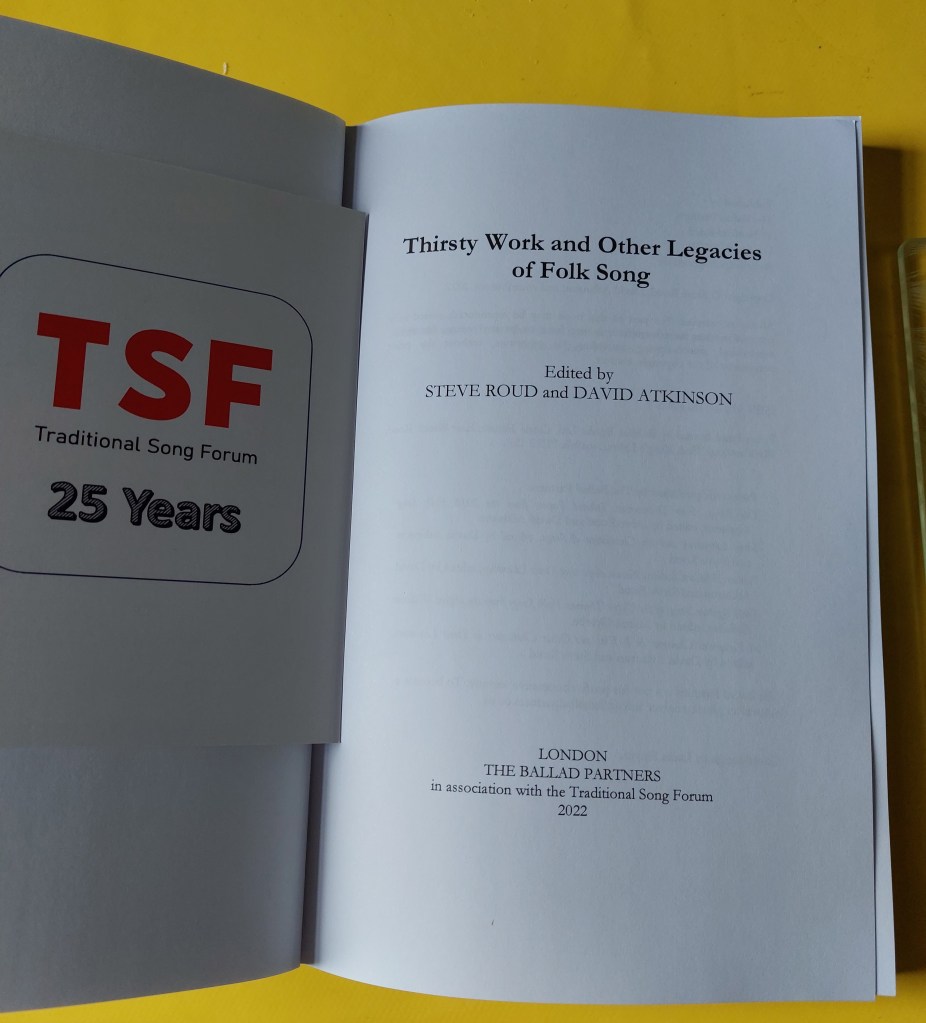
I’ve just received my own copy of a new publication by Ballad Partners, Thirsty Work and Other Heritages of Folk Song, which contains my most recent Alexander Campbell article: ‘Alexander Campbell’s Song Collecting Tour: ‘The Classic Ground of our Celtic Homer’. There’s a section on Campbell and his musicianship – an entirely new angle which I spent some time contemplating during lockdown.
I have just catalogued a copy for the Royal Conservatoire of Scotland Library – I listed the contents there, so I’ll repeat the list here for your interest. If you would like to purchase a copy of the book, please visit the Ballad Partners’ website. (I’m unconnected with the publishers – I am just one of the contributors!)
CONTENTS
Thirsty work: traditional singing on BBC Radio, 1940-41 / Katie Howson — From Tyneside to Wearside: in search of Sunderland songs / Eileen Richardson — Sam Bennett’s songs / Elaine Bradtke — Newman and Company of Dartmouth and the song tradition of Newfoundland’s South Coast / Anna Kearney Guigne — Railwaymen’s charity concerts, 1888-89 / Colin Bargery — Picturing protest: prints to accompany political songs / Patience Young — ‘That is all the explanation I am at liberty to give in print’: Richard Runciman Terry and Songs from the Sea / Keith Gregson — Drawing from the well : Emma Dusenberry and her old songs of the Ozarks / Eleanor Rodes — Alexander Campbell’s song collecting tour : ‘The Classic Ground of our Celtic Homer’ / Karen McAulay — ‘Don’t let us be strangers’ – William Montgomerie’s fieldwork recordings of Scottish farmworkers, 1952 / Margaret Bennett — ‘No maid in history’s pages’ : the female rebel hero in the Irish ballad tradition / Therese McIntyre — Who is speaking in songs? / David Atkinson
SHAMELESSLY sharing this call for papers, word for word. Maybe one of the Claimed From Stationers Hall networkers might feel inspired to talk for five minutes?
“Speaking at a conference is a big step on your career journey & lightning talks are an ideal way to dip your toe in the water. We’re searching for speakers for 5-min lightning talks CILIP’s Copyright Conference (18 May, online).”
This is another of my cross-posts from the Facebook Glasgow Music Publishers page. But I’ve updated the update!
Apologies for the silence here. In recent weeks, I’ve given two conference papers (one on Stationers’ Hall music, and one on old Scots songs and a Lowland pipe tune); I gave another talk (about Scottish song-collector Alexander Campbell) last Sunday late afternoon. Was I happy with my talk? Yes, until I had given it! This self-doubt is really quite a handicap.
I have just had the luxury of a long weekend, but – well, it hasn’t been luxurious. As well as the Sunday talk, there was the usual domesticity and the church organist duties. We expected the roofer to start work today, too, but it rained – and you don’t remove a VERY large skylight in the rain! Not to worry – I turned one of my conference papers into a journal article and submitted it this evening. I’ve just realised I’m a coward. I submitted an article to a journal I’ve not submitted to before, and now I’m struggling NOT to judge it too harshly, probably before the editor has even checked their email inbox!
I really do have to get back to work on a book chapter – although neither it nor the rest of this frenetic activity has been about Glasgow music publishers! (I just hope their ghosts aren’t feeling neglected, or heaven help me come Hallowe’en!)
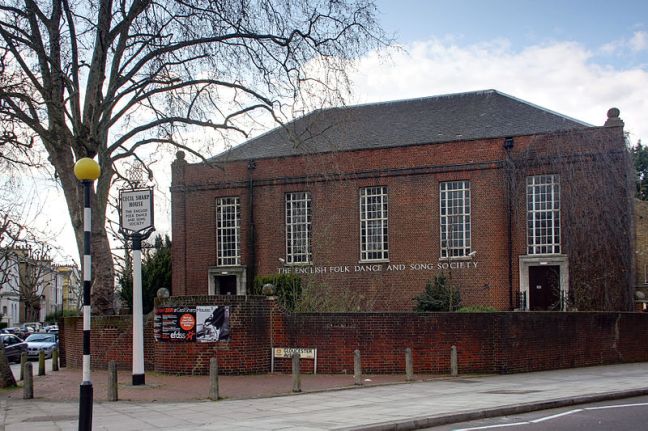
Dr Sue Allen has just alerted me to the very recent publication of the EFDSS conference proceedings we both contributed to. We each have a chapter in this great new folk song publication, from new publishing co-op The Ballad Partners. Only £12 plus p&p online from EFDSS Folk Shop:-
I’ve already mentioned that I would be attending Icepops 2019 at the University of Edinburgh yesterday – a conference about copyright literacy, and providing appropriate training to students, researchers and other staff colleagues.
(Icepops = International Copyright-Literacy Event with Playful Opportunities for Practitioners and Scholars).
My challenge was to deliver a Pecha Kucha which mentioned my research into historical legal deposit music, and ALSO touched on library user education into matters pertaining to copyright. ‘Silence in the Library: from Copyright Collections to Cage’, did just that. I have never spoken about John Cage’s controversial piece, 4’33” before. Neither have I deliberately inserted six seconds of silence into a format DESIGNED for brevity and concision! If you Google how many words you can fit into 20 seconds, you’ll find it’s just 60 words. That’s if you don’t use long words! So giving up a third of a slide to silence was, I felt, a calculated risk, but how else was I to demonstrate what you might hear during a silent episode?! All went well, and my calculations worked out – what a relief!
The conference was about a playful (lusory) approach to copyright education. In that regard, I discussed how Cage’s piece – silent though it was – still has copyright in the concept, and how students could be encouraged to contemplate how intellectual property can reside in the most unlikely situations – whilst also pointing out that 4’33” cannot be performed or even hinted out without dire legal consequences. You don’t believe me? I’ll put my presentation on our Pure institutional repository, and you can follow the references for yourself!
I mentioned playing the piano during the evening social? Oh boy, did we play?! I wasn’t alone – there was also a clarinet duet, and I staggered through a piano duet, unknown to both of us, with one of the (multi-talented) clarinet duo. The same clarinettist, on clarinet, kindly gave the premiere performance of a piece I’d recently written. That was definitely a first – I’ve never had an instrumental composition (as opposed to an arrangement) of my own performed publicly before.
Definitely an out-of-the-ordinary conference, then. I seem to be making a habit of this! Better get back to the eighteenth and early nineteenth centuries, now …
In a strangely sychronistic way, the different topics I’ve focused on as a researcher are now intertwining and demanding to be considered alongside one another. My forthcoming engagements are a perfect example of this!
Next week I’m going to see the Copyright Collection at the University of Aberdeen. That’s directly related to the Claimed From Stationers’ Hall network activities.
The following week I’m sharing a Pecha Kucha at Icepops 2019 (an ‘International Copyright-Literacy Event with Playful Opportunities for Practitioners and Scholars’, in Edinburgh). In 20 slides each lasting 20 seconds, I’m combining historical research, intellectual property, and modern academic librarianship, in ‘Silence in the Library: from Copyright Collections to Cage’. And I’ll be playing the piano, purely in a background music capacity in the evening! Nothing scholarly about that part – I cannot call it practice-based research in the least.
Paratext? In music? Assuredly!
July will see me speaking about paratext at the International Society for Eighteenth Century Studies congress in Edinburgh (‘Reading Between the Lines: Paratext in National Song and Fiddle Tunebooks of the Georgian Era’), and also having some vacation!
By August, hopefully my next grant application will either be taking shape, or have been submitted. Exciting times.
September, talking about songs in the Napoleonic era at a conference held at King’s College London: the British Commission for Military History’s War and Peace in the Age of Napoleon conference. My talk is entitled, ‘Napoleon’s Songs: the Artistic Responses of Composers and Performers to Contemporary Current Affairs’.
And in November, I’ll be talking about Scottish song-collecting at the Centre for Scottish and Celtic Studies at the University of Glasgow: ‘Scottish Song Collecting in the Context of Cultural Heritage: “A Mission of National Importance” (to quote Alexander Campbell)’.
By then the dedicated Stationers’ Hall issue of Brio will be hitting your letterboxes, too!
I’m a bit of a juggler at the moment! The Claimed From Stationers’ Hall network has a dedicated Brio issue forthcoming in November, which I’ll be co-editing with Martin Holmes, the regular editor. Various articles have been promised, and I need to do some writing as well. Not to mention needing to do some book-reviews. I have several ideas there – I need to order some books that I’ve recently come across, to decide if they’d be usefully reviewed for our music librarian audience.
I also need to revise an article for another journal – I first wrote it a couple of years ago – to reflect the fact that the network came into being and more work has since been done.
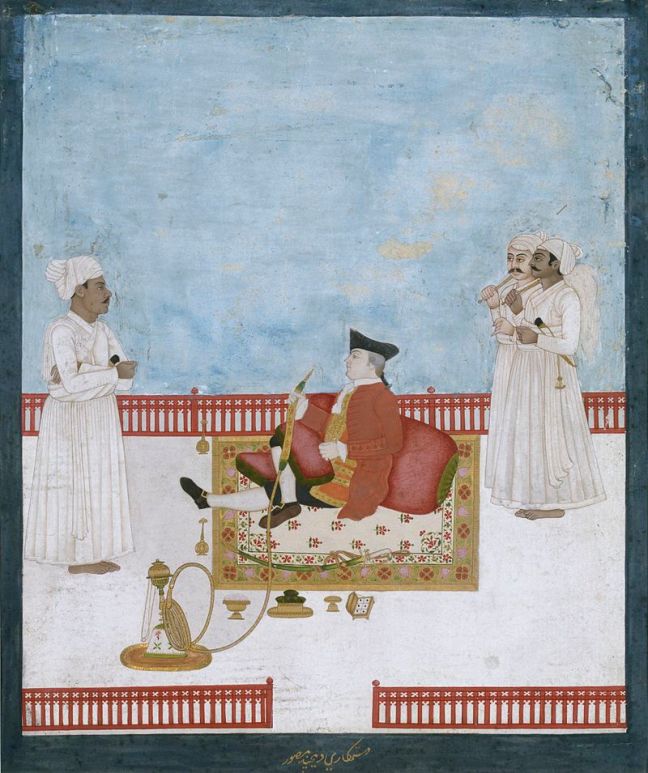
But before that – next week I’m heading to the Sorbonne in Paris, as an invited speaker, to talk about Sir John Macgregor Murray’s involvement in Gaelic culture and song-collecting. The man who got a couple of passing mentions in my thesis and book, has been a major focus for historians interested in his involvement in commissioning and collecting Persian manuscripts on Indian customs and culture, whilst he was active in the East India Company’s private army. I’ll be the only musicologist there – I’ve polished my paper within an inch of its life, so hopefully it will be of interest to scholars from a different discipline and with a different focus. I made a page about Sir John, which you can visit if you’d like to know more about the man.
I’ve been awarded an Athenaeum Award by the Royal Conservatoire of Scotland, to enable me to attend the whole of the International Society of Eighteenth Century Studies conference in Edinburgh in July, where I’ll be joining a panel on paratext. I think paratext is probably one of my all-time favourite research topics, so this is very exciting.
But to clear the decks for some serious writing about paratext, I got my next speaking opportunity all written up and timed well ahead of schedule: I’m talking about copyright and John Cage in a Pecha Kucha presentation at the CILIP Icepops seminar on copyright literacy education towards the end of June. Writing to fit 20 slides each lasting for 20 seconds is a rather different challenge to writing a conference paper! Here’s a hint: if you Google it, you’ll find yourself recommended to write 60 words per slide. However, if you use a lot of long words, then this advice is not for you!! Take it from one who [now] knows!
I’m attending the Icepops conference in Edinburgh with my librarian hat on. In fact, I was at Edinburgh a couple of weeks ago for the National Bibliographic Knowledgebase roadshow – an interesting update – and a couple of days ago, I went to Dundee for a Rare Books Scotland meeting. Again, I wore my librarian hat, but had the opportunity to share an update on the Claimed From Stationers’ Hall network whilst I was at it.
And what else? As I mentioned, I have a glorious idea for a new grant application … but I’ll keep that under my hat until plans are a bit more advanced….
I’m back from vacation with a vengeance, here. I’ve thought of not one, but two future projects worth pursuing, so I am getting in touch with people whom I think might be interested. One project is closely linked to the Claimed From Stationers’ Hall network, whilst the other idea could be said to tie together several strands from all the research I’ve done in the past decade or so. Obviously, grant-writing time is approaching again! Watch this space.
An interesting news snippet is my recent discovery that a librarianship student from Robert Gordon’s University has been doing a placement at the University of Aberdeen’s Library Special Collections – and looking at their Copyright Music collection! This really is very exciting – I love to hear of people getting engaged with these materials, and I’m really happy to think that Aberdeen’s collection is attracting attention. Retired music librarian and rare books cataloguer Richard Turbet did much work on it a few years ago, but it’s definitely time to be woken from its slumbers with some more close study!
So much for copyright music. I still have more writing to do for a substantial journal article about the UK’s repertoire, amongst other things. And we have the Brio journal issue to work towards, later this year, too. All this will be done!
Perso-Indica workshop on “John MacGregor Murray (1745-1822): Persianate and Indic Cultures in British South Asia” – Paris, May 28th 2019.
However, right now, I’m focusing on writing a paper for a seminar at the Sorbonne, which takes place at the end of May. Sir John Macgregor Murray took an almost obsessive interest in Scottish and clan culture, but it appears he was as interested in Indian culture, commissioning translations and texts in Persian, on matters relating to Indian religion, festivals and agriculture. His career was spent in the private army of the East India Company, so maybe we shouldn’t be too surprised that he took an interest in the customs of the land that was his home for more than two decades. He did have a base in Scotland too, having bought Lanrick Castle in his mid-twenties, though I haven’t investigated how often he came home, or whether his wife and son ever stayed there without him. (Much as I’d like to know, I have to remind myself that I’m interested in his cultural activities, not his entire biography!)






 And I’ll be playing the piano, purely in a background music capacity in the evening! Nothing scholarly about that part – I cannot call it practice-based research in the least.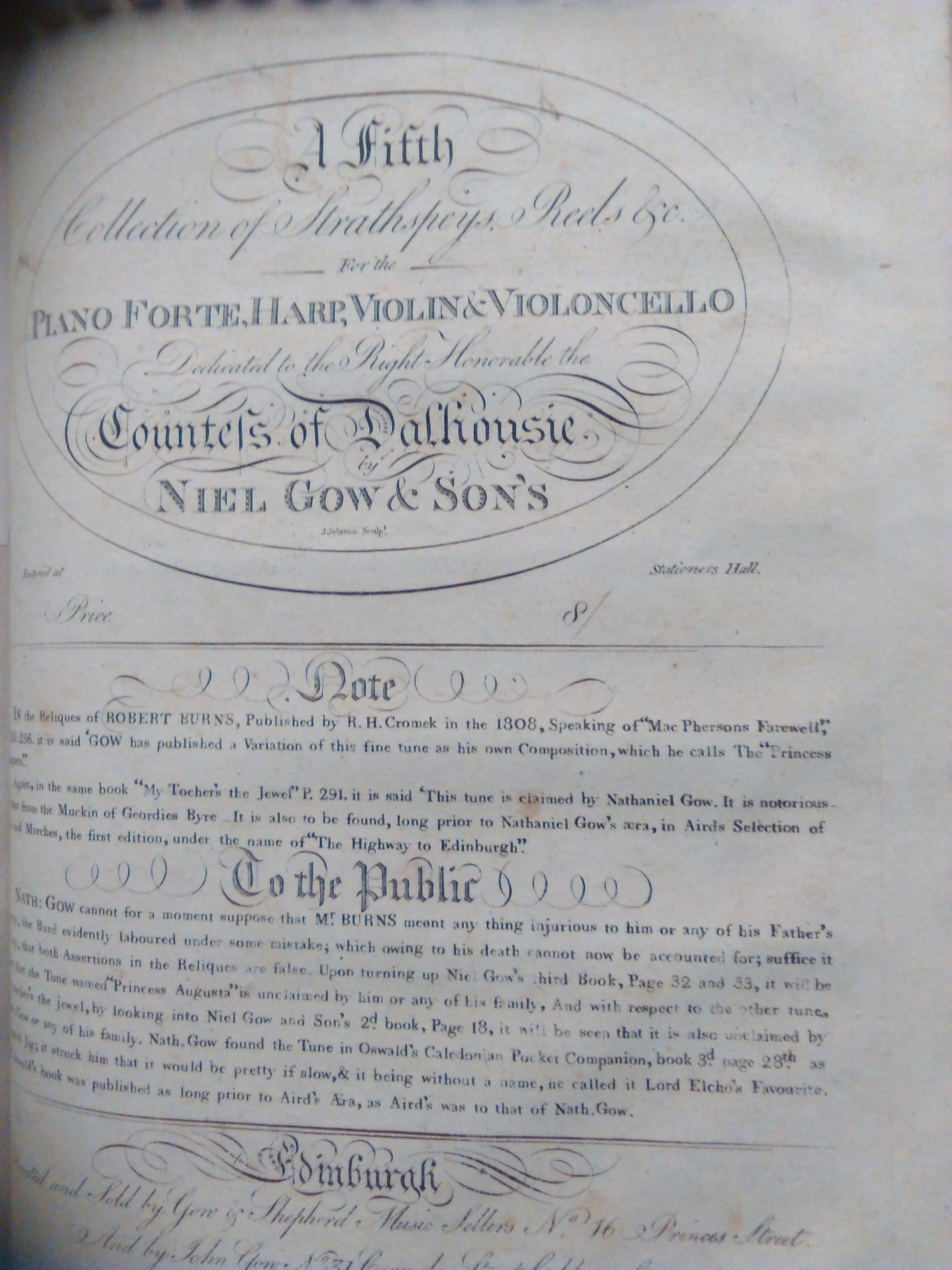


 Karen McAulay, Musicologist