I Met Her, Take my Word for it

‘You’ll be home for lunch’, He said. It was halfway between a query and a command. ‘You have four hours …’ (Actually, that came down to three, once I got to the library. Two, allowing for a coffee and my return journey … )

The Authoress

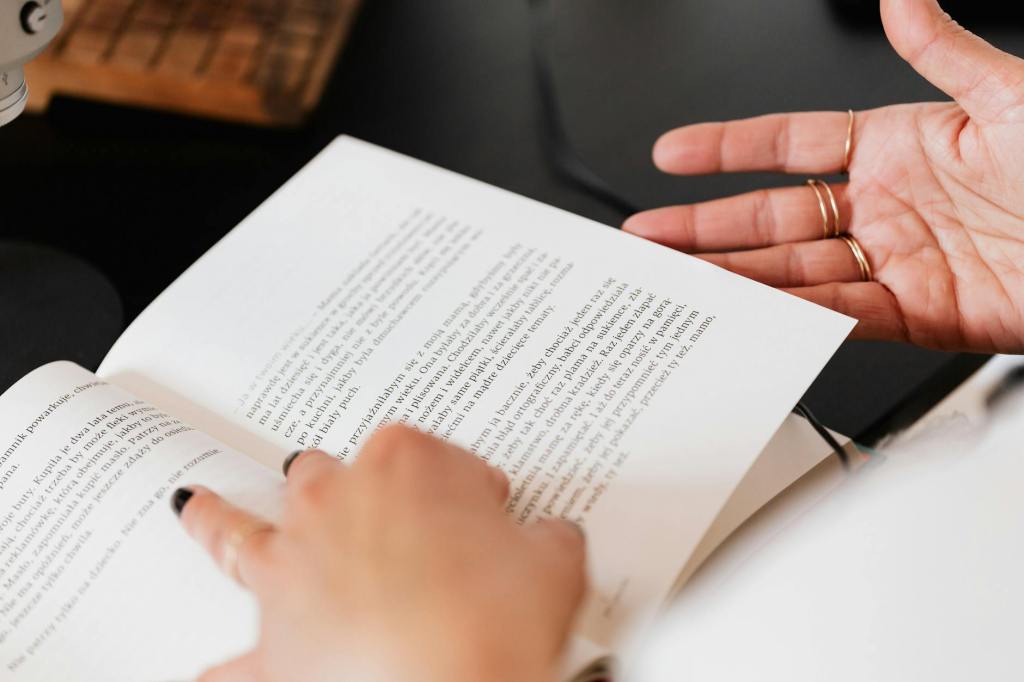
Nonetheless, I held in my hands the two very poetry books that the author (‘authoress’, in those days) had donated to the city library service back in 1881, not that long after they moved from Lanark to Glasgow.  I’ll never know if she handed them in personally, but I think it’s reasonable to assume that she handled those copies at some point. 

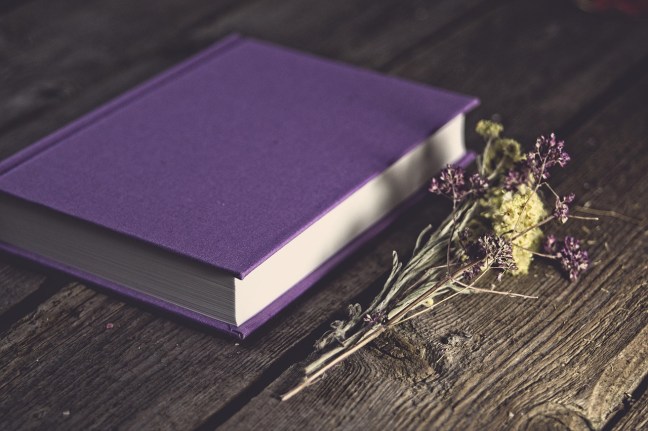
I can’t show you them.  (I signed a library form, which said that I couldn’t share my photos on the internet.) But you can picture two small volumes, one dark green and one purple, a little over six inches tall, with gold-edged leaves, and a little gold-embossed lyre on the front cover of each. Slightly different in design, but very similar.
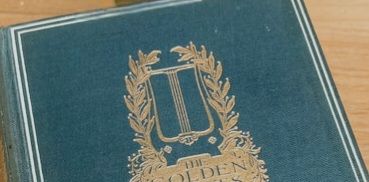
A bit like this unrelated, non-library book

These books are by the mother of one of the women I wrote about in my recent RMA Research Chronicle article.*  Only one has been digitized, but I wanted to see them both. I was enchanted to find she had written a poem about ‘my’ heroine, Rose, when Rose was just a small child.  It was worth the trip for that in itself.  Not that it really added any hard facts to her biography, but still a lovely thing to find.

Anyway, there we were.  Me, Mary Ann’s books, and a poem about wee Rose (amongst lots more poetry – I’m not writing here about everything I found!) – so yes, I think I can safely say I came as close as is possible to ‘meeting’ Mary Ann today. But as I said, you’ll just have to take my word for it.

I handed the books back – it was a bit of a wrench, but hey, that’s what happens in a library – and the curtains of time softly closed behind me, leaving Mary Ann in 1881, and myself here in 2026.  I may be back – she and I could have more to talk about!
Book Image by Ruslan Sikunov from Pixabay

Clock Image by StockSnap from Pixabay


* Article, ‘Women Pursuing Musical Careers: Finding Opportunities in Late 19th- and Early 20th-Century Scottish Music Publishing Circles’, Royal Musical Association Research Chronicle , Volume 56, April 2025 [this date is correct], pp. 97 – 118
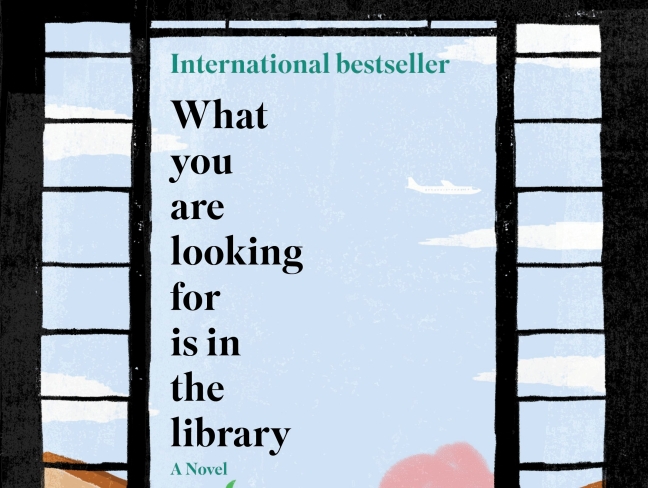
What you are Looking for is in the Library [a Review]

Audible, in its infinite wisdom and comparatively brief acquaintance with me, suggested I might enjoy this Penguin novel by Michiko Aoyama.

What You are looking for is in the Library (Penguin, 2023)

Was it because I enjoyed, The Premonition,  by Banana Yoshimoto? Or does Audible (Amazon) somehow know I’m a librarian? I don’t buy books on librarianship…

In any case, it’s not surprising that when this title came up as a new suggestion, I’d be drawn to it! Haven’t I spent 42 years hoping people would find what they were looking for in the library?

It’s an interesting idea: a series of individuals are drawn to visit a community library. It’s staffed by a nervous but friendly trainee and a mysterious, large, middle-aged former special-needs teacher turned librarian (with a penchant for Japanese honey dome cookies, and a felting obsession).  We encounter each library visitor at a crisis point in their lives. A girl wanting a more challenging job; a woman demoted during maternity leave; a man dissatisfied with his work; an unemployed artist; and a newly-retired man each consult the librarian for book recommendations, receiving a couple of perfect choices, and an apparently random children’s book, along with a bonus gift.

In each case, the random book and felted object help them to realise three truths: that there is always more than one way of looking at a situation; there are always other choices of direction; and that everyone draws their own message from any particular book.

Whilst the characters seem unlinked apart from these common threads, the final chapter does gather them together loosely. It’s a gentle, thoughtful, sequential book rather than one with a grand denouement. 

As such, the reader is left feeling less that it all came together in the end, than that each character had found a way to resolve something that had been troubling them. Less of a ‘Wow!’, more of a quietly satisfied, ‘Yes, I enjoyed that.’

Aoyama’s choice of characters is ingenious.ย  The librarian and her trainee are deftly and likeably characterised as a bit oddball, but happy in their environment, whilst their searching patrons – all new library users – are defined in such a way that the reader is sure to relate to some aspect of their collective predicaments.

And the three truths that I mentioned? Well, as I said, the third was that everyone takes their own message from a book. You’ll have to read it!