Dr Karen McAulay explores the history of Scottish music collecting, publishing and national identity from the 18th to 20th centuries. Research Fellow at Royal Conservatoire of Scotland, author of two Routledge monographs.
I’ve activated my email and library account. I’ve made contact with the library, and I’ve called up a book to be fetched for next week. I’ve also started a literature search for the topic I’m hoping to explore. Half of me considers it unlikely that the general topic hasn’t been covered, and the other half thinks it’s highly unlikely that my specific niche has been written about! If I can research and write an article during this Fellowship, I’ll have a significant output that will have drawn on St Andrews’ admirable library resources.
And of course, I don’t yet know what/how much will need revising in my book! That could be another major task for this autumn.
So far, so good. I have also achieved another personal goal. I wanted to see the sea at lunchtime. I did that, too!
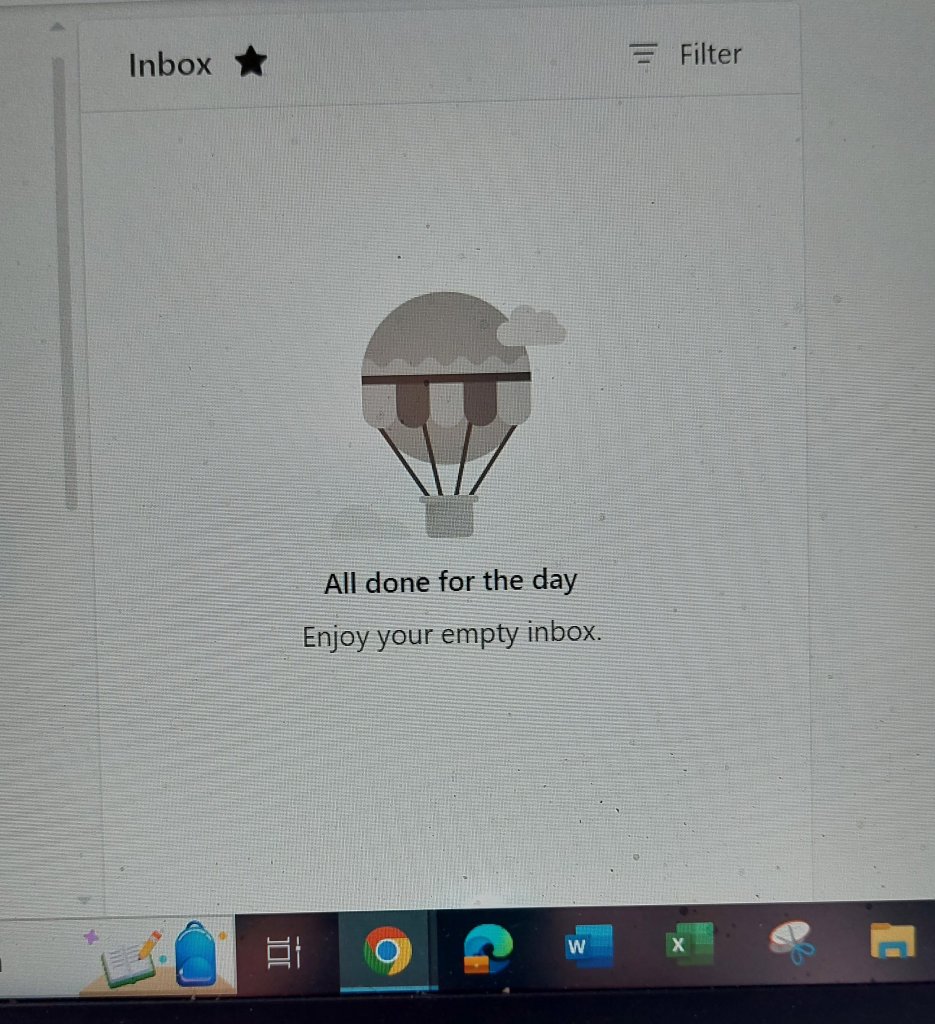
Lunchtime Wandering En route from the Castle Outdoor Coffee BreakA rare sight! (New email account)
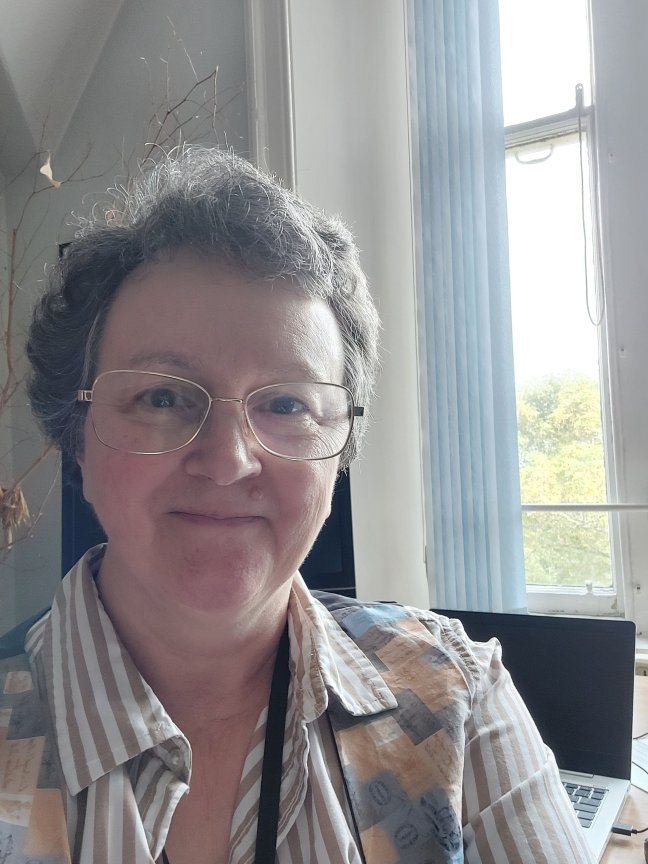
They say a picture speaks a thousand words. Well, in that case, here’s a full-length article! I’ve had a great first day as inaugural Ketelbey Fellow in Late Modern History, in the University of St Andrews’ School of History: sociable, welcoming and productive. I’m looking forward to tomorrow. For now, I need to sleep, so I’ll spare you a detailed account of ‘What Karen Did’, and ‘What Karen did Next’!
(Find out more about the Fellowship here, posted when I got news of it earlier this year.)
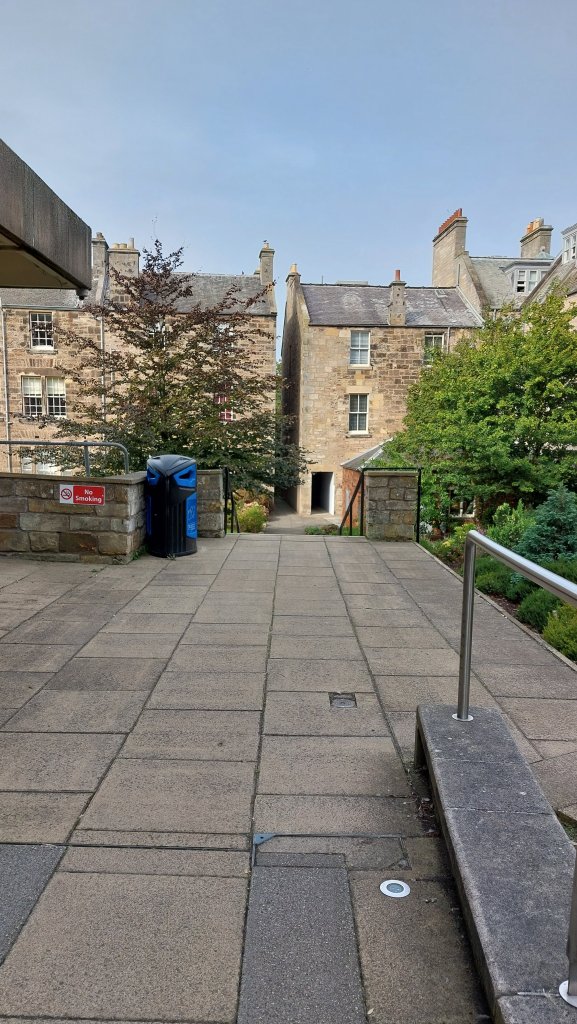
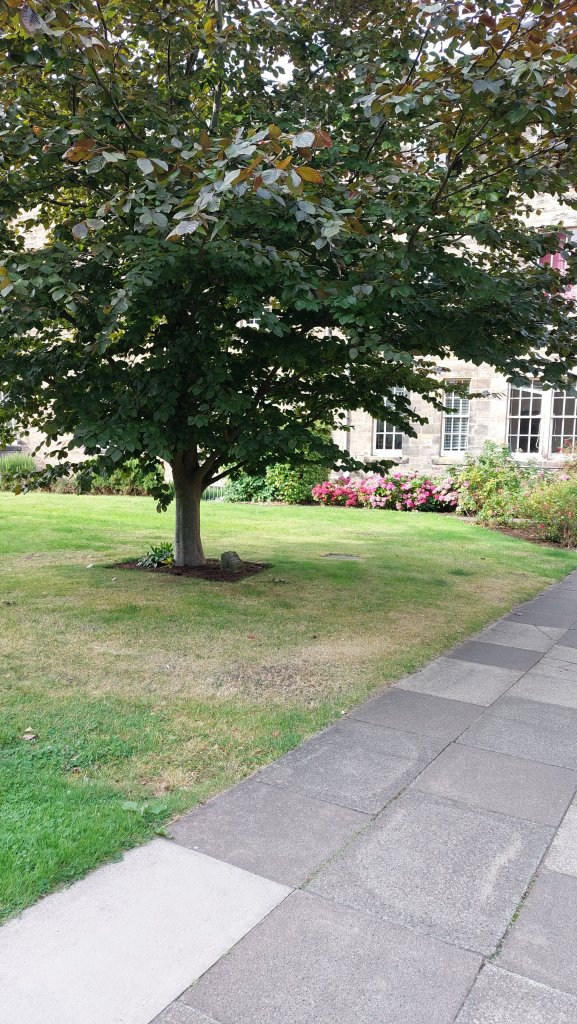
The Room, the View … and beyond the Trees, the Sea!Walking from St Andrews University Library to St Katherine’s Lodge Walking towards St Katherine’s Lodge
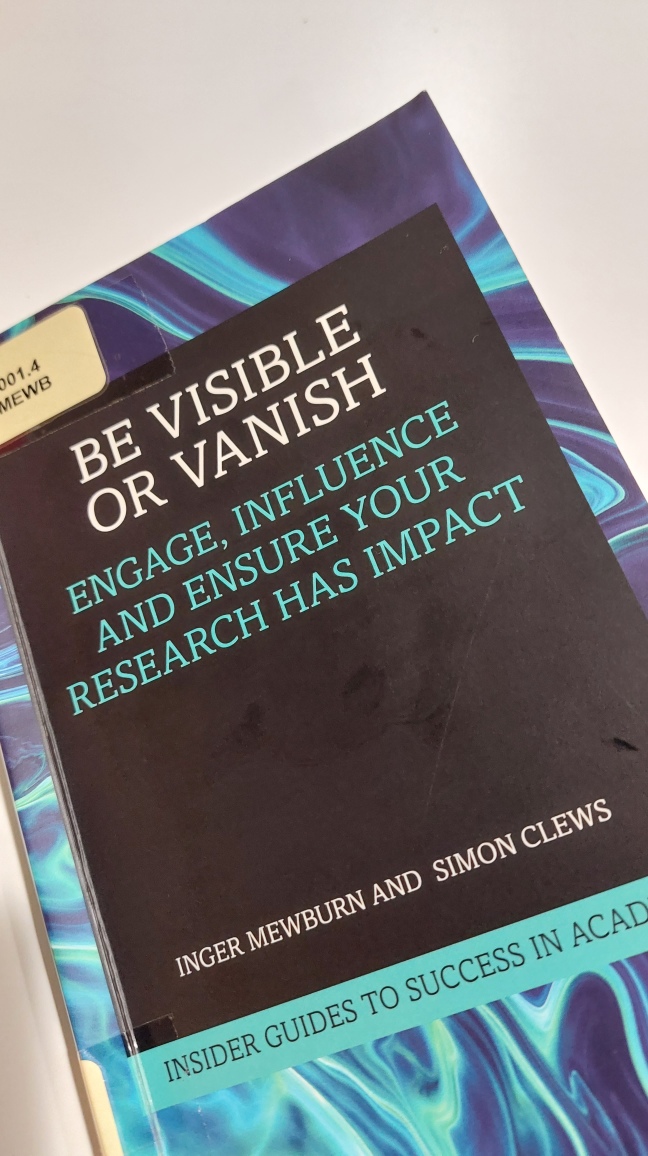
I’m currently reading a new book in the Routledge Insider Guides to Success in Academia series:
Be Visible or Vanish: Engage, Influence and Ensure your Research has Impact (Routledge, 2023)
The authors are Inger Mewburn and Simon Clews; since I’ve followed Inger’s work for a number of years, I knew it would be good, and I got it for RCS Library recently.
It’s an approachable guide, and the kind of book you can tuck into a bag or pocket to read at free moments during the day. This morning as I drank my pre-work latte, I was reading the chapter on making academic small-talk, and being ready with an answer to the inevitable question:-
So, what is your research about?
(A reasonable question in any situation!)
It particularly resonated for me this morning, because I take up my honorary Ketelbey Fellowship at St Andrews tomorrow. Not only that, but a family member had been asking me the same question last night! What are you studying there? Why there? How are you going to benefit from the experience? It wasn’t intended as preparation for the sort of questions I should be anticipating, but I nonetheless took it as a prompt to think carefully about how I shall be introducing myself when I meet new colleagues!
I’ve also heard this described as an ‘elevator pitch’ – though in my case, I would need the elevator to travel more than one floor! As I’ve said before, the title of my recently-submitted book doesn’t exactly trip off the tongue. However, it outlines what my research has been about in recent years so I have to be able to trot it out.
A social history (yes, that describes it well)
of amateur music-making (make no mistake, that’s what we’re talking about – it’s not generally about serious, cutting-edge classical music)
and Scottish national identity (this is such a big deal, that it’s inextricably interwoven throughout the whole book)
[And then there’s the subtitle!] : Scotland’s printed music, 1880-1951 (I’ve been looking at the output of Scottish publishers during this era, which proved much more interesting than even I had ever imagined. When I got to 1951, I got to fever-pitch excitement. You’ll have to wait for the book to find out why!)
But, back to the questions of last night. I’ll be revising the book when it returns from the reviewer(s). I’ll also be investigating a particular aspect of my research that still merits even deeper investigation. I’ll be exploring a bigger, richer library collection than I usually have access to, and I look forward to engaging with a lot of different research scholars, hopefully gaining fresh ideas and maybe ideas for new directions or collaborations.
Most of all, I’ll be settling into my academic role – yes, I know, I’m a seconded researcher back in my home institution, but it’s new for me to be a Fellow for a few months – and I’ll be thinking about my future ‘second career’ as a researcher once I retire from music librarianship next summer.
It’s only four weeks until Induction Week at the University of St Andrews! From knowing I’m going to be the inaugural Ketelbey Fellow ‘in the autumn’ – a vague point in the future – it is suddenly an actual thing happening in a month’s time.
So, on my first research day back after the vacation then the IAML Congress (leaving aside the fact that I wrote my way through almost my entire vacation), I took a deep breath and started a new To Do list.
And suddenly it wasn’t so much a question of, What am I going to do now I’ve submitted the book?, as, Where do I start on all I’ve got to do now I’ve submitted the book? It feels like there’s quite a bit to do – but I do now know the bus times, and I’ve reached out to a couple of libraries about things I need to know, so I’ve made a start.
I’ve got two guest lectures lined up, and interestingly – but perhaps not surprisingly – the monograph throws up several possible topics. It’s easier to see them, now the whole thing is written.
Indeed, although one lecture title is provisionally settled, I can see several other possibilities to choose from for the other one, which is gratifying. (Although I managed to get Dorothy Ketelbey into my book, I don’t know if I could get her into a lecture. It was only a passing mention. And yet ….)
But before that … one or two other things to catch up on. I’d better get started!
I have just contributed a blogpost to a research project blog that is hosted by the University and Stirling. The project is called, Books and Borrowing 1750-1830: an Analysis of Scottish Borrowing Records. There are a large number of participating partners – visit this page to find out more.
I revisited Miss Elizabeth Lambert (later Mrs Williams), Mrs Bertram and her daughters, and Principal Playfair’s daughter, Janet. Here’s the blogpost:-
With impeccable festive timing, two copies of the latest EBS journal popped through my door this morning. The first article is mine, a major output from my research for the AHRC-funded Claimed From Stationers Hall network, for which I won grant-funding a couple of years ago.
‘A Music Library for St Andrews: use of the University’s Copyright Music Collections, 1801-1849’, in Journal of the Edinburgh Bibliographical Society no.15 (2020), pp.13-33. The final proof copy is uploaded on Pure, our RCS institutional repository, though it won’t be visible to the naked eye until the input has been authorised, so you won’t be able to see it straight away.
ABSTRACT
The author’s researches into the Copyright Music Collection at the University of St Andrews led, inevitably, to the Library’s Receipt Books, in which all loans were recorded, whether to professors, students, or “Strangers” – friends of the professors who borrowed under the names of obliging academic staff.
Several thousand pages later, every music loan between 1801 and 1849 has now been logged. Notwithstanding the difficulties of inferring much detail from over 400 Sammelbände (ie, bound collections of multiple items), there are still many interesting observations to be made.
This paper explores findings to date, outlining the progress of the author’s research into a field in which music and library history meet, thereby shedding light on early nineteenth century musical activities in a small university town.
I was delighted to read a brand-new posting by Dr Briony Harding for St Andrews’ University Library’s Echoes From the Vault, today. The Copyright Music Collection again provides the backdrop in this posting,
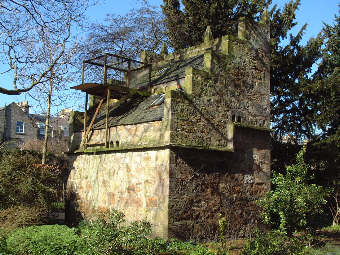
The music collection has had an interesting past – at one point it was shoved aside into a dovecote belonging to the University – but nowadays it sits in splendour, a vital resource for studying British publications of Georgian-era music. It was the inspiration for the AHRC-funded ‘Claimed From Stationers’ Hall’ network.
The story of a very early female music cataloguer at the University of St Andrews
by Dr Karen E McAulay, Royal Conservatoire of Scotland
Introduction
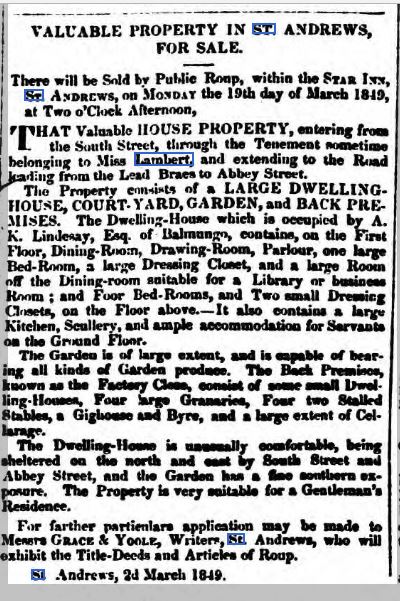
Prior to her marriage to George Williams, Elizabeth Lambert (1789-1875) produced a handwritten catalogue of the University of St Andrews legal deposit music collection, which was accumulated by legal entitlement from the 1790s to 1836. Elizabeth was paid a nominal sum (one shilling) for producing the first catalogue volume in 1826, and continued adding to it, commencing a second volume which someone else presumably completed after she married and moved to London in 1832. [1] This youthful involvement with the University of St Andrews’ Library music collection is more significant, and had a more far-reaching effect, than has hitherto been recognised, for her catalogue would have significantly contributed to the use and enjoyment of the University Library’s music collection. Her subsequent married life in London is minimally documented.
This article would have been added to the Wikipedia Wiki Project, Women in Red, which is promoting entries about women to redress the current male/female balance; however, since the present narrative is based on new research – and there are no books with biographical details of Miss Lambert – it does not fit into the remit of that admirable project.
Childhood
Born in 1789, the year of the French Revolution, Elizabeth Lambert was the firstborn child of clergyman, Revd. Josias Lambert and Dorothea Lambert (née Rotherham). She was christened in St Mary’s Parish Church in Lancaster (Lancashire) on 13 June 1789. [2] Two brothers and two sisters followed in close succession, the youngest being born a few months after their father’s death in 1799. Their widowed mother sold their Yorkshire home, Badger Hall in Burneston, to Col. W R L Serjeantson that year, [3] and relocated the family to St Andrews in Scotland. There, they lived with her brother, Professor John Rotherham, until he died in 1804.
House in South Court, South Street, St AndrewsElizabeth’s mother originally hailed from Northumbria, but remained living in a house at South Court, South Street in St Andrews until her death in 1839. [4] Both of Elizabeth’s sisters died at St Andrews in childhood.
Teens and young adulthood
South Court from South Street, St Andrews
Elizabeth’s brothers attended the University, making use of the library facilities, but Elizabeth and her mother were also able to borrow from the library through the good offices of professorial friends. Elizabeth borrowed widely:- books on conchology, botany and horticulture, divinity and travel, as well as novels and music, and she continued to borrow on a visit to Scotland after her marriage. [5]
She borrowed sacred and secular vocal music – returning to borrow Mozart’s Masses more than once, and also enjoying operatic arias, and Irish, Scottish and Welsh songs – as well as piano music and piano duets. Instrumental music seems to have attracted her – one such book that she borrowed contained concertos, harp and guitar music as well a piano instructor by Cramer, and this wasn’t the only instrumental volume to have appealed to her. She also enjoyed a music journal called The Harmonicon, which enjoyed a brief but very popular run from 1823-33, and borrowed a book about Haydn and Mozart.
Elizabeth’s interest in conchology went beyond reading about the subject, for she was cited in several textbooks for having identified a particular shell (Patellaelongata) inProfessor John Fleming’s cabinet collection in 1814. [6]
Elizabeth built up a shell collection of her own, giving her collection of British and foreign shells to the Natural History Society of Northumbria in 1873 (foreign shells) and 1874 (British and foreign shells). The Society still has a record of her donation, although the collection has been integrated into their own larger collection and can no longer be identified. [7]
Involvement with the University of St Andrews Library
Elizabeth’s uncle John Rotherham had taken responsibility for organising an earlier book catalogue in the library, though it is unlikely that he would have done the cataloguing himself. Nonetheless, his interest, added to Elizabeth’s interest in conchology, does suggest a family disposition towards organising and codifying things!
Sederunt Dr Buist Rector, Principal Haldane, Drs Hunter, J. Hunter, Jackson and Briggs. University Library 29th August 1826. “There was laid upon the Table by the Rector a Manuscript Catalogue of the Music belonging to the Library made out by Miss Lambert. The Rector was requested to convey to her the thanks of the University for the great pains she had been at in making it out. [signed] Geo. Buist Rector. [8]
It is probably worth noting, as an aside, that 1826 was also the year in which the University of St Andrews published a proper catalogue of the entire library holdings – excluding the music, that is! See their Catalogus librorum in Bibliotheca Universitatis Andreanae, secundum literarum ordinem dispositus online via the Wellcome Collection website. (I noticed that the library had the 1788-93 edition of Linnaeus’ Systema naturae, a book which would have enabled Elizabeth to identify that sea-shell in Professor Fleming’s cabinet: “Patella Elongata”, aka “Ansates Pellucida” is none other than a special kind of limpet …)
Although Elizabeth was paid for cataloguing the St Andrews University copyright (legal deposit) music in 1826, the second catalogue book continued to be added to, presumably by someone else and with rather less care after she had married and moved away, until a change in legislation meant that the Library ceased to claim legal deposit books in 1836, instead being awarded a book budget, in common with the other Scottish universities.
Entries in the borrowing registers for 16 October 1827 and 22 May 1828 record Elizabeth taking music ‘to be arranged’, which can be interpreted as an involvement in assembling the music into usable volumes which would then be bound by a commercial bindery. [9] Different volumes were compiled for instrumental music, piano music, songs, harp music and so on.
Marriage
Elizabeth married George Williams in Islington in 1832, where they lived with his mother and brothers. [10] They had no children. George died in Halton Street Islington in 1853. [11] Elizabeth Williams died at 18 Well-Walk Hampstead, Middlesex, 23 years later on 16 February, 1875. [12] There is very little documentation of her life after her marriage.
Significance of Elizabeth’s Music Catalogue
Elizabeth was clearly not a University employee, but was nonetheless entrusted with the task of compiling this catalogue of the music, listing the contents of each numbered bound volume. This is very early documented evidence indeed, of a woman being involved in any way with the organisation of a university library sub-collection. Contributing factors are likely to have been the fact that she was a niece of a deceased professor who, himself, had taken an interest in the library, and also the fact that families and friends were entitled to borrow from the entire collection through association with the professors. Her reading matter shows her to have been an educated woman, and the library’s borrowing records [13] provide ample evidence of both unmarried and married women making use of the music collection – a category in which some of the other legal deposit libraries seemingly took little enough interest for much of the nineteenth century.
Elizabeth’s catalogue was hardly a detailed bibliography, generally listing only composer and title, and sometimes conflating several linked separate publications into one entry. There are occasional spelling errors, which led researcher Elizabeth Ann Frame to suggest that Miss Lambert was dictating entries to another individual. [14]. This cannot be conclusively proven either way. Nonetheless, it would have been very difficult for readers to select music with any degree of precision until the catalogue was written, presumably instead reliant on serendipity, or searching out the latest bound volumes back from the bindery.
Indeed, in this context Miss Lambert’s catalogue represents a kind of endorsement of the University of the value that they attributed to their music collection, since the catalogue facilitated the use of the entire music collection by professors, a few quite young male undergraduates, and friends and family of the professors. There is evidence of the catalogue itself being borrowed by a few keen male borrowers, whether for their own perusal or for consultation by their family or friends, and the music collection was heavily borrowed during the first four decades of the nineteenth century.
The present website was set up for the the British AHRC (Arts and Humanities Research Council) funded postdoctoral network, Claimed From Stationers Hall, which supported further research into legal deposit music collections across Georgian Britain. This research followed on from the present author’s research at the University of St Andrews Library, which has excellent archival documentation to support a well-organised collection.
If you have enjoyed this posting, you might also like to read about another Library reader from St Andrews – Professor Playfair and his family. He appears in another article about the Claimed From Stationers’ Hall network, on the Library’s Echoes From the Vault website.
And there’s more! A boarding school proprietress, and her three teacher daughters, also made use of the library. You can read about Mrs Bertram on another network blog, this time curated by EAERN (Eighteenth-Century Arts Education Research Network): Mrs Bertram’s Music Borrowing: Reading Between the Lines.
University of St Andrews Library Muniments UYLY108/1 – Music Catalogue, 1826
Dorothea’s obituary appeared in The Gentleman’s Magazine and the Perthshire Courier. She was described as the widow of the late Rev Josias Lambert, M.A., of Camp-hill Yorkshire. South Court, her address off South Street in St Andrews, is now passed by visitors to the famous Byre Theatre.
University of St Andrews Muniments UYLY 206/8 (1821-1832)
Professor John Fleming was a member of the Royal Society of Edinburgh and was later cited by Darwin (not in connection with shells). ArchivesHub describes him as Scotland’s first zoologist. An ordained minister, he was also appointed as a professor at Aberdeen in 1834. Edinburgh University holds his papers.
Transactions of the Natural History Society of Northumberland, Durham, and Newcastle upon Tyne. Vol.5 p.368. [List of donations], A collection of British and Foreign Shells. Mrs Elizabeth Williams, Well Walk Hampstead.
Senate Minutes, University of St Andrews Muniments UY452/14/145 University Library 29 August 1826.
University of St Andrews Muniments UYLY 206/8 (1821-1832)
13 September 1832: ‘George Williams, of the Parish of St Mary, Islington, married by Rev Dr Haldane, Principal of St Mary’s College, University of St Andrews’. Old Parochial Register, St Andrews and St Leonards, via Scotland’s People.
Probate. Effects under £6000. The Will with a Codicil of Elizabeth Williams late of 18 Well-walk Hampstead in the County of Middlesex Widow who died 16 February 1875 at 18 Well-walk was proved at the Principal Registry by Henry Cardew a Major in the Royal Artillery stationed with his Battery at Newhaven and Thomas Francis Leadbitter of 158 Leadenhall-Street in the City of London Gentlemen the Executors. Ancestry England & Wales, National Probate Calendar (Index of Wills and Administrations), 1858-1966, 1973-1995. https://www.ancestry.com/
University of St Andrews Muniments UYLY206/5 (1801-16), UYLY 206/6 (1814-19), UYLY 206/7 (1817-21), UYLY 206/8 (1821-1832)
Elizabeth Ann Frame, ‘The Copyright Collection of Music in the University Library, St Andrews: a brief account’, in Edinburgh Bibliographical Society Transactions, Vol.5, issue 4 (1985), pp.1-9
Readers may remember that I contributed a blogpost to the EAERN website (Eighteenth-Century Arts Research Network) back in 2017. I wrote about boarding school proprietress Mrs Jane Bertram, who owned a school in St Andrews (St Leonard’s, near the ruined Cathedral) until 1826, and then another at Newington House in Edinburgh. My primary interest was in her music borrowing from St Andrews’ University Library.
Whilst I was in St Andrews today, I went for a brisk, sunny but bitingly chilly walk at lunchtime, to establish just where St Leonard’s was. I knew that the present highly-esteemed private school is not in any way a direct descendant of Mrs Bertram’s establishment, albeit on the same site, but I made some more discoveries that pleased and surprised me, nonetheless.
I had never looked for the school before – and I had been unaware how close it was to the cathedral and the harbour. I was therefore equally unaware how close it was to the Lambert’s family home on the south side of South Street. However, whilst the families probably knew each other, “my” Miss Elizabeth Lambert would have been an adult by the time I estimate Mrs Bertram bought her school in the second decade of the nineteenth century, so any momentary excitement that Elizabeth might have been taught there, soon evaporated!
What I did discover on my walk was that St Leonard’s was later home to two university professors during some of the intervening years, before the present school was founded by professors anxious that a good quality school should be founded in the town. Not pertinent to Mrs Bertram’s story in the slightest, but it was nice to know a bit more about the property!
Anyway, I took some photos, so I’ll share them here for your enjoyment! First, the walk to St Leonard’s and a plaque outside the grounds …
And next, into the courtyard and a view of the old St Leonard’s Chapel, and the old school building with its plaques about the former professorial occupants!
This week I’ve been focusing on my paper for the EFDSS conference, Traditional Folk Song: Past, Present & Future, on Saturday 10 November, 9:30am – 5:00pm at Cecil Sharp House, London. I’ll be talking about ‘National Airs in Georgian British Libraries’, and particularly focusing on the collections in St Andrews and Edinburgh. I’ll also be alluding to that old nineteenth century irritation – the allegation that England had no national music!
As it happened, I needed to take a day’s annual leave for a non-work related reason yesterday, but I hoped that for most of the day I would be free to concentrate on my presentation. Well, it didn’t work out quite that way, but I did start writing in the evening. Today, I spent the first couple of hours teaching library research skills, then it was back to the laptop in the research room for the rest of the day.
By the end of the working day, I had written just over 4,000 words and felt I deserved a treat: I left my papers on the desk and came home to spend the evening sewing! (Better still, another little indulgence had arrived in the post for me: a silver sixpence dating from 1821, the year of George IV’s coronation, and with a hole pierced in it by a previous owner so that it could be worn on a ribbon. As of course I already am!)
The conference will actually be the culmination of a particularly busy week for me: I’ll be visiting the two Irish Georgian legal deposit libraries in Dublin earlier in the week, and Stationers’ Hall and the British Library on the day before the conference. One of my choir-members looked somewhat surprised when I remarked that I’d be fitting in choir practice between Dublin and the overnight sleeper between Glasgow and London!
I’m particularly looking forward to this conference because it will be a completely different audience to those at the conferences I’ve already been to this year. I’m intending to give a fairly wide-ranging paper. If I unearth any surprises in Dublin, then there will be last-minute tweaking to add them into the mix!
NB If you liked this, you might like a post I wrote on a related topic, earlier this year – essentially a continuation of the story after the period that I’ll be describing in my latest conference paper:- England has no National Music? Chappell Set Out to Refute This






![House in South Court, South Street, St Andrews [2016-08-31]](https://karenmcaulay.files.wordpress.com/2019/11/2016-08-31-14.23.15.jpg?w=169)


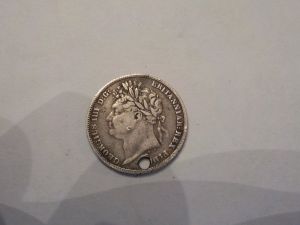 from 1821, the year of George IV’s coronation, and with a hole pierced in it by a previous owner so that it could be worn on a ribbon. As of course I already am!)
 Karen McAulay, Musicologist