Singing in Public? New to me!

George Square Edinburgh University

A few weeks ago, I led a community ‘Scottish song’ event. I found myself singing a solo – well, to say ‘found myself ‘ is inaccurate, because I HAD planned and rehearsed it with a pianist.

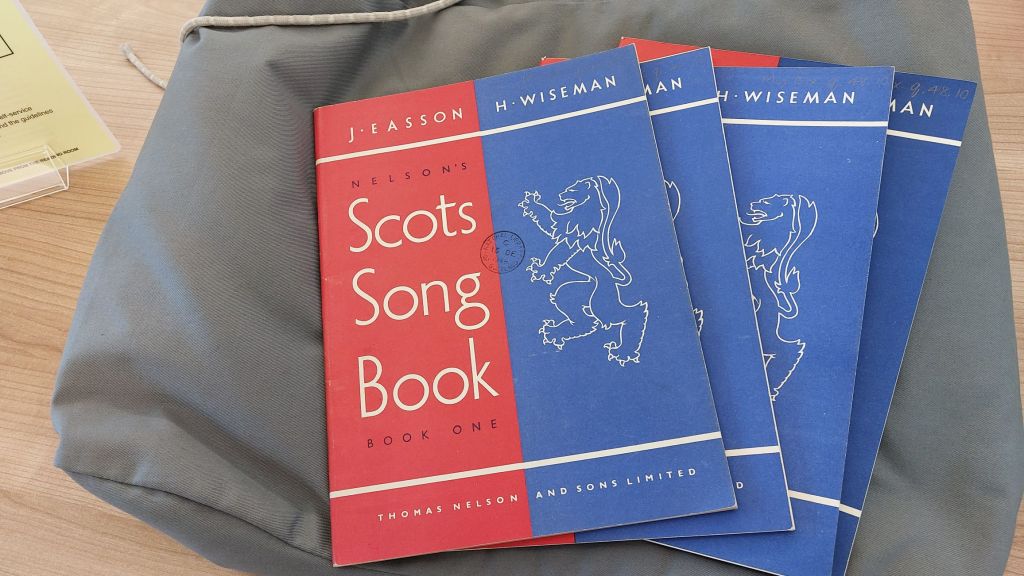
But it seemed to go down well enough, so, emboldened by this, I sang a couple of examples from Nelson’s Scots Song Book at my Work in Progress talk on Wednesday.  This time, I prerecorded my accompaniment myself. (Three cheers for the decent mic I had purchased during lockdown!)

I reminded myself that my esteemed audience were a mixture of musicians and non-musicians, and I was there as a researcher rather than a star turn, so hopefully they’d listen kindly rather than critically! 

And it was fine. I suppose the more often you do something, the easier it gets. I have played in public, conducted in public, and sung in a choir numerous times, but singing solo? That’s something new.

I have another talk coming up in a few weeks.  Of the two songs I sang this week, I much preferred one to the other  – the range was more comfortable. So I looked through NSSB4 again last night, and hit upon a favourite – ‘I’ll aye ca’ in by yon toun.’ I took it to the piano for a first play through. Yes, I like Easson’s setting.  It’s reasonably modern, and playable.

At this point  – just as I’d finished the chorus – I was obliged to stop.

‘But, I was  …’

You’d be alarmed at how routine governs my activities.  No point causing upset by continuing to play, so the song will wait for another time. Supper couldn’t wait!

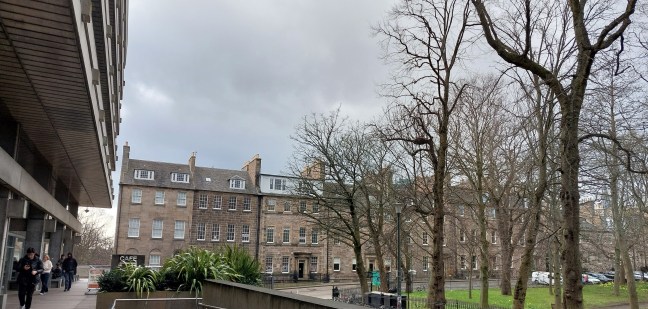
However, I thought I’d look for a YouTube rendition, to accompany my breakfast this morning, and what did I find, but a Topic recording of Jean Redpath performing it in the American Serge Hovey’s setting.  I never heard Jean sing live, but she got an honorary DMus from the University of Glasgow (my Alma Mater), and her enthusiasm for Scottish song was influenced by her time at the University of Edinburgh – as I sit with a cuppa in the Library cafe, I’m literally looking out at the School of Scottish Studies building where she’d have talked with Hamish Henderson.

I’ll aye ca’ in by yon toun

Having heard Redpath’s beautiful singing, I am less sure that my singing is a good idea, but there’s only one way I can share Easson’s setting, and that’s by playing it. Which, without a singer, wouldn’t work at all. I’d better get practising!

Scots Songs: a Question for your Elderly Scottish Relatives!

Front cover of Nelson's Scots Song Book Pupil's Edition Book 2

I would dearly love to trace a child, or children, who sang from these books. I think these books were aimed at children probably between eight to twelve years old, so the oldest children were born circa 1936-1946.

I don’t know how long the books would have remained in use, but my guess is that they’d probably have fallen to bits by the late 1950s. In that case, the youngest users would have been born round about 1950. And that would make them baby-boomers, but several years older than me.

So, if you have elderly Scottish relatives aged between 74 and 90, please do show them these images. Can they remember singing from these books at school?

And does Granny remember her teacher playing the piano for class singing lessons? There were bigger, more substantial teachers’ books to go with these little booklets. The teachers’ books had the piano accompaniments as well as the words and tune melodies. Only a few libraries still have them. I consider myself lucky to have tracked down my Pupil’s Edition Book 2!

Library copies of teachers’ books on an archival cushion

‘I was born an American but my Forbears were Scotch’

I have written a lot about diasporic enthusiasm for Scottish culture. Usually, I’m thinking about music, but today’s archival materials embrace almost every topic under the sun. If it can be taught, then educational materials can be published. And thus it is that I encounter an American author’s proposal to Thomas Nelson’s in Edinburgh, which bears out everything I’ve ever said about people’s affinity with the Auld Country.  (Not to mention the annoying ‘Scotch’, a term unused by Scots!)

Thus I have a hankering, just for the romance of it, to have some of my verse published in Edinburgh, especially since I hope to be in that city in the not very far future […]

I can almost hear echoes of Brigadoon in the distance. But, the poet is practical.  Recognising the paper shortages at the time (post-World War 2), the enthusiastic poet offers money to help defray initial costs, because …

Once out, I believe both of us will profit by its […] appearance.

There was only one problem. The editor replied,

We regret very much, however, that we are not publishing poetry at the present time.

Image by Alan Kidd from Pixabay

Seminar, Weds 26 March, 1pm:- Perusing the Papers from Thomas Nelson and Sons’ Parkside Works (Research into Nelson’s Scots Song Book – Work in Progress)

Through the archway into the courtyard at IASH

As I’ve mentioned, I’m currently Heritage Collections Research Fellow at IASH, the Institute for Advanced Studies in the Humanities, at the University of Edinburgh. All guest fellows are invited to give a work-in-progress seminar, and it’s my turn on Wednesday 26 March at 1 pm. You can attend in person, or online – more details on the link below. The abstract tells you what my talk is about.

Abstract and Zoom link

I’ll explain what I’m looking for, and introduce you to some of the individuals I’ve been finding out about.  The one thing I can’t predict, is whether I shall by then have found the answer to my prime question!

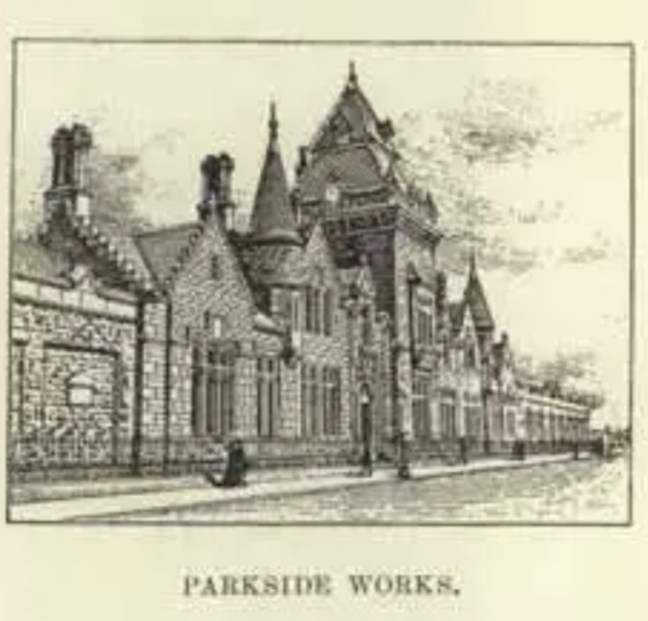
Nelson's Parkside Works - old engraving
Hope Park Square, home of IASH
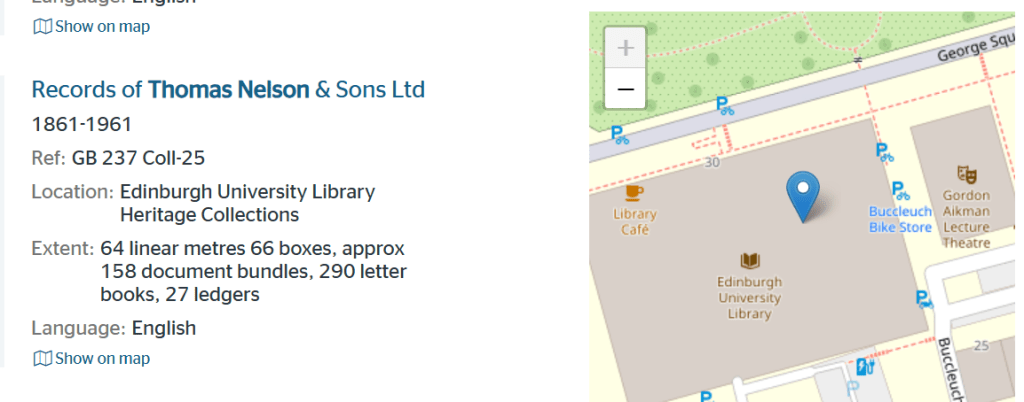
The ArchivesHub entry for the collection