Dr Karen McAulay explores the history of Scottish music collecting, publishing and national identity from the 18th to 20th centuries. Research Fellow at Royal Conservatoire of Scotland, author of two Routledge monographs.
What could be more cool than an extensive, updated bibliography full of good stuff about music copyright and legal deposit history, and its context in 18th-19th century cultural life? I agree – there couldn’t possibly be anything more delightful! And this time, it’s illustrated. Not only that – our guest bloggers are listed as well. Thanks again to each of them for their contributions!
Here on the blog, there’s a page specially for the network bibliography:-
Followers of this blog may like to sign up to news briefings from the Institute of English Studies’ School of Advanced Study at the University of London. The latest briefingincludes news about fellowship opportunities, and advance information about the London Rare Books School in June, with a course run by our friend Giles Bergel (Oxford/UCL) and Elizabeth Savage (IES) – about printing of an earlier era than we normally concentrate on, but very interesting nonetheless!
Over the weekend, I put together a very tiny animation about a tune plagiarised from Moore’s Irish Melodies in 1815. Interesting Twitter conversation ensued with Paul Cooper (of RegencyDances.org) and folklorist Jurgen Kloss in Hennef, Germany. In brief, it does appear that folk tunes – and even country dances – were seen as fair game for repurposing and republication, although there are a number of legal disputes on record in contemporary newspapers. And I have some more great references for the bibliography, next time I’m updating it!
I unearthed an unexpected instance of musical plagiarism yesterday. And I wonder if Thomas Moore and James Power were even aware of it! I won’t divulge too many of the details, as I might be referring to it in a conference paper one day, but here’s the teaser, in the form of a brief Biteable animation! Please click the link below:-
This makes me think of the early photograph of an old lady, Mrs Bertram of Edinburgh. (As readers of Claimed From Stationers Hall blog and the EAERN project blog will realise, I think it highly likely that it’s “our” school proprietress, Jane Bertram.) I’m intrigued that so much can be found out about the subjects of early photographs. Hopefully I’ll be able to reach out to the authors of Glasgow University Library’s blogpost to see if they’ve ever encountered her!
Guest blog post by Roddy Simpson, photographer and writer on the history of photography, author of ‘The Photography of Victorian Scotland’ (2012).
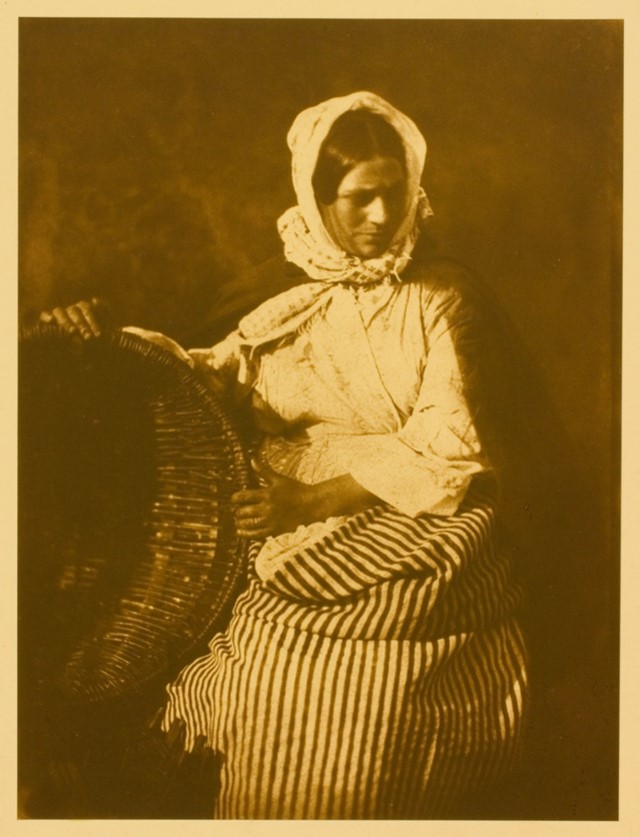
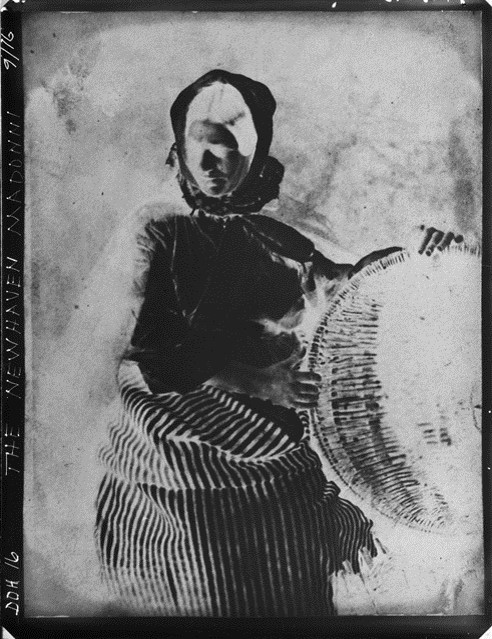
Elizabeth Johnston Hall by Hill and Adamson. Carbon print by Jessie Bertram 1916. University of Glasgow Library, Special Collections Dougan Add. 40
Elizabeth Johnston Hall (1822-1901) is one of the most famous photographed Scottish women because of the superb image of her produced in the mid-1840s, at the very beginnings of photography, by the pioneering Scottish partnership of David Octavius Hill (1802-70) and Robert Adamson (1821-48). She is clearly identified because ‘her name had been written by D O Hill under the photograph’ (see footnote 1).
The beautifully composed and lit image of this Newhaven fishwife has appeared in countless exhibitions around the world, been enlarged to poster size and also appeared on the sides of buses and trams. She has been written about by academics and art…
If you’re rushing to submit a proposal, then the following whispered (well, tweeted) insider comment might make you feel a bit less stressed:- “Officially the deadline is today, but I won’t actually be looking at them until Monday morning. Anyone who sends me an abstract before 9 am on 6 February will still be considered!”
This is turning into a busy week! Here’s another interesting call for essays, this time from the Women’s Study Group. Picture me, if you will, twirling like a top as I decide which of all these opportunities to turn my attention to first!
Quoting, with permission, from the email that was kindly forwarded to me:-
“The Art and Science of Collecting in Eighteenth-Century Europe
Edited by Dr. Arlene Leis and Dr. Kacie Wills
“We are inviting chapter abstracts for a collection of essays designed for academics, specialists and enthusiasts interested in the interrelations between art, science and collecting in Europe during the long 18th century. Our volume will discuss the topic of art, science and collecting in its broadest sense and in diverse theoretical contexts, such as art historical, feminist, social, gendered, colonial, archival, literary and cultural ones. To accompany our existing contributions, we welcome essays that take a global and material approach, and are particularly keen on research that makes use of new archival resources. We encourage interdisciplinary perspectives and are especially interested in essays that reveal the way in which women participated in art, science, and collecting in some capacity.
“The compendium will consist of around 15 essays, 6000 words each (including footnotes), with up to four illustrations. In addition to these more traditional essays, we are looking for shorter (circa 1,000 words) case studies on material objects pertaining to collections/collectors from that period. The subject of art, science and collecting will also be central to these contributions. These smaller pieces will each include one illustration. The following topics/case studies are particularly desired:
Women’s Collecting Interests
Histories and methodologies of collecting, taxonomies, cataloging, arrangement, and modes of display
Cabinets of curiosities
Catalogues
Collections housed in art and/or science institutions
The boundaries between the natural and the artificial
Scientific and artistic tools and instruments
Seriality vs. Rare objects
Transitional Objects
Conservation
Collecting networks
The artist collector
The scientist collector
The overlapping of art, science and collecting in domestic spaces.
“Essay abstracts of 500 words and 300 word abstracts for smaller case studies are due January 30, 2019 and should be sent along with a short bio to: artsciencecollecting@gmail.com
“Finished case studies will be due July 30, 2019, and due date for long essays will be September 30, 2019.
Must be the start of the year – there’s a sudden outpouring of calls for papers, conference registrations and other exciting challenges. Here’s one for this morning – Musica Scotica is a network I’ve long been associated with.
We are delighted to announce that the Icepops 2019 call for contributions is now open. The conference is taking place on 26th June 2019 at the University of Edinburgh and you have from now until the 4th February to come up with an idea for your presentation.
We are looking for speakers on all aspects of copyright education from a variety of different perspectives. Last year we attracted expert speakers from educational & cultural institutions, publishing houses and government departments as well as an impressive number of international delegates. Our first keynote this year is composer, publisher and scholar Simon Anderson, who will be opening the conference with a musical theme. We particularly welcome sessions that might compliment this. However, we also retain the playful learning theme from last year and our afternoon keynote, the award-winning Charlie Farley from the University of Edinburgh will be leading an interactive workshop.
We would like to encourage presenters to address one of the themes of this year’s conference:
– Universal Copyright Literacy: bridging the gaps between lawyers, IP teachers, specialists and copyright muggles
– Engaging and creative approaches to copyright education including using games, music and performance
– Copyright education as part of digital and information literacy initiatives
– Copyright education in the cultural heritage sector
– Teaching copyright as part of scholarly and open practices
However, we wouldn’t want you to feel constrained if you have a great idea relating to copyright literacy that doesn’t fit 100% into any of the above. Please just let us know and we’ll see if it fits in the programme.