

I’m not going to spoil the surprise, but I’m delighted to say that we already have several articles and a couple of book reviews submitted for the next issue of Brio, the professional journal of the UK and Ireland branch of IAML (International Association of Music Libraries). More are on their way. It’s going to be a great special issue, and there will be plenty of new insights into the surviving music that was “Claimed From Stationers’ Hall” during the Georgian era – genuinely completely new discoveries! Woo-hoo!
What’s the Collective Noun for a number of Book Reviews?

My bookshelf seems to be loaded with books that I just “must read”, but I’ve only set myself the task of reviewing three of them. The collective noun for a number of book reviews seems, therefore, to be somewhere between a shelf and a library!
With the deadline looming for our special issue of Brio, I’ve done two book reviews and contributed part of an article, so far. That leaves one more book – sitting right here in front of me – and ultimately, perhaps contributing to the editorial. Even as I write, other contributors are putting together their own contributions. Exciting times! It’s so good to know that one of the network’s major outputs is actually coming together in a very satisfactory way!
Book Reviews
Network members are enthusiastically typing away at the moment, as the deadline for our Brio special issue looms closer! I’ve done a couple of book reviews, and have one more to tackle. Today, I was thinking about matters as apparently disparate as copyright, romanticism, bootlegging and modern recording techniques. Does that sound weird or intriguing to you? I thought it was an excellent book – but you’ll have to wait until the next issue of Brio to read my review!!
Chapter in EFDSS Conference Proceedings
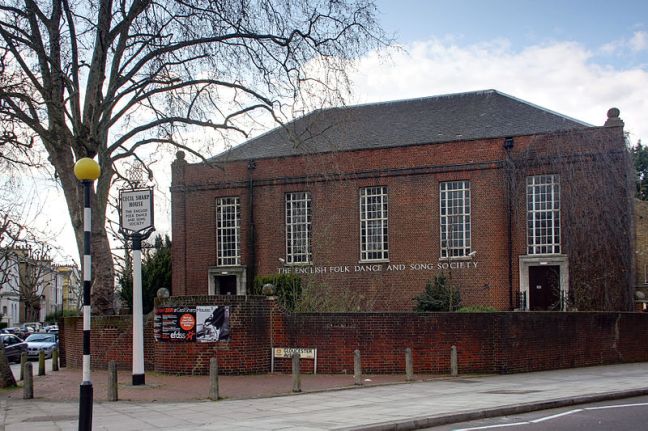
Dr Sue Allen has just alerted me to the very recent publication of the EFDSS conference proceedings we both contributed to. We each have a chapter in this great new folk song publication, from new publishing co-op The Ballad Partners. Only £12 plus p&p online from EFDSS Folk Shop:-
- Sue’s tweet gives pagination for the contents of the book, here.
- Vaughan Williams Memorial Library catalogue entry here.
- ISBN: 9781916142411.
So, suddenly there’s a new entry for our CFSH bibliography, too … 👍 (Now uploaded as the 7th Edition!)
- McAulay, Karen, ‘National Airs in Georgian Libraries’, pp.104-114
History of Music Collections in Edinburgh University Library – 2 new articles!
Readers of Brio (the professional journal of IAML UK and Ireland) will already have read the two-part contribution by Alastair Macdonald and Elizabeth Quarmby-Lawrence, which appeared in Autumn/Winter 2018 and Spring/Summer 2019. However, if you don’t subscribe or have access to that august journal, you might not have seen them. They’re a major contribution to the field, so it’s important that they’re publicised! And yes, they’ve been added to the Claimed From Stationers’ Hall network bibliography on the present website, too.
- Alastair Macdonald and Elizabeth Quarmby-Lawrence, ‘From General Reid to DCRM(M): Cataloguing the Music Collections of Edinburgh University Library. Part 1, The Early Reid Professors and the First Catalogues, 1807-1941’, Brio, 55.2 (2018), 27–49
- Alistair Macdonald and Elizabeth Quarmby-Lawrence, ‘From General Reid to DCRM(M): Cataloguing the Music Collections of Edinburgh University Library. Part 2, Professional Librarians and Automation, 1947-2019.’, Brio, 56.1 (2019), 62–83.
https://wordpress.com/page/claimedfromstationershall.wordpress.com/1661
Guest Issue of Brio (IAML UK & Ireland) guidelines for contributors

Woohoo! It’s deadline time. As you know, we’re contributing a special issue of Brio for IAML (UK and Ireland) on the Claimed From Stationers’ Hall theme. We agreed to have all writings completed by the end of August, and contributors up and down the UK and Ireland have been – and are – eagerly scribbling their considered thoughts on different aspects of the topic.
Brio does have a very general set of guidelines for contributors, but when it comes to referencing, the main requirement is to be clear and consistent within each article. Here’s a pdf of the guidelines, along with a quick screenshot of the first footnotes in the article on Edinburgh University Library’s music collections, already contributed by Alasdair Macdonald and Elizabeth Quarmby-Lawrence, Vol.55 no.2 (‘From General Reid to DCRM(M): Cataloguing the music collections of Edinburgh University Library, Part 1, The early Reid Professors and the first catalogues, 1807-1941)’, 27-49.
If the pdf doesn’t open for you, please let me know!
If you’re reading this but you’re not (yet) a member of IAML, then you might like to know more about us.
- IAML (UK and Ireland) homepage
- IAML (UK and Ireland) publications page
- IAML international parent organisation homepage. (We call it “Big IAML”!)
Sharing News: Early Music Monographs Digitized
This is a piece of news that I received via IAML (International Association of Music Libraries) and the MLA (the Music Library Association, an American organisation). Copying and pasting shamelessly, because this is news that’s bursting to get out, I offer you this exciting snippet:-
The Music Division of the Library of Congress has launched a new site with scans of approximately 2,000 books on music published before 1800. The scans were made from microfilmed versions of the books.
https://www.loc.gov/collections/books-about-music-before-1800/about-this-collection/
Karen C. Lund is the Digital Project Coordinator for the Music Division.
New Owner – Toronto Archives
This blogpost about a military tunebook may be of interest to our readers!
Living With the Guilt (Being a Part-Time Researcher)

My research career, beginning with the start of my doctoral studies in 2004, has been entirely on a part-time basis. I studied part-time whilst I worked full-time, and have since then had several secondments to part-time research whilst spending the rest of my working week occupying my regular professional role.
During my doctoral studies, I grew accustomed to the niggling question, “am I doing enough research?” (It was accompanied by, “am I doing this parenting lark adequately?!”)
I felt reasonably confident that my professional role wasn’t suffering – after all, when I was at that desk, I was working the work! But, in my student capacity, I had the memory of what full-time research “felt like”, from a previous doctoral attempt, and it was hard persuading myself that no-one expected me to achieve as much, as fast, when I was doing it entirely in evenings, at weekends and on holiday. (Reading early nineteenth-century commentaries whilst at Eurocamp? Oh yes, been there!)
Fast-forward to my present 70:30 existence (70% librarian, 30% postdoc). Desperate to be taken seriously as a researcher, I struggle to achieve as much as the average academic, when I’m only a researcher for 10.5 hours a week. Reading, writing, researching, editing, attending conferences … I drive myself to produce “output” at a rate that makes me look like a force to be reckoned with, but honesty forces me to concede that some of it has to be done at home, in my own time.
So, I reached this summer. Since May, I’ve been a guest-speaker at a workshop in Paris, contributed a pecha kucha at a copyright literacy seminar closely followed by a paper at a week-long international history conference (both in Edinburgh), been an after-dinner speaker at an engagement in the Highlands, and then – oh, blessed relief, came a fortnight’s vacation.
The first holiday week, I struggled with the guilt that I had a journal issue to edit, and ought to be doing the book-reviews I’d allocated myself. I managed not to do any of it! This was due to a combination of excessive domesticity, a self-imposed fitness regime, and end-of-term exhaustion. By the second week, I had family obligations that took me away from home, and I read no more than the introduction to the first book-review book. I’m driving home tomorrow. It does feel as though I’ve had a mental break, but the guilt is now pressing on my shoulders like a heavy cloud, and I’m perplexed as to how I’ll catch up with my scholarly obligations. It can’t be done in 10.5 hours a week, that’s for sure!
I’ve seen headlines in social media about how even full-time academics don’t get enough time in which to do research. I can understand this, but I can’t make comparisons. If an academic is not teaching, marking or administrating, then presumably some research can be done. For me, by contrast, if it’s not a research day/morning, then I have the rest of my 9-to-5 taken up with a completely different role, and NO research can be done. Likewise, I may have similar holiday allocation to my academic colleagues, but there’s a difference between that, and the length of the average undergraduate vacation. During that time there are no undergraduate lecture or tutorial commitments. I don’t have that difference at my disposal.
I’m sure I am not the only part-time researcher to feel this guilt. I don’t think there’s an answer, either. I’m moderately pleased with myself that I have deliberately, consciously taken a fortnight off, and only very occasionally opened my work email inbox to check that nothing crucial had popped into it. I deleted a few irrelevant messages, and closed the inbox again. My out-of-office message would have explained my silence, to anyone expecting to hear from me. I haven’t come up with a strategy for catching up with my editing and writing obligations. It may entail ignoring emails for a couple more days until I’ve reviewed those books!
I’d like to write a blogpost about the ISECS eighteenth-century history conference, but I fear it would be a bit of an indulgence, in the face of all that I personally absolutely have to do.
I wonder how other part-time researchers manage? Any tips or tricks to share?
Lanrick Castle, Centre Stage!

I have just stumbled across a whole video about Lanrick Castle – only touching upon Sir John MacGregor Murray’s time there, but it’s very evocative, so I thought you might like to see it for yourself. You can imagine Sir John living there, and song-collector Alexander Campbell approaching it in 1815, perhaps a little in awe when he saw the grandeur inside:-
Dr Peter J. Gordon’s website is called “Hole Ousia”. You’ll find the Lanrick Castle video here:- https://holeousia.com/time-passes-listen/ruins/lanrick-castle-demolished/
 Karen McAulay, Musicologist