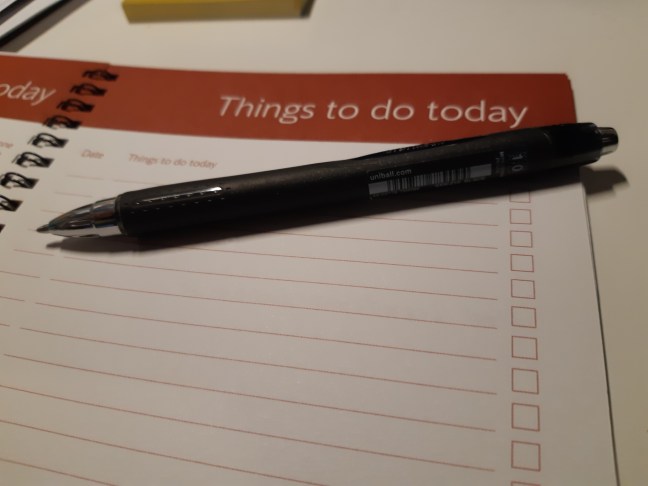
Researchfish – Safely reeled in!

Funded research clearly has to  be documented, and in the UK that involves uploading outputs to a website called Researchfish.  I’m glad I was just about up-to-date on my Researchfish entries, so it didn’t take excessively long to check a few entries and submit the whole thing.

It’s a good thing I checked, though.  The bibliography is on the blog – and the blog was logged literally ages ago.  But today I decided that the bibliography was such a huge output that it deserved its own mention.   And although I logged our Brio special issue over a month ago, elsewhere in my earlier narrative I had noted that it was “pending”.  I hastily updated that, too!  (The Brio issue is all there on Pure, our institutional repository, along with my other research outputs.)

fishing-3441090_960_720 PixabaySo as far as I’m concerned, the “fish” has been netted, weighed, documented and forwarded to the distributor!  I’ve hit SEND, and now all that remains is to apply for the next research grant.

Well, after a deserved coffee, anyway!

Researchers and Television – an opportunity

I had the opportunity to attend an event sponsored by AHTV and the Arts and Humanities Research Council this week. It took place at the Barbican Centre on Wednesday 5th February, so I travelled down the previous evening, and back to Glasgow on Thursday. The whole purpose of the event was to provide academic researchers with an opportunity to meet with TV professionals, and to learn more about getting one’s research discovered and disseminated through the medium of television.

It was a most informative day. I must confess to feeling a little star-struck when I realised that the keynote address was by Bettany Hughes, whom I’ve seen and admired on television history programmes. Similarly, hearing about the making of ‘Suffragettes’ with Lucy Worsley was fascinating – even if Lucy herself wasn’t actually there! I also availed myself of the opportunity to have a speed meeting with a TV professional.

I’d genuinely love to have the opportunity to get the Claimed From Stationers’ Hall network research out to a wider audience, but my first problem is the fact that we need big names or significant events to hang our story on. However, our primary heroine – Elizabeth Williams, nee Lambert – was, on the face of it a complete nonentity in terms of big names or big achievements. It goes without saying that she wasn’t a nobody in my opinion! (See A Labour of Love for Miss Lambert, also on this blog.) Of course, we know that her music catalogue was significant and highly useful to the music lovers of St Andrews in the late Georgian era. It made the collection much more easily navigable, and hence more useable.

In the wider scheme of things, it demonstrates the importance of work that goes on behind the scenes in libraries to this day. Very few professional cataloguers have a prominent public profile, and Miss Lambert certainly wasn’t a professional of any kind – she was paid a tiny amount for producing a catalogue, and that appears to be the sum total of her ‘official’ involvement. She married at a fairly late age and went off to join her husband, his mother and brothers, in Islington – and there’s not a lot more known about her life apart from her gift of her shell collection to the Natural History Society of Northumbria not long before her death. You could say that her life went as unnoticed as the vast majority of women of her era (and indeed subsequent eras), and yet those two handwritten music catalogue volumes do have significance in their own way.

We have to bear in mind that this veritable mountain of legal deposit music wasn’t exactly what most Georgian university officials wanted in their libraries – it was the books on law, theology, medicine and science that they had their eyes on. The St Andrews professors maybe took a different attitude to most, in allowing non-university music lovers to borrow music through the good offices of their professorial friends. The collection that was clearly important to Miss Lambert was heavily used by both men and women – I interrogated the music in terms of what was most borrowed by various categories of readers. Considering that there were parallel collections in several other legal deposit libraries, we were keen to compare what survived elsewhere, but nowhere else are there borrowing records or evidence of such intensive use. So many stories – but can I argue the case for a television documentary? Well, let’s see!

Book reviews in Brio Special Issue 56.2 (Claimed From Stationers’ Hall)

It occurred to me that you might like to know which books were reviewed in the special issue, since their titles don’t appear in the contents list:-

  • Derek Miller, Copyright and the Value of Performance, 1770-1911. Cambridge:
    Cambridge University Press, 2018
  • Book Parts. Edited by Dennis Duncan and Adam Smyth. Oxford: Oxford
    University Press, 2019
  • David Pearson, Provenance Research in Book History: a Handbook.
    New and revised edition. Oxford: Bodleian Library, 2019
  • Lee Marshall, Bootlegging: Romanticism and Copyright in the Music
    Industry.London: Thousand Oaks; New Delhi: Sage, 2005

Sion College: a Postscript

I have just learned that Anna James, who was for a few years cataloguer at Lambeth Palace Library, wrote her University College London Masters Thesis on Sion College’s history, in 2007.  Part of the dissertation became a paper given to CILIP’s Library and Information History Group in 2013, and that section formed the basis of an online paper on Anna’s Academia page.  Although music isn’t mentioned in this version, we nonetheless learn an enormous amount about the college, so this is a valuable contribution to the field.  I’ll add a link to our network bibliography at the earliest opportunity.

(It’s worth noting that Mr Greenhill (of Stationers’ Hall) sent lists of new publications to all the legal deposit libraries, and Sion College’s lists are still extant, like those at some of the other libraries.  But Sion’s music – as I’ve already noted – is long gone!)

Sion College Library: Vade fac similiter, by Anna James (2016)

(You do need to sign up to Academia to be able to download the pdf – however, there’s no need to populate your new account with your own writings if you don’t wish to!)

Image sourced from Lambeth Palace’s website.

Digital Humanities: a Strange New World

With Brio Vol.56 no.2 safely delivered, there aren’t any more big planned outputs from the Claimed From Stationers’ Hall network – and 2020 is the year for new grant applications.  Should I change the name of this blog, or start a new one? My gut feeling is to stick with this one until a new grant is won!  Digital humanities are likely to come into it somewhere along the line.  One application was submitted right at the start of November, and now I must think about the next one.

Since our Bass Culture project was essentially a digital humanities project (resulting in hms.scot), the realm of digital humanities isn’t entirely alien to me.  Nonetheless, on revisiting notes from a couple of meetings I attended last year, I realise there is terminology that I need to become more conversant with.  If I want the technology to help with my next project, the least I can do is make sure I can talk the lingo!

Triple IF

Today it’s “Triple IF”.  It sounds a bit like IVF without the Vitro, but it’s actually concerned with marking up images, and stands for International Image Interoperability Framework.  (Three I’s and an F, in fact.)  Who better to come to my rescue than the Bodleian Library, so here’s my next reading material:-

International Image Interoperability Framework:-

https://blogs.bodleian.ox.ac.uk/archivesandmanuscripts/2015/06/19/iiif/

Claimed From Stationers’ Hall: papers from an AHRC-funded network project (Brio Vol.56 no.2, Autumn-Winter 2019)

And it popped through the letter-box today: the latest shiny-new issue of Brio, our special issue dedicated to papers from the Claimed From Stationers’ Hall networking project.

If you or your library subscribe to Brio, put the kettle on and settle down to a fascinating read.  (Your library may have been closed for Christmas, so it might take a day or two for the latest issue to hit the shelves!)

I have added the entire issue to Pure, the Royal Conservatoire of Scotland’s institutional repository.  My thanks to IAML (UK and Ireland) for agreeing to this – it’s really important to us, as grant-funded research outputs need to be openly accessible.

If you contributed to the volume, but haven’t got access to Brio, please don’t worry – we’ll be sending you a copy in due course!

Meanwhile, to whet your appetite, here’s what you can look forward to!

Brio 56 no 2 title page

Along with the workshop that we held at the Royal Conservatoire of Scotland in Spring 2018, this issue is the network’s biggest and proudest output.  So, congratulations to each and everyone in any way involved in the production of this issue.   My special thanks go to Editor Martin Holmes for his kind and gracious support, and of course to IAML (UK and Ireland) for allowing us to produce this special issue in the first place.  We’re very grateful indeed.

Brio 56 no 2 contentsBrio 56 no 2 more contents

Book History: Scottish Airs in London Dress

Before establishing the Claimed From Stationers’ Hall network, I was a postdoctoral researcher on the Bass Culture project, which looked at Scottish fiddle tune collections largely from the Georgian era.  In that context, I read a paper at Musica Scotica in Spring 2014, about a couple of London-published music collections.  It has finally been published in Scottish Music Review Vol.5 (2019), 75-87, this week.

Sometimes when we look back at earlier work, we wonder if we’d have written it differently today, but I’m still pretty happy with this article.  If anything, I think it justifies my claim that the history of this kind of collection does indeed deserve to count as “book history”, even if it is music rather than literature. So, here it is for your enjoyment:-

Scottish Airs in London Dress: Vocal Airs and Dance Tunes in Two Eighteenth-Century London Collections

Wrapping Things Up

CFSH Bibliography

Followers of the Claimed From Stationers’ Hall research network are probably already aware that there’s an extensive bibliography of writings to do with legal deposit and copyright, most specifically historical music legal deposit and copyright – but also a bit of library history, book history, cultural history of various kinds, and bibliography.

It has been updated periodically, and is now in its 7th edition, but when the special issue of Brio (vol.56 no.2) rolls off the printing press, a significantly extended 8th edition of the bibliography will be posted on this website.  It’ll include every article and review in the special issue, and virtually every reference or footnote cited by each author of ditto.  I wouldn’t be so bold as to say that not one citation concerning historical music legal deposit has been missed, but the chances of having missed anything significant are probably fairly slender!


And … Send!

2019-08-08 10.06.13That’s it, folks.  Martin and I have given the Brio “Special Issue” proofs the final thumbs up, and they’ve gone off to the printer.  No going back now … your special issues are well and truly on their way.  (They look slightly different to those pictured here, but I won’t spoil the surprise!)

A different track: Cambridge legal deposit disrupted by 2nd World War

From an era a century later than our project’s focus, we encounter legal deposit again – at Cambridge University Library. The practical impact of the Second World War? A disruption in the supply of legal deposit music!

mj263's avatarMusiCB3 Blog

This week, I have been busy laying out a small exhibition in the Anderson Room to commemorate the start of the Second World War.

I had a very clear idea in my head of what I was going to do – an exhibition based around some wartime favourites: There’ll be Bluebirds over the White Cliffs of Dover, Lilli Marlene, Moonlight Serenade, Bella Ciao, and the famous timpani version of Beethoven’s Fifth Symphony – Morse code for Churchill’s Victory V, the sound of the BBC broadcasting to Europe throughout the war years.

Due to circumstances beyond my control, and reflecting wartime conditions, the exhibition ended up being rather different to my original intentions. It is though, I believe, perhaps a truer reflection of the times.


View original post 990 more words