I’ve already mentioned that I would be attending Icepops 2019 at the University of Edinburgh yesterday – a conference about copyright literacy, and providing appropriate training to students, researchers and other staff colleagues.
(Icepops = International Copyright-Literacy Event with Playful Opportunities for Practitioners and Scholars).
My challenge was to deliver a Pecha Kucha which mentioned my research into historical legal deposit music, and ALSO touched on library user education into matters pertaining to copyright. ‘Silence in the Library: from Copyright Collections to Cage’, did just that. I have never spoken about John Cage’s controversial piece, 4’33” before. Neither have I deliberately inserted six seconds of silence into a format DESIGNED for brevity and concision! If you Google how many words you can fit into 20 seconds, you’ll find it’s just 60 words. That’s if you don’t use long words! So giving up a third of a slide to silence was, I felt, a calculated risk, but how else was I to demonstrate what you might hear during a silent episode?! All went well, and my calculations worked out – what a relief!
The conference was about a playful (lusory) approach to copyright education. In that regard, I discussed how Cage’s piece – silent though it was – still has copyright in the concept, and how students could be encouraged to contemplate how intellectual property can reside in the most unlikely situations – whilst also pointing out that 4’33” cannot be performed or even hinted out without dire legal consequences. You don’t believe me? I’ll put my presentation on our Pure institutional repository, and you can follow the references for yourself!
I mentioned playing the piano during the evening social? Oh boy, did we play?! I wasn’t alone – there was also a clarinet duet, and I staggered through a piano duet, unknown to both of us, with one of the (multi-talented) clarinet duo. The same clarinettist, on clarinet, kindly gave the premiere performance of a piece I’d recently written. That was definitely a first – I’ve never had an instrumental composition (as opposed to an arrangement) of my own performed publicly before.
Definitely an out-of-the-ordinary conference, then. I seem to be making a habit of this! Better get back to the eighteenth and early nineteenth centuries, now …


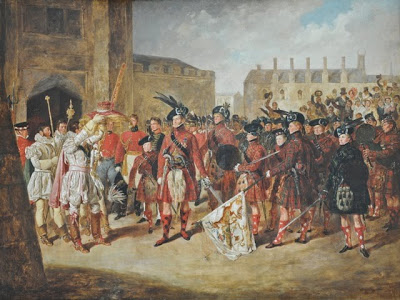
 Engaging with students in teaching bibliographic citation, and demonstrating the significance of paratext in historical national song collections.


 And I’ll be playing the piano, purely in a background music capacity in the evening! Nothing scholarly about that part – I cannot call it practice-based research in the least.
 Karen McAulay, Musicologist